All In Podcast Planning: Starting With Purpose, Not Guesswork
Every successful podcast begins long before the microphone is turned on. While it may seem like experienced creators simply sit down and start talking, the reality is very different. Behind every engaging episode is thoughtful planning, a clear direction, and a well-developed script that helps the conversation stay focused while still feeling authentic. Taking time to prepare before you start recording gives you the confidence to deliver valuable content that your audience wants to hear.
At Masterly Studios, we work with creators, entrepreneurs, educators, and professionals who want their podcast to make a lasting impression. We know that many first-time hosts feel overwhelmed because there are countless decisions to make before publishing an episode. From choosing a podcast name to organizing your outline, every step plays an important role in creating a professional show. Instead of relying on guesswork, our goal is to help you build a repeatable process that supports long-term growth.
Planning also helps you avoid one of the most common mistakes in podcasting—starting without a clear purpose. When you understand what you want to accomplish and who you want to reach, every part of your podcast script becomes easier to develop. A thoughtful plan allows you to communicate your ideas clearly while keeping your listener engaged from the opening intro to the final goodbye.
Purpose Should Always Come Before Recording
One reason most podcasts struggle to grow is because they begin without a defined objective. Recording an episode simply because you have something to say is rarely enough to build a loyal audience. Instead, each conversation should support a larger mission that reflects your expertise, personality, or business goals.
Before you write anything, identify your target audience. Think about who will benefit most from your message and what questions they are hoping you'll answer. This approach makes every point in your script more intentional and helps you avoid drifting into unrelated topics.
When you begin with purpose, every future episode becomes easier to plan because you always have a clear direction.
Define the Main Points Before You Write
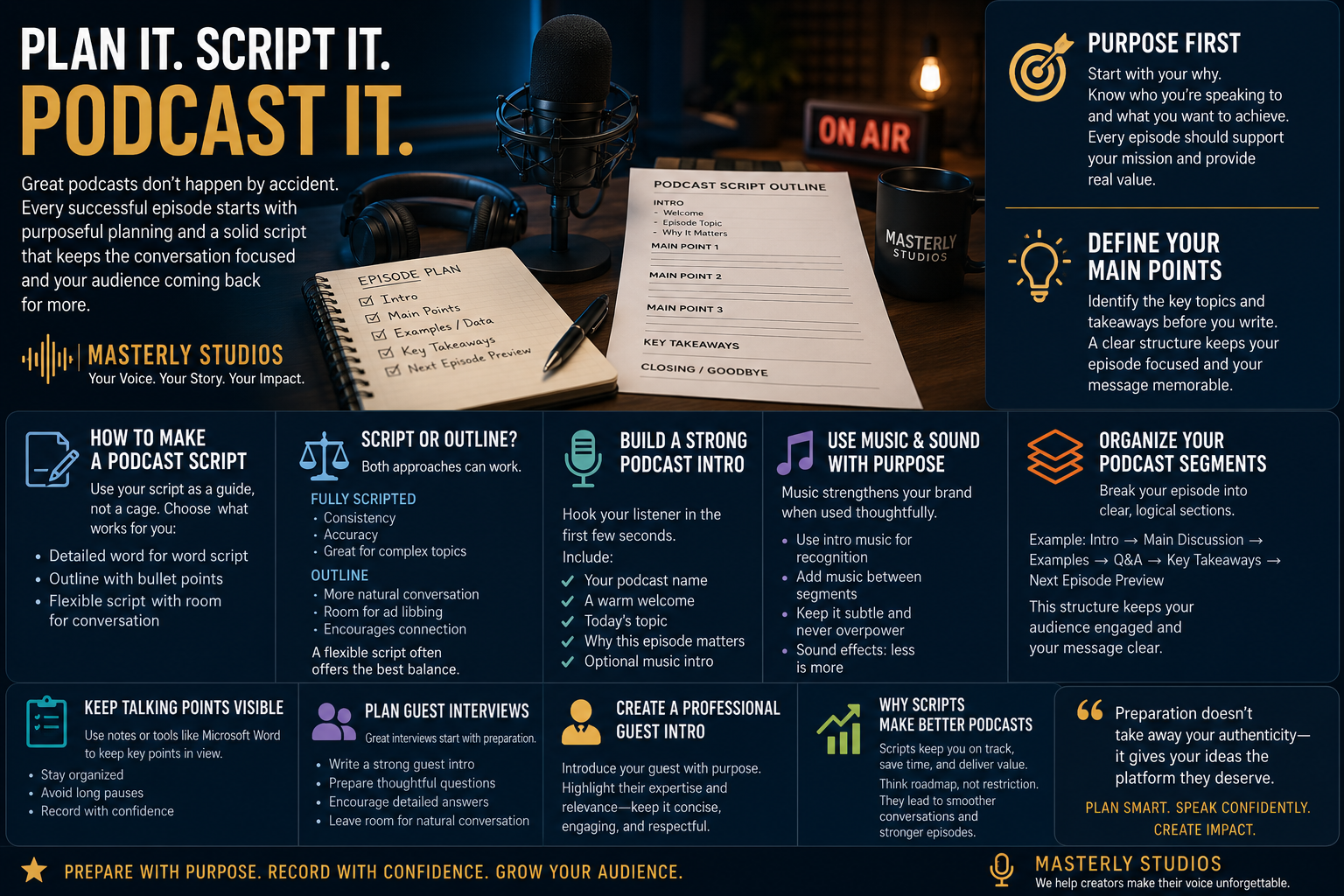
One of the easiest ways to organize a podcast script is to identify your main points first. Rather than worrying about every sentence, focus on the key topics you want your listener to remember after the conversation ends.
A simple planning session may include:
- Your opening intro
- The primary main points
- Supporting examples or supporting data
- A summary of your key takeaways
- A preview of the next episode
This method creates enough structure to guide the conversation while leaving room for natural interaction.
Understanding How to Make a Podcast Script
Many new creators wonder how to make a podcast script without sounding robotic. The answer is to think of your script as a guide instead of something that controls every sentence you say. The best podcast script provides direction while allowing your personality to come through naturally.
Some creators prefer a detailed word for word script, while others use a simple outline with a few bullet points. Both methods can work successfully depending on your experience and speaking style. The important thing is choosing an approach that helps you stay organized without limiting your creativity.
As you start writing, remember that your goal is not perfection. Your goal is to create a conversation that provides value and keeps the listener interested.
Choosing Between a Fully Scripted Episode and an Outline
Every creator eventually decides whether to produce a fully scripted episode or rely on an outline. Neither approach is universally better because each serves different personalities and content styles.
A fully scripted show provides consistency and helps explain complex concepts with greater accuracy. On the other hand, an outline encourages more conversational delivery and allows room for ad libbing when inspiration strikes.
Many experienced hosts find that a flexible script offers the best balance. It includes the essential talking points while leaving space for natural conversation that sounds natural instead of rehearsed.
Build a Podcast Intro That Captures Attention
Your podcast intro is one of the most important parts of every episode because it determines whether people continue listening. A strong opening immediately tells the audience what they can expect while creating excitement for the conversation ahead.
An effective intro often includes your podcast name, a brief welcome, today's topic, and a short explanation of why the episode matters. Some creators also include a recognizable music intro that helps establish a consistent brand identity.
The opening should feel inviting without becoming unnecessarily long. Remember that your goal is to earn the audience's attention within the first few moments.
Adding Music Without Distracting the Listener
Thoughtfully selected music intro tracks can strengthen your brand while making your podcast sound more polished. Music creates familiarity, helping returning listeners recognize your show immediately.
You may also choose to add music during transitions between podcast segments or beneath certain storytelling moments. However, avoid overwhelming the conversation with excessive background audio. The listener should always hear the host clearly.
The same principle applies to sound effects. Used carefully, they enhance the experience. Used too often, they distract from your message.
Organizing Your Podcast Segments
Breaking your whole episode into smaller podcast segments makes the conversation easier for both you and your audience to follow. Instead of covering everything at once, divide your content into logical sections that build naturally from one idea to the next.
For example, an educational episode might begin with an introduction, transition into the main discussion, provide practical examples, answer common questions, and finish with clear key takeaways.
This structure helps both the host and the listener stay focused while making longer conversations easier to understand.
Keep Talking Points Visible
Whether you're using printed notes or Microsoft Word, keeping your talking points nearby prevents unnecessary pauses during recording. Your outline should highlight each important point without encouraging you to read every sentence directly.
A well-organized podcast script helps you forget fewer details while allowing the conversation to remain engaging. It also reduces the temptation to constantly stop and restart the recording.
Good preparation creates confidence, and confident hosts create stronger episodes.
Planning Guest Interviews Before Recording
If your podcast includes guest interviews, preparation becomes even more important. Every guest brings unique experiences, and thoughtful planning helps those conversations feel meaningful rather than improvised.
Prepare a guest introduction that briefly explains why the guest's perspective matters. Then organize thoughtful questions that encourage detailed responses instead of simple yes-or-no answers.
Leave room within your outline for the guest's responses to shape the discussion naturally. Some of the best conversations happen when interesting follow-up questions emerge during the interview.
Creating a Professional Guest Intro
A polished guest intro immediately establishes credibility while helping the audience understand why they should continue listening. Keep it concise, mention the guest's expertise, and explain how their experience relates to today's episode.
Avoid reading a long biography. Instead, highlight the information most relevant to the conversation. This keeps the pace moving while creating anticipation for what comes next.
An effective guest introduction also helps your guest feel welcomed and appreciated before the discussion begins.
Why Scripts Make Better Podcasts
Some creators worry that using a podcast script will make their show feel less authentic. In reality, a thoughtful script often creates more engaging conversations because it eliminates unnecessary distractions and keeps every point connected to the central topic.
Think of your script as a roadmap rather than a limitation. It provides direction while still allowing your personality to shine. Whether you're producing a solo show, an interview podcast, or recording with co hosts, planning ahead creates smoother conversations and more valuable content.
At Masterly Studios, we encourage creators to find a scripting method that fits their communication style. The goal is not to memorize an actual script, but to prepare enough that every episode feels confident, organized, and enjoyable for both the host and every listener.
Build a Production Process You Can Repeat
A great podcast is not created by chance. Behind every polished episode is a reliable production process that makes planning, recording, editing, and publishing more efficient. Creating a repeatable workflow saves time and helps you maintain consistency as your library of content grows.
Instead of reinventing your approach for every episode, create a checklist that guides you through each stage. A dependable system allows you to spend more time creating meaningful conversations and less time trying to remember what comes next.
As your confidence grows, your workflow will naturally become faster, making it easier to publish new content on a regular schedule.
Organize the Recording Process Before Pressing Record
The recording process should begin well before the microphone is turned on. Review your outline, confirm your equipment is working, and read through your podcast script one final time. Taking a few extra minutes to prepare can prevent unnecessary interruptions later.
Many creators also find it helpful to perform a short sound check to make sure the audio is clear and balanced. This simple habit reduces editing time and allows you to focus on delivering valuable content instead of worrying about technical issues.
When your preparation is complete, you can start recording with confidence instead of uncertainty.
Keep Your Script Flexible
Many new hosts assume every script has to be rigid, but that is rarely the case. A flexible script gives you enough direction to stay organized while leaving room for natural conversation. This balance allows your personality to come through without losing focus.
Think of your podcast script as a guide rather than a rulebook. If an unexpected idea improves the conversation, don't be afraid to explore it. The goal is to create an engaging episode, not simply read from a page.
Your audience will appreciate conversations that feel genuine because they reflect real enthusiasm instead of rehearsed delivery.
Use Descriptive Language to Paint a Clear Picture
People cannot see what is happening during a podcast, so your word choices become especially important. Using descriptive language helps listeners picture the people, places, and situations you describe.
For example, instead of saying something was "interesting," explain what made it memorable. Help the listener imagine the scene, understand the emotions involved, and visualize the situation through your storytelling.
Strong descriptions make your content more engaging while helping important ideas stay with your audience long after the episode ends.
Support Your Message With Examples
Every strong podcast script benefits from practical examples. Real-life situations, personal experiences, and supporting data make information easier to understand and more memorable.
If you're explaining a strategy, include an example that shows how someone successfully applied it. When discussing industry trends, reference supporting data that reinforces your message without overwhelming the audience.
Using examples helps simplify complex concepts while making your advice more relatable and actionable.
Balance Facts With Storytelling
Facts are valuable, but storytelling creates emotional connection. Combining practical information with relatable experiences helps your audience stay engaged throughout the episode.
A simple story about overcoming a challenge can make an educational point far more memorable than statistics alone. Whether you're sharing your own experience or describing a client's success, authentic stories help listeners connect with your message.
The best podcast conversations educate while also entertaining.
Sponsor Messages Should Feel Natural
As your podcast grows, you may decide to include a sponsor message. The key is making these moments feel like a natural part of the conversation rather than an interruption.
Instead of suddenly switching into a sales pitch, introduce the sponsor message in your own voice. Explain why you believe in the product or service and how it relates to your audience. Authentic recommendations build trust, while forced promotions often have the opposite effect.
Many creators include a sponsor message shortly after the opening intro or midway through the episode where it feels most natural.
Plan Sponsor Messages Carefully
If your show includes more than one sponsor message, think carefully about placement. Too many interruptions can reduce the overall listening experience, while thoughtful spacing keeps the conversation flowing smoothly.
Review your podcast script to identify transition points where a sponsor message fits naturally. Planning these moments ahead of time prevents awkward interruptions during recording.
Your audience is much more likely to respond positively when promotions feel relevant rather than forced.
Use Sound Effects With Intention
Well-placed sound effects can enhance storytelling, improve transitions, and create a more immersive experience. However, they should support your content instead of becoming the focus.
For example, subtle sound effects can separate different sections of an episode or emphasize an important moment. They work especially well when paired with a recognizable music intro or a brief transition before introducing a guest.
Remember that less is often more. A few carefully selected sounds usually create a stronger impact than constantly adding effects.
End Every Episode Professionally
Just as the opening matters, the ending leaves a lasting impression. Summarize your main points, remind listeners of the key takeaways, and encourage them to return for the next episode.
A consistent closing helps establish your brand while making each episode feel complete. Many creators finish with a recognizable closing music jingle, giving listeners a familiar ending they associate with the show.
Ending with confidence also creates anticipation for future conversations.
Continue Improving Every Episode
No creator produces a perfect podcast on the first attempt. Growth comes from reviewing your work, listening carefully, and making small improvements after every recording.
Take time to listen to each completed episode as if you were a first-time audience member. Notice where the pacing slows, where transitions could improve, or where additional clarity might strengthen your message.
Do not be discouraged if everything isn't perfect immediately. Every new recording helps you become a stronger communicator.
Don't Forget to Review Your Work
One of the simplest ways to improve is to review your completed script alongside the finished recording. Compare what you planned with what actually happened during the conversation.
Sometimes you'll discover that certain sections worked better than expected, while other areas could benefit from a stronger outline or clearer talking points. This review process helps you improve without starting from scratch each time.
The more you evaluate your work, the easier it becomes to produce engaging episodes consistently.
Turn Planning Into Long-Term Success
Successful podcasting is built on preparation, consistency, and a willingness to keep learning. Every thoughtful script, carefully planned episode, and organized outline contributes to long-term growth.
Rather than rushing to publish content, focus on building a repeatable system that allows you to confidently write, record, and refine each conversation. Planning gives you the freedom to be creative because you already know where the discussion is headed.
When you invest in preparation, your audience notices the difference. Clear communication, organized content, and meaningful conversations help transform first-time listeners into loyal followers.
Use the Right Tools to Build a Stronger Podcast Script
Creating a great podcast episode is a multi step process that becomes much easier when you have the right resources from the beginning. Many creators begin with podcast script templates because they provide a helpful framework without limiting creativity. As you start creating, focus first on your key points instead of trying to perfect every sentence, then build your script around those ideas. Some hosts prefer using dictation software to quickly capture thoughts before organizing them into a structured outline, while others write directly in their preferred editing program.
No matter which method you choose, remember that common elements like an engaging intro, organized transitions, a clear call to action, and detailed show notes help every episode feel complete. A well-planned script is a powerful tool for maintaining effective communication, keeping your audience engaged, and making recording less stressful. There are a few options for developing your workflow, so choose the process that matches your speaking style while allowing your personality to come through naturally.
Contact Masterly Studios for a Free Consultation
If you're ready to move beyond guesswork and build a podcast with confidence, Masterly Studios is here to help. Whether you're learning how to make a podcast script, organizing your first episode, or refining an existing show, our team provides professional guidance designed to simplify every step of the journey.
We work with creators, entrepreneurs, educators, and organizations throughout the country, helping them develop stronger podcast strategies, improve their recording process, and produce engaging content that connects with the right audience. From planning your podcast intro and refining your podcast format to developing a complete production workflow, we're committed to helping you create a show that reflects your vision.
Contact Masterly Studios today at (404) 726-7261 to book your free consultation. We'll answer your questions, discuss your goals, and help you build a podcast that starts with purpose, not guesswork, while giving you the confidence to create episodes your listeners will look forward to hearing again and again.