The Copyright Mistakes That Could Put Your Podcast at Risk
Starting a podcast is an exciting way to share your ideas, tell stories, and connect with people who value your perspective. Whether you're producing interviews, educational discussions, or a true crime podcast, every episode represents a creative investment. However, one overlooked mistake can put everything you've built at risk. Using the wrong song, downloading copyrighted music, or assuming something qualifies as fair use without understanding the law can lead to expensive problems that many podcast creators never expect.
At Masterly Studios, we believe successful podcasting is about more than recording great conversations. It's also about understanding music licensing for podcast productions and protecting your work from avoidable legal issues. Our Legal Aspects of Podcasting Workshop helps creators understand the practical side of copyright law, giving them the confidence to publish responsibly while respecting the work of others. A little preparation today can prevent serious complications tomorrow.
Every Podcast Uses Creative Work Protected by Law
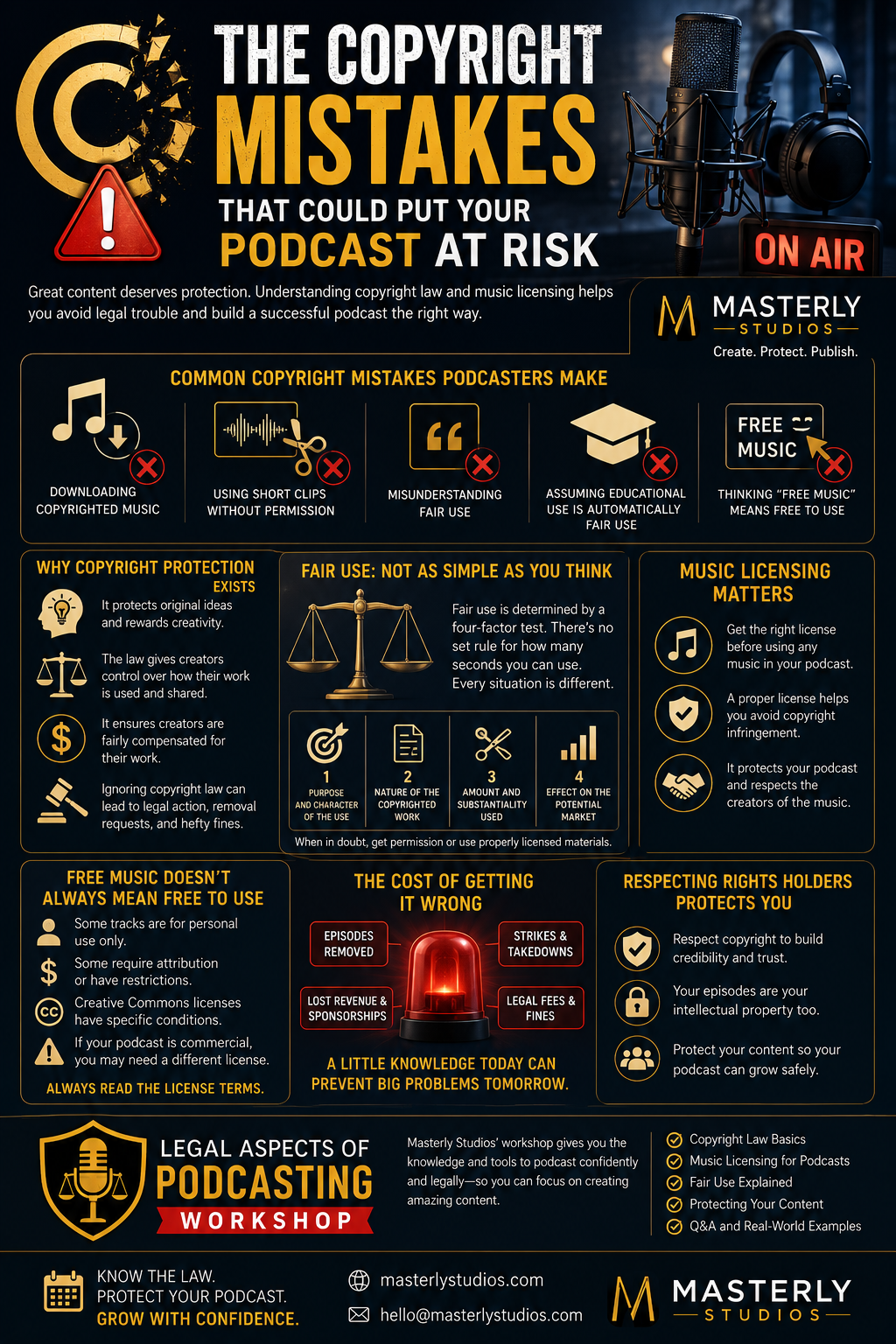
Many people assume that anything found online is available to use. Unfortunately, that is one of the most common mistakes made by new creators. Most songs, sound effects, video clips, artwork, and other creative work are protected by copyright, meaning someone owns the legal rights to that material. Those rights holders control how their work is used, distributed, and reproduced.
Whether you are adding intro music, outro music, or a short clip from a favorite song, the same basic rules usually apply. Unless the material is in the public domain, covered by a valid Creative Commons license, or you have received permission to use it, incorporating it into your podcast may expose you to copyright infringement claims. The fact that a file is easy to download does not mean it is free to use.
Copyright Protection Exists for a Reason
Copyright exists to protect original ideas and reward creativity. Musicians, composers, producers, writers, and artists invest significant time into producing original work. Copyright protection allows them to maintain ownership while deciding how others may use their creations. It also helps ensure they are fairly compensated when their work is licensed or distributed.
The Copyright Act and other intellectual property laws provide the legal framework that protects these creative assets. These laws apply whether you're producing a hobby project or a commercial podcast. Ignoring them can result in legal action, requests to remove your episodes, or even financial penalties if unauthorized material is used repeatedly.
Fair Use Is Often Misunderstood
One of the biggest misconceptions surrounding podcasting involves fair use. Many people believe using only a few seconds of a copyrighted song automatically qualifies as legal. In reality, that assumption is a common misconception. There is no universal rule that says a certain number of seconds is always acceptable.
Instead, fair use is evaluated using a legal analysis commonly known as the four factor test. Courts may consider the purpose of the use, the nature of the original work, the amount used, and the effect on the potential market for the original material. Because every situation is evaluated on a case by case basis, the outcome is never guaranteed.
Educational Use Does Not Automatically Mean Fair Use
Some podcasters believe that educational content automatically qualifies for fair use, particularly when discussing current events or creating instructional material. While news reporting, criticism, commentary, and nonprofit educational purposes may strengthen a fair use argument, they do not create automatic protection. Each situation depends on its specific facts.
For example, a true crime podcast discussing a historical event may reference a popular song, but including that recording without obtaining permission could still present legal concerns. Simply mentioning that your podcast is educational does not replace the need for careful analysis. Performing proper due diligence before publishing remains your best bet.
Music Licensing Matters More Than Many Creators Realize
Choosing the right music is one of the most important production decisions you'll make. The soundtrack helps establish the personality of your show, but every piece of copyrighted music carries legal responsibilities. Before using intro music, outro music, or background tracks, you should determine whether you need a podcast music license or another type of license.
Professional music licensing helps ensure your podcast complies with applicable copyright law. Instead of relying on assumptions, experienced creators obtain a proper license whenever required. This simple step can help avoid copyright infringement while protecting both your podcast and the people who created the original music.
Free Music Doesn't Always Mean Free to Use
Many websites advertise free music, but every creator should read the licensing terms carefully. Some tracks are available only for personal projects, while others prohibit commercial use or require attribution. Certain collections use Creative Commons licenses with specific conditions that must be followed exactly.
If your podcast generates advertising revenue, sponsorship income, or supports your business, its commercial nature may affect which license you need. Before downloading any track, review the agreement carefully. Understanding the difference between license music and unrestricted music can help prevent unexpected problems later, especially if you're working to build a sustainable show with business fundamentals for podcasters in mind.
Respecting Rights Holders Protects Your Own Creative Work
Every podcast episode you produce becomes part of your own intellectual property. Just as you expect others to respect your original ideas, rights holders expect their work to receive the same consideration. Respecting copyright builds credibility while demonstrating professionalism to your audience and business partners.
When your podcast grows, you'll likely want your own episodes protected as well. Understanding intellectual property today helps prepare you for future success. At Masterly Studios, we teach creators not only how to respect other people's work but also how to safeguard the original content they produce for years to come through our comprehensive podcast training and consulting services.
Obtaining Permission Before You Publish
One of the simplest ways to reduce legal risk is by obtaining permission before using someone else's work. Whether you want to include a copyrighted audio clip, a popular song, or background music, reaching out to the copyright holder is often the safest approach. Receiving written permission or purchasing the appropriate podcast music license provides clarity before your episode goes live.
Many creators assume they can simply credit the artist in their show notes, but attribution alone rarely replaces a legal license. Giving credit is respectful, but it does not grant the permission to use copyrighted material. When in doubt, always verify the licensing requirements before publishing.
Choosing the Right License for Your Podcast
Not every podcast requires the same type of license. The correct option depends on how the music will be used, where the podcast is distributed, and whether the content has a commercial nature. Understanding these differences helps you select the most appropriate music licensing solution for your project.
Some creators purchase royalty-free tracks, while others license music directly from a composer, publisher, or record label. In other situations, a podcast music license may be required for a specific copyrighted song. Selecting the right option helps protect your show while respecting the rights of the original creators.
Public Domain and Creative Commons Are Different
Many people confuse the public domain with Creative Commons, but they are not the same. Material in the public domain is generally no longer protected by copyright, meaning it may often be used without requesting permission. However, confirming whether a work truly belongs in the public domain requires careful research depending on when and where it was created.
Creative Commons works differently because the creator still owns the material but grants certain permissions under specific conditions. Some licenses allow commercial use, while others prohibit it. Some require attribution, while others prevent changes that would create derivative works. Reading the license terms carefully is an important part of responsible music licensing for podcast production.
Small Mistakes Can Lead to Big Consequences
A single mistake involving copyrighted content can affect your entire production. Streaming platforms may remove episodes, advertisers may hesitate to work with your show, and repeated violations could lead to legal action. In serious cases, copyright owners may pursue statutory damages for unauthorized use.
This is one reason most podcasters invest time in understanding copyright before publishing. It is far more cost effective to secure a proper license than to defend against claims after the fact. Taking proactive steps today helps protect the future of your podcast.
Avoid Common Copyright Mistakes Before They Happen
Many copyright problems begin with assumptions rather than intentional misconduct. Understanding the following practices can help you avoid copyright infringement while building a stronger podcast.
- Never assume short snippets automatically qualify as fair use.
- Confirm whether a work is truly in the public domain before using it.
- Request permission to use any copyrighted material whenever required.
- Review every license carefully before downloading or publishing content.
- Keep documentation showing you received permission or purchased the appropriate rights.
- Remember that using unlicensed music may result in a copyright violation, even if your intentions were good.
These habits help reduce unnecessary risk while demonstrating respect for fellow creators and copyright owners.
Fair Use Should Never Be Your Only Strategy
Although fair use plays an important role within copyright law, relying on it without understanding the legal standards can be risky. Courts evaluate whether a particular infringing use qualifies as fair by considering multiple factors rather than applying a simple formula. Every situation is different, making careful evaluation essential.
It is also worth noting that even if someone believes their use is fair, the copyright holder may still challenge it. Resolving those disputes often requires significant time and legal resources. Whenever possible, securing permission or purchasing the correct license provides greater certainty than depending solely on a fair use argument.
Protect Your Podcast Before Problems Begin
Every successful podcast represents countless hours of planning, recording, editing, and promotion. Protecting that investment should be just as important as producing engaging episodes. Foundational skills from a Podcasting 101 workshop, along with understanding music licensing, copyright law, and intellectual property, help you publish with confidence while reducing unnecessary legal exposure.
At Masterly Studios, our Legal Aspects of Podcasting Workshop is designed to help creators understand the practical side of copyright. We explain how music licensing for podcast production works, discuss the responsibilities involved in using copyrighted music, and help participants recognize situations where additional permission may be required. Our goal is to give podcast creators the knowledge they need to make informed decisions before publishing.
Understanding Copyright Rules Before You Publish
Every successful podcast depends on more than creative ideas—it also depends on understanding the rules that govern original content. Intellectual property laws exist to protect every type of creative work, from a single song to an entire podcast, and those laws apply regardless of whether you're producing content for commercial purposes or nonprofit educational purposes. Growing a show within those boundaries also requires intentional outreach, and strategic social media podcast marketing can amplify compliant content to the right audience.
One common misconception is that there is such thing as a universal time limit that allows anyone to use copyrighted material without consequences. In reality, every situation is evaluated on a case by case basis, often using the four factor test, which examines the purpose of the use, the nature of the work, the amount used, and its impact on the potential market. That is exactly why performing proper due diligence before publishing is your best bet.
Many podcasters want to include intro music, outro music, sound effects, video clips, or a memorable song to make their episodes more engaging. However, before you play music or include any other copyrighted material, you should verify whether it is protected by copyright and whether you have permission from the copyright holder. In some situations, using free music or content found through a digital download website is acceptable, but only if the licensing terms specifically allow your intended use. Otherwise, obtaining a proper license or written permission to use the material is the safest way to avoid infringement while ensuring creators and rights holders are fairly compensated for their work, especially when you're recording in a professional podcast and video production studio.
If you're unsure about ownership, the Copyright Office and other reliable resources can help you gain access to important information about copyright registration and ownership records. This is especially valuable when researching older works under the Copyright Act or determining whether a piece has entered the public domain. Taking the time to verify ownership before publishing can help you avoid unnecessary legal challenges, especially if your podcast is making money or intended for commercial distribution. Masterly Studios helps creators understand these legal responsibilities so they can confidently publish engaging content while respecting the rights of others.
Paying Attention to Copyright Before You Publish
Many creators focus on producing engaging content but overlook the legal details that protect both their podcast and the work of others. Whether you're producing news reporting, commentary, or a true crime podcast, understanding copyright protection is essential before adding music or other copyrighted material to your episodes. Even when you believe such use might qualify as fair use, every situation should be carefully evaluated because copyright decisions depend on the specific facts surrounding each project.
Choosing the right music for your podcast is just as important as choosing the right topic. By paying attention to licensing requirements before publishing, you reduce the risk of copyright disputes while building a more professional and trustworthy brand that aligns with your overall podcast artwork and branding strategy. As your skills grow, advanced podcasting techniques training can help you refine storytelling, sound design, and production while staying compliant. At Masterly Studios, we help podcast creators understand these responsibilities so they can confidently publish compelling episodes while respecting copyright laws and protecting the future of their show.
Music Licensing Protects Your Podcast and Your Brand
Understanding music licensing for podcast production is one of the smartest investments a creator can make before publishing new episodes. Every piece of copyrighted material, including copyrighted music, is protected by copyright law and intellectual property laws, even if it is easy to find online. Many creators mistakenly believe that downloading free music automatically gives them permission to use it, but licensing terms can vary significantly. Taking time to review those terms helps avoid copyright infringement while demonstrating respect for the original creator's intellectual property.
At Masterly Studios, we teach podcasters how to identify properly licensed resources and understand the responsibilities that come with using copyrighted content. Our workshop explains how to evaluate licenses, obtain permission when necessary, and select music that aligns with your show's goals without creating unnecessary legal risk. When combined with focused podcast monetization strategies, a thoughtful licensing strategy helps avoid infringement, protects your podcast's reputation, and gives you the confidence to publish every episode knowing your content has been built on a solid legal foundation.
Contact Masterly Studios for a Free Consultation
If you're unsure whether your podcast follows current copyright requirements or you want to better understand music licensing for podcast productions, Masterly Studios is here to help. Our workshop provides practical guidance on copyright compliance, intellectual property, licensing, and the steps needed to protect your content while respecting the work of others.
Contact Masterly Studios today at (404) 726-7261 to schedule your free consultation. We'll answer your questions, explain how our Legal Aspects of Podcasting Workshop can help you confidently navigate copyright issues, and show you how to publish podcast episodes with greater peace of mind. We proudly work with podcast creators, businesses, educators, and organizations throughout the country, providing professional podcast studio rental and video podcast production services that help clients build podcasts that are both creative and legally compliant.