How to Shape a Podcast Topic That Keeps Listeners Coming Back
Why Some Podcasts Build Loyal Audiences While Others Fade Away
Anyone exploring starting a podcast 101 quickly discovers that launching a show is easier than ever. Modern technology, affordable podcast equipment, and user-friendly publishing platforms have opened the door for nearly anyone to start a podcast. Yet despite this accessibility, many creators struggle to keep podcast listeners engaged after the first episode.
The difference often comes down to the podcast topic. A compelling topic does more than attract attention. It creates anticipation, encourages repeat listening, and gives people a reason to return for new episodes. Even the most polished production cannot compensate for content that lacks direction or relevance.
In today's podcasting industry, audiences have thousands of options available through podcast directories, Apple Podcasts, and virtually every podcast app imaginable. Standing out requires more than technical quality. It requires a topic that consistently delivers value to a clearly defined audience.
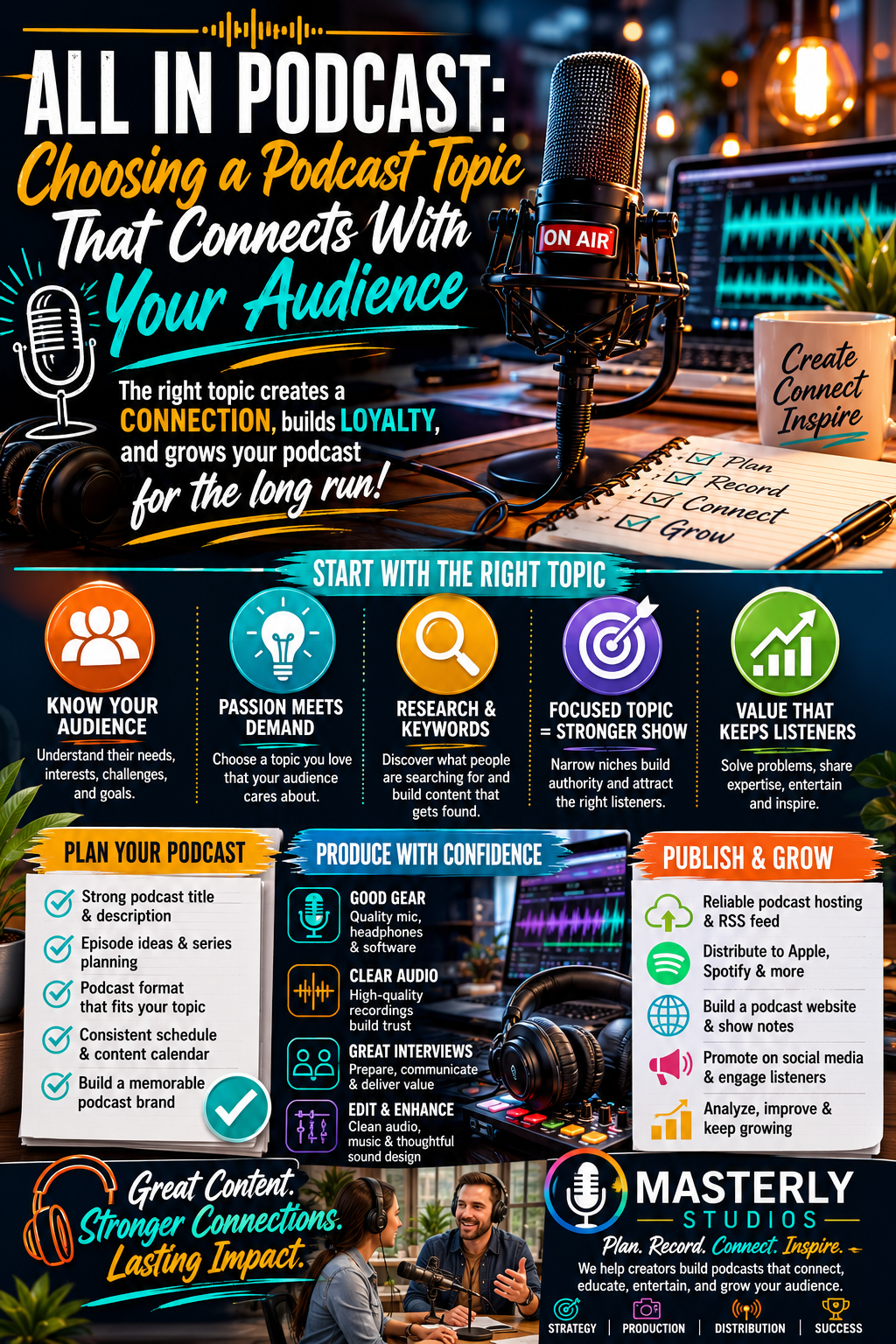
At Masterly Studios, we frequently work with creators who have excellent ideas but need help refining their direction. Choosing the right topic is often the first step toward building a podcast that grows steadily over time.
Understanding What Keeps Podcast Listeners Engaged
Many new podcasters focus heavily on attracting listeners but spend less time thinking about retention. While downloads matter, long-term growth depends on whether people return after listening to one episode.
Podcast listeners stay engaged when content consistently meets expectations. If your audience understands what your show delivers and receives that value every time, trust begins to develop.
A successful podcast topic creates familiarity while still allowing room for fresh discussions. Listeners should know what they are getting while remaining curious about what comes next.
The strongest shows create habits. People begin looking forward to the next episode because they know it will address subjects that matter to them.
Start With Your Audience Instead of Your Microphone
Many creators spend weeks researching a good podcast mic before considering who they want to serve. While audio quality is important, audience clarity should come first.
Before investing heavily in podcast equipment, ask yourself who your ideal listener is. What challenges are they facing? What questions do they ask regularly? What type of content do they already consume?
Defining a target audience helps narrow potential topics and makes future content decisions easier. It also supports stronger branding, marketing, and content planning.
When your audience becomes the center of your strategy, every podcast episode feels more focused and purposeful.
Building a Podcast Around Real Problems and Interests
A podcast topic that keeps people coming back usually addresses ongoing needs, interests, or curiosities. Listeners return because they believe future episodes will continue providing useful information or meaningful entertainment.
The most effective topics often focus on:
- Solving recurring problems
- Teaching valuable skills
- Sharing expert insights
- Exploring industry trends
- Delivering compelling stories
Whether you produce educational content, interviews, or fiction podcasts, consistency around a central theme helps establish authority and trust.
The goal is not simply to create content. The goal is to become a reliable resource.
Using Keyword Research to Shape Better Topics
Keyword research provides valuable insight into audience behavior. It helps reveal what people actively search for online and what information they struggle to find.
For podcasters, keyword research can inspire episode ideas, series themes, and long-term content strategies. It also helps improve discoverability through search engines and podcast directories.
Many creators overlook this step, yet it can significantly influence growth. By understanding search trends, you gain a clearer picture of audience interests.
A strong podcast title, podcast description, and episode title often begin with insights gathered through research.
Creating a Podcast Brand Around Your Topic
A podcast brand is much more than visual design. It represents the promise you make to listeners every time they press play.
Your podcast brand includes several elements working together:
- Podcast name
- Podcast artwork
- Podcast description
- Host name
- Tone and style
- Content focus
When these elements align with your podcast topic, audiences gain confidence in what your show offers.
Strong branding also makes your podcast easier to recognize among thousands of competing options.
Choosing a Topic With Long-Term Potential
One common mistake among new podcasters is selecting a topic that sounds exciting initially but lacks long-term depth.
Before launching your own podcast, consider whether you can realistically create multiple episodes around the subject. A topic may seem interesting for one episode but become difficult to sustain after several weeks.
Try brainstorming content ideas before recording your first episode. If you can easily generate dozens of potential discussions, interviews, and themes, your topic likely has staying power.
This exercise also helps identify opportunities for future series and special features.
Why Podcast Format Influences Audience Retention
Your podcast format affects how listeners experience your content. Some audiences enjoy solo shows where expertise is shared directly. Others prefer conversations, interviews, or storytelling.
Different podcast formats include:
- Solo shows
- Interview programs
- Panel discussions
- Educational presentations
- Fiction podcasts
- Video podcast productions
The right format should complement your topic and audience expectations.
Choosing a format that supports your content naturally increases listener engagement and retention.
Creating a Structure That Sounds Natural
Many creators worry that preparation will make their podcast sound robotic. In reality, organization often improves listener experience.
Rather than creating a fully scripted production, many successful hosts rely on a simple outline. A few bullet points can keep discussions focused without limiting spontaneity.
Useful planning elements may include:
- Guest intro
- Talking points
- Key takeaways
- Audience questions
- Closing remarks
This approach helps conversations sound natural while ensuring important information is covered.
Developing Content Beyond the First Few Episodes
The first few episodes often receive the most planning and attention. However, long-term success depends on maintaining quality after launch.
Many new podcasters focus heavily on the first episode but overlook future content planning. Building a content calendar helps prevent creative burnout.
Consider creating a general outline covering several months of content. This allows you to identify themes, guest opportunities, and audience interests before production begins.
Planning ahead also reduces stress and supports consistency.
Why Publishing Multiple Episodes Can Help Growth
Launching with multiple episodes provides several advantages. New listeners gain immediate access to more content and can better understand your style.
When you publish multiple episodes at launch, audiences spend more time engaging with your show. This can improve retention and increase subscription rates.
Having multiple episodes available also allows listeners to sample different topics and conversations.
Instead of judging your show based on one episode, they experience a broader representation of your expertise and personality.
Producing High Quality Audio Without Complexity
Many aspiring creators assume professional audio requires expensive equipment. While quality tools help, strong audio recording practices matter more.
To record high quality audio, focus on creating a quiet environment and maintaining consistent microphone placement. Even a good podcast mic can produce poor results if used improperly.
High quality audio improves listener satisfaction and strengthens credibility. People are more likely to continue listening when the experience feels professional.
Small improvements in audio quality often create a noticeable difference.
Selecting the Right Podcast Equipment
Podcast equipment choices should support your goals rather than complicate them.
Many new podcasters feel overwhelming pressure when researching gear. The market contains countless recommendations, reviews, and comparisons.
A simple setup is often enough to jump start production:
- Good podcast mic
- Headphones
- Audio recording software
- Computer
- Reliable internet connection
Starting with simple tools allows creators to focus on content instead of constantly upgrading equipment.
Enhancing Episodes With Editing and Sound Design
Editing software plays an important role in shaping a polished final product. Proper editing removes distractions and improves pacing.
Many creators also use royalty free music and sound effects to create a more professional listening experience. These elements should support the content rather than dominate it.
Thoughtful editing helps improve the flow of the whole episode. It also strengthens audience engagement by eliminating unnecessary interruptions.
The best production choices often go unnoticed because they feel seamless.
Managing Remote Interviews Successfully
Remote interviews provide opportunities to connect with guests regardless of location.
Preparation becomes especially important when recording remotely. Testing technology before you start recording helps avoid technical issues.
Reviewing episode details, preparing talking points, and confirming guest expectations can significantly improve results.
Professional preparation also creates a smoother experience for everyone involved.
How Hosting and Distribution Support Growth
A podcast hosting service serves as the foundation of your publishing strategy. It stores each audio file and distributes content through an RSS feed.
The RSS feed connects your podcast to podcast players, podcast directories, and platforms such as Apple Podcasts.
Without reliable hosting, reaching your audience becomes much more difficult.
A strong distribution strategy ensures your content remains accessible wherever listeners prefer to consume podcasts.
Expanding Reach Through a Podcast Website
A podcast website provides an online home for your content and brand.
Beyond hosting episode details and show notes, a website can support search visibility and audience engagement. It also creates opportunities to publish a blog post related to your episodes.
Many successful creators use their websites to share resources, collect email subscribers, and strengthen relationships with listeners.
A well-designed website supports both growth and credibility.
Leveraging Technology to Save Time
Modern creators have access to different tools that simplify podcast production.
A podcast generator can assist with planning, content ideas, and workflow organization. In many cases, a podcast generator maintains consistency by helping creators manage repetitive tasks.
These tools are not replacements for creativity, but they can save time and improve efficiency.
When used strategically, technology allows podcasters to focus more energy on creating meaningful content.
Exploring Revenue Opportunities
While audience growth should remain the primary focus early on, monetization opportunities may emerge over time.
Many creators eventually introduce paid subscriptions that provide exclusive content, bonus discussions, or premium resources.
These offerings work best when audiences already trust the value being delivered.
Building loyalty first often creates stronger long-term revenue opportunities.
Learning Through Consistent Practice
Podcasting is a skill that develops over time. Every podcast host improves through repetition and experience.
Mistakes during the first episode, technical challenges, and awkward moments are all part of the learning process. Growth happens through consistent effort.
Most podcasts that achieve lasting success do so because their creators continue improving with each release.
Like any creative discipline, podcasting takes practice.
Moving Forward With Confidence
Choosing the right podcast topic is not about finding a perfect idea. It is about finding a meaningful direction that aligns with your audience, expertise, and podcasting goals.
The strongest topics create opportunities for ongoing conversations, consistent value, and deeper audience relationships. They give listeners a reason to return, recommend your content, and stay engaged over time.
As your show evolves, your topic can evolve as well. What matters most is maintaining a clear purpose and commitment to serving your audience.
Every successful podcast starts with a topic worth exploring and a creator willing to keep showing up.
Using a Podcast Script to Stay Focused
A podcast script can be a valuable tool for keeping episodes organized and engaging. While some creators prefer a conversational style, having a script or structured notes helps ensure important ideas are not overlooked. A script does not need to be fully detailed from beginning to end. Many successful podcasters use a flexible framework that allows room for natural discussion while maintaining focus. This balance helps episodes feel professional, informative, and easy for listeners to follow.
Launching a New Podcast With Confidence
Creating a new podcast can feel exciting and intimidating at the same time. Many creators worry about making mistakes or not having enough experience, but every successful podcast started with a first recording. The key is to focus on delivering value to your audience rather than striving for perfection. As you continue publishing content and learning from feedback, your skills and confidence will naturally improve. Consistency and commitment often matter more than having everything figured out from the start.
Finding the Right Episode Length for Your Audience
Determining the ideal episode length depends largely on your content and audience expectations. Some listeners prefer short, focused discussions they can enjoy during a commute, while others appreciate longer conversations that explore topics in greater depth. Instead of aiming for a specific duration, focus on delivering meaningful value without unnecessary filler. A well-structured episode that respects the listener's time will often perform better than one stretched beyond what the topic requires. The best episode length is the one that keeps your audience engaged from beginning to end.
Why You Should Hit Record and Get Started
Many aspiring podcasters spend months planning but never actually hit record. Preparation is important, but real growth happens through action and experience. The sooner you begin recording, the sooner you can learn what works, improve your delivery, and connect with listeners. Every episode provides an opportunity to refine your skills and build confidence behind the microphone. Taking that first step is often the most important part of creating a successful podcast.
Contact Masterly Studios for a Free Podcast Consultation
If you are considering starting a podcast 101 journey or looking to refine an existing show, Masterly Studios can help. Our team works with clients throughout the country and nationally, helping creators, entrepreneurs, businesses, and organizations build podcasts that attract and retain listeners.
Whether you need guidance on selecting a podcast topic, developing a podcast brand, improving audio quality, choosing a podcast format, creating a video podcast, or building a long-term content strategy, we are ready to answer your questions.
Podcasting does not have to feel overwhelming. With the right planning, tools, and expertise, you can create content that builds meaningful connections and supports your goals for years to come.
Contact Masterly Studios today at (404) 726-7261 to schedule your free consultation. We would be happy to discuss your ideas, evaluate your opportunities, and help you create a podcast that keeps listeners coming back episode after episode.