Understanding Podcast Copyright: How License Music Rules Apply to Every Episode You Produce
April 6, 2026
The Moment You Add Music, You Enter a Legal Space
Creating podcasts is exciting. You choose your topic, hit record, and start building something meaningful. But the moment you add music—even a few seconds—you step into a legal environment governed by copyright law.Many podcast creators assume short clips or background tracks are harmless. The short answer is that they are not. Even one unlicensed sound clip can trigger copyright infringement claims, and in some cases, lead to serious legal action.
At Masterly Studios, we help creators understand how music licensing works so they can protect their creative work and grow their podcasts confidently.
Why Podcast Copyright Matters More Than Ever
Podcasts are no longer small hobby projects. They are powerful platforms used for storytelling, education, and even making money. Because of their commercial nature, copyright law applies to nearly every piece of content used.Music is considered intellectual property, just like books or films. This means every song, beat, or sound effect is protected by copyright protection laws. Using copyrighted material without permission can expose you to legal risk.
What Counts as Copyrighted Music in Podcasts
Any piece of music you did not create yourself is likely protected. This includes intro music, outro music, and even short background sounds. Common examples include:- Popular songs from record labels
- Tracks from a spotify playlist
- Audio pulled from apple music
- Clips from video clips or social media
Even a short section of copyrighted songs can still be considered infringing use.
The Real Risk of Copyright Infringement
One of the biggest misunderstandings among podcasters is thinking small use does not matter. In reality, copyright infringement does not depend on how long the clip is used.If you use copyrighted music without permission, you may face:
- Copyright infringement claims
- Removal of your podcast episodes
- Loss of monetization opportunities
- Potential legal action from rights holders
Even one mistake can impact your entire podcast and your ability to distribute it as a digital download.
Music Licensing Explained in Simple Terms
Music licensing is the process of getting permission to use a piece of music. This ensures that the copyright holder is fairly compensated for their work.There are different types of licenses involved in podcast music license agreements, including performance rights and mechanical rights. Each type covers a different way music is used in podcasts.
Understanding music licensing is essential if you want to avoid copyright infringement and build a sustainable podcast.
Types of Licenses You May Need
When you use music for your podcast, you may need multiple licenses depending on how the song is used.These can include:
- Performance rights for streaming or broadcasting
- Mechanical rights for reproduction and digital download
- Sync rights if pairing music with video clips
Each license ensures that the copyright owner receives proper compensation.
The Difference Between Licensed and Royalty Free Music
Many podcasters turn to royalty free music as a safer option. However, even royalty free music requires a license. Royalty free does not mean free music. It simply means you pay once to gain access to use the track under certain terms. Always review the fine print to understand what is allowed.Choosing the right music can help you avoid infringement while still creating a professional sound.
Understanding Fair Use and Its Limits
Fair use is one of the most misunderstood concepts in copyright law. It allows limited use of copyrighted content under specific conditions. However, most podcasts do not qualify for fair use. The four factor test looks at:- Purpose of the use
- Nature of the copyrighted work
- Amount used
- Impact on the potential market
Even in cases like news reporting or nonprofit educational purposes, fair use is not guaranteed.
Why Fair Use Rarely Applies to Podcasts
Most podcasts are considered commercial use, even if they are not making money yet. This means they do not qualify for fair use in most situations.For example, using a song in a true crime podcast may seem harmless, but it can still violate copyright law. The laws apply regardless of intent.
Relying on fair use without proper legal guidance is risky.
Public Domain Music as an Alternative
Public domain music is one of the safest options available. This includes works that are no longer protected by copyright. However, it is worth noting that not all old music is automatically public domain. Some recordings are still protected even if the composition is not.Doing proper due diligence is essential before using public domain music.
Working With Independent Artists
Another option is to collaborate with independent artists. Many creators are open to licensing their music for podcasts. This approach allows you to obtain permission directly and often at a lower cost. It also supports artists and helps them get fairly compensated.Always make sure the agreement clearly outlines the rights you have to use the music.
The Role of Record Labels and Music Publishers
Record labels and music publishers control the rights to most popular music. This makes licensing more complex and often more expensive.If you want to use a well-known song, you will likely need to negotiate with multiple rights holders. This process can be time-consuming and costly.
For most podcasters, this is not the best bet.
Choosing the Right Music for Your Podcast
Selecting the right music is about more than just sound. It is about legal compliance and protecting your podcast. Consider these factors:- Does the license allow commercial purposes
- Are you allowed to use it in all podcast episodes
- Can you distribute it across platforms
Paying attention to these details can prevent costly mistakes.
Common Pitfalls Podcasters Should Avoid
Many podcasters make similar mistakes when it comes to music licensing.Some of the most common pitfalls include:
- Assuming short clips are safe
- Using free music without checking the license
- Ignoring permission requirements
Avoiding these issues can save you from future legal trouble.
How Copyright Law Applies to Every Episode
Every episode you produce is subject to copyright law. This includes intro music, background tracks, and even sound effects. The laws apply regardless of the size of your audience. Whether you have ten listeners or thousands, the same rules apply. Consistency in following proper licensing practices is key.The Importance of Obtaining Permission
Obtaining permission is one of the most important steps in using music legally. Without it, you risk violating the copyright act. Always ensure you have permission to use any copyrighted content. This protects you from copyright infringement claims and legal action.How Music Licensing Supports Your Growth
Proper music licensing is not just about avoiding risk. It also supports your growth as a creator. When you use licensed music, you build credibility and professionalism. This can help you attract sponsors and grow your audience.It also ensures that artists are fairly compensated for their work.
What Happens If You Ignore Licensing Rules
Ignoring music licensing rules can have serious consequences. Your podcast may be removed from platforms or flagged for violations.In some cases, repeated violations can lead to permanent account suspension. This can erase years of hard work.
Taking licensing seriously is essential for long-term success.
Protecting Your Creative Work and Brand
Your podcast is your creative work. Protecting it means understanding how copyright laws affect every aspect of production. By following proper licensing practices, you protect your brand and your reputation. This allows you to focus on creating content without fear.Build Your Podcast the Right Way From the Start
Starting with the right foundation makes all the difference. By understanding music licensing early, you avoid costly mistakes later. Most podcasters learn these lessons the hard way. Taking a proactive approach sets you apart and positions your podcast for success.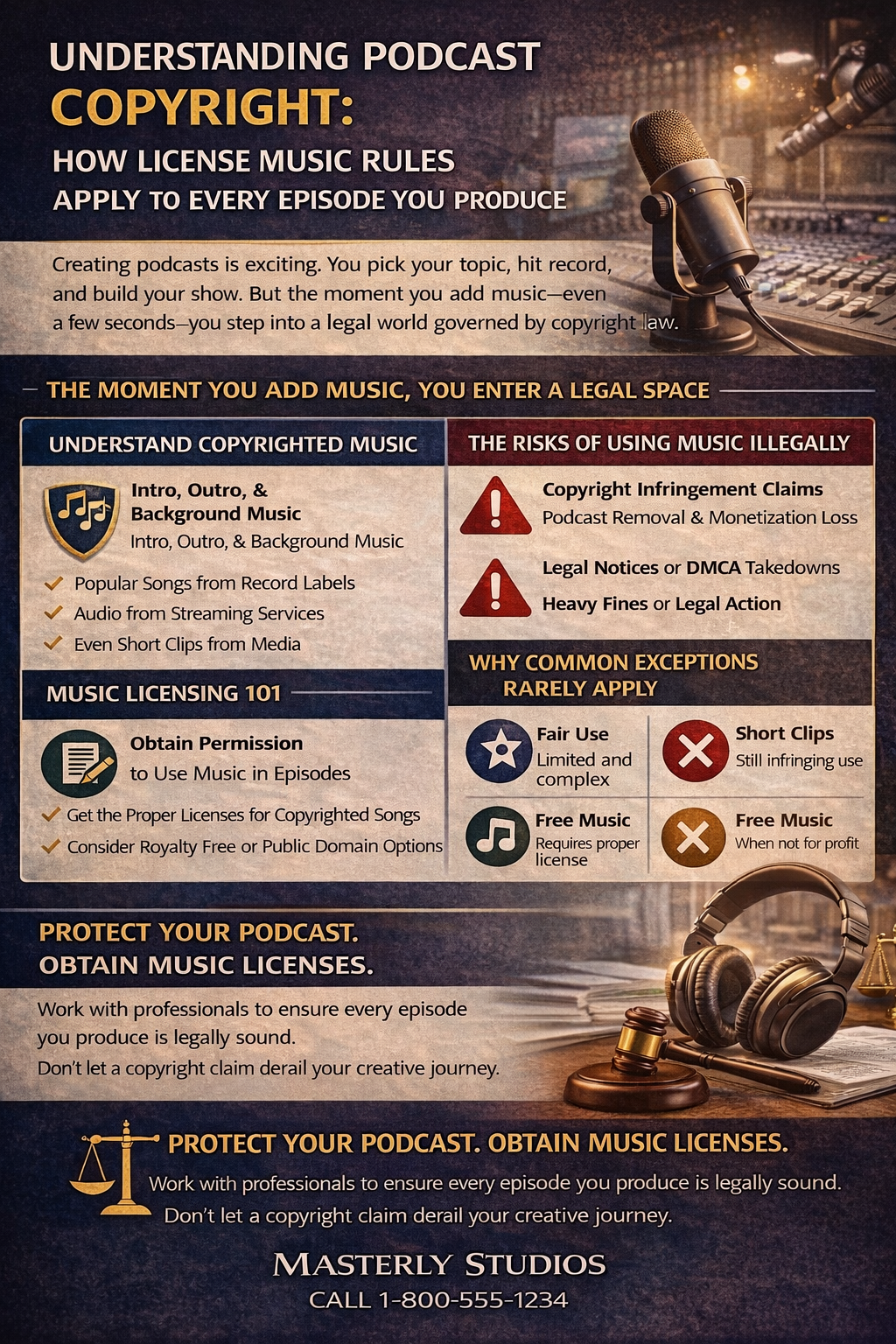
Playing Music the Right Way: Legal Considerations Every Podcaster Should Know
When you play music in your podcast, you are using content that is protected under copyright law, even if it is only for a few seconds. Many podcasters search for the perfect song to match their brand, but selecting the right track also means understanding the legal responsibilities that come with it. The copyright office recognizes music as protected intellectual property, which means permission is required before use. These rules also apply across other countries, so distribution on global platforms can increase your exposure to risk. In many cases, such use without proper licensing may be considered unauthorized, especially if the content creates derivative works or is altered in any way.Research and Smart Choices Lead to Cost Effective Podcast Production
Navigating music lic ensing requires careful attention and research depending on how you plan to use the track in your podcast. Whether your show is educational, entertainment-based, or commercially driven, understanding licensing requirements helps you make informed decisions. Taking the time to evaluate your options can lead to more cost effective solutions, such as choosing properly licensed or royalty free tracks instead of risking copyright infringement. Making smart decisions early not only protects your podcast but also allows you to focus on growth without legal distractions.Speak With Masterly Studios About License Music for Your Podcast
If you are creating podcasts and want to ensure you are using music the right way, we are here to help. At Masterly Studios, we work with clients across the country to guide them through music licensing and podcast production.Whether you are launching your first episode or growing an established show, we can help you choose the right music, understand your license requirements, and avoid copyright infringement. Our goal is to make sure your podcast is protected, professional, and ready to scale.
Contact us at (888) 209-4055 to book a free consultation. Let us help you build your podcast with confidence and clarity while staying fully compliant with music licensing rules.
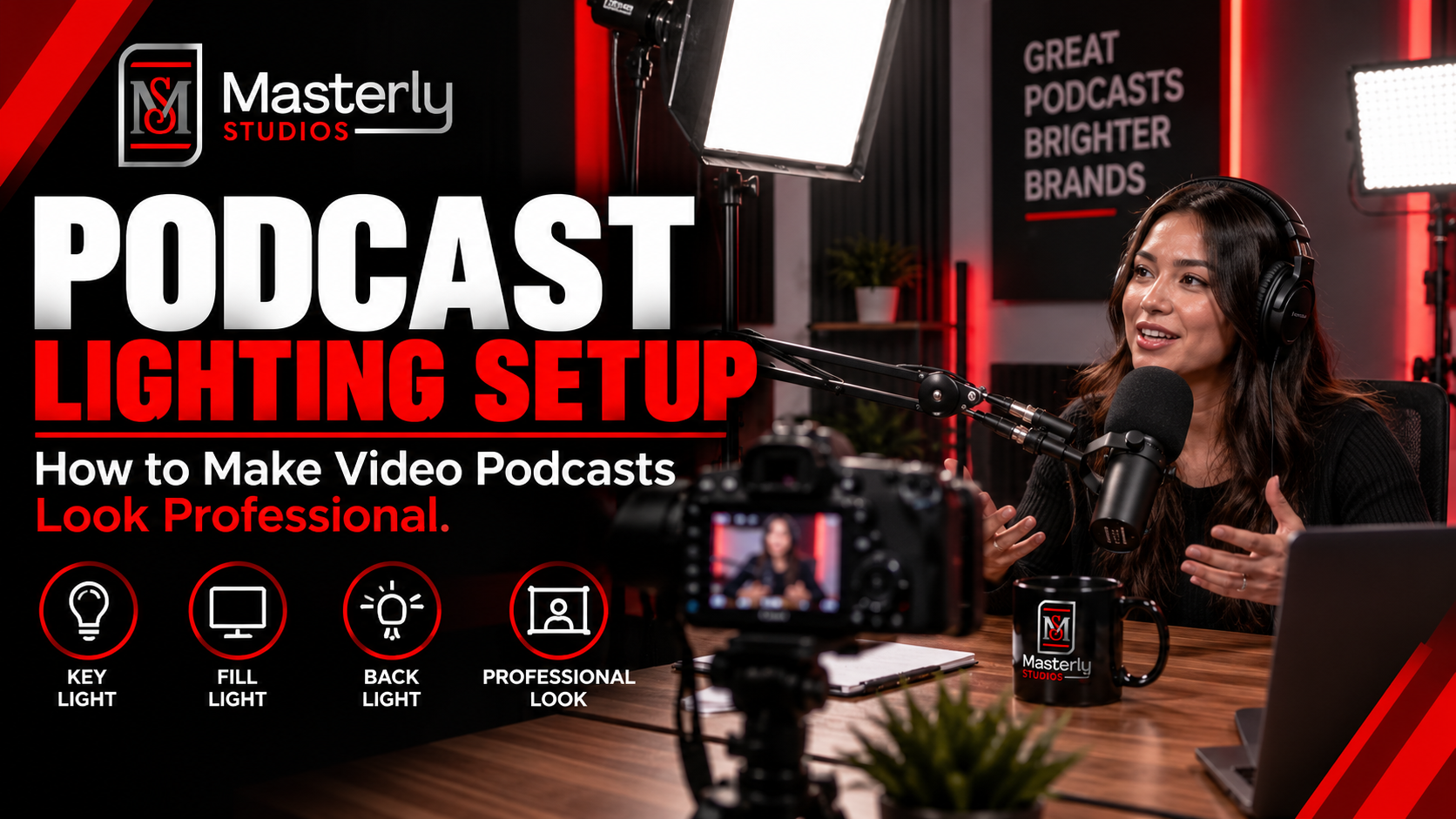
Need a podcast lighting setup? Masterly Studios provides professional podcast and camera lighting in a prepared studio for consistent, polished video production.
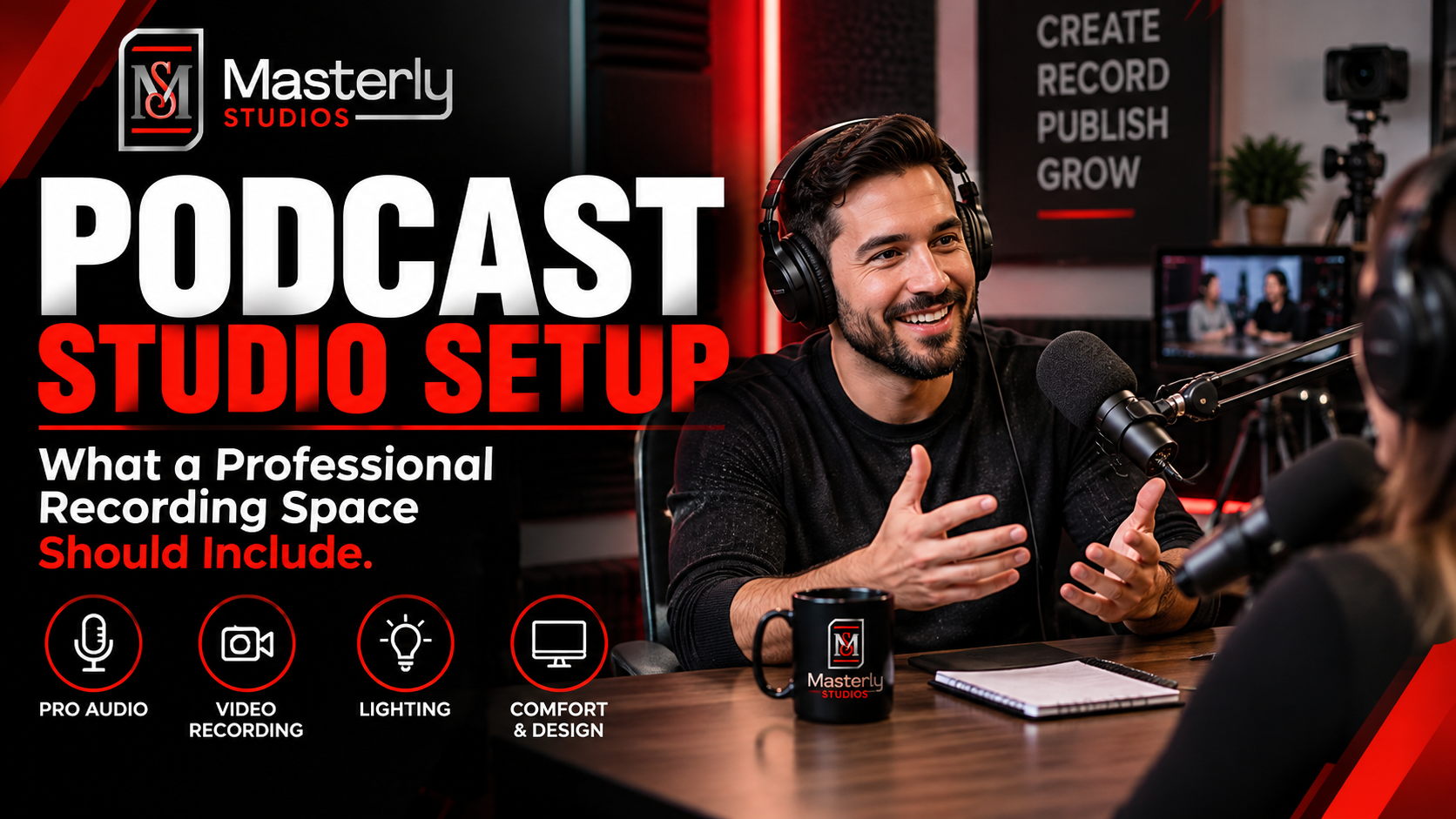
Need a podcast studio setup? Masterly Studios offers a professional recording space with quality equipment, lighting, acoustics, and video support for creators.
Book a training venue in Atlanta for corporate workshops, employee training, and learning events with flexible layouts, A/V support, and professional amenities.
Learn how to record a video podcast in Atlanta with a professional studio setup, clear audio, polished lighting, guest support, and a smooth recording workflow.

Book a corporate Christmas party venue in Atlanta for year-end events with flexible space, A/V support, catering, branding, and more for your team and festive fun.
Book a creative studio rental for photography, video, branded content, and marketing campaigns with flexible production space at Masterly Studios for every project.
Book a professional seminar venue for training, presentations, and business events with flexible seating, A/V, check-in, parking, content support, and event setup.

Use an event venue checklist to evaluate capacity, layout, parking, load-in, A/V, Wi-Fi, accessibility, catering, branding, production, and overtime needs.

Plan corporate events with professional support for venues, A/V, catering, speakers, content capture, access, and production at Masterly Studios in Atlanta.
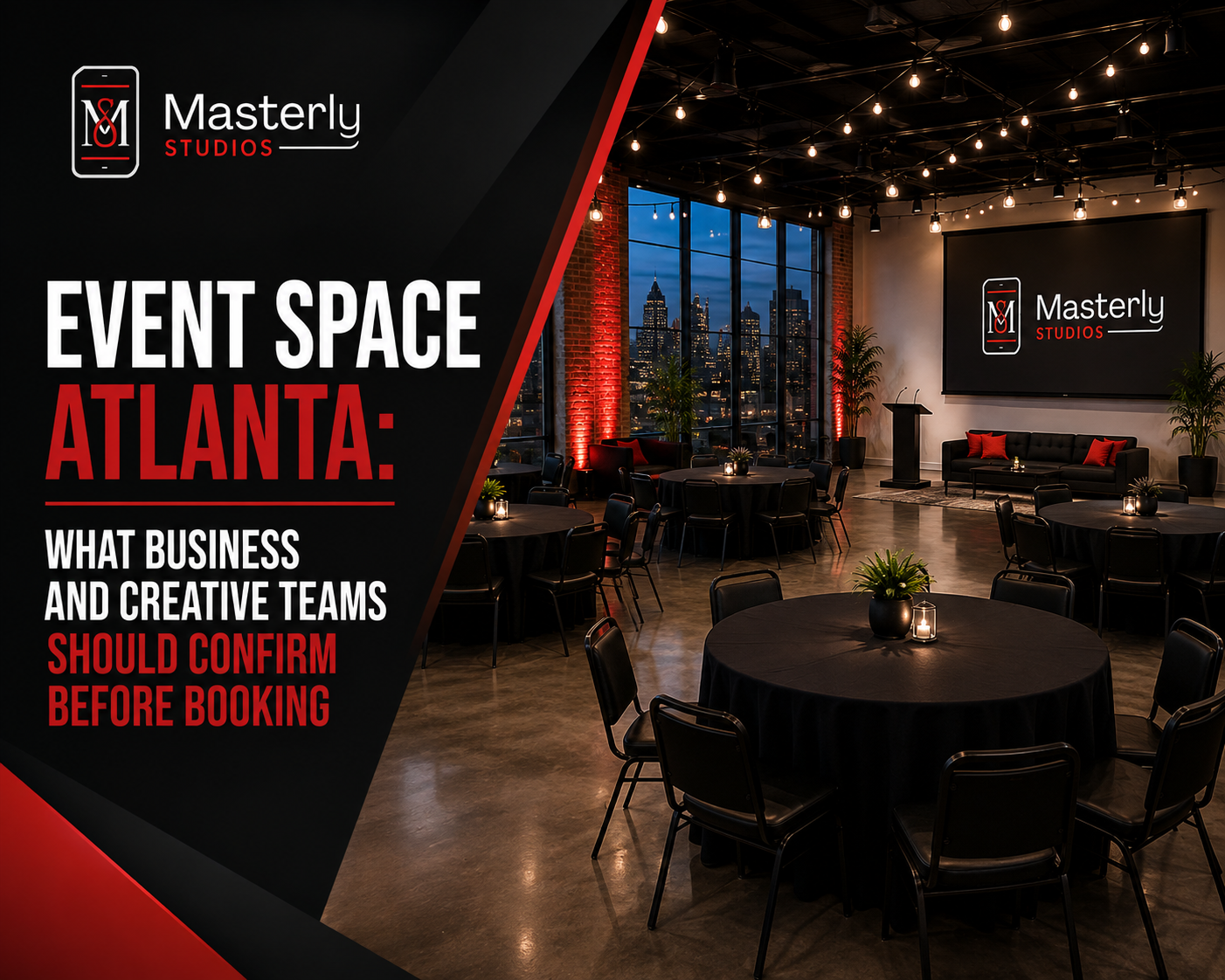
Find the right event space in Atlanta by confirming capacity, AV, parking, catering, layouts, accessibility, and production support before booking. Masterly Studios