3 Point Lighting: How to Light Interviews, Podcasts, and Talking Head Video
By Drew Rhoden | Masterly Studios
3 point lighting is a professional video lighting method that uses three light sources: a key light, a fill light, and a back light. Together, they illuminate the subject, soften unwanted shadows, and create separation from the background. Masterly Studios in Atlanta helps creators and businesses achieve consistent lighting for interviews, podcasts, and branded video content.
A great conversation can lose its impact when the lighting makes the speaker look tired, creates distracting shadows, or changes from one camera angle to another.
For businesses recording executive interviews, educational videos, and marketing content, lighting affects how viewers see both the speaker and the brand.
A professional recording environment should create clear, natural-looking images without requiring the person on camera to think about equipment.
Masterly Studios provides professional video podcast production, studio recording, and video production services in Atlanta, helping clients create polished content with lighting that supports their message.
What Is 3 Point Lighting?
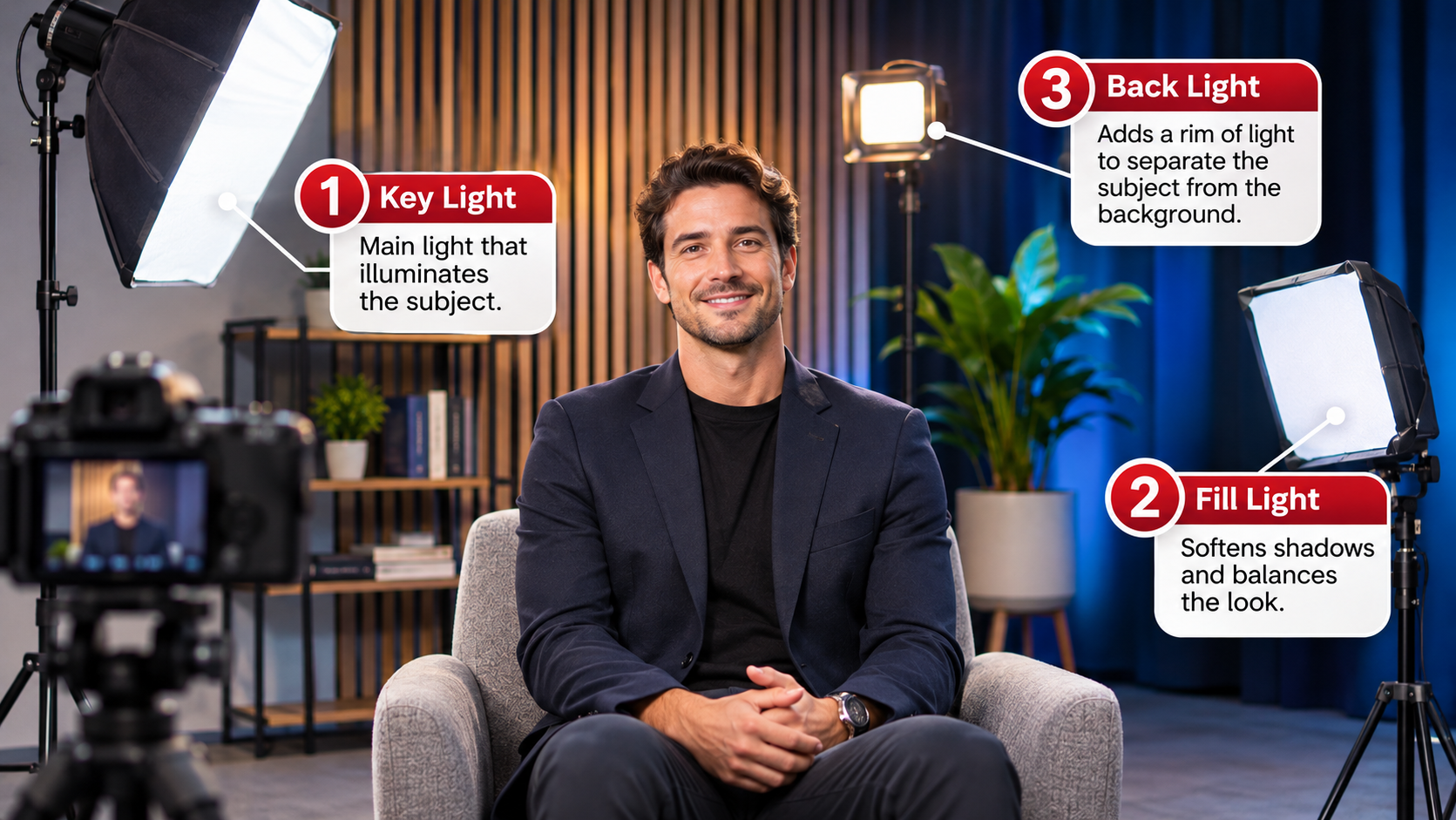
Three point lighting is a common video production technique that uses three lighting positions to shape how a subject appears on camera. The key light provides the main illumination, the fill light controls shadows, and the back light separates the person from the background. Together, these lights create depth, balance, and visual consistency.
The Key Light: Placement and Angle
The key light is the main source of illumination in a three point lighting setup.
It has the greatest influence on how a subject's face appears on camera.
For professional interviews and talking head videos, the key light helps establish facial shape, visibility, and the overall mood of the scene.
Why Key Light Position Matters
To start, place the key light slightly above eye level and approximately 30 to 45 degrees to one side of the subject.
This placement creates gentle shadows that give the face a natural sense of depth.
However, the ideal angle depends on the person's features, camera position, background, and desired visual style, and small changes can adjust the tone of the scene.
For example, a corporate interview may benefit from balanced, flattering illumination, while a documentary interview may use stronger shadows to create a more dramatic appearance.
Professional lighting should support the message and the person delivering it.
Soft Lighting for Professional Interviews
The size and quality of the light source affect how shadows appear.
A large, diffused light can create softer transitions between bright and dark areas.
This is often useful for interviews, business presentations, and educational videos where clear facial expressions are important.
Harsh lighting may emphasize skin texture or produce strong shadows under the eyes and nose.
Masterly Studios considers lighting direction, camera framing, and the subject's appearance when planning professional video production.
Keeping the Key Light Consistent
Consistency becomes especially important when businesses record several videos for the same campaign.
If the key light changes significantly between recordings, the finished videos may look unrelated.
This can become noticeable when clips appear together on a company website, social media page, or educational platform.
A controlled lighting arrangement helps support visual continuity across recording sessions.
The Fill Light and Back Light: Shaping Shadows and Separation
The second and third lighting positions support the key light.
Together, they help control contrast and give the subject a more balanced appearance within the scene.
What the Fill Light Does
The fill light reduces the shadows created by the main light.
It is usually positioned on the opposite side of the subject from the key light.
The fill light should be less bright and lower in intensity than the key light.
In many professional setups, it is intentionally softer, with the fill set more like a flood to soften shadows on the other side of the face.
Too much fill can make the subject look flat, while too little may leave distracting shadows. High-key lighting uses a low fill-to-key ratio, while low-key lighting uses a high key-to-fill ratio.
For business interviews, the goal is often a comfortable balance, providing enough detail in expressions without flattening the face.
Using the Back Light for Visual Depth
The backlight, sometimes called a rim light or hair light, helps separate the subject from the background.
It is generally positioned behind the subject or slightly above them, outside the camera's view.
When adjusted appropriately, it creates a subtle highlight along the hair or shoulders and can form a faint glowing outline.
This can be especially valuable when the subject wears dark clothing against a darker background.
Without enough separation, the person may blend into the surrounding environment.
A properly controlled back light adds depth without becoming visually distracting, which is its main purpose.
Balancing All Three Lights
The most effective three point lighting arrangements use the three lights as a coordinated system.
The key light establishes the main illumination.
The fill light manages shadows.
The back light creates separation.
Their brightness, direction, and color should complement one another.
For example, mixing different light colors without proper control may cause uneven skin tones.
Masterly Studios provides professional lighting environments for video production, helping clients maintain a consistent appearance across recordings.
Once all three lights are set, small changes in position and intensity help refine the mood.
How 3 Point Lighting Supports Different Video Formats
Although the basic lighting method remains the same, each video format creates different production requirements.
A single-person interview is not identical to a two-person podcast or a corporate video presentation.
Professional lighting must account for these differences.
Corporate Interviews and Executive Videos
Executive interviews often require a clean, balanced appearance that reflects the company's professional identity.
The lighting should help viewers focus on the speaker's face and message.
Backgrounds, clothing, camera angles, and lighting all contribute to the final presentation.
For companies producing leadership messages or branded interviews, repeatable lighting can also help maintain consistency across multiple speakers.
Video Podcasts With Multiple Participants
Video podcasts may involve two or more people seated at different positions.
A lighting arrangement designed for one person may leave another participant too dark or unevenly lit.
Multiple cameras can also introduce different views of the same lighting setup.
The production team must consider how each person appears from the available camera angles.
Masterly Studios offers professional video podcast recording and production services designed for businesses and creators.
For additional information about podcast-specific lighting requirements, read Podcast Lighting Setup: How to Make Video Podcasts Look Professional.
Talking Head Videos and Marketing Content
Talking head videos commonly feature one person speaking directly to the camera.
Businesses use this format for educational content, social media announcements, website introductions, and professional presentations.
Consistent lighting helps viewers recognize the speaker and keeps the focus on the message.
For companies recording several videos in one session, a prepared lighting environment can also reduce the need for repeated adjustments.
Common 3 Point Lighting Mistakes and Quick Fixes
Even when three lights are available, the resulting video may not look balanced.
Several common lighting problems can affect professional recordings.
Shadows That Are Too Harsh
A small or poorly positioned key light may produce strong shadows across the face.
Diffusion, light position, and the size of the light source can affect shadow softness.
Professional lighting adjustments can create a more natural appearance without removing all facial depth.
A Face That Looks Flat
When the fill light is too bright, it can remove the shadows that give the face its shape.
The result may look evenly illuminated but lack visual dimension.
A balanced relationship between the key and fill lights helps preserve natural contrast, and you can play with that balance to keep natural dimension intact.
An Overly Bright Back Light
A back light that is too strong may create distracting highlights around the head or shoulders.
It may also shine into the camera lens and reduce image contrast.
Careful positioning and brightness control help create subtle separation.
Unnatural Skin Tones
Different lighting colors can cause skin tones to appear too warm, too cool, or inconsistent.
Camera settings and the surrounding environment also affect color.
Professional video production considers lighting color and camera settings together to maintain a natural appearance.
Lighting That Changes Between Takes
Natural daylight can shift during a recording session.
This may cause visible differences between takes, particularly when artificial lighting is mixed with window light.
A controlled studio environment reduces dependence on changing outdoor conditions.
These issues show why professional lighting involves more than simply placing lights around a camera.
When to Use a Professional Studio or Studio Setup Service
Some creators begin recording videos in a home office or spare room.
However, reliable professional lighting requires suitable space, appropriate equipment, and consistent camera positioning.
For businesses that produce content regularly, managing these details can become time-consuming.
When Recording Quality Must Stay Consistent
A company producing recurring educational videos or executive interviews may need a consistent visual appearance.
Lighting changes, background differences, and camera adjustments can make a video series look disconnected.
A professionally prepared studio provides a more controlled recording environment.
Masterly Studios helps clients create video content with coordinated lighting, camera placement, and production support.
When Multiple Cameras or Speakers Are Involved
Multi-camera interviews and podcasts create additional lighting considerations.
Three point lighting often needs adjusting when shooting indoors with limited space or in other changing recording environments.
A setup that works for one camera angle may produce unwanted shadows or reflections from another.
When several people appear on camera, each participant needs suitable illumination.
Professional production planning helps balance these requirements while maintaining a consistent overall scene.
Learn more about Atlanta Video Podcast and Video Production Services.
When Live Video Requires Reliable Lighting
Livestreams and webinars introduce different challenges because problems may be visible to viewers immediately.
Speakers may move, camera views may change, and presentations may require adjustments during the broadcast.
A controlled studio environment can help reduce distracting lighting changes.
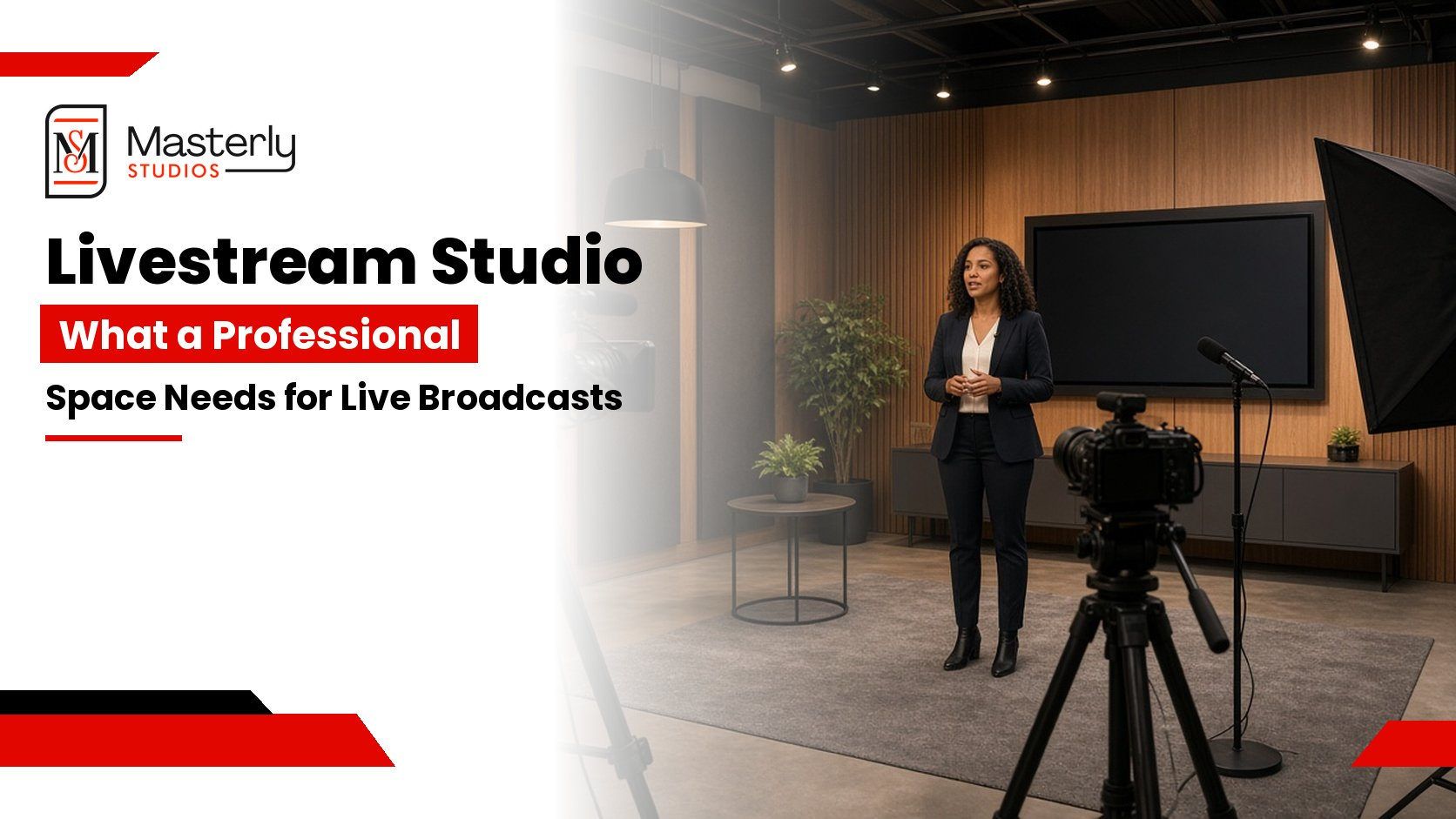
For businesses planning live presentations, explore Livestream Studio: What a Professional Space Needs for Live Broadcasts.
Why Professional Lighting Matters for Your Brand
Lighting influences how professional your content appears.
A well-lit interview can help the audience focus on the speaker's expressions and message.
A poorly lit video may distract audiences, even when the information is valuable.
For businesses, professional video often becomes part of a larger communication strategy.
The same footage may appear on websites, social media channels, presentations, and marketing campaigns.
Consistent lighting helps these materials feel connected and supports a recognizable brand image, bringing a brand's visual story to life for the audience.
How Masterly Studios Helps With Professional Video Lighting
Masterly Studios provides professional video recording environments and production services in Atlanta, supporting lighting for video, film, and photography projects when appropriate.
Clients can discuss the format of their project, the number of speakers, camera requirements, and desired visual appearance.
Depending on the project scope, professional lighting techniques may be coordinated with camera angles, backgrounds, audio equipment, and the overall recording arrangement, with tools such as reflectors used when extra fill or control is needed.
This allows business owners, executives, and creators to concentrate on presenting their message instead of troubleshooting the technical setup.
Whether the project involves interviews, video podcasts, or branded content, Masterly Studios offers production options designed to support professional video creation.
Frequently Asked Questions About 3 Point Lighting
What is a key light?
A key light is the main light source used to illuminate a person in video production. It establishes the primary lighting direction and influences facial shadows, contrast, and the overall tone of the image. In a three point lighting setup, the fill and back lights support the key light, so once you understand it, the rest of the setup is easier to build.
Can you do 3 point lighting with two lights?
Yes. A two-light arrangement can create a similar visual effect when one light serves as the key and the second provides fill or separation. A reflector can fill in shadows by bouncing existing light, or a suitable existing light may perform the remaining function. However, the results depend on the room, subject, and desired appearance, and this approach is common in still photography as well as video.
How far should the key light be from the subject?
There is no universal distance. The ideal position depends on the light's size, brightness, diffusion, camera framing, and desired shadow softness. Larger diffused lights are often positioned relatively close to the subject for soft illumination, while other setups require different distances.
Talk With Masterly Studios About Your Video Lighting Setup
Professional video lighting should make your message easier to watch and your brand easier to recognize.
Whether you are producing an executive interview, recording a video podcast, or creating marketing content, the right lighting environment helps establish a consistent professional appearance.
Masterly Studios in Atlanta provides studio recording and video production services for creators, businesses, and marketing teams.
Rather than managing lighting, cameras, and recording conditions on your own, you can discuss your production needs with a team that works with professional video environments.
Call (404) 726-7261 to discuss your upcoming project.