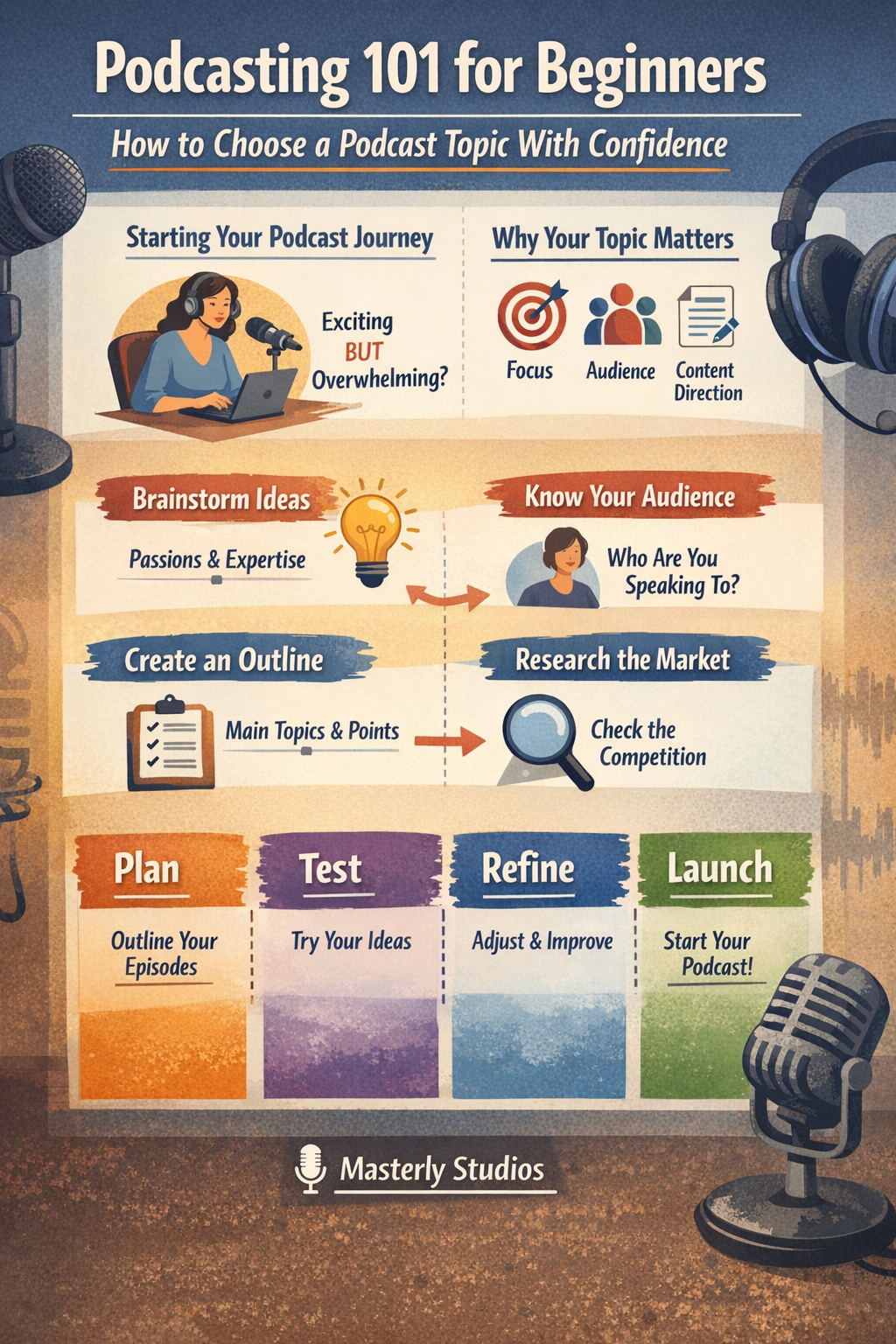
Podcasting 101 for Beginners: How to Choose a Podcast Topic With Confidence
April 1, 2026
Starting some
thing new can feel exciting and overwhelming at the same time. Many people dream of launching their own podcasts, but they often get stuck at the very beginning—choosing the right podcast topic. It may seem like a small decision, but it shapes your entire direction, from your podcast name to your podcast script and even your audience. If you’ve been unsure where to begin, you’re not alone.
At Masterly Studios, we work with creators across the country who want to turn ideas into professional, engaging podcasts. Whether you’re planning a solo show, working with a co host, or building something bigger with guest interviews, choosing your direction early makes everything easier. This guide will walk you through the process in a clear, structured way so you can move forward with confidence.
Many beginners try to cover too much at once. This often leads to unfocused podcast episodes that struggle to keep listeners engaged. A clear direction helps you build a structured outline, define your talking points, and create consistent content. When your topic is strong, everything else—from your intro music to your outro music—feels more intentional.
A helpful approach is to create a basic outline of ideas. This gives you a bird's eye view of potential directions and helps you narrow down your focus. Ask yourself what kind of supporting data or insights you can bring into your episode.
Your topic should allow for multiple podcast episodes, not just one or two. This ensures you can build momentum and continue producing content without running out of ideas.
Think about what your audience wants to learn, hear, or experience. Are they looking for education, entertainment, or a mix of both? Your podcast outline should reflect these expectations.
When you build your script around your audience, your content feels more like a natural conversation rather than a forced presentation. This is especially important if you want your delivery to feel natural sounding and relatable.
Your structure might include:
This approach ensures your script ensures consistency across your podcast episodes. A structured outline also helps y ou maintain focus, especially when recording longer episodes.
Using a detailed outline helps you avoid rambling and keeps your listeners engaged throughout the whole episode.
Avoid relying entirely on a word for word script. Instead, focus on creating talking points that guide your discussion. This allows for off script comments and more authentic delivery.
A well-written script should:
This balance helps your content feel both professional and engaging.
A typical script template includes:
Using a script template also saves time and helps ensure you don’t miss important elements.
Each format uses a script differently, but all rely on clear organization and purposeful storytelling.
This approach helps you build confidence while creating content that connects with your audience.
During recording, focus on maintaining a conversational tone. Even if you’re using a full script, try to deliver it in a way that feels natural.
In post production, you can enhance your episode with:
These elements elevate your production an d create a polished final product.
For interviews, prepare:
Using the guest name and host name consistently helps maintain clarity and professionalism throughout the episode.
These techniques help build loyalty and keep your audience c oming back.
A strong brand makes your podcasts mo re recognizable and easier to grow.
A well-prepared script ensures that your content stays focused and professional. It also helps you avoid unnecessary edits during post production.
Even experienced creators un derstand that preparation is what separates average content from the best podcast episodes.
At Masterly Studios, we work with creators across the country who want to turn ideas into professional, engaging podcasts. Whether you’re planning a solo show, working with a co host, or building something bigger with guest interviews, choosing your direction early makes everything easier. This guide will walk you through the process in a clear, structured way so you can move forward with confidence.
Why Your Podcast Topic Matters More Than You Think
The foundation o f all successful podcasts starts with a strong and focused idea. Your episode topic influences your tone, your audience, and even how your podcast script is written. Without clarity, even the best podcast recording tools and editing software won’t fix a weak concept.Many beginners try to cover too much at once. This often leads to unfocused podcast episodes that struggle to keep listeners engaged. A clear direction helps you build a structured outline, define your talking points, and create consistent content. When your topic is strong, everything else—from your intro music to your outro music—feels more intentional.
Finding the Right Podcast Topic for You
Choosing a podcast topic doesn’t have to feel like a daunting task. The key is to align your interests with what your audience wants to hear. Start by thinking about areas where you can speak naturally and provide value.A helpful approach is to create a basic outline of ideas. This gives you a bird's eye view of potential directions and helps you narrow down your focus. Ask yourself what kind of supporting data or insights you can bring into your episode.
Your topic should allow for multiple podcast episodes, not just one or two. This ensures you can build momentum and continue producing content without running out of ideas.
Understanding Your Audience Before You Start Writing
Before you start writing, it’s important to understand who your listeners are. Most podcasts succeed because they speak directly to a specific audience rather than trying to reach everyone.Think about what your audience wants to learn, hear, or experience. Are they looking for education, entertainment, or a mix of both? Your podcast outline should reflect these expectations.
When you build your script around your audience, your content feels more like a natural conversation rather than a forced presentation. This is especially important if you want your delivery to feel natural sounding and relatable.
How to Structure Your Podcast from the Beginning
Every successf ul episode starts with a clear structure. A simple outline helps you stay organized while still allowing room for flexibility. Many creators use a podcast script template to guide their format.Your structure might include:
- Introduction with intro music
- Main discussion or talking points
- Sponsor message placement
- Closing summary with outro music
This approach ensures your script ensures consistency across your podcast episodes. A structured outline also helps y ou maintain focus, especially when recording longer episodes.
Creating a Podcast Outline That Works
A strong podcast outline is one of the most valuable tools you can use. It acts as a roadmap for your episode and helps you organize your key points clearly. Your outline should include:- The main episode topic
- A list of supporting points
- Any supporting data or examples
- Planned transitions and podcast segments
Using a detailed outline helps you avoid rambling and keeps your listeners engaged throughout the whole episode.
Writing a Podcast Script That Sounds Natural
One of the bigge st challenges for beginners is learning how to write a podcast script that doesn’t sound robotic. A good podcast script should feel conversational and easy to follow.Avoid relying entirely on a word for word script. Instead, focus on creating talking points that guide your discussion. This allows for off script comments and more authentic delivery.
A well-written script should:
- Sound like a conversational tone
- Include clear supporting points
- Flow naturally from one section to the next
This balance helps your content feel both professional and engaging.
Using a Podcast Script Template to Stay Organized
A podcast script template can simplify your workflow and help you stay consistent. Whether you’re creating a solo show or working with a co host, templates make it easier to plan each episode.A typical script template includes:
- Opening with host name introduction
- Guest intro or guest introduction if applicable
- Main discussion and talking points
- Sponsor message sections
- Closing with closing jingle and outro music
Using a script template also saves time and helps ensure you don’t miss important elements.
Podcast Script Examples and How to Learn From Them
Reviewing a podcast script example can help you understand how to structure your own content. It shows how supporting data, key points, and transitions come together in a real-world format. Look at different styles, including:- Interview-based podcasts
- Story-driven narrative podcasts
- Scripted formats like audio dramas
Each format uses a script differently, but all rely on clear organization and purposeful storytelling.
Planning Your First Episode With Confidence
Your fir st episode sets the tone for everything that follows. Start with a simple outline and build from there. Focus on delivering value rather than trying to be perfect. Include:- A clear introduction to your podcast name
- A breakdown of your episode topic
- A few strong supporting points
- A call to action for your next episode
This approach helps you build confidence while creating content that connects with your audience.
Recording and Production Essentials
Once yo ur script is ready, it’s time to record. Using quality podcast recording tools makes a noticeable difference in your sound.During recording, focus on maintaining a conversational tone. Even if you’re using a full script, try to deliver it in a way that feels natural.
In post production, you can enhance your episode with:
- Sound effects
- Background i ntro music
- Professional outro music
These elements elevate your production an d create a polished final product.
Working With a Co Host or Guests
If you r podcasts include a co host or guest interviews, preparation becomes even more important. Your podcast outline should include clear talking points and planned transitions.For interviews, prepare:
- Interview questions
- Follow up questions
- A structured guest introduction
Using the guest name and host name consistently helps maintain clarity and professionalism throughout the episode.
Keeping Listeners Engaged Across Episodes
Consist ency is key when building an audience. Each episode should connect to the next while still standing on its own. Use strategies like:- Referencing your next episode
- Highlighting key takeaways
- Encouraging listeners to return next week
These techniques help build loyalty and keep your audience c oming back.
Building Your Podcast Brand
Your brand goes b eyond your content. It includes your podcast name, your tone, and your overall presentation. Consider creating a podcast website where listeners can find:- Show notes
- Episode summaries
- Additional resources
A strong brand makes your podcasts mo re recognizable and easier to grow.
Why Planning Saves Time and Improves Quality
Taking the tim e to plan your podcast outline and script upfront can make a big difference. It reduces mistakes, improves flow, and ensures your message is clear.A well-prepared script ensures that your content stays focused and professional. It also helps you avoid unnecessary edits during post production.
Even experienced creators un derstand that preparation is what separates average content from the best podcast episodes.
Taking the First Step Toward Your Podcast
Starting a new podcast doesn’t have to be overwhelming. With the right structure, tools, and guidance, you can move forward with confidence.Focus on building a strong foundation with your podcast outline, refining your script, and delivering value in every episode. Over time, your skills will grow, and your content will improve.
Building an Episode Script That Feels Natural and Engaging
Creating a stro ng episode script is one of the most important steps in producing high-quality podcasts. Many beginners rely on a podcast script generator to get started, but it’s important to refine that output into your own podcast script so it reflects your voice and style. A good script should include clear structure, but it should still allow for flexibility and personality. Using bullet points instead of a rigid format can help you stay on track while keeping your delivery natural. Start with a few bullet points that highlight your relevant key points, then expand them into your own script so you can script naturally without sounding rehearsed. This approach helps cre ate a balance between preparation and authenticity, which is what most audiences expect.Making Today’s Episode Stand Out on Platforms Like Apple Podcasts
When pla nning today's episode, it’s important to think about how your content will perform on platforms like Apple Podcasts. Successful creators understand that each episode needs to include the essential elements that keep listeners engaged from start to finish. Whether you’re hosting solo or working with voice actors, your delivery should feel like free flowing conversations rather than a scripted performance. This is where keyword research becomes valuable—it helps you align your content with what audiences are already searching for. A seasoned podcaster knows that strong planning, combined with natural delivery, creates an experience that feels both professional and relatable. By focusing on clarity, structure, and connection, your episode has a much better chance of standing out in a crowded space.Let Masterly Studios Help You Launch With Confidence
If you’re ready to start your podcast but want expert guidance, Masterly Studios is here to help. We work with clients nationwide to develop, produce, and refine high-quality podcasts that stand out.From developing your podcast script template to recording and production, our team provides the support you need at every stage. Whether you’re building your first episode or improving an existing show, we can help you create content that connects and performs.
Call us today at (888) 209-4055 to book a free consultation. Let’s bring your ideas to life and build a podcast you’re proud of.
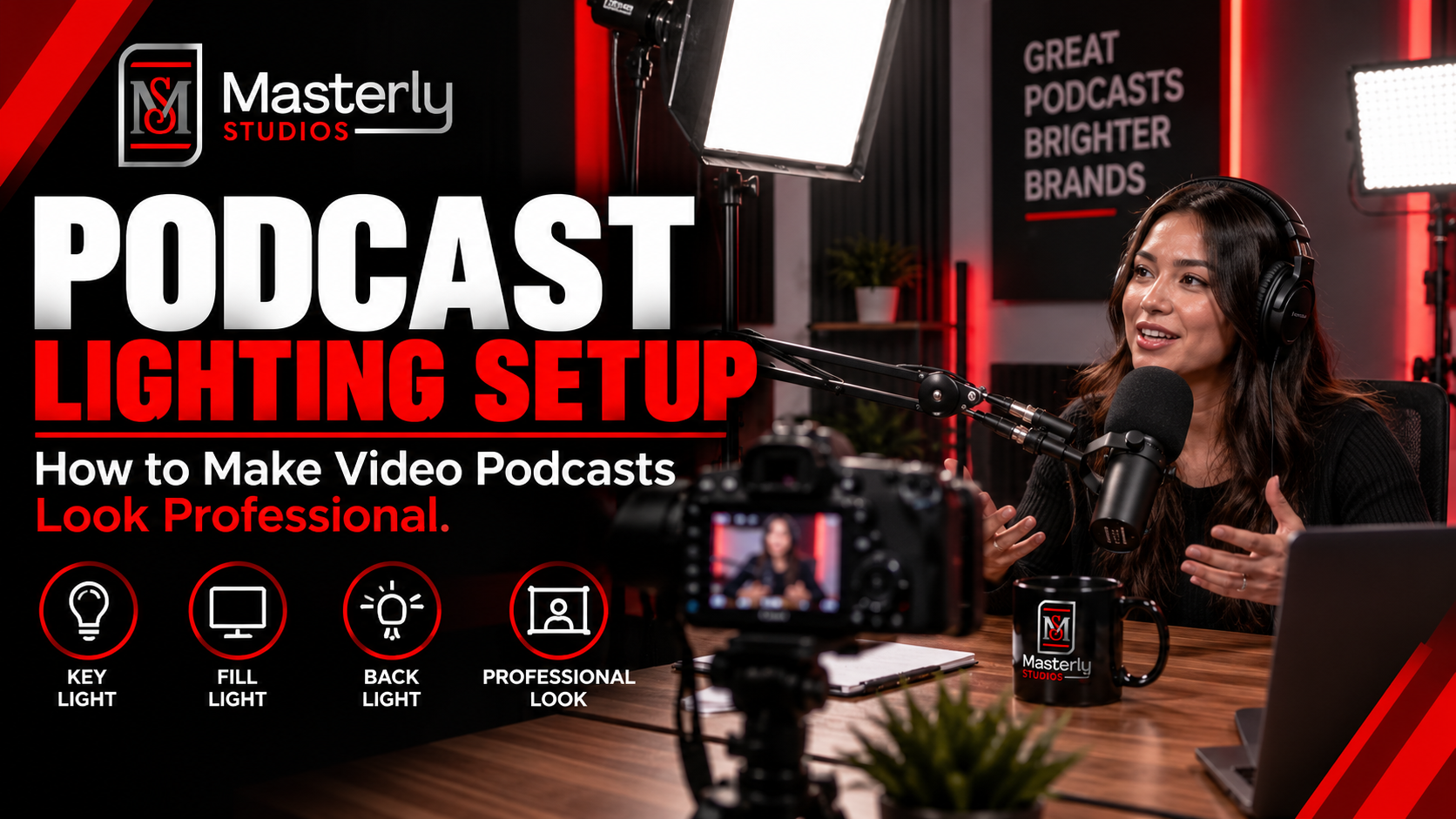
Need a podcast lighting setup? Masterly Studios provides professional podcast and camera lighting in a prepared studio for consistent, polished video production.
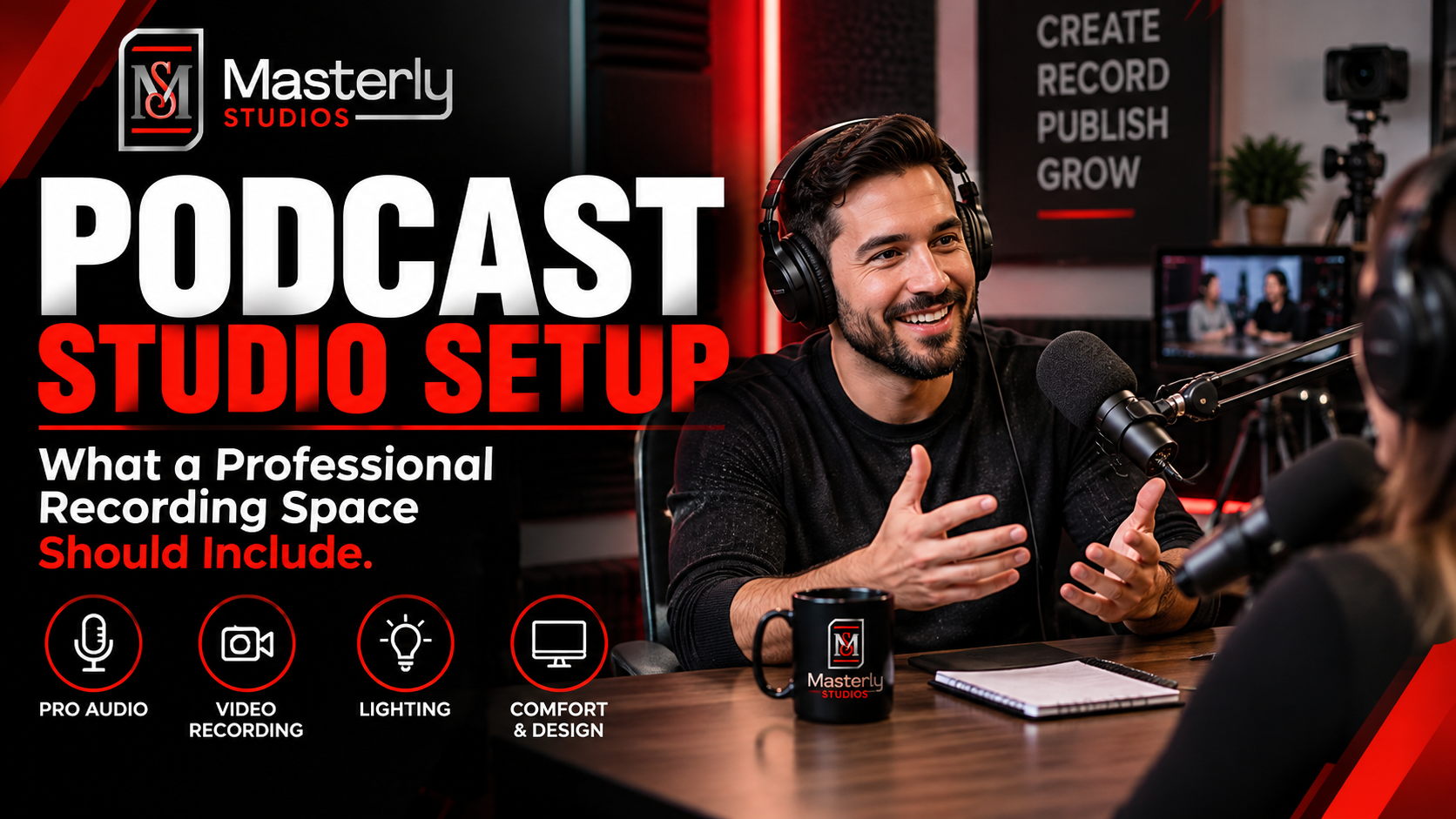
Need a podcast studio setup? Masterly Studios offers a professional recording space with quality equipment, lighting, acoustics, and video support for creators.
Book a training venue in Atlanta for corporate workshops, employee training, and learning events with flexible layouts, A/V support, and professional amenities.
Learn how to record a video podcast in Atlanta with a professional studio setup, clear audio, polished lighting, guest support, and a smooth recording workflow.

Book a corporate Christmas party venue in Atlanta for year-end events with flexible space, A/V support, catering, branding, and more for your team and festive fun.
Book a creative studio rental for photography, video, branded content, and marketing campaigns with flexible production space at Masterly Studios for every project.
Book a professional seminar venue for training, presentations, and business events with flexible seating, A/V, check-in, parking, content support, and event setup.
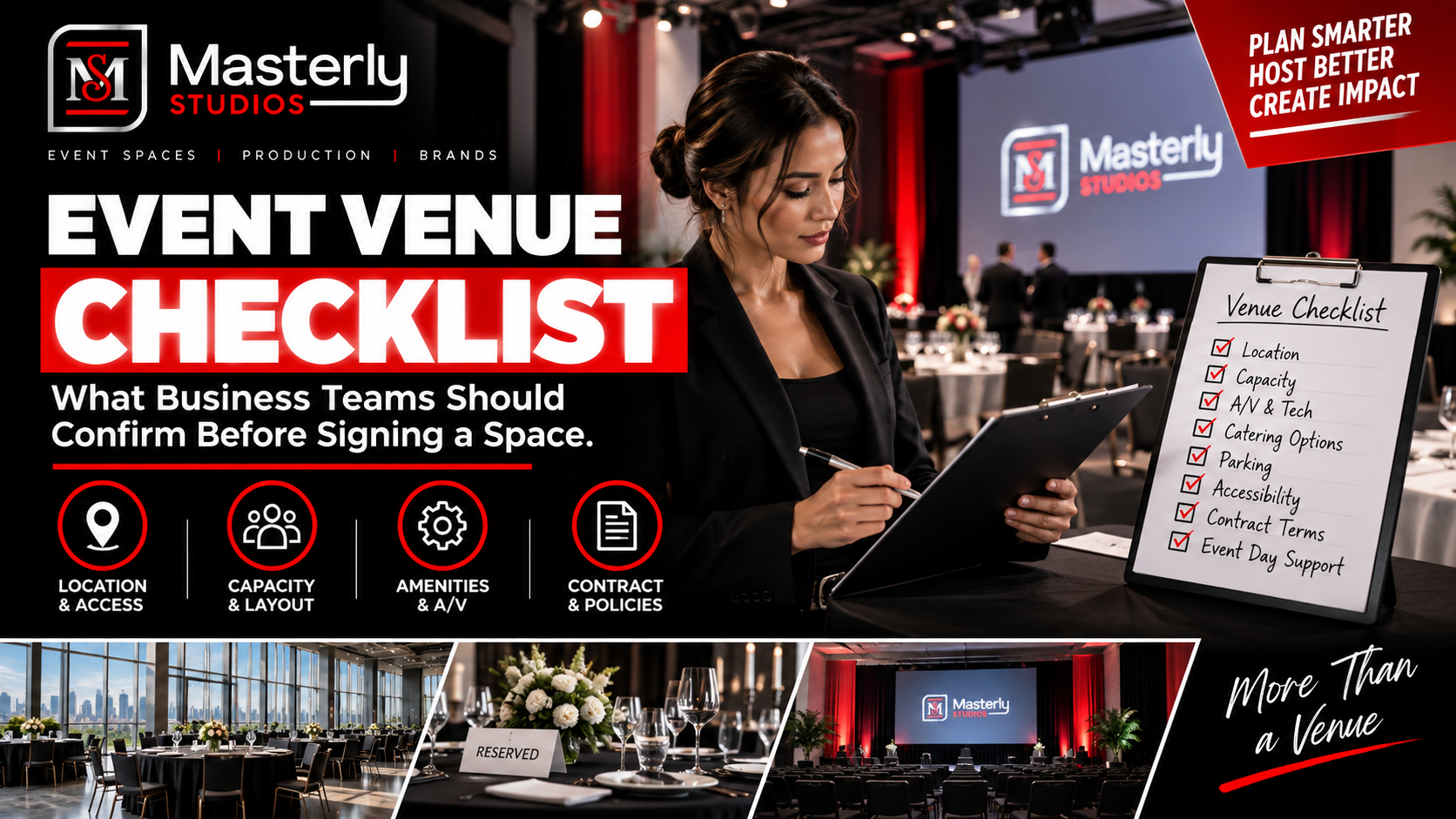
Use an event venue checklist to evaluate capacity, layout, parking, load-in, A/V, Wi-Fi, accessibility, catering, branding, production, and overtime needs.

Plan corporate events with professional support for venues, A/V, catering, speakers, content capture, access, and production at Masterly Studios in Atlanta.

Find the right event space in Atlanta by confirming capacity, AV, parking, catering, layouts, accessibility, and production support before booking. Masterly Studios