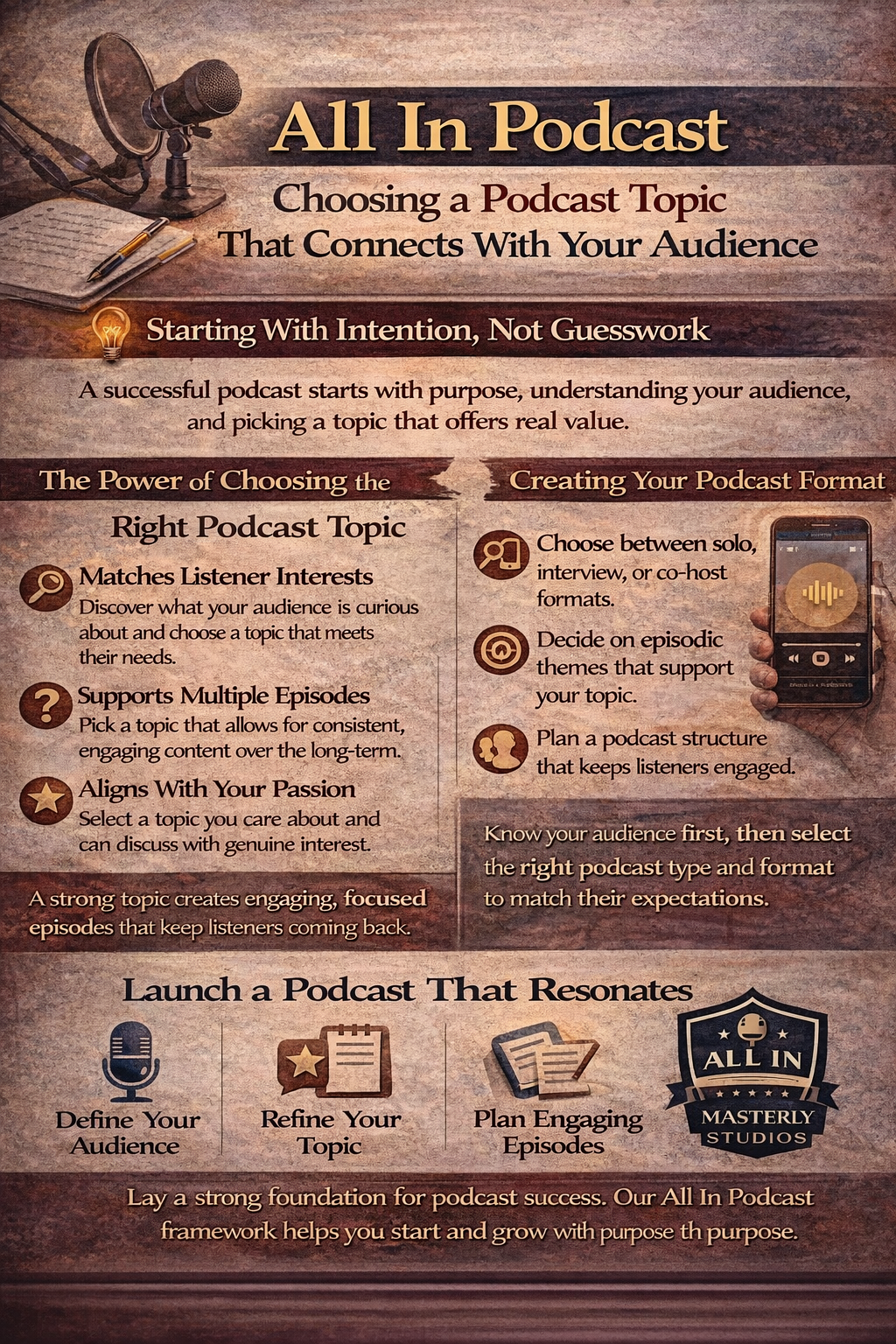
All In Podcast: Choosing a Podcast Topic That Connects With Your Audience
January 27, 2026
Starting With Intention, Not Guesswork
Launching a podcast is exciting, but choosing the right direction from the start matters more than most people realize. Many creators rush to hit reco rd before they fully understand who they are speaking to or what they want to say. That early rush often leads to stalled growth, unfocused episodes, and listeners who drift away after just one episode. A strong foundation begins with clarity, purpose, and a topic that genuinely connects.At Masterly Studios, we built the all in podcast framework to help creators avoid those early mistakes. Our approach focuses on alignment between message, audience, and delivery. When your topic is clear and intentional, every podcast episode feels more confident and more engaging.
Understanding the Power of a Strong Podcast Topic
Why Topic Selection Shapes the Entire Podcast
Your podcast topic influences everything from your podcast title to how listeners describe your show to others. It guides the podcast format, episode length, and even how you write a podcast script. A strong topic creates consistency, which helps podcast listeners know what to expect each time they tune in.Without a focused topic, it becomes harder to plan ahead or publish multiple episodes with confidence. You may find yourself scrambling for ideas or repeating the same talking points. A clear topic gives your podcast structure and momentum.
Connecting Topic to Listener Expectations
Listeners come to a podcast looking for value, whether that means education, inspiration, or entertainment. Your topic should match the needs and interests of your target audience. When the topic aligns, listeners stay engaged and return for the next episode.Understanding your audience helps shape the episode topic and the overall podcast brand. This connection is what turns casual listeners into loyal subscribers.
Defining Your Target Audience Early
Knowing Who You Are Speaking To
Before you write a podcast script or record audio, you need to understand who your podcast is for. Your target audience includes their interests, challenges, and the type of content they enjoy. This knowledge shapes how you speak, what examples you use, and how you structure each episode.A podcast designed for everyone often connects with no one. Narrowing your focus allows you to speak directly to the people you want to reach.
Matching Content Style to Audience Needs
Some audiences prefer interview podcasts with guest interviews and expert insights. Others enjoy solo episodes with personal stories and clear key takeaways. Knowing your audience helps you choose between conversational formats, structured discussions, or natural conversation styles.Your audience also influences how formal or casual your conversational tone should be. The better the match, the more listeners engaged you will have.
Choosing a Podcast Topic That Lasts
Avoiding Topics That Burn Out Quickly
A podcast topic should support multiple episodes, not just one episode. Topics that are too narrow can limit growth and make it hard to plan upcoming episodes. On the other hand, topics that are too broad can feel unfocused.A sustainable topic allows you to publish multiple episodes while keeping each one fresh. It also helps you create a detailed outline for future content without repeating yourself.
Finding a Topic You Can Commit To
Podcasting takes consistency and long-term effort. Choosing a topic you care about helps you stay motivated when the process feels challenging. Passion shows in your voice, your episode script, and your interaction with guests.When you enjoy the topic, recording feels less like work and more like creative expression. That energy is something listeners notice.
Shaping Your Podcast Format Around the Topic
Selecting the Right Podcast Format
Your topic influences whether you choose solo episodes, interview podcasts, or shows with a co host. Some topics thrive with guest interviews, while others benefit from personal commentary. The podcast format should support how you want to explore your topic.Format decisions also affect episode length and pacing. A clear format makes it easier to plan and stay consistent.
Deciding on Single or Multiple Hosts
Some podcasts work best with multiple hosts who bring different perspectives. Others benefit from a single podcast host guiding the entire conversation. The choice depends on the topic and how you want to present it.A co host can add energy, balance, and natural conversation. However, multiple hosts require coordination and clear roles.
Writing a Podcast Script That Supports Your Topic
The Role of a Podcast Script
A podcast script helps organize thoughts and keep the episode focused. It does not have to be a word for word script unless that fits your style. Many creators use a simple outline with key points and transitions.A good podcast script keeps the whole episode on track while allowing room for spontaneity. It helps you avoid rambling and ensures you cover essential elements.
Script Styles That Work
Some podcasters prefer a word for word script they can read aloud. Others use bullet points and talking points to guide a natural conversation. Both approaches can work depending on comfort level and experience.As you gain confidence, you may develop your own script style. The goal is clarity, not perfection.
Building a Strong Podcast Intro and Structure
Creating an Engaging Podcast Intro
The podcast intro sets expectations for today’s episode. It introduces the episode title, the topic, and what listeners will gain. A clear intro helps listeners decide to stay through the whole episode.Your intro should be brief but compelling. It should connect directly to your topic and audience needs.
Structuring the Episode Flow
A well-structured episode includes a beginning, middle, and end. Using a podcast outline helps organize segments and transitions. This structure supports better pacing and clearer messaging.Strong structure improves audio quality perception because the episode feels intentional. Listeners are more likely to stay engaged.
Planning Episodes and Content in Advance
Planning Multiple Episodes Ahead
Planning ahead allows you to publish multiple episodes without stress. It also helps maintain consistency, which podcast directories and listeners appreciate. Planning makes it easier to batch record audio and manage post production. When you know your next episode topics, you reduce creative pressure. This approach supports long-term podcasting goals.Using Show Notes and Episode Details
Show notes and episode details help listeners understand the value of each episode. They also support discoverability on a podcast website and podcast app platforms. Clear descriptions improve listener experience.Good show notes reinforce key points and provide additional resources. They are an extension of the episode itself.
Recording and Production Considerations
Setting Up for Quality Recording
High quality audio matters, even for a new podcast. A good podcast mic and basic setup improve audio quality significantly. Clear sound keeps listeners focused on your message.Podcast equipment does not have to be expensive. Choosing the right tools for your environment is more important than buying everything at once.
Recording With Confidence
When you start recording, confidence grows with practice. Hitting record becomes easier when you know your script and structure. Preparation helps reduce mistakes and editing time.Recording improves when you focus on connection rather than perfection. Authentic delivery resonates with listeners.
Editing, Hosting, and Distribution
Editing and Post Production
Editing software helps refine the audio file and remove distractions. Post production improves flow, volume, and clarity. Good editing supports a professional feel.Editing also helps maintain a consistent tone across episodes. This consistency builds trust with listeners.
Hosting and Distribution Platforms
A podcast hosting service stores your audio file and distributes it through an RSS feed. This feed connects your podcast to podcast directories like Apple Podcasts. Choosing a reliable hosting service matters.Distribution ensures your podcast reaches listeners across platforms. Visibility supports growth and engagement.
Branding Elements That Support Your Topic
Podcast Name and Artwork
Your podcast name should reflect your topic clearly. It should be memorable and easy to understand. Podcast artwork visually represents your brand and topic. Strong branding helps your podcast stand out among popular podcasts. Visual clarity supports listener recognition.Building a Consistent Podcast Brand
Consistency across podcast artwork, tone, and messaging builds trust. Your brand should align with your topic and audience expectations. This alignment strengthens listener loyalty. Brand consistency also supports marketing and growth efforts.Learning From Established Podcasts
Observing What Works
Studying popular podcasts can provide inspiration without copying. Notice how they structure episodes, introduce guests, and maintain engagement. Observing formats like the Joe Rogan experience helps identify effective techniques.Learning from others helps refine your own approach. Adapt ideas to fit your unique topic and voice.
Developing Your Own Style
Your podcast should reflect your personality and expertise. Over time, your style will evolve. Authenticity matters more than imitation.Listeners connect with hosts who sound genuine and confident.
Growing Engagement Over Time
Keeping Listeners Engaged
Engagement grows when listeners feel understood and valued. Clear key points, strong storytelling, and relevant topics keep listeners coming back. Asking thoughtful questions helps build connection.Listeners engaged are more likely to share episodes and leave reviews. Engagement supports organic growth.
Evaluating Progress and Adjusting
Review feedback and performance regularly. Understanding what resonates helps refine future episodes. Adjustments are part of the growth process.Continuous improvement keeps the podcast relevant and aligned with goals.
Moving Forward With Confidence
From First Episode to Long-Term Vision
The first episode sets the tone, but growth happens over time. Consistency, clarity, and commitment matter. Each episode builds on the last.Podcasting is a journey, not a one-time project. Confidence grows with experience.
Staying All In on Your Podcast Vision
Staying all in means committing to quality, preparation, and connection. It means learning, adjusting, and showing up consistently. That commitment is what builds a lasting podcast.Support and guidance make the journey smoother.
Contact Masterly Studios for Podcasting Support
If you are ready to move forward with confidence and clarity, Masterly Studios is here to help. We offer a free consultation to answer questions, refine your topic, and guide you through creating a podcast that truly connects. Whether you are launching your first episode or refining an existing show, our team works with clients throughout the country and nationally. Contact us at (888) 209-4055 to book your free consultation and take the next step with your all in podcast.Disclaimer: This article is for informational purposes only and does not constitute professional or legal advice. Podcasting results vary based on effort, consistency, and individual goals.

Plan your Atlanta event space rental with the right room size, guest flow, technical support, and scheduling. Request a venue tour to confirm the best fit.
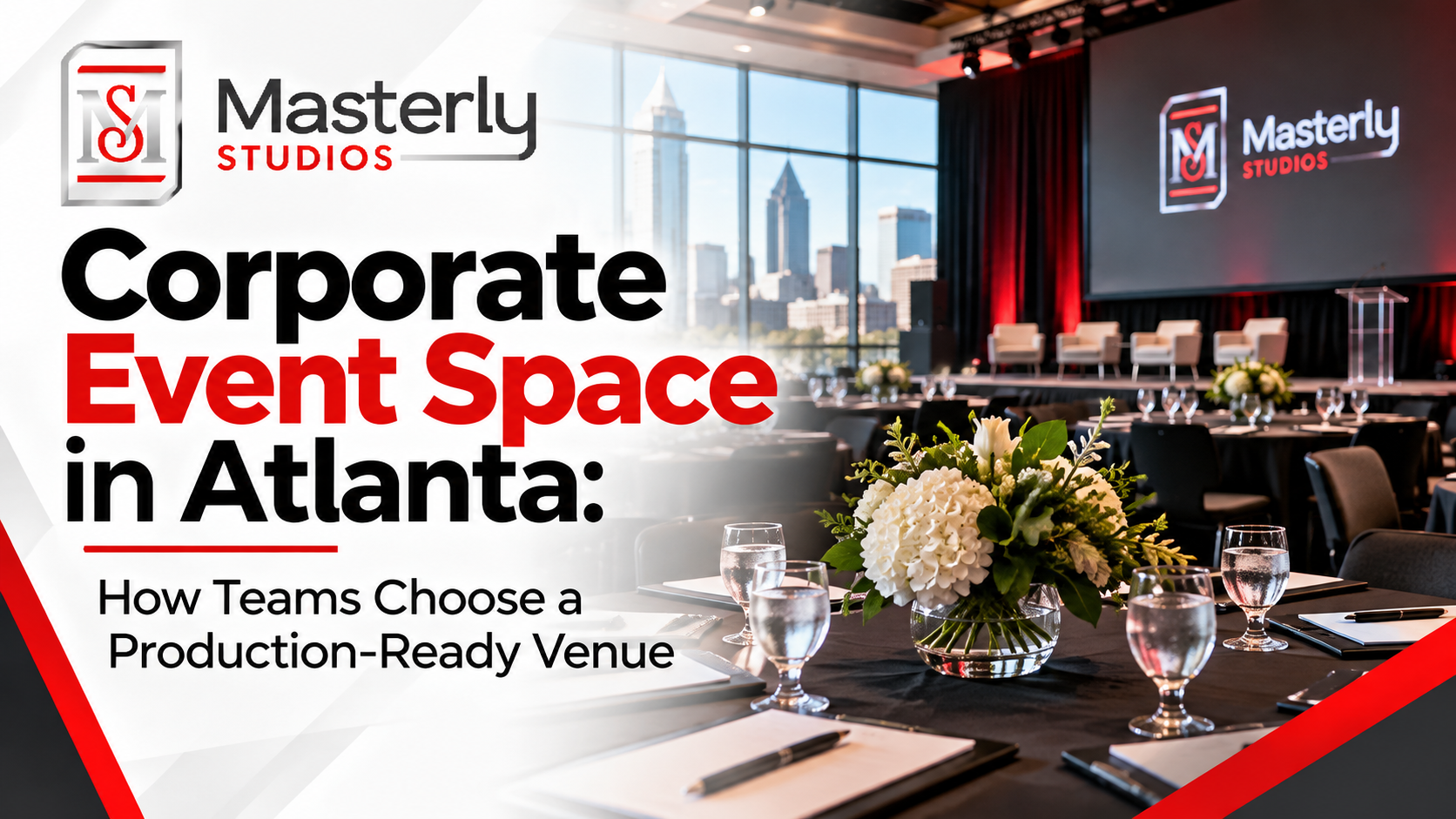
Explore what to consider when choosing Atlanta corporate event space, including room layouts, AV capabilities, parking, guest experience, and booking options.
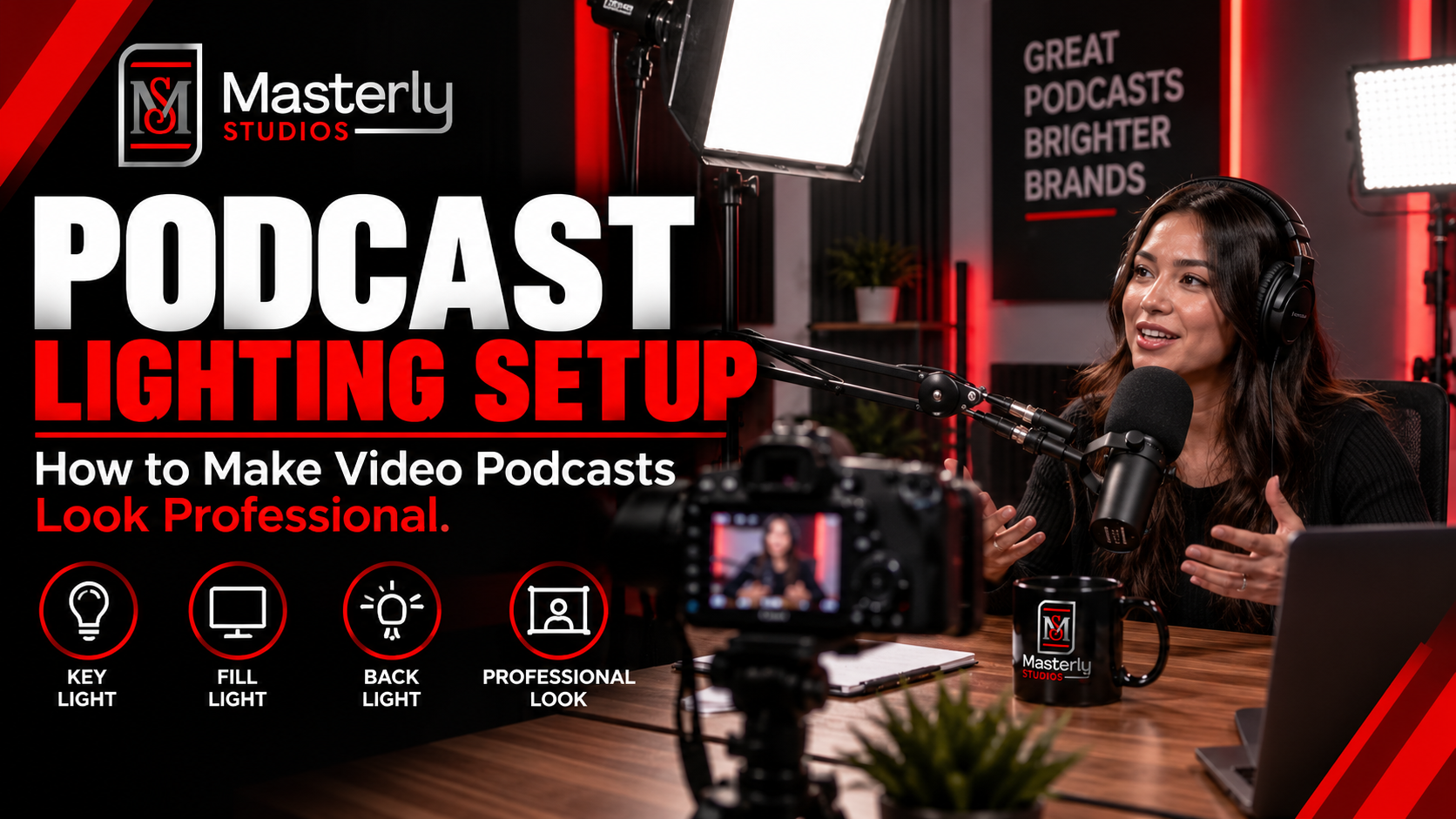
Need a podcast lighting setup? Masterly Studios provides professional podcast and camera lighting in a prepared studio for consistent, polished video production.
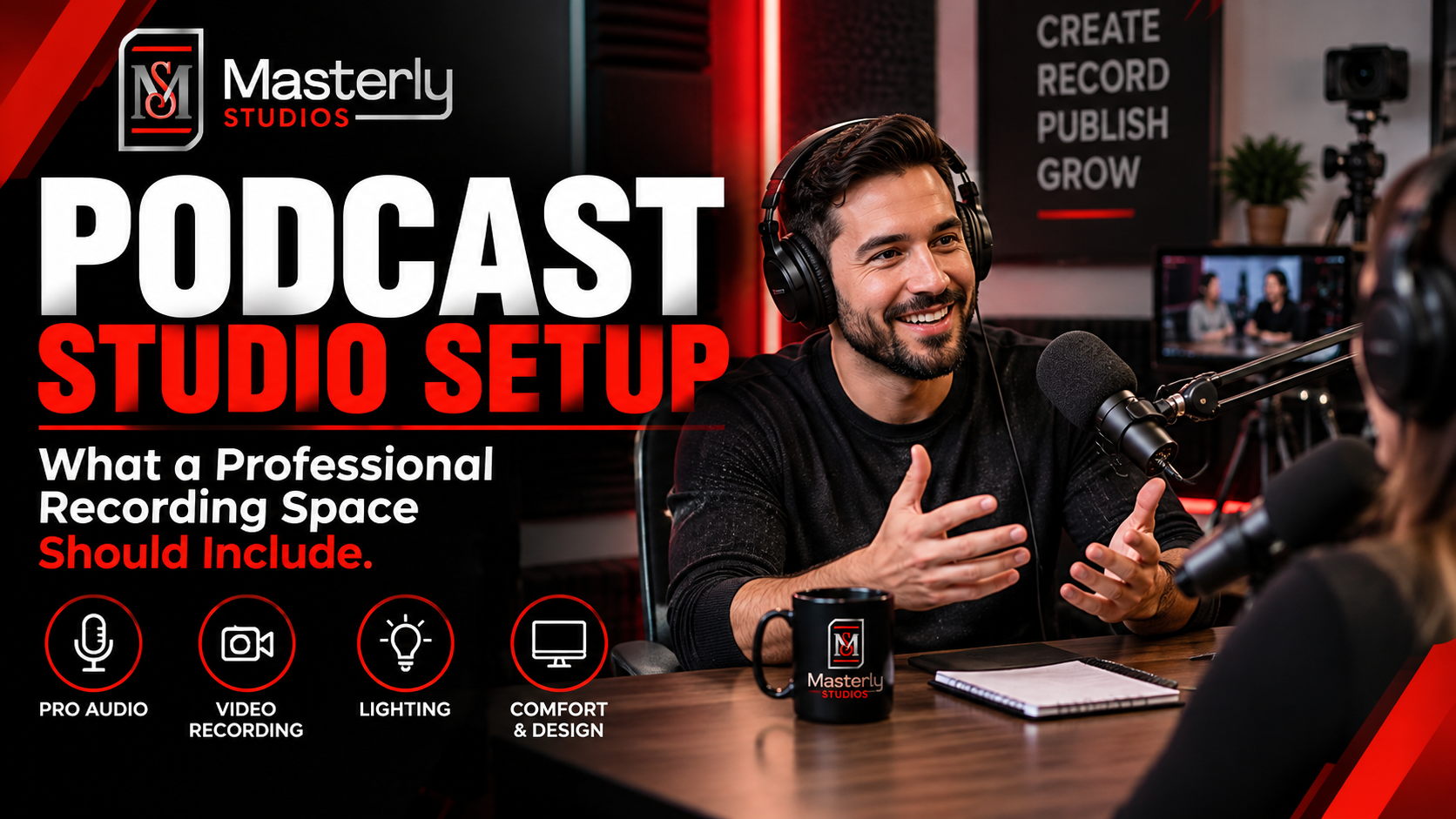
Need a podcast studio setup? Masterly Studios offers a professional recording space with quality equipment, lighting, acoustics, and video support for creators.
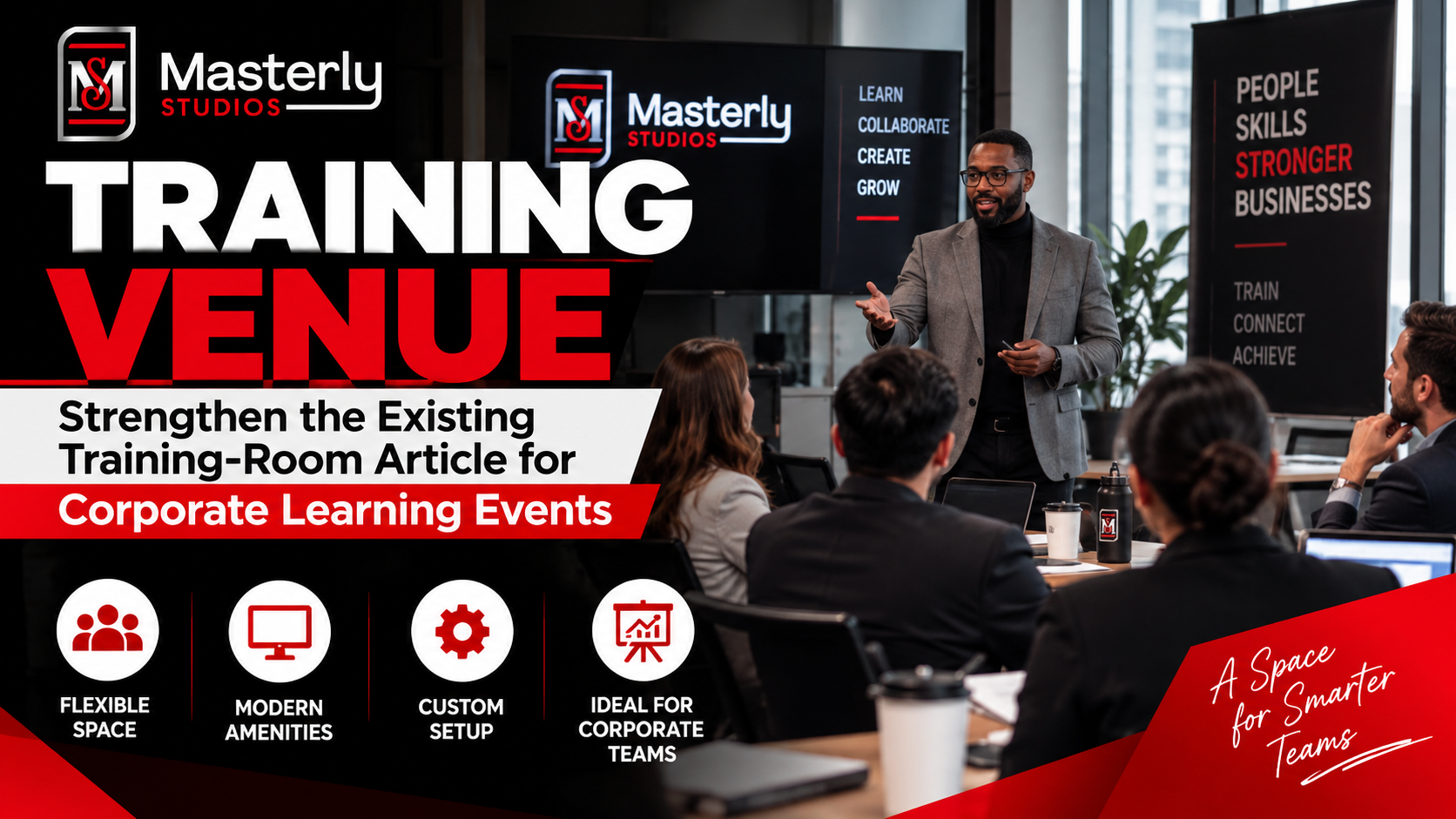
Book a training venue in Atlanta for corporate workshops, employee training, and learning events with flexible layouts, A/V support, and professional amenities.
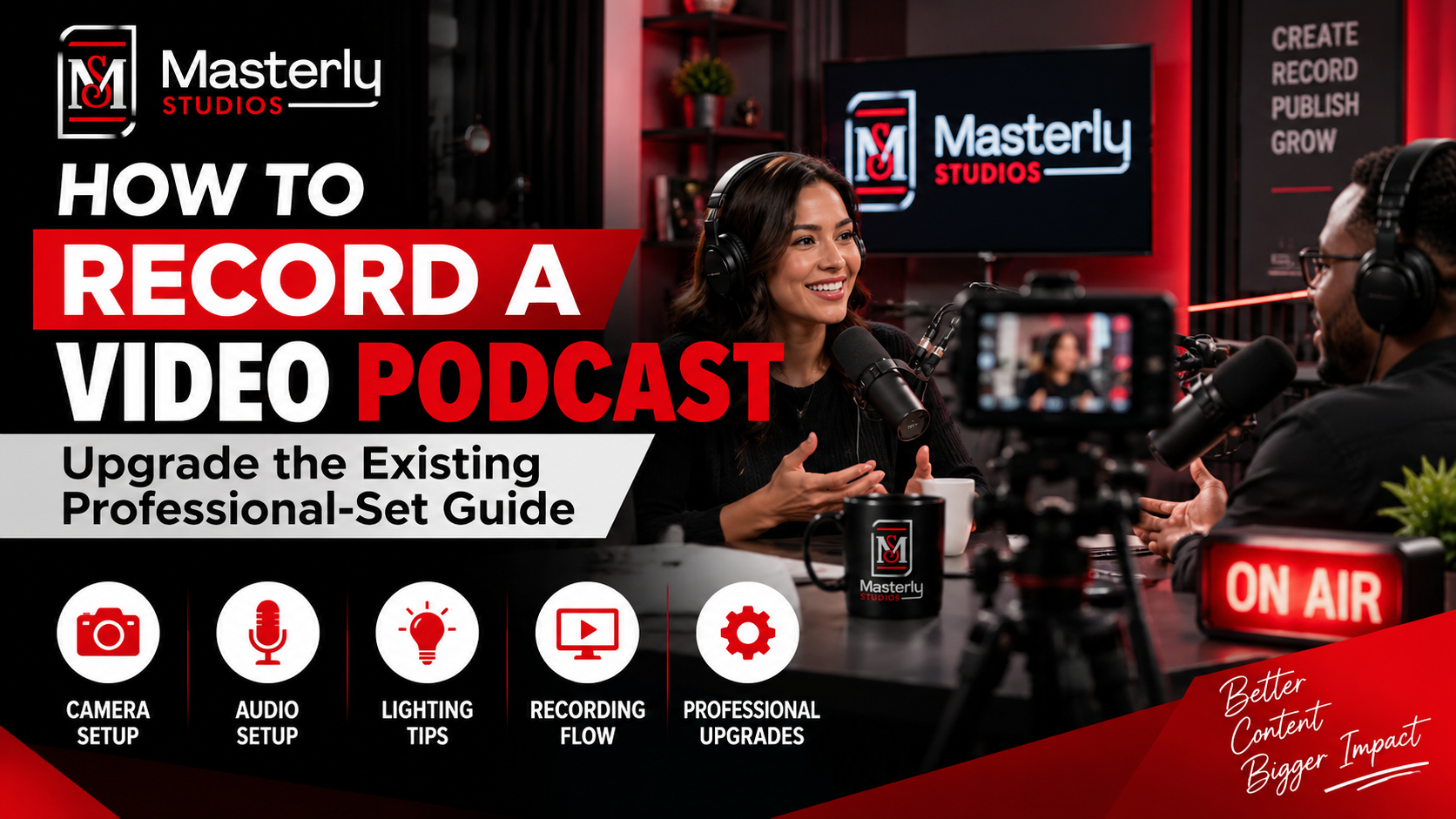
Learn how to record a video podcast in Atlanta with a professional studio setup, clear audio, polished lighting, guest support, and a smooth recording workflow.

Book a corporate Christmas party venue in Atlanta for year-end events with flexible space, A/V support, catering, branding, and more for your team and festive fun.
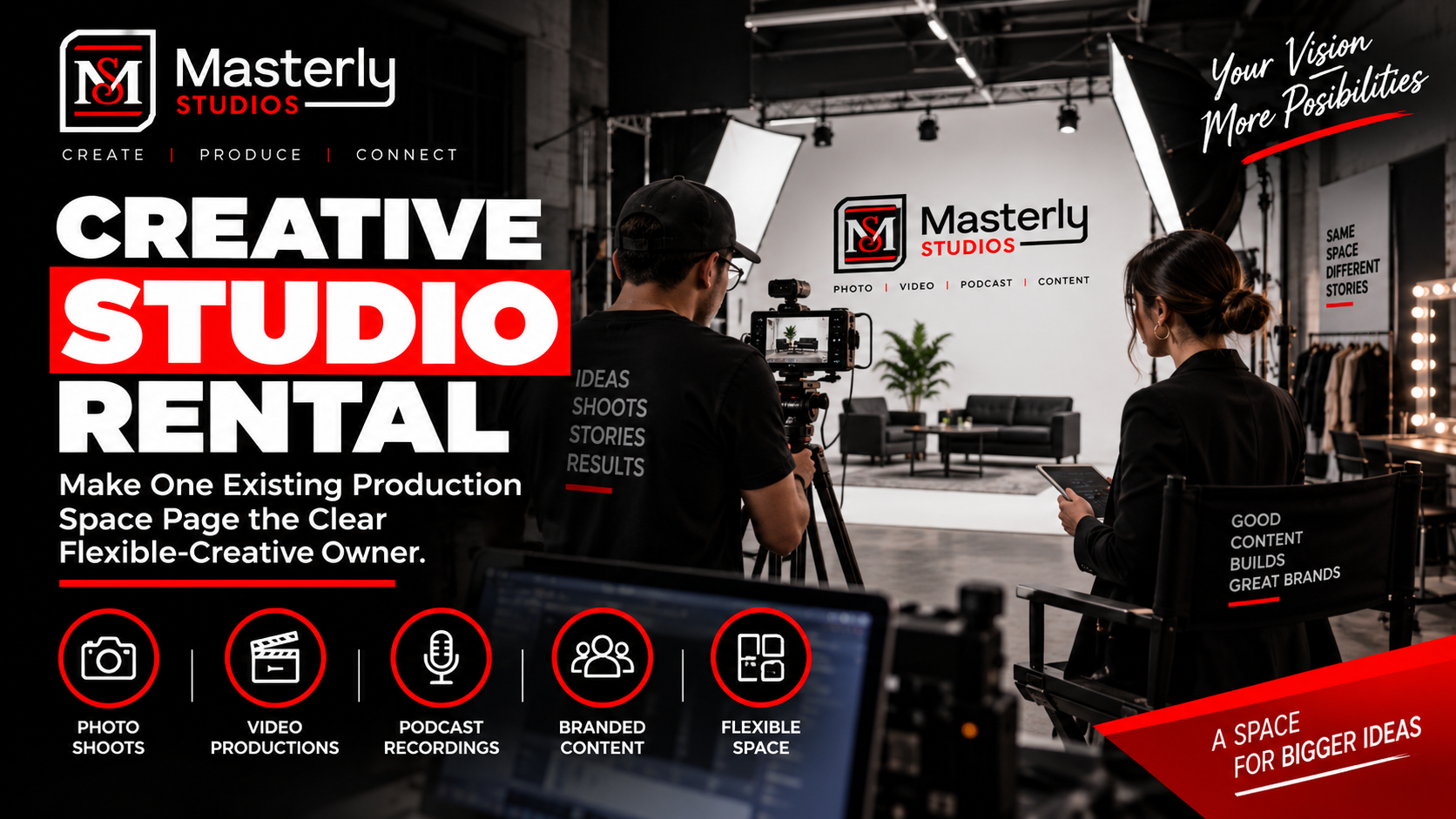
Book a creative studio rental for photography, video, branded content, and marketing campaigns with flexible production space at Masterly Studios for every project.
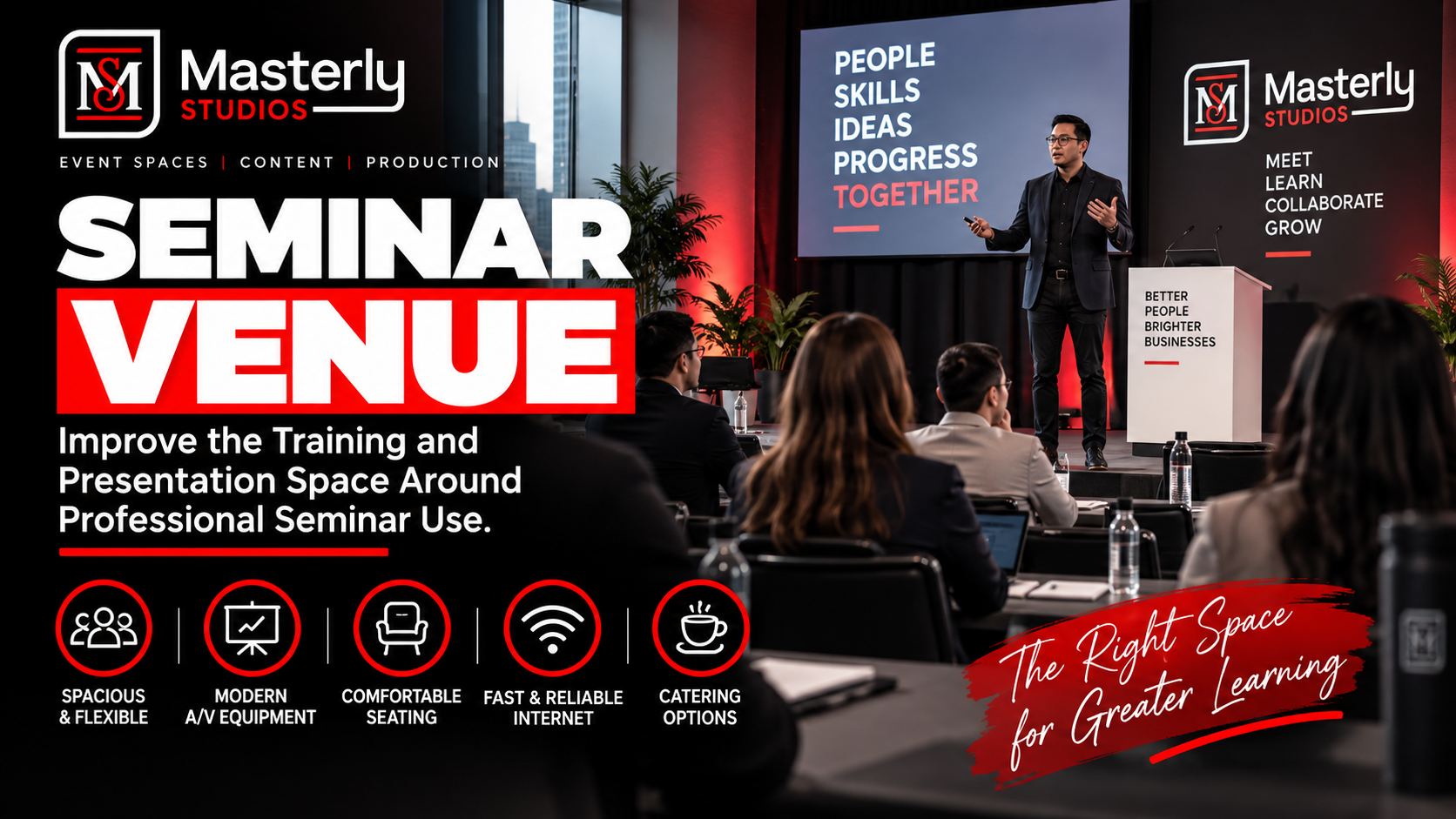
Book a professional seminar venue for training, presentations, and business events with flexible seating, A/V, check-in, parking, content support, and event setup.
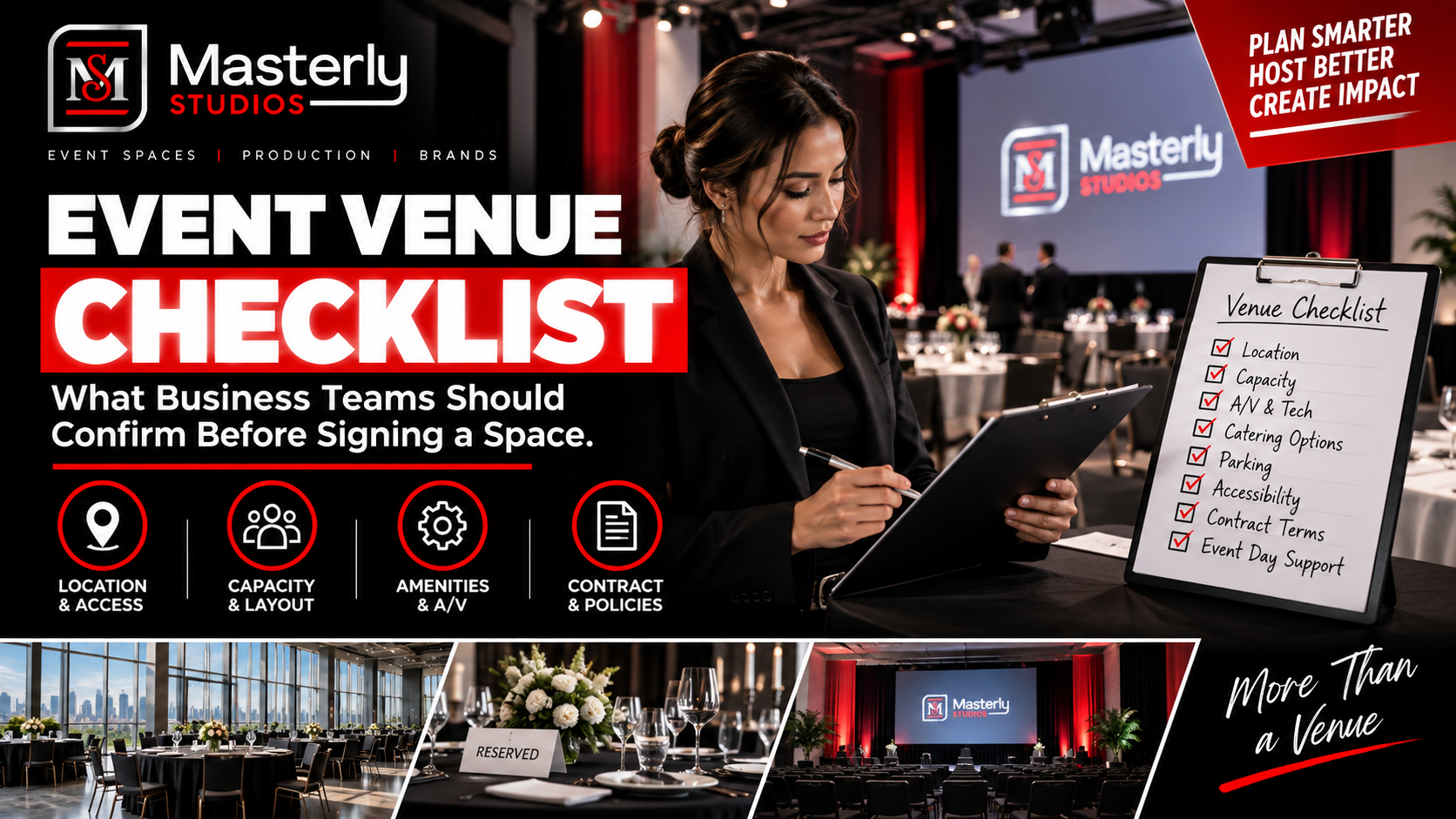
Use an event venue checklist to evaluate capacity, layout, parking, load-in, A/V, Wi-Fi, accessibility, catering, branding, production, and overtime needs.