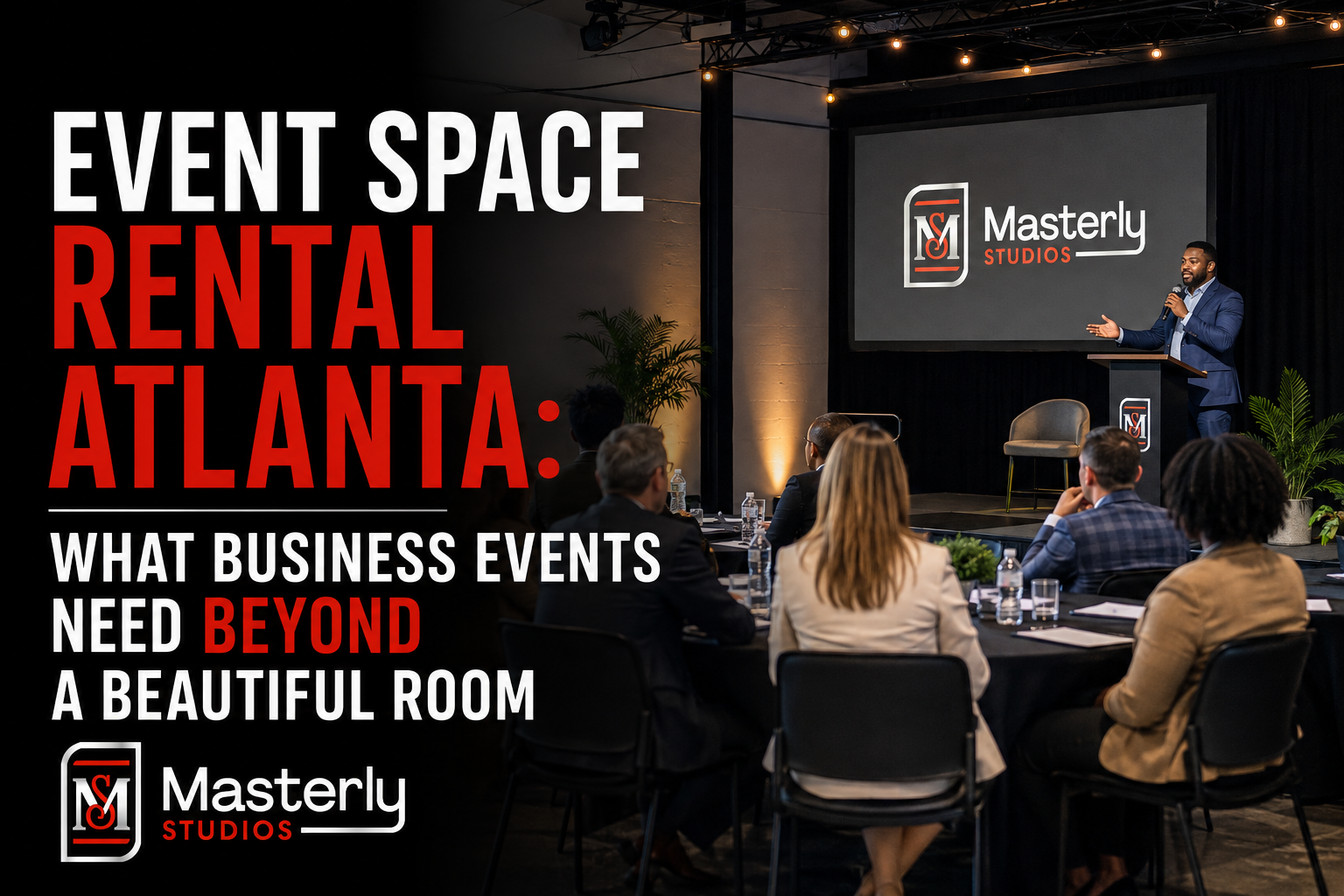
Event Venue Checklist: What Business Teams Should Confirm Before Signing a Space
Choosing an event venue can look simple until the real requirements appear. A space may look impressive during a tour but create problems later because there is not enough seating, parking is limited, equipment cannot be loaded in easily, Wi-Fi is unreliable, or the A/V setup does not support the program.
For business events, the venue is part of the guest experience and the company's brand. The wrong space can create unnecessary costs, production delays, and frustration for attendees and event teams.
A professionalevent venue checklist helps business teams look beyond appearance and consider how the space will actually support the event.
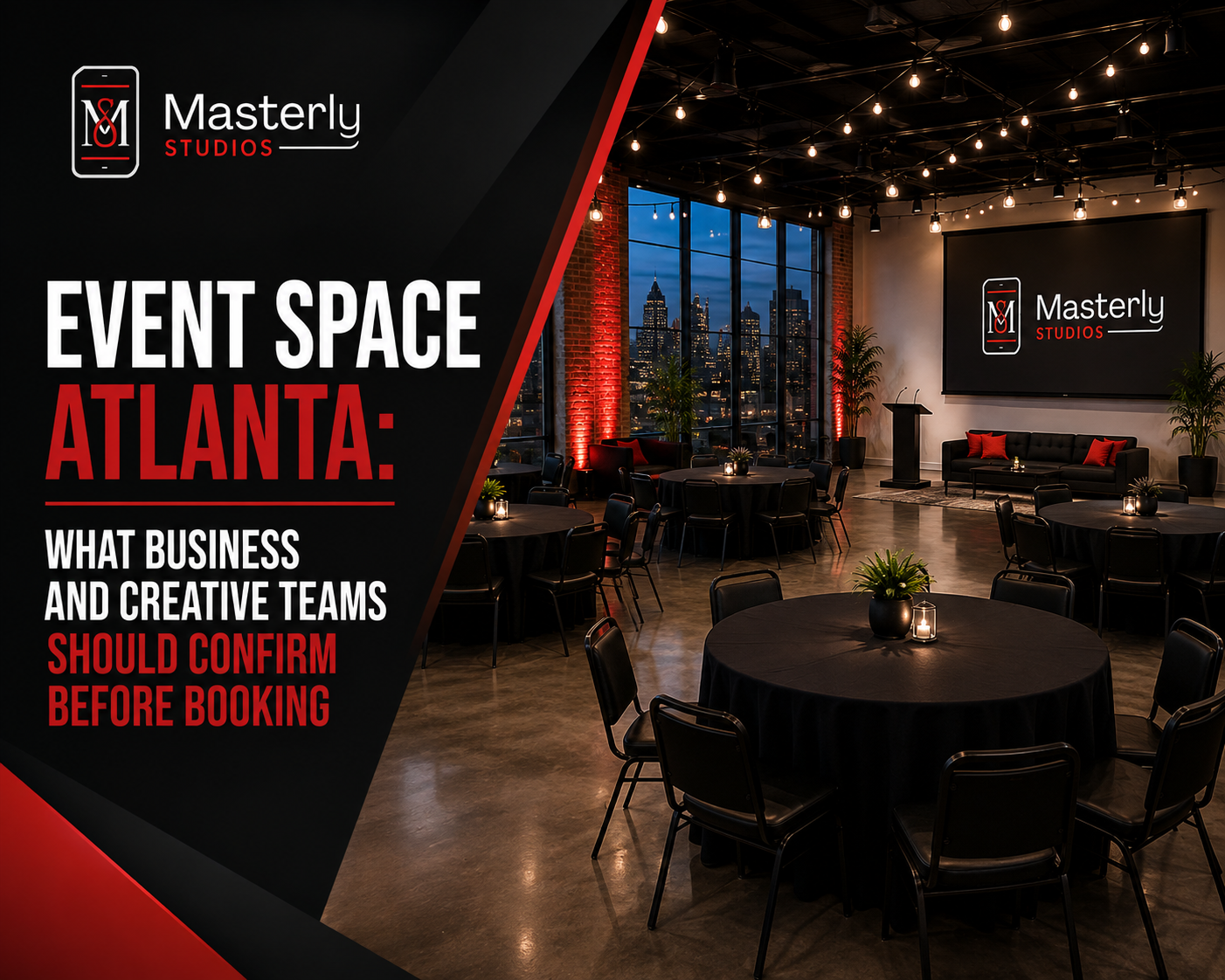
Masterly Studios provides a professional environment for corporate meetings, conferences, productions, branded events, content creation, and other business gatherings. The goal is to give teams a space that can support the event experience from setup through completion.
Why the Right Event Venue Matters to Your Business
An event venue does more than hold your guests.
It affects how people arrive, where they sit, how they move through the space, how presentations are delivered, how food is served, how vendors work, and how your brand appears in photos and videos.
For a company hosting clients, executives, employees, partners, or other important guests, those details matter.
A well-matched venue can make the event feel organized and professional. A poor fit can create problems that become visible to guests.
That is why a business event venue checklist should focus on the complete event experience rather than simply asking whether the room looks good.
Capacity Should Match the Actual Guest Experience
The first question is often how many people the venue can hold. But maximum capacity is only part of the answer, so confirm the venue’s legal and fire marshal capacity limits rather than relying only on the posted maximum capacity.
The space also needs to accommodate the way guests will use it.
A seated conference, networking event, executive meeting, product presentation, or company gathering can require very different layouts.
Consider space for:
- Guest seating
- Registration and check-in
- Networking
- Speakers
- Stage or presentation areas
- Catering
- A/V equipment
- Photography and video
- Staff
- Vendors
- Accessibility
If your setup includes a dance floor, plan for about 4.5 square feet per person for dancing when evaluating space requirements.
A venue that technically holds 200 guests may not comfortably support 200 guests once production and service areas are included.
Masterly Studios can help businesses evaluate how the available space can support the intended event experience.
Room Layout Should Support the Program
The room layout affects how guests see, hear, move, and interact.
A presentation may need clear sightlines toward a screen. A networking event may need open areas for conversation. A panel discussion may require a stage arrangement with seating for several speakers. For example, a training session, networking mixer, or presentation each calls for a different layout in a different instance.
Production teams also need space to work without interfering with guests.
Before selecting a venue, professional event teams should consider whether the room can support the actual program and room setup in line with the event goals, rather than simply the guest count.
This is one of the most important parts of an event venue checklist because a beautiful room can still be the wrong room for the event, especially if its style, design elements, and overall venue feel do not suit the event's theme.
Parking, Transportation Options, and Arrival Should Be Easy for Guests
The guest experience starts before anyone enters the room.
Parking, drop-off areas, entrances, elevators, stairs, signage, and check-in locations can all affect the first impression.
For corporate events, guests may arrive in different ways. The venue’s location should be easy to reach, with proximity to major transportation hubs, parking availability, and nearby train stations or other transportation options considered alongside drop-off convenience. Executives may require convenient access. Vendors may need separate loading access. Guests with mobility needs may need accessible entrances and routes. Teams should also confirm the space is venue accessible, meets ADA compliance expectations, and supports smooth guest access.
A venue should make arrival feel clear rather than confusing.
Masterly Studios offers businesses a professional setting where event teams can discuss arrival, access, room setup, and production requirements as part of the venue planning process.
Load-In and Vendor Access Need Attention
A venue can work perfectly for guests while creating serious challenges for vendors.
A/V equipment, furniture, catering supplies, staging, lighting, photography equipment, and other production materials may need to enter the building before the event.
Important event venue questions include:
- When can vendors arrive?
- Is there a loading area?
- Where can equipment be unloaded?
- Are there restrictions on deliveries?
- How long is setup access available?
- Where can vendors store equipment?
- When must everything be removed?
During the site walk-through, note any potential issues, especially around load-in paths and storage.
Clear answers help with vendor logistics while preventing production delays and unexpected costs.
A/V and Production Requirements Should Be Confirmed
Technology can determine whether a corporate event runs smoothly.
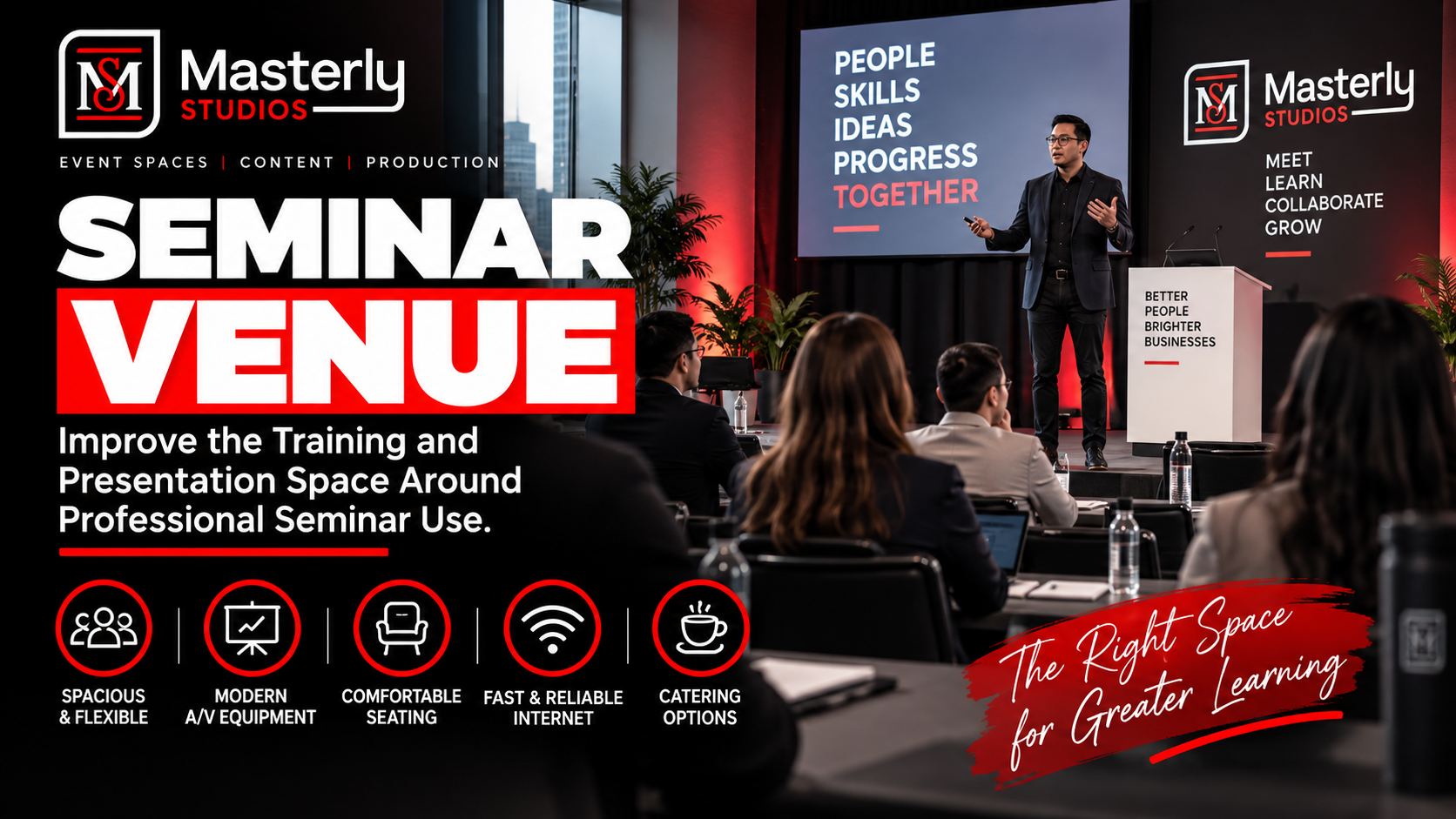
Depending on the program, teams may need microphones, speakers, screens, projectors, lighting, recording gear, presentation systems, or other AV equipment, and they should confirm how the venue handles the AV setup.
The venue should be able to accommodate the technical requirements of the event. Schedule a technical rehearsal at least 24 hours before the event and test the setup to double check key systems before event day.
Businesses should also understand whether equipment is included, whether outside vendors are allowed, and whether additional fees apply.
Masterly Studios provides a production-focused environment that can support professional meetings, presentations, photography, video, and branded content. On-site tech support can also be important for in person programs, especially when presentations or live streaming are involved.
Wi-Fi Should Support Business Needs
Reliable Wi-Fi may be essential for corporate events.
Guests may need internet access for communication and networking. Presenters may need online access for demonstrations or cloud-based presentations. Event teams may use digital registration systems or event platforms.
Ask about network reliability, available bandwidth, access requirements, and whether dedicated connectivity is available for production needs.
A venue that cannot support the event's technology requirements may create problems that are difficult to solve after the booking is confirmed.
Accessibility Should Be Part of the Venue Decision
A professional venue should be usable by all expected guests.
Teams should consider accessible entrances, pathways, restrooms, elevators, seating options, and other relevant accessibility requirements.
Accessibility plays a big role in attendee satisfaction, with 87.85% of attendees saying it is critical to their event experience.
Accessibility should not be treated as an afterthought.
It is part of creating a professional attendee experience and ensuring that guests can participate comfortably.
Catering and Food Service Need Clear Rules
Catering requirements can vary greatly from one event to another.
Some events may need plated meals. Others may require refreshments, coffee service, appetizers, or flexible food stations.
Teams should also understand venue policies around outside catering, food preparation, service areas, cleanup, and whether many venues provide in house catering or other in-house services through the house team.
It is also important to confirm whether using the caterer is required and how dietary needs, dietary restrictions, special dietary requests, and special dietary needs will be handled.
These details can affect both the guest experience and the event budget.
Ask about food and beverage minimums and whether a beverage plan is expected as part of catering pricing.
Food quality also matters to the guest experience — 87.85% of attendees say it is critical for satisfaction — so request a tasting before the event date.
A venue should be able to explain its catering policies clearly before a contract is signed.
Branding Opportunities Can Add Value
The venue itself becomes part of the event's visual environment.
Businesses may want space for logos, signage, sponsor displays, branded backdrops, product displays, presentation graphics, or other visual elements.
Branding should fit naturally within the space.
A venue with flexible production areas can make it easier to create professional photos and videos that show the company, event, speakers, products, and attendees in a consistent environment.
For businesses investing in an event, this content can continue to provide value after the event ends.
Photography and Content Capture Should Be Considered Early
Corporate events often create opportunities for marketing content.
Professional photography can capture speakers, executives, networking, branded spaces, team interactions, products, presentations, and other important moments.
If photography or video is part of the event, the venue needs to support that work.
Lighting, available space, access, background options, power, and production rules can all affect the final content.
Masterly Studios provides an environment designed to support professional visual production, making it easier for businesses to connect their event experience with their content needs.
Understand Overtime and Production Rules
One of the most important items on any venue checklist is the contract.
Teams should review the full pricing structure, including the payment schedule, included services, and any hidden costs beyond the initial rental fee, and confirm it aligns with their budget and event dates.
A venue may charge additional fees for early setup, extended event hours, overtime, additional cleaning, equipment use, or late breakdown. Request a full breakdown of costs before signing.
The contract should also clearly explain rules for outside vendors, catering, decorations, A/V equipment, photography, signage, and production.
Understanding these requirements before signing can help prevent unexpected costs later, and do not forget to review cancellation terms, force majeure language, rescheduling penalties, and any contract flexibility that could affect minimum room block requirements.
A Business Event Planning Checklist Should Look Beyond the Room
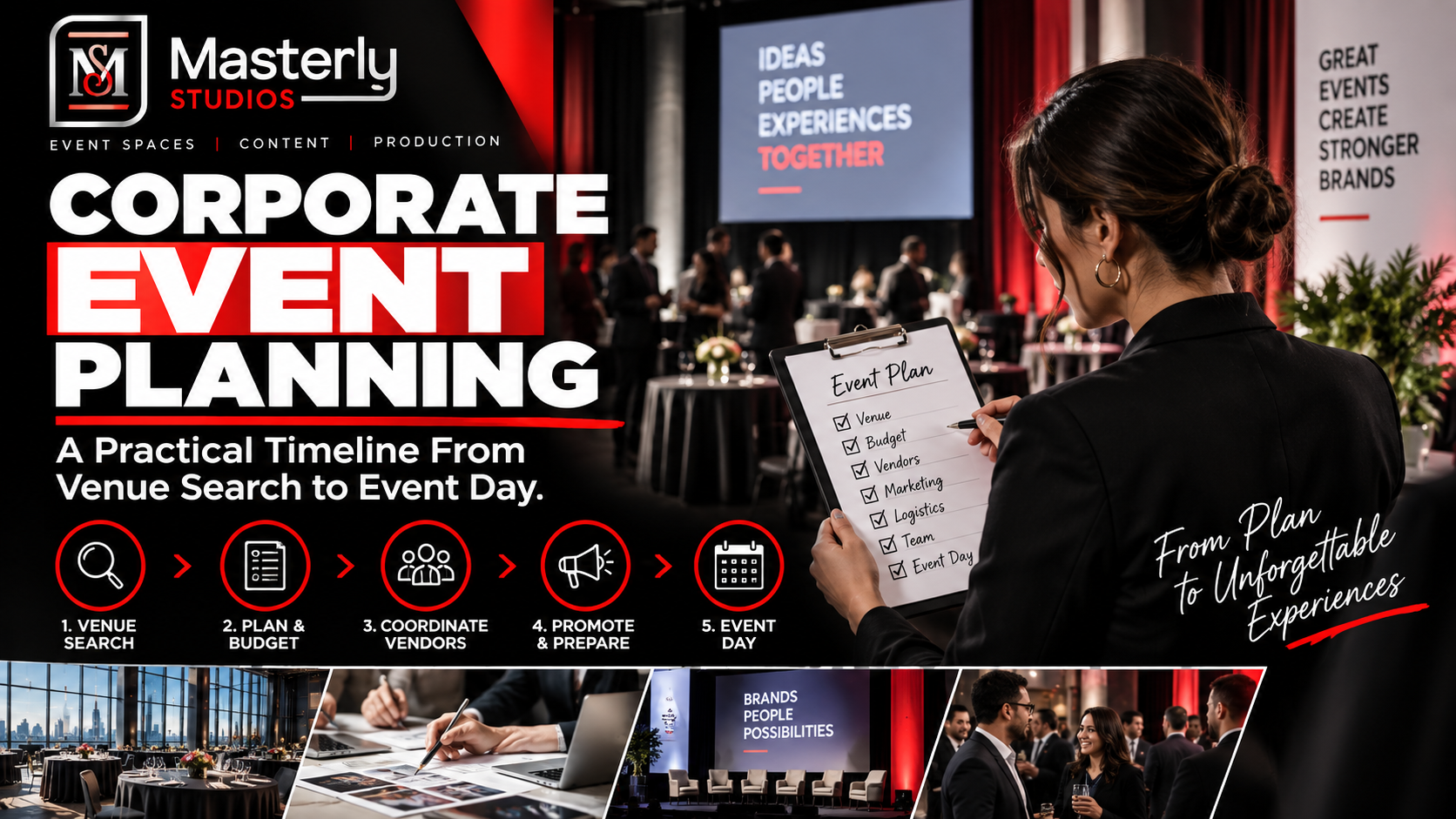
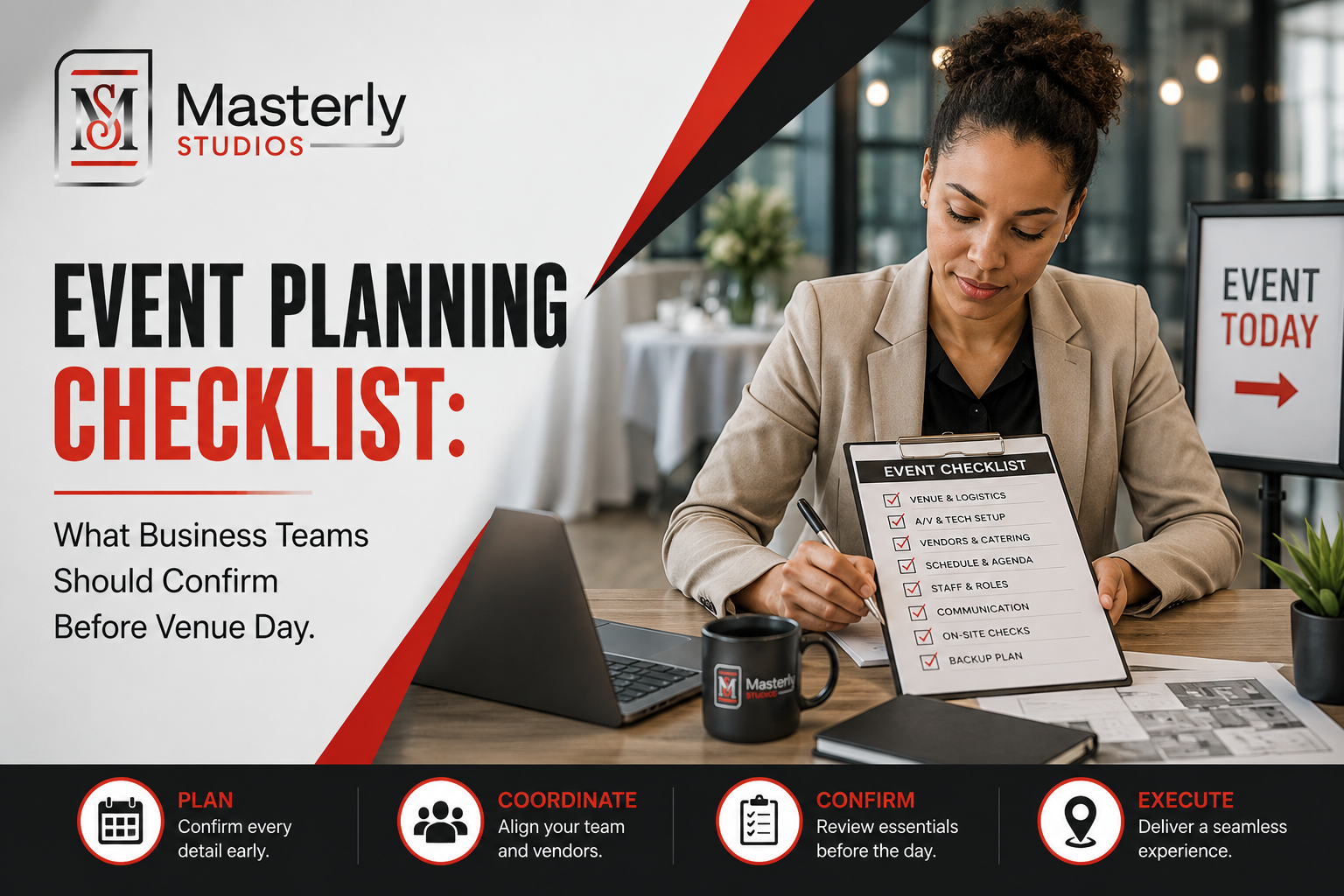
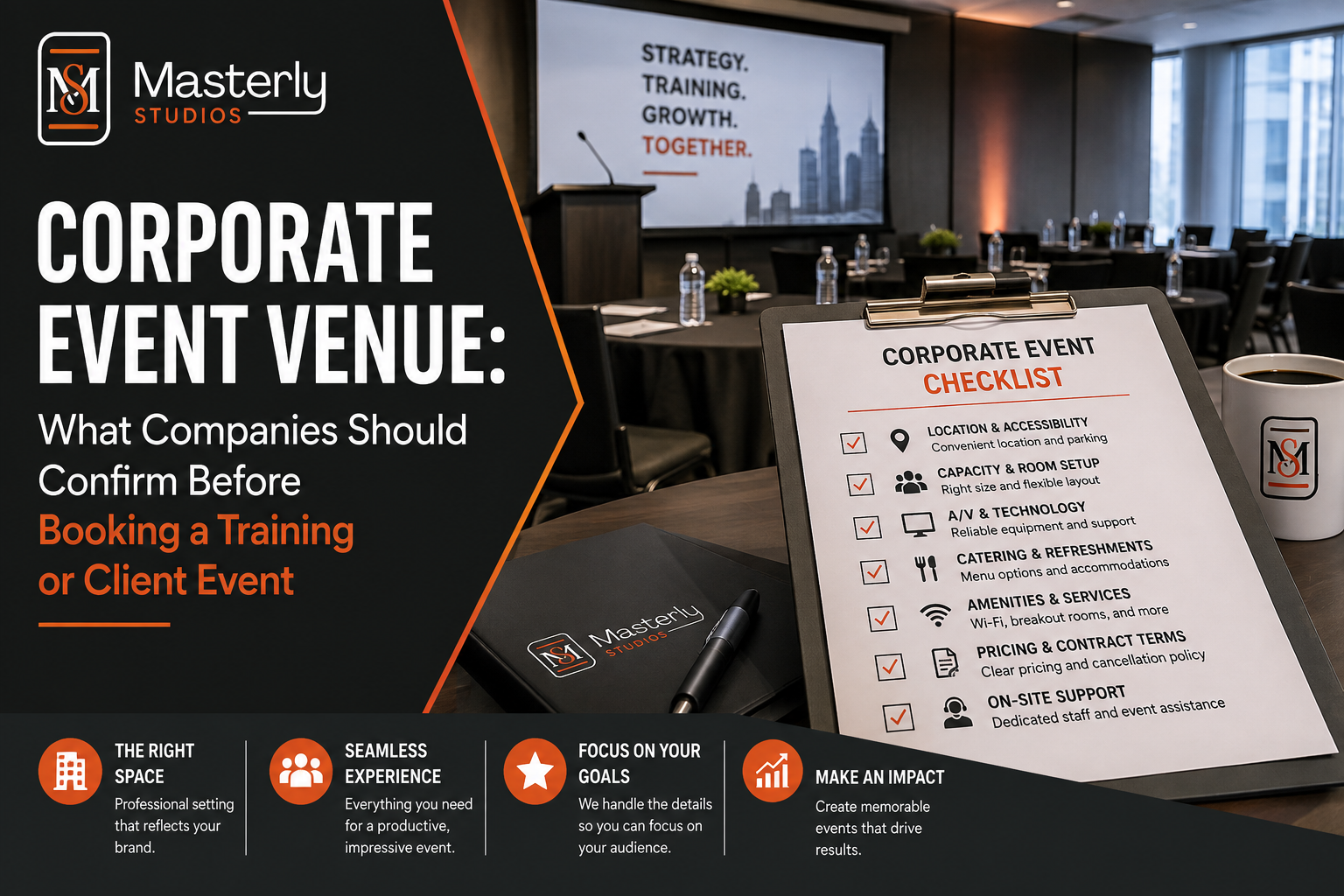
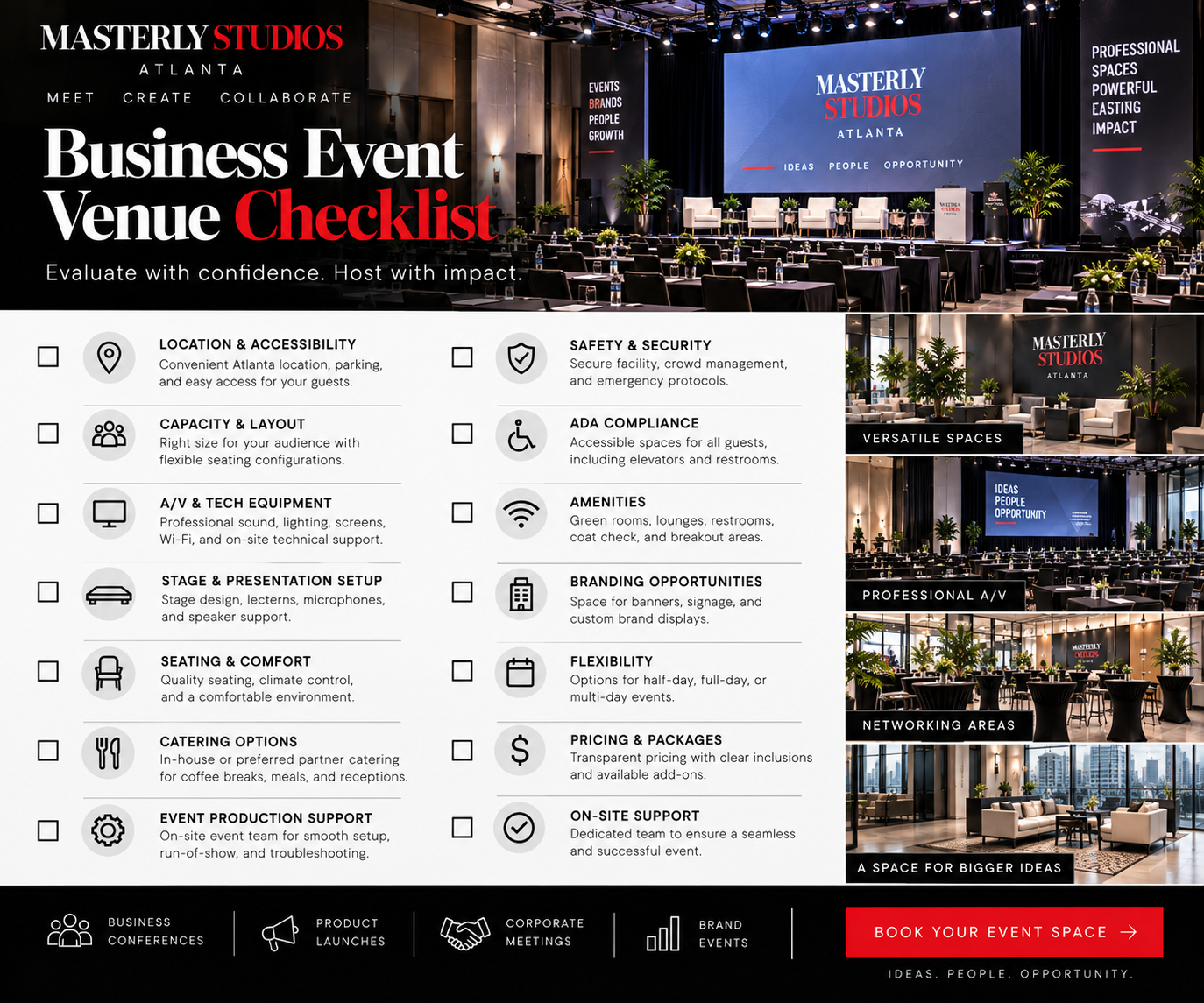
A strong Business Event Venue Checklist and event planning checklist should cover the complete experience:
- Capacity
- Room layout
- Parking
- Guest arrival
- Load-in
- Vendor access
- A/V
- Wi-Fi
- Accessibility
- Catering
- Branding
- Photography and video
- Production requirements
- Setup and breakdown
- Overtime
- Venue policies
The purpose is not to create a complicated process.
It is to make sure the selected venue can support the event your business actually wants to produce, while guiding event planning and capturing important details before the venue is selected.
Why Masterly Studios Can Be Part of the Solution
Masterly Studios provides businesses with a professional environment for meetings, corporate events, productions, branded content, photography, video, and other business-focused experiences.
The space can be evaluated around the needs of the event rather than simply viewed as an empty room.
That means business teams can discuss guest capacity, room layout, production requirements, A/V, content creation, access, branding, and other important considerations during the venue-selection process.
For teams that want their event and visual production needs to work together, this approach can make venue planning more efficient.
The right space should support the event before, during, and after guests arrive.
Frequently Asked Questions
What is an event venue checklist?
An event venue checklist is a structured way to evaluate whether a venue can support the capacity, layout, technology, access, catering, branding, production, and budget needs of an event.
What should an event venue checklist include?
It should include capacity, room layout, parking, load-in, A/V, Wi-Fi, accessibility, catering, branding, production requirements, and overtime rules.
What event venue questions should businesses ask?
Businesses should ask about capacity, access, setup times, vendor rules, A/V, Wi-Fi, catering, accessibility, branding, overtime, and production restrictions.
Can Masterly Studios support corporate events?
Yes. Masterly Studios provides a professional environment for corporate meetings, events, productions, branded content, photography, and video.
Can teams tour Masterly Studios before booking?
Yes. A studio tour allows teams to evaluate the space and discuss their event, production, layout, and content requirements.
Why should businesses review venue rules before signing?
Venue rules can affect setup, vendors, catering, equipment, production, access, and overtime costs. Reviewing them early helps prevent unexpected problems.
Invite Teams to Use the Checklist During a Masterly Studios Tour
The right venue should do more than accommodate your guest list. It should support the way your business wants the event to look, feel, and operate.
If your team is comparing venues, use this event venue checklist to plan your review, compare date availability, and bring detailed questions to a professional venue tour.
Masterly Studios can help you evaluate the space around your guest experience, production requirements, A/V needs, branding, and content goals.
Call (404) 726-7261 or visit Masterly Studios to schedule a tour and discuss your upcoming event.
Final thoughts: confirm the key operational details before you book.