Corporate Event Planning: A Practical Timeline From Venue Search to Event Day
Corporate events can become stressful when too many important details are managed separately. The venue may be selected before anyone confirms the A/V needs. Speakers may receive different schedules. Catering may not match the program. The room may not support the planned seating. Photography and content capture may be considered only after the most important moments have already happened.
For a business, these issues can affect more than the event itself. Guests notice when an event feels disorganized, and that experience can influence how they view the company behind it.
Professional corporate event planning brings the major pieces together before event day. With the right production environment and support, businesses can focus on their guests and objectives while experienced professionals manage the details that keep the event moving.
Masterly Studios provides a professional environment for corporate meetings, productions, branded events, content creation, and business gatherings. The goal is to help companies create an event experience that feels intentional, organized, and consistent with their brand.
Why Corporate Event Planning Matters to Your Business
A corporate event is a reflection of the organization hosting it.
An executive meeting communicates professionalism to leadership and clients. A company celebration reflects workplace culture. A networking event represents the brand to potential partners. A product presentation can influence how customers perceive the company's offering.
That makes business event planning more than a scheduling exercise.
The event needs to support a clear business purpose, with event objectives set using the SMART framework so the plan stays tied to broader business goals. Measurable outcomes can include attendance targets and satisfaction scores. It also needs to give guests a comfortable and professional experience from arrival through departure.
When venue, production, speakers, catering, seating, and content capture are coordinated, the event is less likely to feel like a collection of disconnected tasks.
Start With the Objective, Audience, and Event Experience
Every event begins with a reason.
The objective might be to bring clients together, communicate company news, host executives, support product launches that create excitement around new products or services, run employee appreciation events that recognize contributions and strengthen morale, build relationships, or create branded content — so setting objectives clearly from the start helps define the right event type.
The audience matters just as much.
Your target audience may include executives, employees, clients, partners, speakers, sponsors, and VIP guests, each with different expectations and requirements.
Identifying target attendees and choosing a date that avoids major holidays should happen early in the planning process.
These factors influence the venue, seating, schedule, technology, catering, and visual content.
For professional corporate event planning, the objective and audience should remain central throughout the production. Every major decision should support the experience the business wants its guests to have.
Venue Selection Should Support the Entire Program
Choosing a corporate event venue is not simply about finding an attractive room, and evaluating venues properly helps prevent issues with logistics, access, and production later.
The space needs to work for the actual program.
The right venue should be assessed for layout, preferred date availability, setup time, and whether it can support plenary flow as well as breakout spaces.
Considerations may include:
- Guest capacity
- Seating configuration
- Stage or presentation area
- A/V requirements
- Lighting
- Catering access
- Registration
- Networking space
- Speaker preparation
- Photography and video access
- Vendor load-in
- Production setup
- Guest accessibility
- Room flow for breakout sessions
A venue that looks good but cannot support the production requirements can create problems later.
Masterly Studios provides a professional setting where businesses can bring meetings, productions, presentations, branded content, and other corporate experiences together in one controlled environment.
Seating Should Reflect the Event Purpose
Room layout can influence how guests experience an event.
A presentation may require clear sightlines toward a screen or stage. A networking event may need open areas where people can comfortably move and talk. A formal gathering may require structured seating for executives and VIP guests.
Production teams also need space.
Photographers, videographers, A/V professionals, speakers, and event staff may require specific positions or access points.
A professional corporate event planning approach considers these needs before the room is finalized.
The goal is to make the space work for both the audience and the production.
A/V and Event Technology Planning Protects the Presentation
A/V problems can quickly become visible to every guest in the room.
Corporate presentations may require microphones, screens, projectors, speakers, lighting, internet access, video playback, recording equipment, or other event technology as part of the technical plan.
Live streaming technology can connect remote attendees for virtual events or hybrid participation.
The technology needs to match the program.
Speakers may also have different presentation requirements. Files should be available in the proper format, equipment should be tested, and the production team should understand the schedule before guests arrive.
Professional planning allows technical requirements to be addressed before they become event-day problems. Interactive tools such as social media walls can also help engage attendees during the program.
Catering Should Work With the Schedule and Event Budget
Food and beverage service is an important part of the guest experience, but it also needs to fit the event program, and catering staff should be coordinated with the schedule, not just the menu.
Meals, refreshments, breaks, and service periods should be coordinated with presentations, networking, meetings, and other activities.
Dietary requirements should also be considered early. Confirm catering timings as part of schedule planning.
For an executive meeting, a delayed meal can disrupt the agenda. For a networking event, catering placement can affect how guests move through the room.
Strong business event planning connects catering with the overall guest experience instead of treating it as a separate item. It also helps to secure reliable partners for catering and A/V equipment.
Speakers Need a Clear Production Plan
Speakers should know what to expect before arriving.
That includes arrival time, registration, presentation schedule, rehearsal, microphone requirements, stage access, introductions, and departure.
The production team also needs to know when each speaker will be on stage and what equipment is required.
This becomes especially important when an event includes executives, panels, awards, presentations, or multiple speakers.
A shared production schedule gives everyone a clearer understanding of the event and reduces unnecessary last-minute communication.
Rehearsal Helps Identify Problems Early
A rehearsal gives the team an opportunity to review the event before guests arrive.
It can include:
- Speaker entrances
- Microphone checks
- Presentations
- Video playback
- Lighting
- Stage movement
- Awards
- Introductions
- Transitions
- Timing
Rehearsals also help confirm attendee engagement moments by checking that the agenda alternates between content delivery and participant interaction.
A rehearsal can reveal issues that are difficult to identify from a written schedule.
A presentation may need a different setup. A microphone may not be suitable for a speaker. A video may require another format. A transition may take longer than expected.
Finding these issues before guests arrive gives the production team time to make adjustments.
Content Capture Should Be Part of Corporate Event Planning
A corporate event can create valuable content long after the event is finished, and that ongoing value is one reason content capture matters for event marketing.
Professional photography and video can capture executives, speakers, guests, networking, presentations, branded areas, awards, products, and authentic interactions.
Those assets may later support:
- Company websites
- Social media
- Marketing campaigns
- Internal communications
- Public relations
- Annual reports
- Recruiting
- Promotion for future events
- Brand storytelling
They can also be used across event websites and other campaign channels to promote the event and track RSVPs.
This is why content capture should be considered as part of corporate event planning, rather than added as an afterthought.
Masterly Studios can provide a professional environment that supports photography, video, branded content, and corporate productions.
Access Planning Keeps Production Moving
Different teams may need access to the venue at different times, so access planning should be part of vendor coordination across teams entering the space on different schedules.
A/V crews may need early access for equipment. Caterers may need delivery and preparation time. Photographers and videographers may need to prepare their positions. Speakers may need rehearsal access.
A clear access schedule helps prevent one delayed setup from affecting the entire event. Understaffing can lead to long registration lines and poor coordination.
The production timeline should account for:
- Vendor arrival
- Equipment delivery
- Room setup
- Technical checks
- Catering preparation
- Speaker arrival
- Rehearsal
- Guest arrival
- Event programming
- Breakdown
Staffing and access plans often change depending on whether the event is small, midsize, or one of the more complex events; small corporate events host up to 250 people, while midsize events can include up to 1,000 attendees.
This level of coordination can make a major difference when several teams are working in the same space.
Contingency Planning Protects the Guest Experience
Even carefully planned events can change.
A speaker may become unavailable. A delivery may be delayed. Technical equipment may need a replacement. Weather may affect transportation. A schedule may need to change.
Professional event planning leaves room in the event budget to respond. Budget overruns often come from last-minute requests or vendor rate changes. A contingency fund of 15–20% can help protect the plan from unexpected costs.
The purpose of contingency planning is not to expect problems. It is to make sure the team has a clear response if something unexpected happens.
That preparation can help protect the schedule, guest experience, and reputation of the company hosting the event.
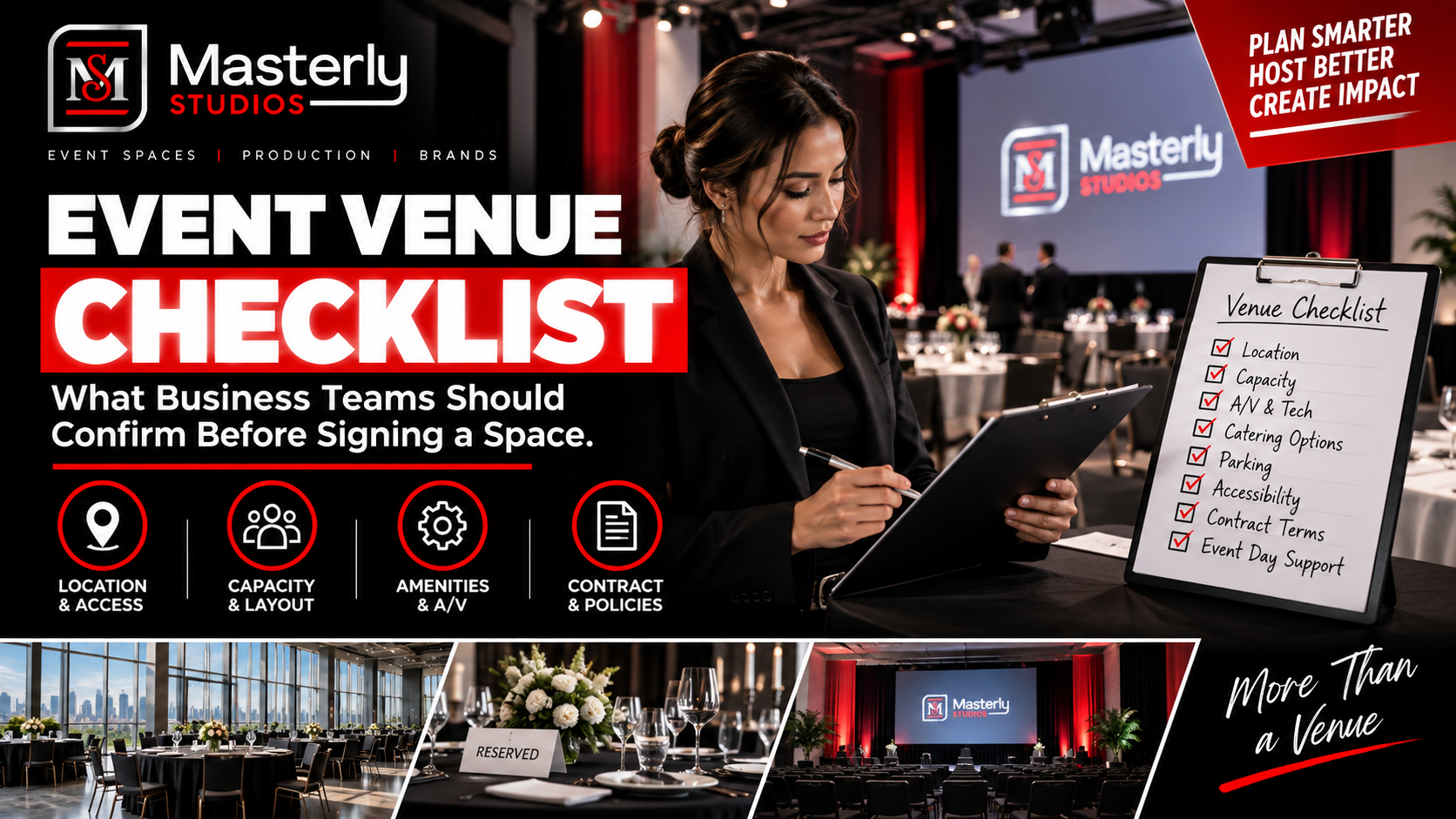
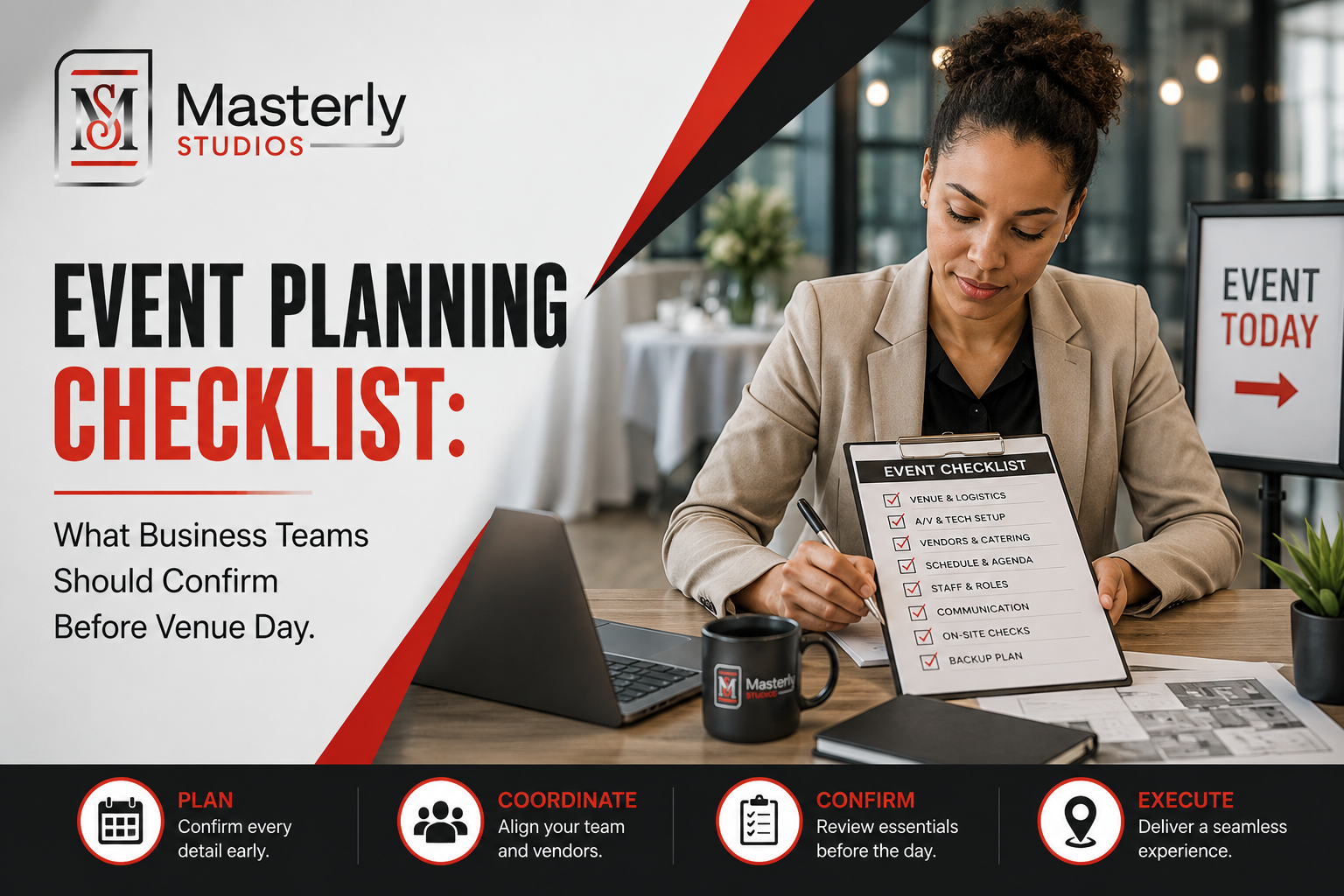
A Corporate Event Checklist Should Connect the Entire Production
A corporate event planning checklist is most useful when it supports the full planning process and brings the entire event together.
It should account for:
- Business objectives
- Audience
- Venue
- Seating
- A/V
- Catering
- Speakers
- Rehearsal
- Photography and video
- Content capture
- Vendor access
- Production schedules
- Contingency planning
A strong checklist should also cover budget setup, including revenue sources and major expense categories.
It should also support post-event review by tracking budget variance and measuring return on investment.
For businesses, the value is not in having a long checklist. The value is having experienced professionals who know how those details affect one another.
The Masterly Studios Approach
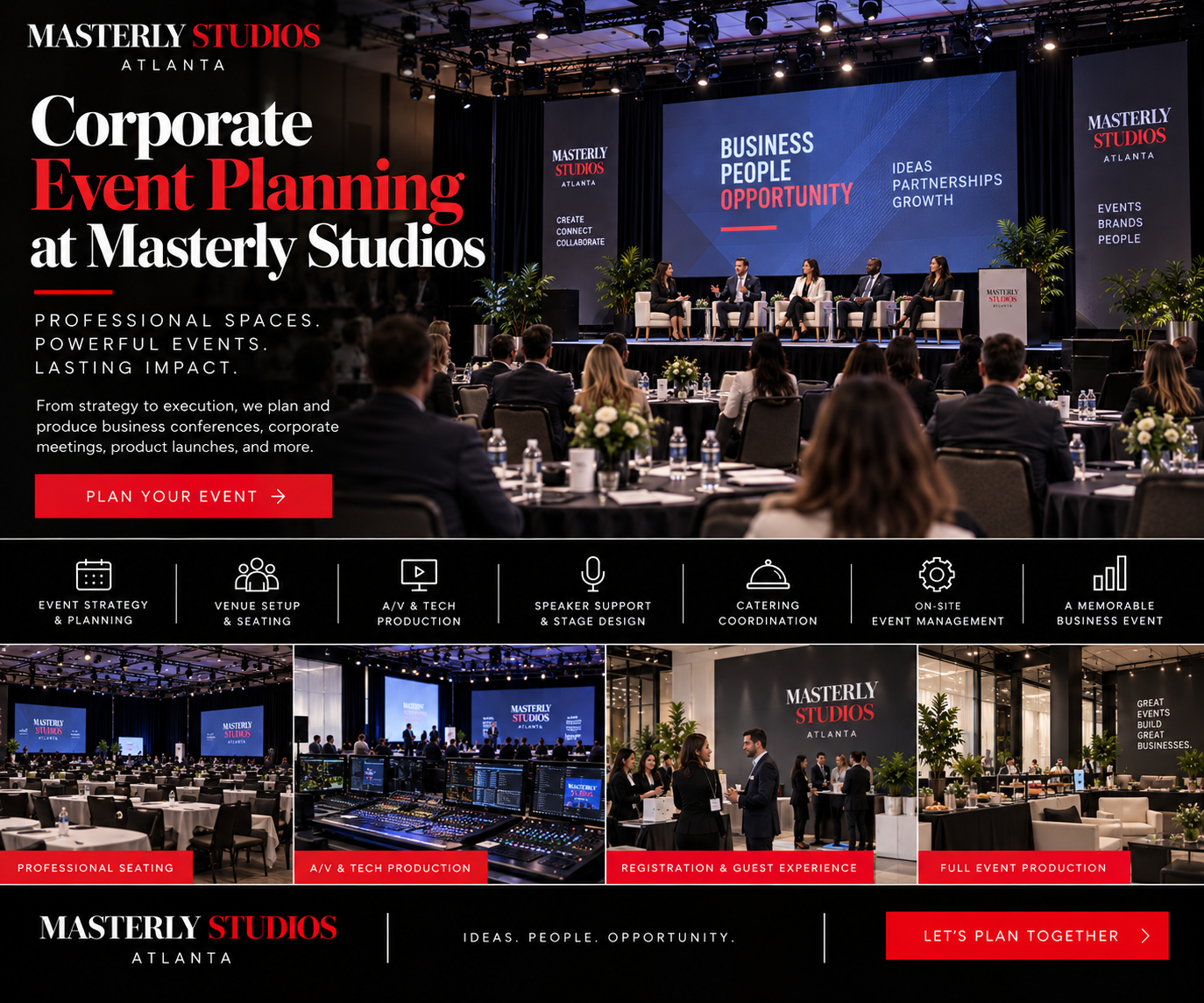
Masterly Studios offers businesses a professional environment designed to support corporate meetings, productions, branded content, presentations, and other business-focused experiences.
Instead of asking an internal team to manage every production detail while also handling their normal responsibilities, businesses can work with experienced corporate event planners in a dedicated professional space with production-focused support.
The studio environment can also make it easier to coordinate visual content around the event.
Executives, speakers, products, teams, presentations, and branded elements can be captured with a clear understanding of how those assets will be used afterward.
This creates value beyond the event itself.
The goal is to help businesses create a professional experience while producing useful content that can continue supporting their marketing and communications. Strong event management also includes reviewing event data with data analytics tools to measure event success and attendee engagement after the program.
When Professional Corporate Event Planning Makes Sense
Professional corporate event planning can be especially valuable when an event involves executives, clients, multiple vendors, speakers, A/V production, branded content, a large guest list, or more complex formats like large conferences. Businesses should start planning large events 9–12 months in advance.
It can also help when an internal team knows what the company wants to accomplish but does not have the time to coordinate every venue and production detail.
Masterly Studios can provide a professional setting where businesses can bring key event and production needs together, and outside support can also help review vendor contracts carefully, especially cancellation policies and hidden fees.
Coordinate Event Teams and Vendor Management for a Stronger Attendee Experience
Professional event teams need more than a detailed schedule to deliver successful corporate gatherings. Whether the event is a company retreat, company offsite, team offsite, conference, or one of several social events, coordination between the core team, vendors, speakers, and production staff is essential. Vendor management should cover arrival times, setup requirements, catering, A/V, and other services, while on-site execution keeps the plan moving once guests arrive. Even small details such as dietary restrictions, dress code, registration, and check in can influence the attendee experience. For larger public events, trade shows, and corporate gatherings, an event app can also support communication, schedules, and social engagement.
Build a Marketing Plan Around the Event Experience
Corporate events can create opportunities to build awareness before, during, and after the event. A strong marketing plan can connect event photography, video, social content, branded materials, and follow-up communications. This applies to conferences, trade shows, company retreats, team offsites, and other business or social events. Instead of treating the event as a single day, professional teams can plan content that continues to support the company's message afterward. This helps create a lasting impression while giving the business useful material for future marketing.
Prepare for Technical Issues Before Guests Arrive
Even well-planned events can experience technical issues. Microphone problems, presentation errors, connectivity issues, lighting changes, or equipment failures can interrupt the attendee experience. Professional on-site execution includes technical checks, vendor coordination, and clear communication between the event team and production staff. Preparing for these issues in advance helps the team respond quickly without allowing a small problem to disrupt the entire event.
Use Attendee Feedback and Post-Event Analysis to Improve Future Events
The work does not end when the final guest leaves. Attendee feedback and post event analysis can help businesses understand what worked, what created friction, and what should change for future events. Teams can review registration and check in numbers, attendance, engagement, survey responses, content performance, and other final numbers. This information can guide future company retreats, company offsites, team offsites, conferences, and public events. Reviewing the complete attendee experience gives the core team useful insight for planning future events and maintaining a consistent standard across multiple gatherings.
Frequently Asked Questions
What does corporate event planning include?
Corporate event planning can include objectives, audience needs, venue selection, seating, A/V, catering, speakers, rehearsal, content capture, access, scheduling, and contingency planning. It should also cover the full event lifecycle, including post event follow up. Post-event tasks should include thank-you messages, a post event survey, and other ways to gather feedback within a few days, including attendee surveys for improvement. Review event metrics such as attendance rates and audience engagement to improve the next event.
Why is corporate event planning important?
It helps connect the event with the company's business goals, brand presentation, guest experience, and production requirements.
Can Masterly Studios support corporate events?
Yes. Masterly Studios provides a professional environment for corporate meetings, productions, branded content, presentations, and business events, including in person gatherings.
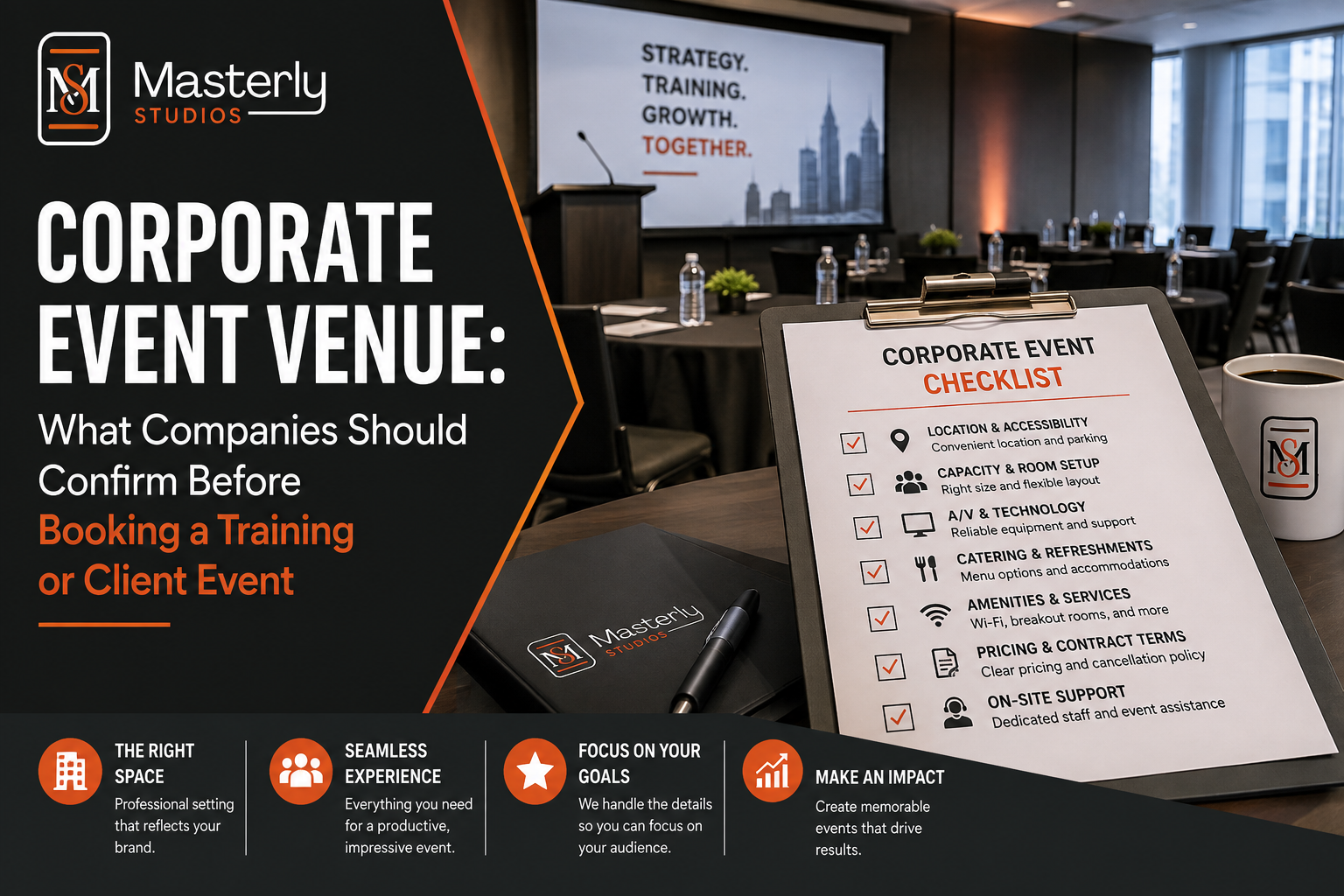
What should a corporate event checklist include?
A corporate event checklist should cover the objective, audience, venue, seating, A/V, catering, speakers, rehearsal, content capture, access, and contingency planning, with an event planning checklist structure that also maps budgeting and logistics from pre-event preparation through on-site setup and post-event follow-up. It should also include an event budget with a 10% to 15% contingency fund for unexpected costs.
Should photography and video be planned before the event?
Yes. Planning content capture early helps ensure important people, moments, branding, and presentations are properly documented.
Can Masterly Studios support both events and content production?
Yes. The studio can support corporate productions, meetings, branded content, photography, video, and other professional business needs, with support that can extend from online registration through content production and post-event review.
Attendee journey planning can start at registration with useful communications and continue through post-event measurement, including return on investment.
Invite Planners to Tour Masterly Studios for Q4 and Early-2027 Dates
If you are one of the event planners organizing your next corporate event for Q4 or early 2027, the right environment can make it easier to bring your people, production, presentations, and visual content together.
Large scale events often need more lead time, tighter logistics, and a contingency fund of around 20% to cover unexpected costs.
Masterly Studios provides a professional setting for businesses that need a polished space for corporate experiences and related production needs. Large scale events also need added planning attention around logistics and risk.
Call (404) 726-7261 or visit Masterly Studios to discuss your upcoming event, including coordination with local vendors, and schedule a studio tour.