Avoiding Copyright Infringement: What Every Podcaster Must Know About License Music Requirements
January 27, 2026
Starting
a podcast is exciting because it feels like you’re finally creating something that’s yours. You get to build a show, develop your voice, and share ideas with the public in a way that’s personal and powerful. But there’s one issue that trips up podcasters more than almost anything else: using music without truly understanding what the law requires.
At Masterly Studios, we work with creators across the country who want their content to look and sound professional while staying legally protected. And here’s the reality—copyright mistakes rarely happen because someone is trying to steal. Most copyright infringement cases begin with a simple assumption like, “It’s only a few seconds,” or “Everyone uses that song,” or “It’s online so it must be free.”
If you want to use music in your podcast, you need a plan. This guide breaks down what license music requirements really mean, why fair use is widely misundersto od, and how to avoid the kind of infringement issues that can shut down your show.
This happens because copyright law is strict, and platforms don’t always warn you before a problem occurs. A track might upload fine today and get flagged weeks later when an algorithm catches it. Even if it’s just background music or a short clip, it may still be considered infringement.
The smartest move is treating audio like an asset that needs licensing, not like decoration you can borrow. If you don’t, your podcast could face takedowns, demonetization, or legal action.
A single song can have multiple layers of rights. The artist may own one part, while a label owns the recording and another party owns the publishing. That means getting permission to use a track isn’t always as simple as asking one person. In podcast production, copyright issues can show up fast because your content is distributed widely. The more public your show becomes, the more likely your use will be noticed.
This is where music licensing becomes confusing for new creators. It feels like you’re getting a “license,” but you might be getting only part of what you need. And that gap is where copyright infringement often happens. If you’re unsure, always slow down before publishing. The risk is not worth it.
Fair use is a legal defense, not a permission slip. That means you may still get flagged or challenged, even if you think fair use applies. A platform like Spotify may remove the episode before you even get to explain your position.
Many creators assume fair use applies if they’re doing commentary, education, or critique. But fair use depends on the specific facts, and even then it can still be disputed.
Even one recognizable part of a song can trigger a claim. A few seconds may be enough for a system to identify the track. Once that happens, the record label or rights holder may take action.
The length of time you use doesn’t automatically protect you. The better question is whether you obtained the right license and permission to use it.
It can also affect monetization. Platforms may limit your reach or restrict your content if they see repeated infringement issues. Even if you didn’t mean harm, the system doesn’t care about intent.
If your podcast is part of your business brand, copyright mistakes can look careless. Protecting your audio is part of protecting your reputation.
Some licenses cover only personal use, not commercial. Some cover only one episode, not your full show. Some allow streaming but not social media clips, and some exclude p aid ads.
Licensing isn’t a one-size-fits-all process. If you want to use music safely, you need to confirm what your license actually allows.
No matter which way you go, your goal is to have the rights clearly documented. If you can’t prove permission, you may still face a claim later.
This is why podcasters need to be careful with what they download. Just because you find something online doesn’t mean it’s safe. Free doesn’t automatically equal licensed.
The safe approach is checking the license source and terms every time. If it feels unclear, avoid it.
That means the sheet music may be public domain, but the version you found on the internet is not. If you use a modern recording, you may still violate copyright.
Public domain is useful, but it’s not effor tless. Verification matters.
The safest path is sourcing sound effects from licensed libraries where usage rights are clear. Never assume a sound is free just because it’s short. Even small audio details may be protected.
The goal is to create a great show without borrowing someone else’s work. It’s possible, but it requires intentional choices.
The system is always scanning new and existing uploads. If your podcast contains copyrighted music, it may trigger a match at any time. Sometimes the platform removes the episode, sometimes it restricts distribution, and sometimes it sends a notice.
Creators who think “I got away with it” are often just waiting for detection. It’s not worth risking your show’s future.
The more specific the permission, the safer you are. If you can’t get clear permission, you should not use the track.
This is where creators get caught off guard. A song snippet in the background of a 20-second promo may trigger a claim. And because the clip is more public and more shareable, it may be found quickly.
If you want to use music across platforms, your license needs to cover those uses. Don’t assume your podcast rights automatically cover social.
Podcasters do not automatically have those rights. A podcast is a different distribution format, and licensing requirements can differ. That’s why podcasters need to take music licensing seriously.
You may be creating content for fun, but once it’s published publicly, copyright rules still apply.
This system makes it easier to avoid infringement and protect your growth. It also helps your show feel more professional.
At Masterly Studios, we work with creators across the country who want their content to look and sound professional while staying legally protected. And here’s the reality—copyright mistakes rarely happen because someone is trying to steal. Most copyright infringement cases begin with a simple assumption like, “It’s only a few seconds,” or “Everyone uses that song,” or “It’s online so it must be free.”
If you want to use music in your podcast, you need a plan. This guide breaks down what license music requirements really mean, why fair use is widely misundersto od, and how to avoid the kind of infringement issues that can shut down your show.
Why Podcasters Accidentally Violate Copyright Rules So Often
Podcasters are creators first, not lawyers. You may be focused on your guest, your script, your edits, and making each episode better than the last. Then you add a trending song or a dramatic track because it fits the vibe—and suddenly you’ve used copyrighted material without permission.This happens because copyright law is strict, and platforms don’t always warn you before a problem occurs. A track might upload fine today and get flagged weeks later when an algorithm catches it. Even if it’s just background music or a short clip, it may still be considered infringement.
The smartest move is treating audio like an asset that needs licensing, not like decoration you can borrow. If you don’t, your podcast could face takedowns, demonetization, or legal action.
What Copyright Protects in Podcast Audio Content
When people hear the wor d copyright, they often think only of big artists and major record labels. But copyright applies to creative work across the board—songs, sound recordings, clips, voice performances, and even certain sound effects. If someone created it and fixed it in a tangible form, it likely has copyright protection.A single song can have multiple layers of rights. The artist may own one part, while a label owns the recording and another party owns the publishing. That means getting permission to use a track isn’t always as simple as asking one person. In podcast production, copyright issues can show up fast because your content is distributed widely. The more public your show becomes, the more likely your use will be noticed.
The Two Rights You Need to Understand Before You Play Music
If you want to play music in a podcast, you typically need to understand at least two separate rights. One involves the composition (the written song), and the other involves the sound recording (the recorded track you hear). Even if you have permission for one, you may still violate the other.This is where music licensing becomes confusing for new creators. It feels like you’re getting a “license,” but you might be getting only part of what you need. And that gap is where copyright infringement often happens. If you’re unsure, always slow down before publishing. The risk is not worth it.
The Truth About “Fair Use” and Why It’s Not a Safety Net
Most podcasters talk a bout fair use like it’s a magic word. They believe fair use means they can use any music clip if they talk over it or keep it short. But fair use is not automatic, and it does not exist just because you have good intentions.Fair use is a legal defense, not a permission slip. That means you may still get flagged or challenged, even if you think fair use applies. A platform like Spotify may remove the episode before you even get to explain your position.
Many creators assume fair use applies if they’re doing commentary, education, or critique. But fair use depends on the specific facts, and even then it can still be disputed.
Why “It’s Only a Few Seconds” Is One of the Biggest Myths
There’s a common myth that you can use five seconds, ten seconds, or a certain number of seconds and be safe. That’s simply not how copyright works. There is no universal rule that makes short clips legal.Even one recognizable part of a song can trigger a claim. A few seconds may be enough for a system to identify the track. Once that happens, the record label or rights holder may take action.
The length of time you use doesn’t automatically protect you. The better question is whether you obtained the right license and permission to use it.
How Copyright Infringement Can Hurt Your Podcast Growth
Copyright infringement doesn’t just create legal risk—it can slow your momentum as a creator. Imagine spending hours editing a show, publishing it proudly, and then losing it to a takedown. That can damage your consistency, your audience trust, and your future partnerships.It can also affect monetization. Platforms may limit your reach or restrict your content if they see repeated infringement issues. Even if you didn’t mean harm, the system doesn’t care about intent.
If your podcast is part of your business brand, copyright mistakes can look careless. Protecting your audio is part of protecting your reputation.
What “Li cense Music” Actually Means for Podcasters
When people say license music, they usually mean acquiring the legal right to use a track in their content. That right may include using the music as an intro, background sound, transition, or emotional cue. But not every license covers every type of use.Some licenses cover only personal use, not commercial. Some cover only one episode, not your full show. Some allow streaming but not social media clips, and some exclude p aid ads.
Licensing isn’t a one-size-fits-all process. If you want to use music safely, you need to confirm what your license actually allows.
Music Licensing Options That Podcasters Commonly Use
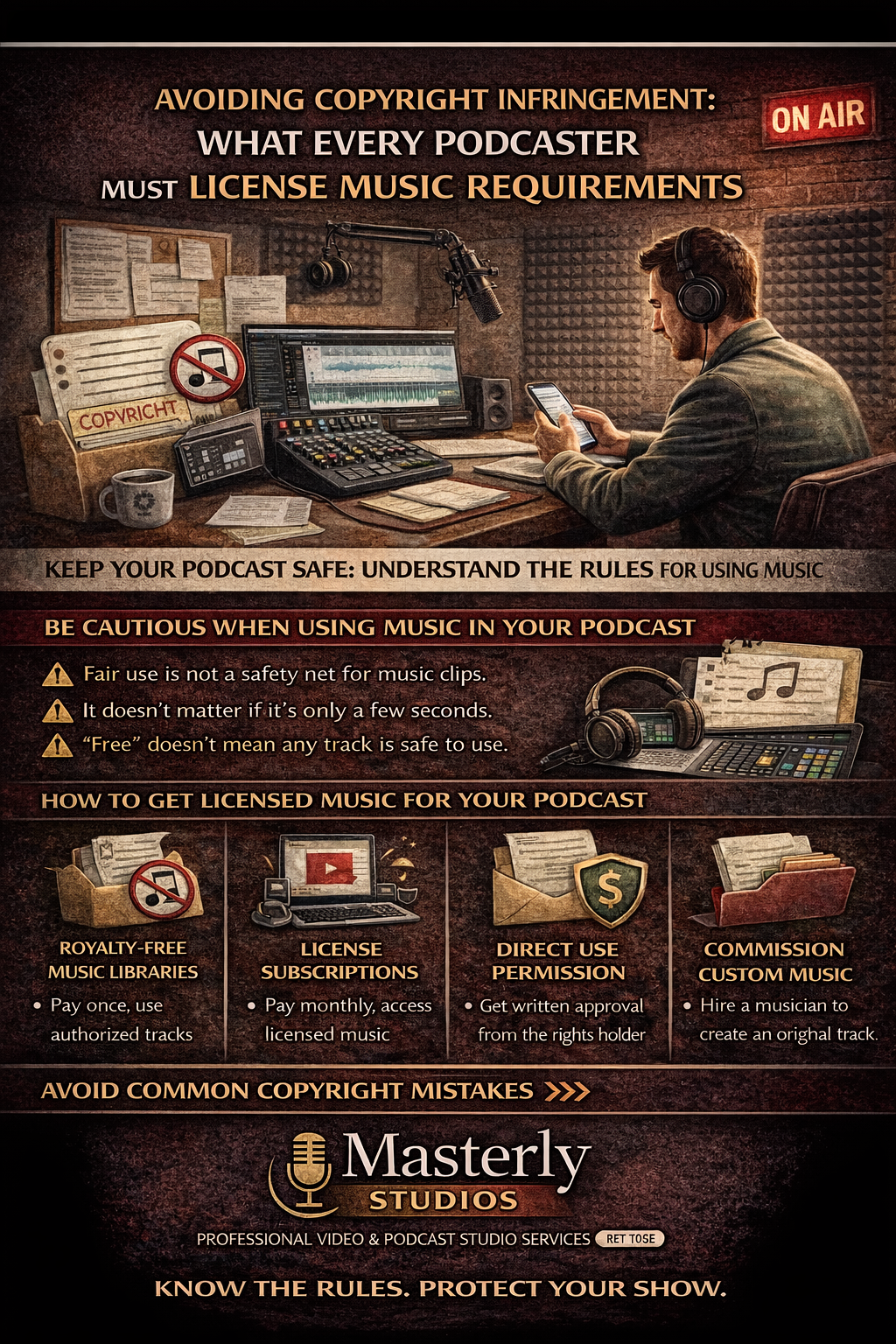
There are different ways podcasters obtain music licensing, depending on budget and creative goals. Some creators want custom sound. Others just need a simple track that won’t cause a copyright issue. Common options include:- Royalty-free music libraries with clear license terms
- Subscription services that provide licensed tracks
- Direct permission from an independent artist
- Custom music created specifically for your podcast
- Public domain audio , when truly valid
No matter which way you go, your goal is to have the rights clearly documented. If you can’t prove permission, you may still face a claim later.
Why “Free Music” Isn’t Always Free
A track la beled free music may still require attribution or may be limited to personal use. Some free tracks are posted by someone who doesn’t actually own the rights. If you use it, you could still be responsible for infringement.This is why podcasters need to be careful with what they download. Just because you find something online doesn’t mean it’s safe. Free doesn’t automatically equal licensed.
The safe approach is checking the license source and terms every time. If it feels unclear, avoid it.
Public Domain Music Can Help, But You Must Verify It
Public domain music can be a great option, but it’s also misunderstood. A song might be old enough to be public domain in one country, but not in another. Some compositions are public domain, but the recording is still copyrighted.That means the sheet music may be public domain, but the version you found on the internet is not. If you use a modern recording, you may still violate copyright.
Public domain is useful, but it’s not effor tless. Verification matters.
Sound Effects: Small Sounds, Big Copyright Problems
Podcasters often use sound effects to make episodes more fun and engaging. A quick beep, a dramatic boom, or a movie-style whoosh seems harmless. But sound effects can also be copyrighted material, especially if they come from commercial libraries or entertainment clips.The safest path is sourcing sound effects from licensed libraries where usage rights are clear. Never assume a sound is free just because it’s short. Even small audio details may be protected.
The goal is to create a great show without borrowing someone else’s work. It’s possible, but it requires intentional choices.
Why Spotify and Podcast Platforms Flag Episodes Unexpectedly
Platforms like Spotify use audio recognition systems to identify copyrighted music and other protected material. Your episode might upload today and be flagged later. That delay can confuse creators and make them think the platform is inconsistent.The system is always scanning new and existing uploads. If your podcast contains copyrighted music, it may trigger a match at any time. Sometimes the platform removes the episode, sometimes it restricts distribution, and sometimes it sends a notice.
Creators who think “I got away with it” are often just waiting for detection. It’s not worth risking your show’s future.
Permission to Use Music: What It Should Look Like
Permission is only useful if it’s clear. If you want to use a track, you need written permission to use it and proof of what rights are granted. A vague email or a casual DM may not protect you in a dispute. Good permission documentation should include:- The name of the song or track
- Who owns the rights
- What kind of use is allowed
- Where the podcast will be published
- Whether you can monetize and run ads
- Whether you can use clips on social platforms
The more specific the permission, the safer you are. If you can’t get clear permission, you should not use the track.
Podcast Clips and Social Media Create Extra Risk
A lot of podcasters use short clips for marketing. These clips may go on Instagram, TikTok, YouTube Shorts, or other platforms. Even if your full episode isn’t flagged, your clip might be.This is where creators get caught off guard. A song snippet in the background of a 20-second promo may trigger a claim. And because the clip is more public and more shareable, it may be found quickly.
If you want to use music across platforms, your license needs to cover those uses. Don’t assume your podcast rights automatically cover social.
The “Radio Rule” Doesn’t Apply to Podcasts
Some creators assume that if radio stations can play music, a podcast can too. That’s another myth. Radio stations typically have blanket licensing agreements and business frameworks that cover broadcasting.Podcasters do not automatically have those rights. A podcast is a different distribution format, and licensing requirements can differ. That’s why podcasters need to take music licensing seriously.
You may be creating content for fun, but once it’s published publicly, copyright rules still apply.
How to Build a Safer Workflow for Every Episode
Protecting your podcast doesn’t have to be complicated. You just need a repeatable workflow that keeps you from making accidental mistakes. A good process helps you move fast while staying compliant. Here’s a safe way to handle audio choices:- Use licensed music libraries with clear terms
- Save your receipts , licenses, and documentation
- Keep a folder for each episode’s audio assets
- Verify that each track is allowed for commercial use
- Don’t rely on fair use unless legal counsel confirms it
- Avoid trending songs unless you obtained permission
This system makes it easier to avoid infringement and protect your growth. It also helps your show feel more professional.
Why Working With a Studio Helps You Stay Protected
Many podcasters try to handle everything alone. That’s admirable, but it can create legal risk without you realizing it. A professional studio environment helps you make better content decisions, including music and sound selection.At Masterly Studios, we help creators build podcast episodes that sound clean, engaging, and legally safe. We also help you build a content strategy that works across platforms while minimizing exposure.
The goal is not just to mak e something great once. It’s to build a show that lasts.
How Masterly Studios Helps Podcasters Use Music the Right Way
When you work with Masterly Studios, you get more than microphones and cameras. You get creative support and production clarity that helps prevent mistakes before they go public. That includes guidance on licensed audio options, how to keep documentation organized, and how to maintain consistent quality.We help podcasters avoid the “publish now, panic later” cycle. Your content should feel exciting, not stressful. If you want to grow confidently, your production process needs to be stable and safe.
Whether you’re new or already established, the right system can save you time and protect your brand.
Contact Masterly Studios to Book a Free Consultation
If you w ant to use license music the right way—and avoid copyright problems that could interrupt your podcast growth—Masterly Studios is here to help. Many podcasters violate copyright rules without realizing it, and once infringement gets flagged, it can be hard to reverse the damage.At Masterly Studios, we work with creators throughout the country and nationally to produce high-quality podcast content that looks professional and stays protected. If you have questions about music licensing, fair use myths, public domain rules, or how to build a safer audio workflow, we’ll help you get clarity before you publish.
Call (888) 209-4055 to book a free consultation. Let’s talk about your podcast, your goals, and how to keep your content strong, clean, and legally safe.
Need a podcast lighting setup? Masterly Studios provides professional podcast and camera lighting in a prepared studio for consistent, polished video production.
Need a podcast studio setup? Masterly Studios offers a professional recording space with quality equipment, lighting, acoustics, and video support for creators.
Book a training venue in Atlanta for corporate workshops, employee training, and learning events with flexible layouts, A/V support, and professional amenities.
Learn how to record a video podcast in Atlanta with a professional studio setup, clear audio, polished lighting, guest support, and a smooth recording workflow.
Book a corporate Christmas party venue in Atlanta for year-end events with flexible space, A/V support, catering, branding, and more for your team and festive fun.
Book a creative studio rental for photography, video, branded content, and marketing campaigns with flexible production space at Masterly Studios for every project.
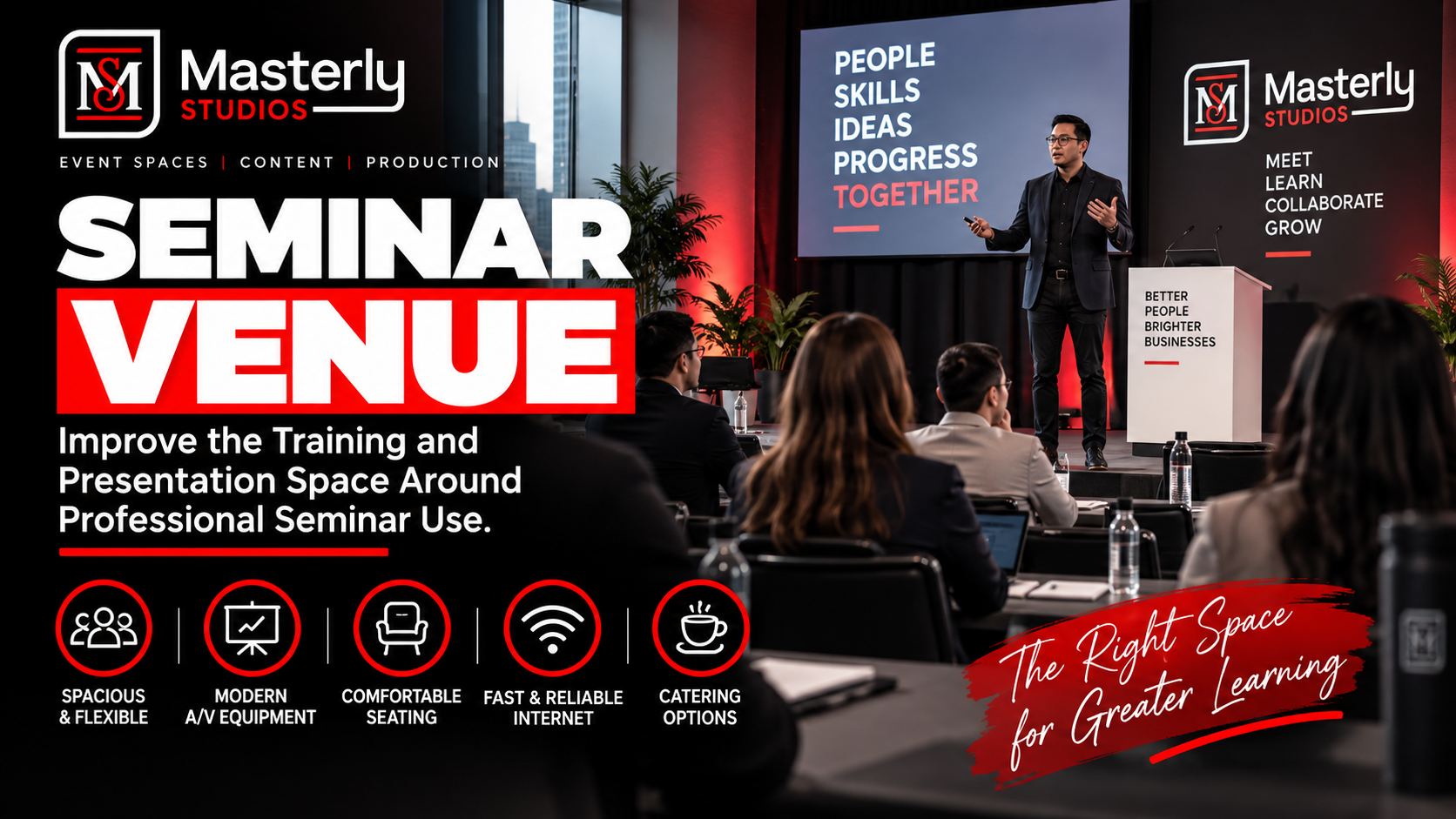
Book a professional seminar venue for training, presentations, and business events with flexible seating, A/V, check-in, parking, content support, and event setup.

Use an event venue checklist to evaluate capacity, layout, parking, load-in, A/V, Wi-Fi, accessibility, catering, branding, production, and overtime needs.

Plan corporate events with professional support for venues, A/V, catering, speakers, content capture, access, and production at Masterly Studios in Atlanta.
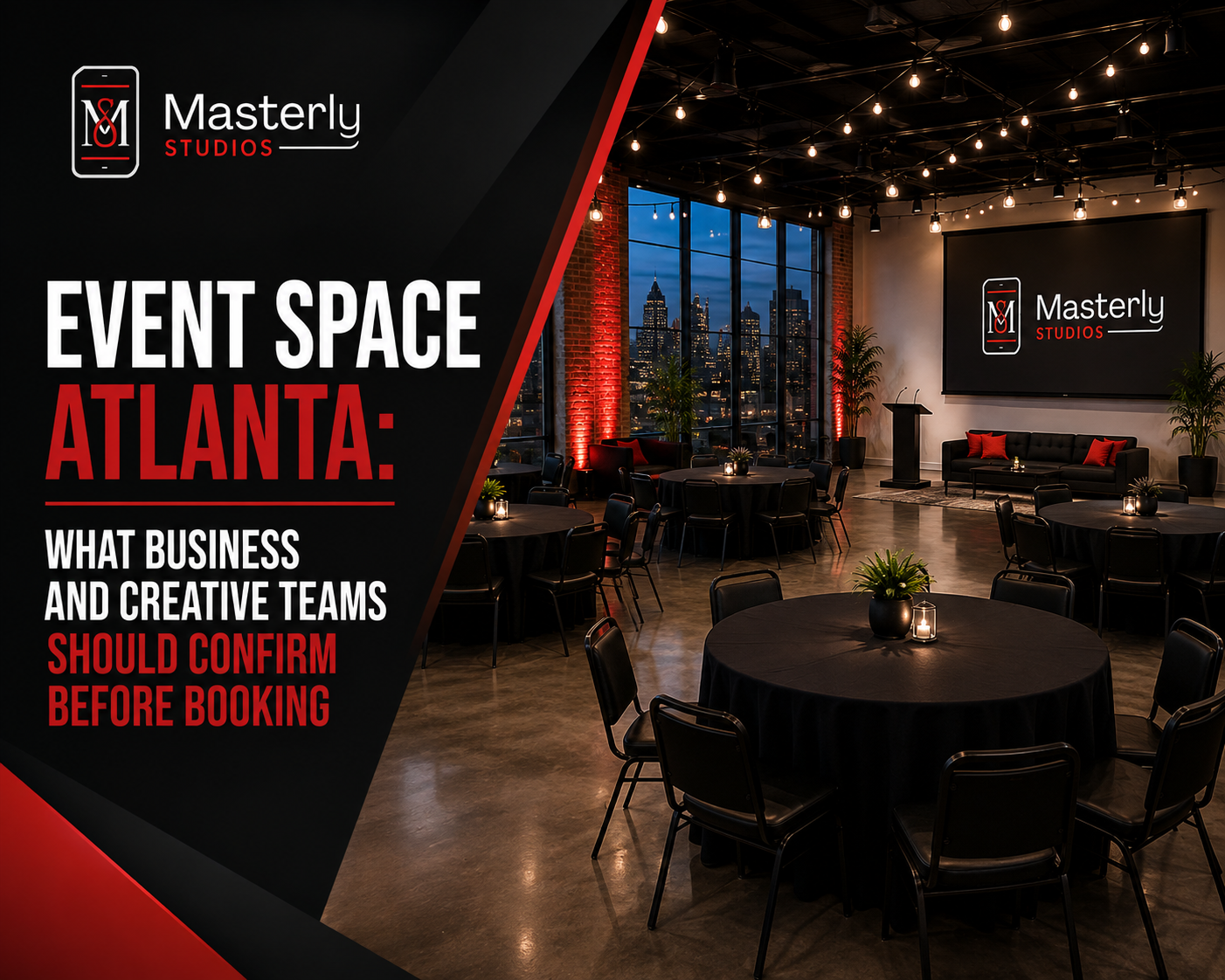
Find the right event space in Atlanta by confirming capacity, AV, parking, catering, layouts, accessibility, and production support before booking. Masterly Studios