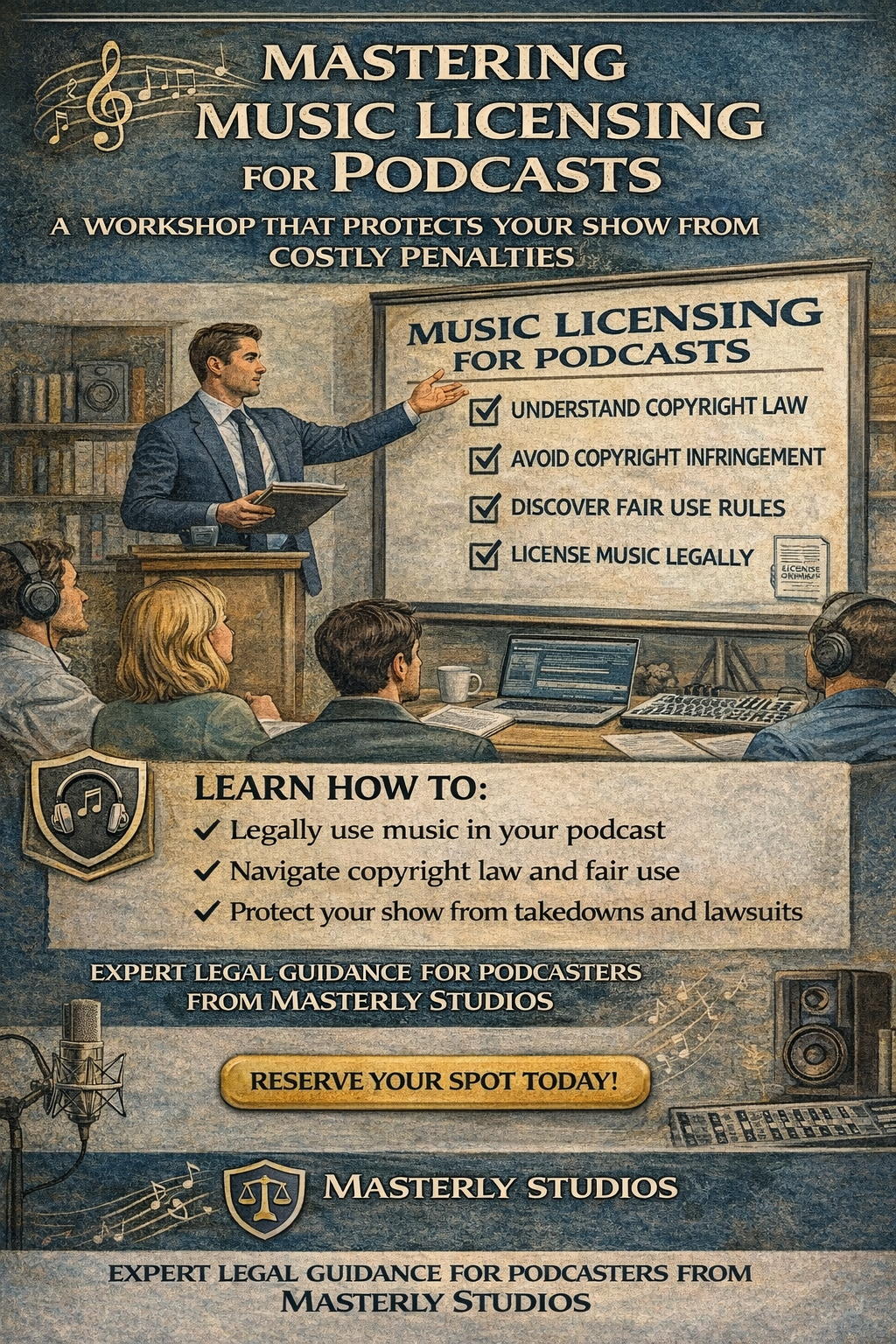
Mastering Music Licensing for Podcasts: A Workshop That Protects Your Show From Costly Penalties
March 11, 2026
Launching a podcast is exciting. You develop your concept, design your artwork, and plan your episodes with care. Then comes the creative layer that makes everything feel polished: music and sound. But the moment you add a song, sound effects, or copyrighted audio to your podcast, you enter a legal landscape governed by copyright law and complex licensing rules.
Many podcasters assume they can play music for a few seconds and move on. Others believe that adding a copyright notice in their show notes or crediting a recording artist is enough. The short answer is that these assumptions can lead to copyright infringement. At Masterly Studios, our music licensing workshop is designed to protect your podcast from takedowns, lawsuits, and unnecessary stress by teaching you how to properly license music and understand fair use.
Music licensing is not just a technical step; it is a safeguard for your brand. When you use copyrighted music without obtaining permission, you expose your show to claims from the copyright owner, record label, or music publishers. Our workshop breaks down music licensing in clear terms so you understand the rules before you publish.
For example, a song may involve the songwriter, music publishers, a record company, and a recording artist. Each of these different entities may hold separate rights in the original work. Without proper permission, your use could qualify as infringing use under the law.
Obtaining permission is not always simple. You may need express permission in writing, especially if your podcast has commercial purposes or a commercial nature. Our workshop teaches you how to identify rights holders and approach music licensing with confidence.
The four factor test determines whether such use is fair. Courts examine the purpose and character of the use, the nature of the copyrighted work, the substantiality of the portion used, and the effect on the potential market. Even if you use only a portion of a copyrighted song, it may still infringe if it harms the potential market for the original work.
The substantiality of the portion is another key element. Using the “heart” of a song, even briefly, can be considered substantial. Finally, the impact on the potential market is crucial, especially if your podcast could substitute for the original work or reduce licensing revenue.
Courts consider whether the use is transformative use, meaning it adds new meaning or message. Simply placing copyrighted music in the background of a true crime podcast rarely qualifies. Our workshop explains how fair use applies differently depending on the podcast’s format and purpose.
Creative commons licenses also allow certain uses of music and sound. But creative commons comes with its own rules, including attribution requirements and restrictions on commercial use. Our workshop helps you understand how to evaluate public domain claims and creative commons terms carefully.
Relying on a legal defense after receiving a takedown notice is risky and expensive. It is far better to understand the rules apply before you publish. Our workshop prepares podcasters to navigate these challenges proactively.
Even if you are not making money now, your podcast may have a commercial nature if you plan to monetize in the future. Copyright law focuses on actual and potential market effects. Our workshop teaches you how to evaluate these risks realistically.
Many podcasters assume that short clips are safe. The short answer is that even brief clips can qualify as infringing use if they are substantial or affect the potential market. We provide clear examples so you understand only what is permissible under fair use.
Understanding this distinction is critical for any podcast that analyzes music or cultural events. Our workshop walks through real-world scenarios to show how courts apply these concepts. This clarity helps you avoid copyright infringement.
Most podcasters do not realize how many licenses may be required. Depending on your format, you may need separate permissions from music publishers and record labels. Our workshop simplifies the process so you can create confidently.
We explain how copyright protection works, how to identify copyrighted work, and how to approach music licensing responsibly. Whether you host a true crime podcast, an educational show, or a commercial series, our training equips you to operate within the law.
By the end, you will understand how to protect your audio content from takedowns and lawsuits. You will also gain confidence in navigating copyright law and license agreements.
Many podcasters assume they can play music for a few seconds and move on. Others believe that adding a copyright notice in their show notes or crediting a recording artist is enough. The short answer is that these assumptions can lead to copyright infringement. At Masterly Studios, our music licensing workshop is designed to protect your podcast from takedowns, lawsuits, and unnecessary stress by teaching you how to properly license music and understand fair use.
Why Music Licensing Matters More Than Ever
Podcast platforms and streaming services now rely on automated systems to detect copyrighted material. If your episode includes unlicensed music or copyrighted songs without permission to use them, your entire podcast could be removed. In serious cases, copyright holders may pursue legal action for copyright infringement.Music licensing is not just a technical step; it is a safeguard for your brand. When you use copyrighted music without obtaining permission, you expose your show to claims from the copyright owner, record label, or music publishers. Our workshop breaks down music licensing in clear terms so you understand the rules before you publish.
Understanding Copyright Law and Your Podcast
Copyright law protects creative works, including songs, sound recordings, and other copyrighted material. The copyright act grants exclusive rights to the copyright holder, including the right to reproduce, distribute copies, and perform the work publicly. When you use a single song in your podcast, you are often dealing with multiple rights holders.For example, a song may involve the songwriter, music publishers, a record company, and a recording artist. Each of these different entities may hold separate rights in the original work. Without proper permission, your use could qualify as infringing use under the law.
The Role of the Copyright Owner and Rights Holders
The copyright owner controls how the copyrighted work is used. In many cases, music publishers manage the composition, while the record label controls the sound recording. If you want to play music in your podcast, you may need permission from both.Obtaining permission is not always simple. You may need express permission in writing, especially if your podcast has commercial purposes or a commercial nature. Our workshop teaches you how to identify rights holders and approach music licensing with confidence.
The Common Misconception About Fair Use
Fair use is often misunderstood. Many podcasters believe that using only a portion of a song automatically qualifies as fair use. This is a common misconception that can result in copyright infringement.The four factor test determines whether such use is fair. Courts examine the purpose and character of the use, the nature of the copyrighted work, the substantiality of the portion used, and the effect on the potential market. Even if you use only a portion of a copyrighted song, it may still infringe if it harms the potential market for the original work.
Breaking Down the Four Factor Test
The first factor looks at the purpose and character of your use. If your podcast uses music for commercial purposes or is making money through sponsorships, this factor may weigh against fair use. The nature of the copyrighted work also matters, especially when the work is creative rather than factual.The substantiality of the portion is another key element. Using the “heart” of a song, even briefly, can be considered substantial. Finally, the impact on the potential market is crucial, especially if your podcast could substitute for the original work or reduce licensing revenue.
Fair Use in News Reporting and True Crime Podcasts
Fair use sometimes applies in contexts like news reporting or commentary. A true crime podcast discussing a specific event might reference a song connected to the story. However, fair does not mean automatic protection.Courts consider whether the use is transformative use, meaning it adds new meaning or message. Simply placing copyrighted music in the background of a true crime podcast rarely qualifies. Our workshop explains how fair use applies differently depending on the podcast’s format and purpose.
Public Domain and Creative Commons Explained
Not all music requires a license. Works in the public domain are not protected by copyright law and can generally be used freely. However, determining whether a song is truly in the public domain requires research depending on publication date and renewal status.Creative commons licenses also allow certain uses of music and sound. But creative commons comes with its own rules, including attribution requirements and restrictions on commercial use. Our workshop helps you understand how to evaluate public domain claims and creative commons terms carefully.
Permission to Use and Obtaining Permission
When in doubt, the safest approach is obtaining permission. Permission to use copyrighted music must come from the appropriate copyright owner or rights holders. A verbal agreement is rarely enough; written license agreements are critical. In our music licensing workshop, we show you how to request permission and what to include in a license agreement. We explain how license terms differ for digital download distribution versus public performance. Understanding these distinctions protects your podcast from unexpected claims.The Digital Millennium Copyright Act and Takedowns
The digital millennium copyright act allows copyright owners to request takedowns of infringing content. If your podcast includes copyrighted material without a proper license, platforms may remove the episode or the entire podcast. Repeated violations can lead to account termination.Relying on a legal defense after receiving a takedown notice is risky and expensive. It is far better to understand the rules apply before you publish. Our workshop prepares podcasters to navigate these challenges proactively.
Commercial Nature Versus Nonprofit Educational Purposes
Some creators assume that nonprofit educational purposes automatically protect them. While nonprofit educational purposes may weigh in favor of fair use, they do not guarantee it. The commercial nature of your podcast, including sponsorships or ads, can shift the analysis.Even if you are not making money now, your podcast may have a commercial nature if you plan to monetize in the future. Copyright law focuses on actual and potential market effects. Our workshop teaches you how to evaluate these risks realistically.
Using Song Lyrics, Sound Effects, and Copyrighted Audio
Copyrighted material includes more than full songs. Song lyrics, short clips, and sound effects may all be protected. Using copyrighted audio in your intro or outro without a proper license can create liability.Many podcasters assume that short clips are safe. The short answer is that even brief clips can qualify as infringing use if they are substantial or affect the potential market. We provide clear examples so you understand only what is permissible under fair use.
The Difference Between Derivative Works and Transformative Use
Derivative works are new creations based on the original work. Transformative use may qualify as fair if it significantly alters the purpose or character of the copyrighted work. However, simply layering commentary over copyrighted songs does not automatically make the use transformative.Understanding this distinction is critical for any podcast that analyzes music or cultural events. Our workshop walks through real-world scenarios to show how courts apply these concepts. This clarity helps you avoid copyright infringement.
Music Licensing for an Entire Podcast Strategy
Music licensing should be part of your entire podcast strategy. From intro music to background music and sound effects, every element should be reviewed. You must consider whether you need a mechanical license for digital download distribution or a public performance license.Most podcasters do not realize how many licenses may be required. Depending on your format, you may need separate permissions from music publishers and record labels. Our workshop simplifies the process so you can create confidently.
How Masterly Studios Protects Your Podcast
At Masterly Studios, we work with podcasters across the country. Our music licensing workshop is designed as a practical safeguard against copyright infringement. We focus on real examples, common mistakes, and actionable steps.We explain how copyright protection works, how to identify copyrighted work, and how to approach music licensing responsibly. Whether you host a true crime podcast, an educational show, or a commercial series, our training equips you to operate within the law.
What You Will Learn in the Workshop
Our workshop covers:- How to license music legally
- How to analyze fair use using the four factor test
- How to approach music publishers and record companies
- How to identify public domain and creative commons music
- How to avoid infringing use and protect your intellectual property
By the end, you will understand how to protect your audio content from takedowns and lawsuits. You will also gain confidence in navigating copyright law and license agreements.
Protect Your Podcast With Confidence
Music adds emotion and professionalism to your podcast, but it must be handled responsibly. Ignoring music licensing rules can lead to copyright infringement, loss of episodes, or costly legal disputes. With the right knowledge, you can protect your creative works and build your show without fear.At Masterly Studios, we are committed to helping podcasters master music licensing. We believe education is the best protection against avoidable mistakes. Our workshop is built to safeguard your podcast so you can focus on storytelling, not legal uncertainty.
Official Duties, So Called Exceptions, and Works Created in the Course of Production
Podcasters are sometimes told that material produced as part of their official duties or internal production process is automatically safe to use, but that is not always accurate. There is a so called assumption that if works created during employment or collaboration are shared within a team, they are free from copyright concerns. In reality, works created for a show may still be protected under copyright law, and ownership depends on contracts, agreements, and the specific circumstances of creation.If a contractor, editor, or composer contributes music or audio elements, those works created may belong to that individual unless rights are properly assigned. Understanding how official duties and authorship affect ownership is essential to preventing disputes and ensuring your podcast has clear, documented rights to every piece of content it publishes.
Book a Free Consultation About License Music Today
If you are unsure whether your podcast properly license music or whether your current episodes comply with copyright law, we are here to help. Masterly Studios works with clients nationally, guiding podcasters through music licensing challenges and risk management strategies.Contact us at (888) 209-4055 to book a free consultation. We will review your concerns, discuss your podcast format, and explain how our music licensing workshop can protect your show from costly penalties. Taking action now can save you from future legal headaches and ensure your podcast remains available to your audience for years to come.
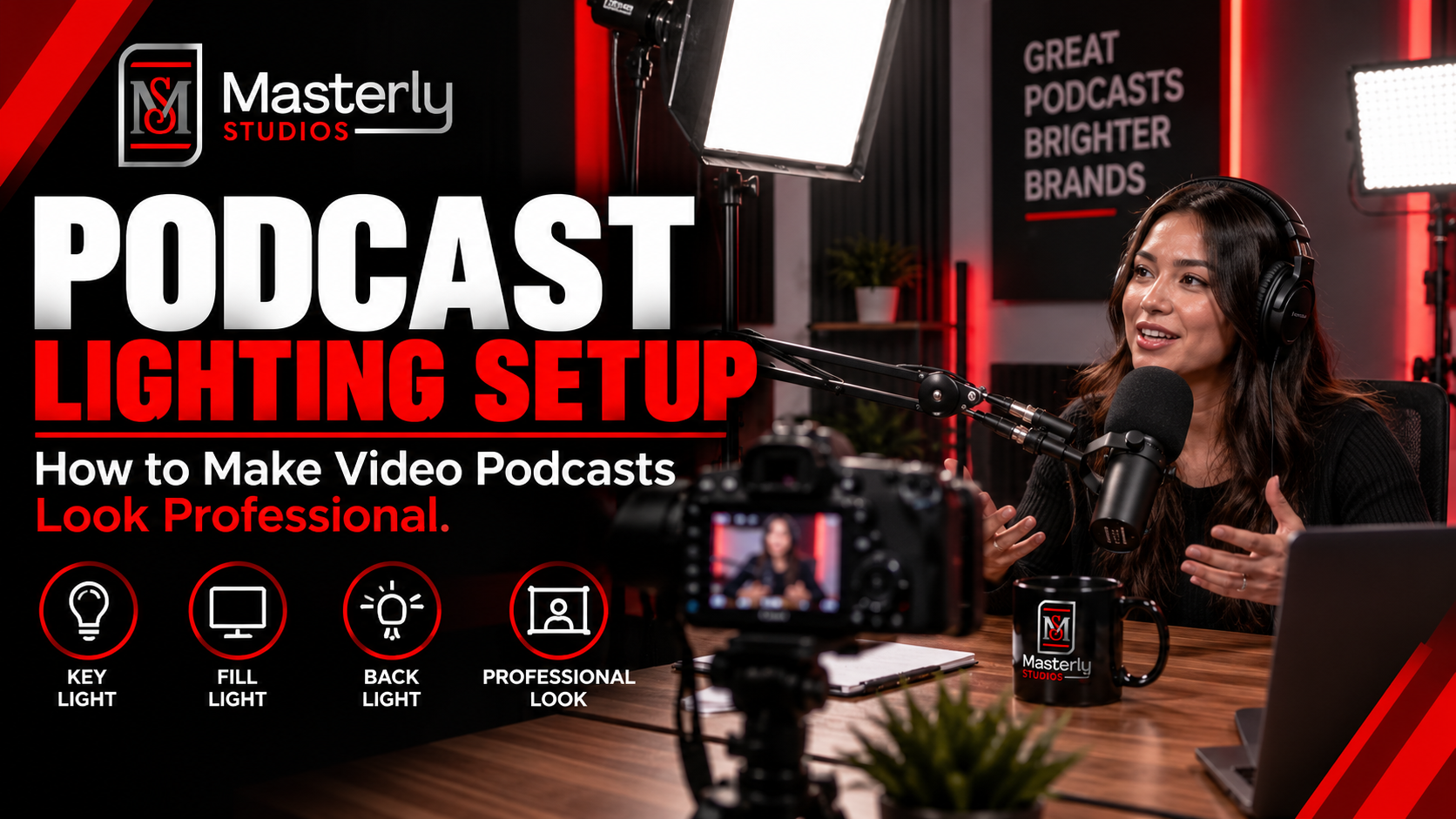
Need a podcast lighting setup? Masterly Studios provides professional podcast and camera lighting in a prepared studio for consistent, polished video production.
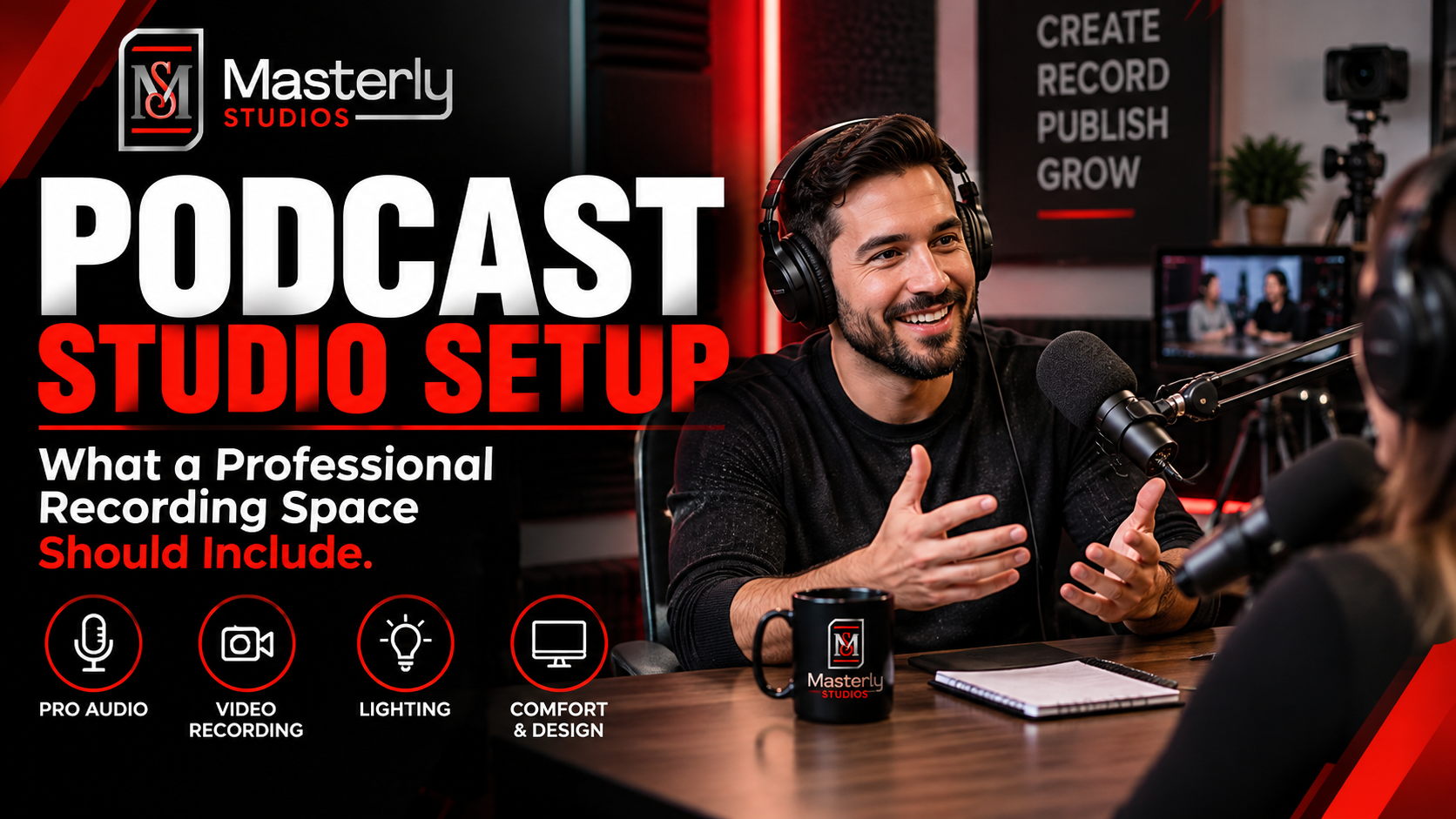
Need a podcast studio setup? Masterly Studios offers a professional recording space with quality equipment, lighting, acoustics, and video support for creators.
Book a training venue in Atlanta for corporate workshops, employee training, and learning events with flexible layouts, A/V support, and professional amenities.
Learn how to record a video podcast in Atlanta with a professional studio setup, clear audio, polished lighting, guest support, and a smooth recording workflow.
Book a corporate Christmas party venue in Atlanta for year-end events with flexible space, A/V support, catering, branding, and more for your team and festive fun.
Book a creative studio rental for photography, video, branded content, and marketing campaigns with flexible production space at Masterly Studios for every project.
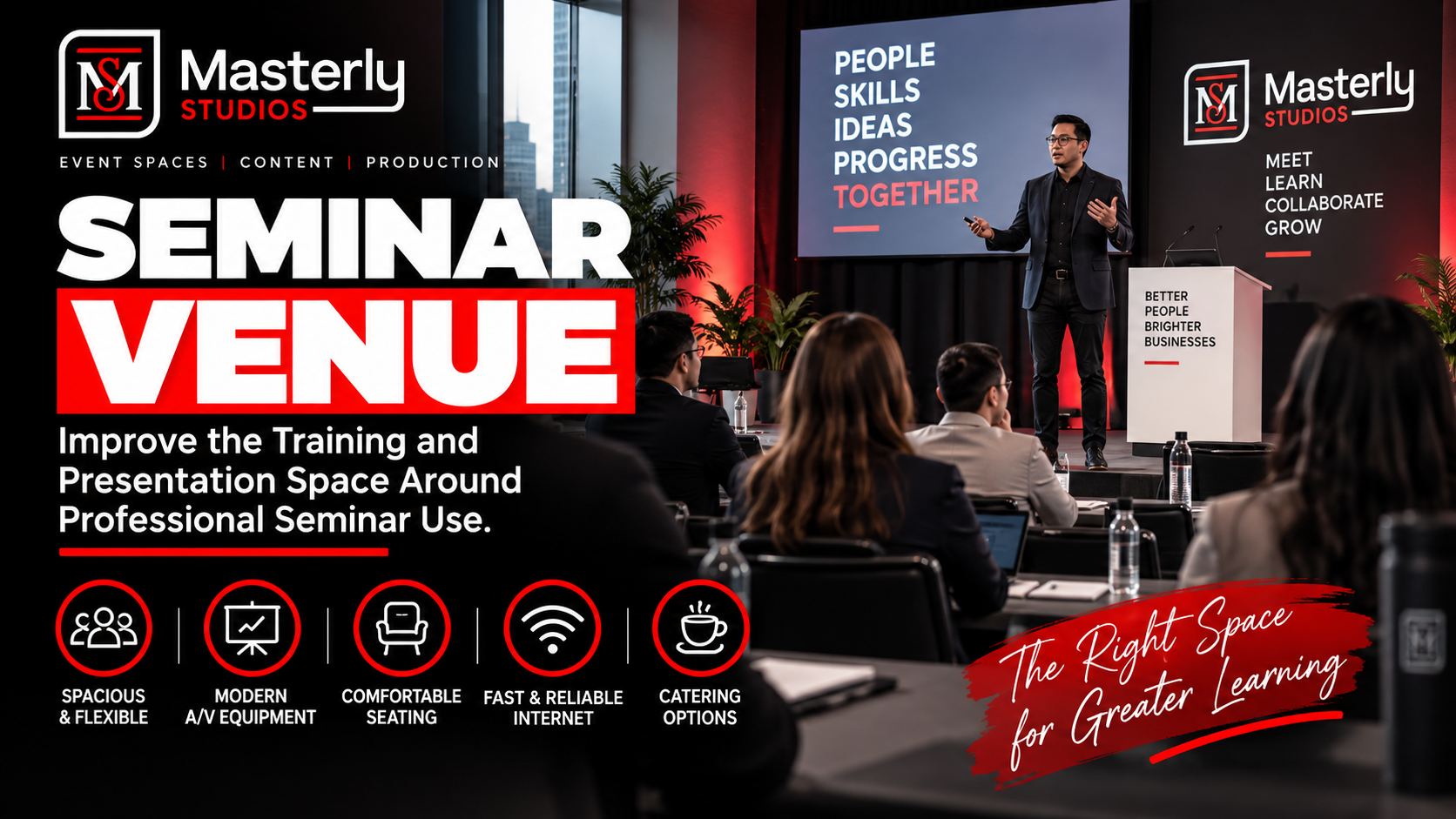
Book a professional seminar venue for training, presentations, and business events with flexible seating, A/V, check-in, parking, content support, and event setup.
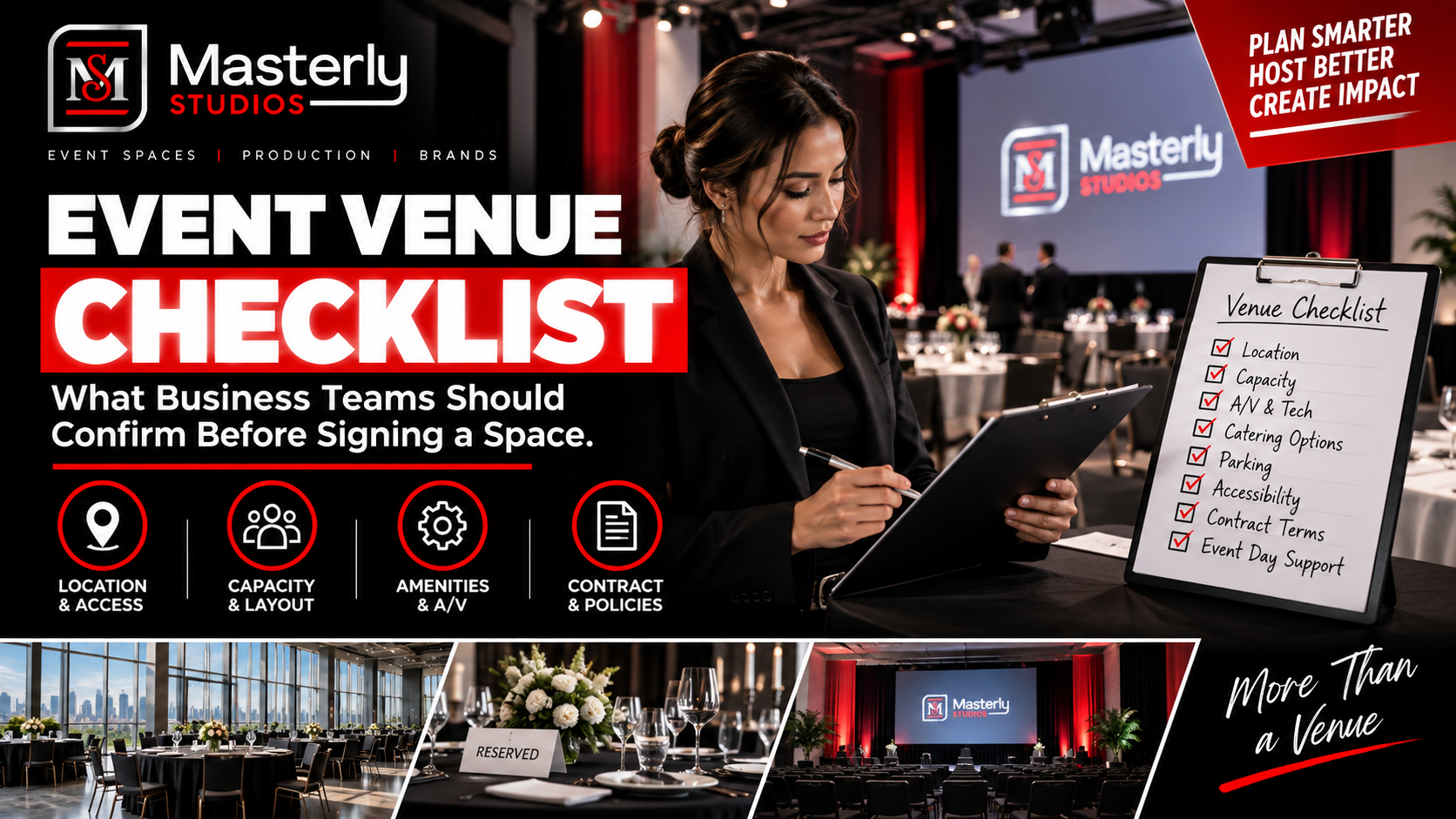
Use an event venue checklist to evaluate capacity, layout, parking, load-in, A/V, Wi-Fi, accessibility, catering, branding, production, and overtime needs.

Plan corporate events with professional support for venues, A/V, catering, speakers, content capture, access, and production at Masterly Studios in Atlanta.
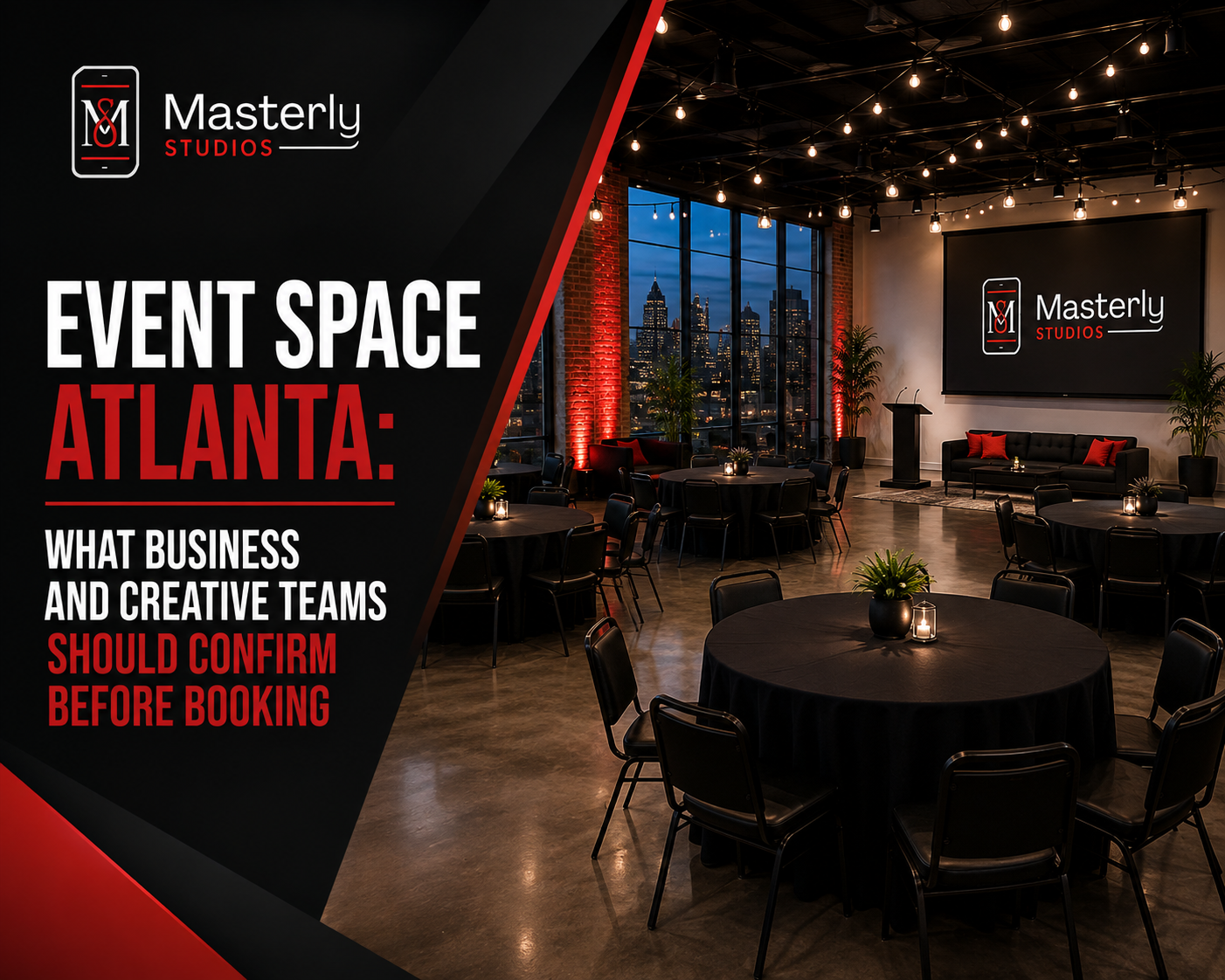
Find the right event space in Atlanta by confirming capacity, AV, parking, catering, layouts, accessibility, and production support before booking. Masterly Studios