Mastering Podcast Monetization Methods That Brands Look For When Choosing Which Shows to Sponsor
February 16, 2026
Every
podcaster
dreams of landing sponsorship deals that turn a passion project into real income. Yet many creators struggle to understand what brands actually value when deciding which podcast to support. If you want to make money and build long-term revenue, you need more than downloads. You need a clear monetization strategy that shows advertisers why your podcast is worth the investment.
At Masterly Studios, we work with creators, entrepreneurs, and content producers across the country who want to monetize your podcast the right way. As photographers and media professionals, we understand how visuals, branding, and production quality influence perception. This article breaks down how to monetize a podcast in ways that brands respect, trust, and ultimately fund.
To monetize a podcast effectively, you must think in layers. Podcast monetization includes ads, paid subscriptions, affiliate link partnerships, live events, and premium content. When you present multiple revenue streams, it signals professionalism and long-term vision.
Potential sponsors look at consistency in new episodes, audience demographics, and how people listen across podcast apps. They also review your show notes, website, and personal brand presence to see if your podcast marketing reflects quality. If your show looks polished, brands feel more confident investing money.
To create that connection, your podcast host must be authentic and consistent. High quality content builds trust, and trust drives revenue. The more your listeners feel connected, the easier it becomes to start monetizing without damaging credibility.
High quality content demonstrates that you take your podcast seriously. It also makes dynamic ads and mid roll placements sound natural instead of forced. When a sponsor pays for placement, they want their message integrated smoothly.
If you want to monetize a podcast effectively, you must understand your niche audience. Specific niches often generate strong loyalty, which brands value more than broad but shallow reach. This approach makes sense for long-term podcast growth.
Advertisers often prefer mid roll spots because people listen more attentively during the middle of content. A podcast host who reads ads authentically can increase conversion and justify higher rates.
For example, you can offer bonus episodes, premium content, and early access to new episodes. Apple podcasts subscriptions make it easier to implement a podcast subscription model that delivers ad free episodes or bonus content.
Premium episodes and exclusive episodes give your loyal audience more value. You can also offer bonus episodes or behind the scenes footage from live shows. These strategies help you monetize without relying entirely on advertisers.
Affiliate marketing works especially well when discussed naturally within podcast episodes. Adding the affiliate link to your show notes ensures listeners can easily access it later.
Selling your own products or educational resources can also boost revenue. This strategy works best when your podcast host has established authority within the niche.
Brands often prefer to sponsor live events because of direct exposure. A podcast network with multiple shows can even bundle sponsorship deals across events for greater impact.
Listener support also demonstrates that people listen consistently and value your show. Brands see this as proof of loyalty.
Full time podcaster status often comes from combining sponsorship deals, affiliate link income, and premium subscriptions. The most money usually comes from layering multiple monetization tools together.
Brands notice shows that actively promote new episodes. A steady marketing focus signals long-term viability and reduces sponsor risk.
A sponsor pays for credibility and access. If your listeners trust your voice, the partnership will generate real revenue.
At Masterly Studios, we work with creators, entrepreneurs, and content producers across the country who want to monetize your podcast the right way. As photographers and media professionals, we understand how visuals, branding, and production quality influence perception. This article breaks down how to monetize a podcast in ways that brands respect, trust, and ultimately fund.
Why Podcast Monetization Is About More Than Ads
Many creators assume podcast monetization begins and ends with a podcast ad. While ads are important, brands look at the entire ecosystem of your show. They evaluate your podcast audience, engagement level, and consistency before committing to sponsorship deals.To monetize a podcast effectively, you must think in layers. Podcast monetization includes ads, paid subscriptions, affiliate link partnerships, live events, and premium content. When you present multiple revenue streams, it signals professionalism and long-term vision.
Understanding What Brands Actually Look For
Brands care about alignment and trust. They want access to an engaged audience that shares similar interests with their customers. A small podcast with a loyal audience can be more valuable than a large show with passive listeners.Potential sponsors look at consistency in new episodes, audience demographics, and how people listen across podcast apps. They also review your show notes, website, and personal brand presence to see if your podcast marketing reflects quality. If your show looks polished, brands feel more confident investing money.
Building a Loyal and Engaged Audience
Before you monetize your podcast, you must build a loyal audience. A loyal audience is one that interacts, comments, shares video clips, and supports the show. This type of audience increases your value in podcast sponsorships.To create that connection, your podcast host must be authentic and consistent. High quality content builds trust, and trust drives revenue. The more your listeners feel connected, the easier it becomes to start monetizing without damaging credibility.
Creating High Quality Content That Attracts Sponsors
Brands rarely invest in inconsistent production. A successful podcast maintains sound clarity, professional visuals, and a clear focus. This is where production support from a podcast producer or studio like Masterly Studios can make a difference.High quality content demonstrates that you take your podcast seriously. It also makes dynamic ads and mid roll placements sound natural instead of forced. When a sponsor pays for placement, they want their message integrated smoothly.
Choosing the Right Monetization Strategy for Your Niche
Every niche requires a slightly different monetization strategy. A business podcast may rely heavily on sponsorship deals and affiliate link partnerships. A creative show might monetize through premium episodes and exclusive content.If you want to monetize a podcast effectively, you must understand your niche audience. Specific niches often generate strong loyalty, which brands value more than broad but shallow reach. This approach makes sense for long-term podcast growth.
Advertising Models Brands Prefer
There are several ways ads can appear within podcast episodes. Common formats include:- Pre roll ads at the beginning of an episode
- Mid roll placements inserted naturally into the conversation
- Dynamic ads that rotate based on listener location
Advertisers often prefer mid roll spots because people listen more attentively during the middle of content. A podcast host who reads ads authentically can increase conversion and justify higher rates.
Beyond Ads: Diversifying Revenue Streams
If your only income is ads, your revenue is limited. Diversified revenue streams make your podcast more attractive to brands and more stable financially. This includes listener support, paid subscriptions, and affiliate link income.For example, you can offer bonus episodes, premium content, and early access to new episodes. Apple podcasts subscriptions make it easier to implement a podcast subscription model that delivers ad free episodes or bonus content.
Leveraging Paid Subscriptions and Premium Content
Paid subscriptions are becoming a popular monetization option. Listeners who want exclusive content or ad free episodes are often willing to pay. This recurring revenue supports you even before major sponsorship deals arrive.Premium episodes and exclusive episodes give your loyal audience more value. You can also offer bonus episodes or behind the scenes footage from live shows. These strategies help you monetize without relying entirely on advertisers.
Affiliate Links and Promoting Products
Affiliate link partnerships are a fantastic way to monetize your podcast. When you promote products that align with your niche, your listeners are more likely to trust your recommendation. Each sale generates money without requiring traditional ads.Affiliate marketing works especially well when discussed naturally within podcast episodes. Adding the affiliate link to your show notes ensures listeners can easily access it later.
Selling Merch and Building a Brand
Another way to make money is to sell merch. T shirts, branded merchandise, and even digital downloads allow you to monetize your podcast creatively. When listeners wear your brand, they become walking ambassadors.Selling your own products or educational resources can also boost revenue. This strategy works best when your podcast host has established authority within the niche.
Live Events and Live Shows as Monetization Tools
Live events create a deeper connection with your audience. Live shows and meetups allow listeners to interact directly with the podcast host. These events can generate ticket revenue and attract sponsors.Brands often prefer to sponsor live events because of direct exposure. A podcast network with multiple shows can even bundle sponsorship deals across events for greater impact.
Listener Support and Community Building
Listener support through donations or membership platforms helps stabilize income. Creating a facebook community strengthens bonds among listeners. An engaged audience is more likely to support premium content.Listener support also demonstrates that people listen consistently and value your show. Brands see this as proof of loyalty.
Positioning Yourself as a Full Time Podcaster
If your goal is to become a full time podcaster, you must treat your podcast like a business. That means consistent scheduling, professional visuals, and clear messaging. Money podcasting requires intentional planning.Full time podcaster status often comes from combining sponsorship deals, affiliate link income, and premium subscriptions. The most money usually comes from layering multiple monetization tools together.
Podcast Marketing That Attracts Advertisers
Podcast marketing is essential for podcast growth. Repurposing video clips for social media helps attract new listeners. When new listeners join consistently, your audience expands naturally.Brands notice shows that actively promote new episodes. A steady marketing focus signals long-term viability and reduces sponsor risk.
What Makes a Podcast Sponsorship Valuable
Podcast sponsorships succeed when the brand and podcast share similar interests. Advertisers want alignment between their product and your niche audience. Random sponsorship deals rarely perform well.A sponsor pays for credibility and access. If your listeners trust your voice, the partnership will generate real revenue.
Learning from Industry Examples
Many creators look at Joe Rogan as an example of podcast monetization at scale. While not every podcast will reach that size, the principle remains the same. Build trust first, then monetize strategically. Other podcasts within smaller niches have become successful podcast brands by focusing on community and consistency. Even a small podcast can attract advertisers when engagement is strong.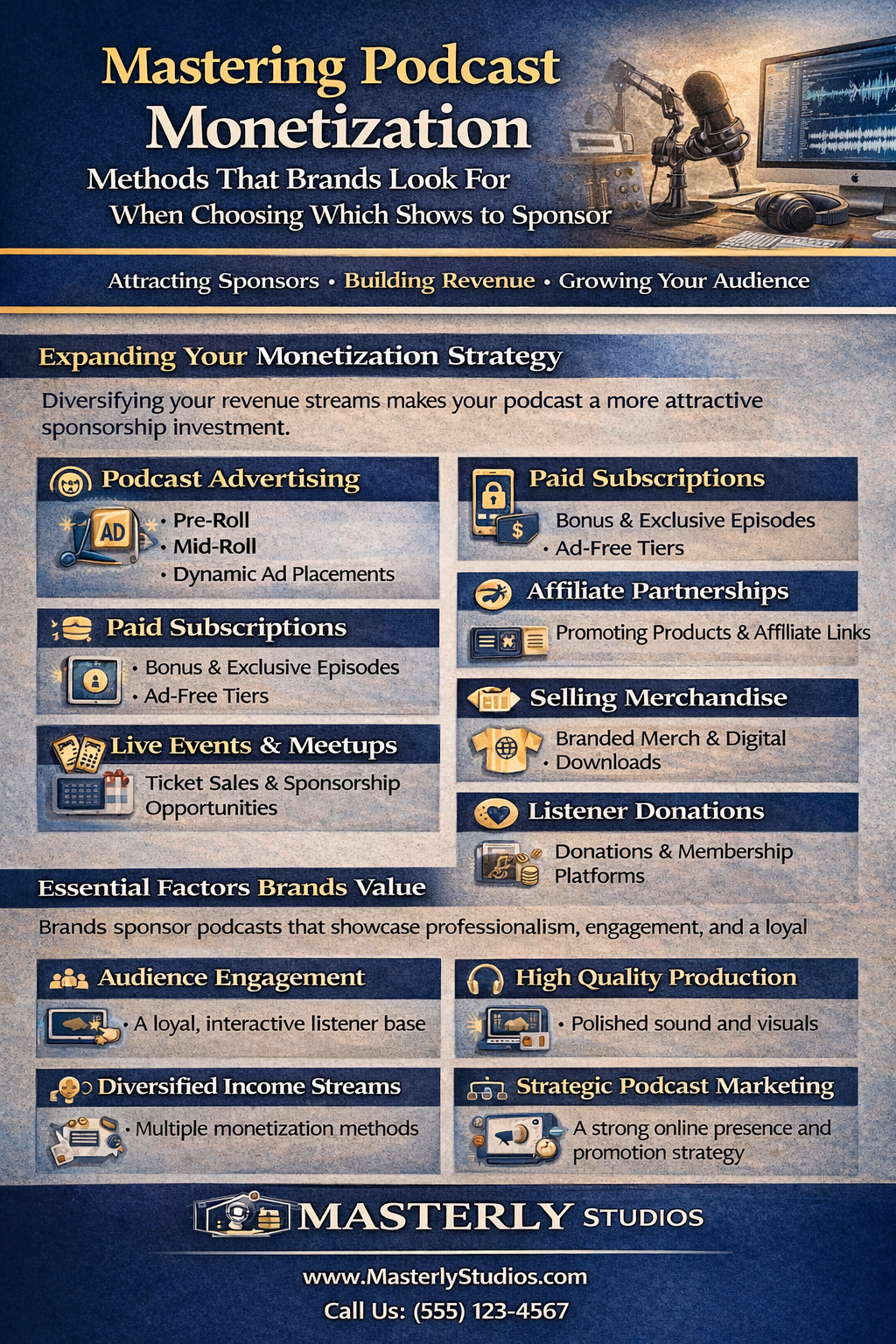
Creating a Sustainable Monetization Plan
To monetize your podcast effectively, you must create a long-term plan. Ask yourself how to monetize a podcast in stages. Start with affiliate link partnerships, then move into sponsorship deals and paid subscriptions.Your monetization strategy should evolve as your audience grows. Consistency in content creation builds momentum and revenue over time.
Turning Passion Into Generating Revenue
Podcasting began as a creative outlet for many creators. Today, it is a powerful platform for generating revenue and building a personal brand. When you combine strategy with authenticity, monetization feels natural.The goal is not just to make money but to build sustainable revenue. When you monetize in ways that respect your listeners, everyone benefits.
Work With Professionals to Elevate Your Podcast
Production quality, branding, and visual consistency influence how brands view your podcast. At Masterly Studios, we help creators create a professional presence that attracts sponsorship deals.We understand what advertisers look for because we work with clients nationally across media and branding. When your podcast looks and sounds polished, it stands out.
Ready to Monetize Your Podcast the Right Way?
If you want clarity on how to monetize a podcast and position your show for real sponsorship opportunities, we are here to help. Whether you are just beginning your podcasting journey or aiming to become a full time podcaster, strategic guidance makes all the difference.At Masterly Studios, we help creators refine their monetization strategy, improve production, and prepare for meaningful sponsorship deals. We work with clients throughout the country and nationally to elevate their podcast brand.
Contact us at (888) 209-4055 to book a free consultation. Let us help you create a monetization plan that attracts advertisers, builds revenue, and turns your podcast into a sustainable platform for long-term success.
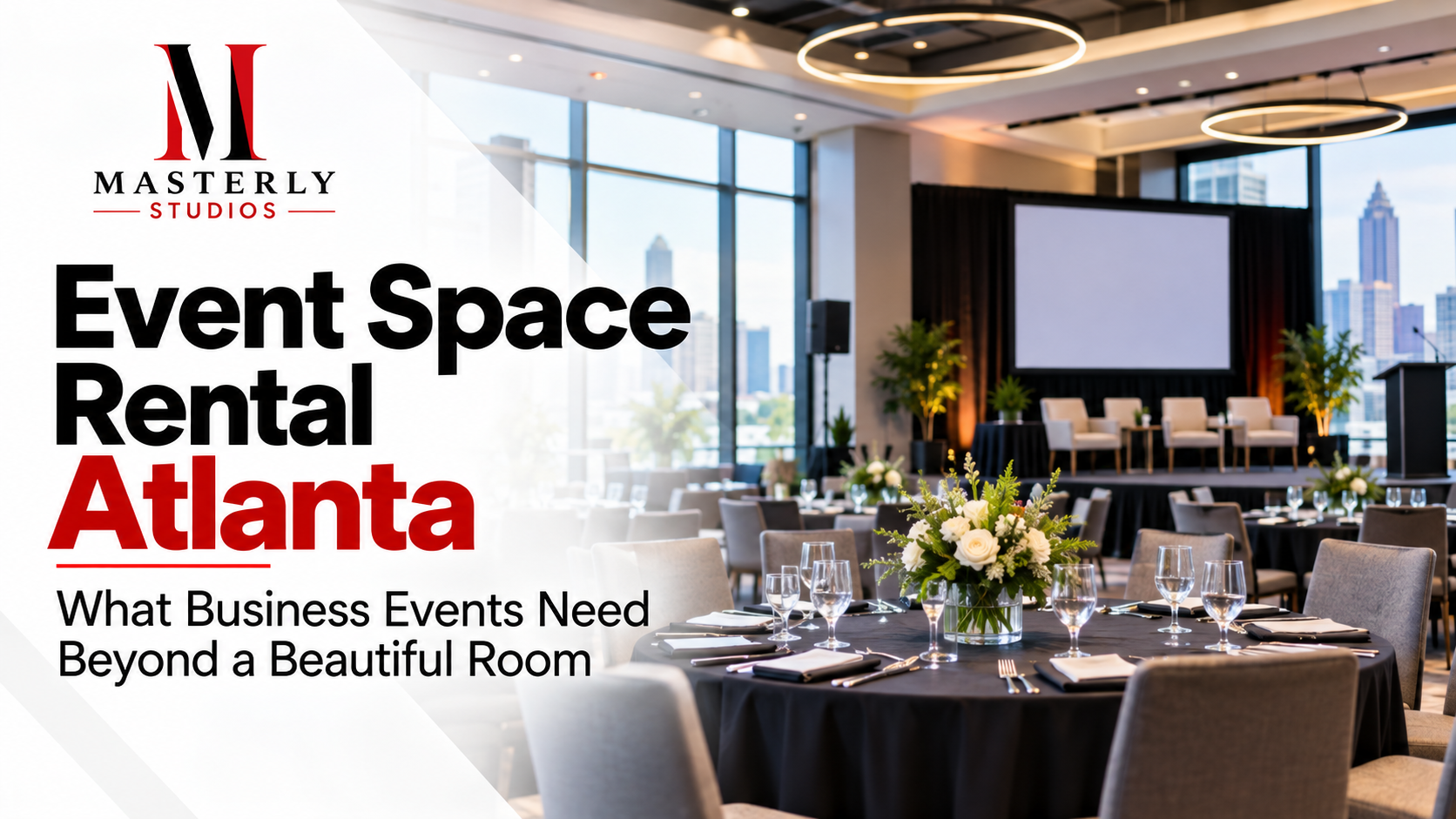
Plan your Atlanta event space rental with the right room size, guest flow, technical support, and scheduling. Request a venue tour to confirm the best fit.
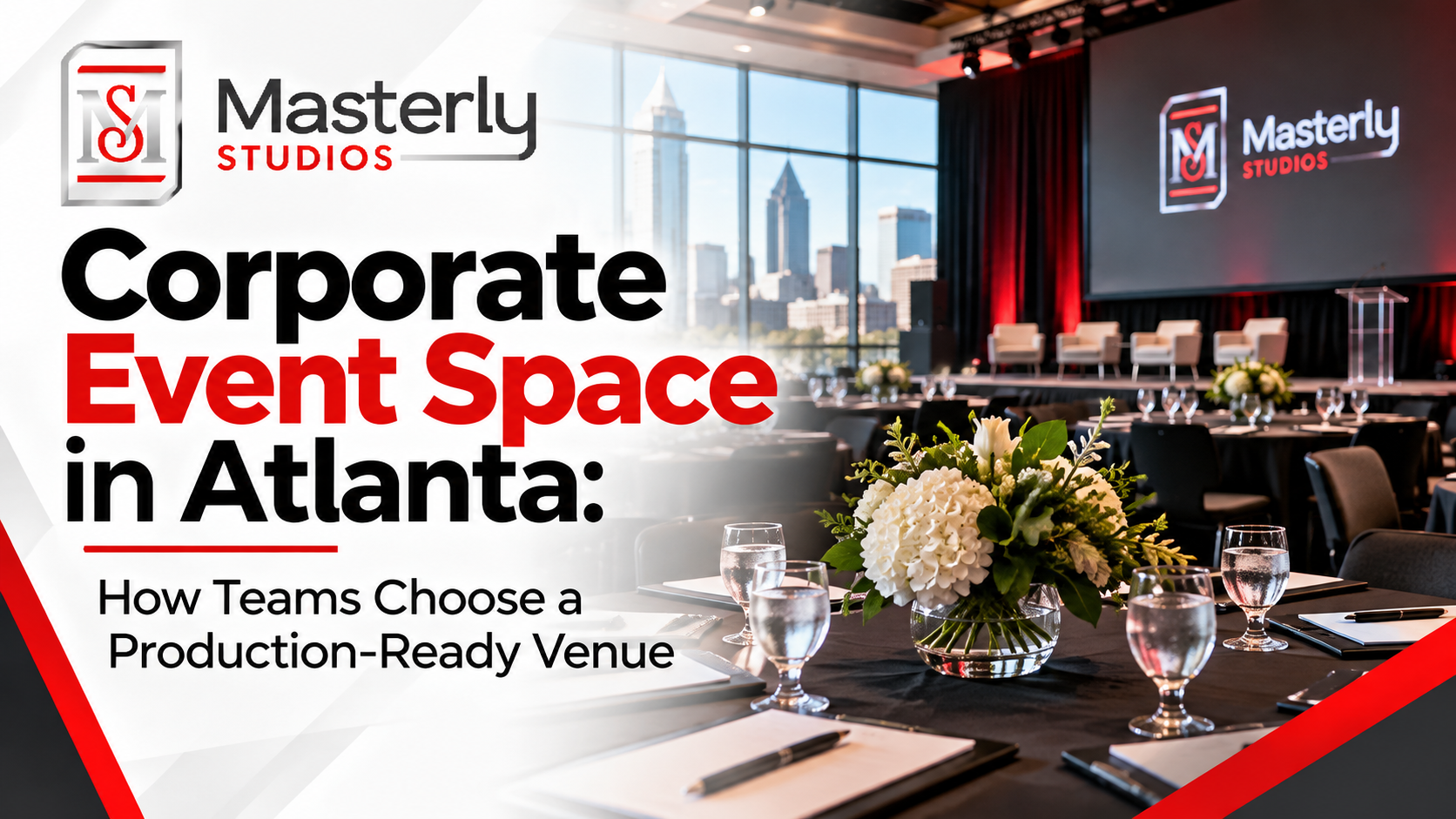
Explore what to consider when choosing Atlanta corporate event space, including room layouts, AV capabilities, parking, guest experience, and booking options.
Need a podcast lighting setup? Masterly Studios provides professional podcast and camera lighting in a prepared studio for consistent, polished video production.
Need a podcast studio setup? Masterly Studios offers a professional recording space with quality equipment, lighting, acoustics, and video support for creators.
Book a training venue in Atlanta for corporate workshops, employee training, and learning events with flexible layouts, A/V support, and professional amenities.
Learn how to record a video podcast in Atlanta with a professional studio setup, clear audio, polished lighting, guest support, and a smooth recording workflow.
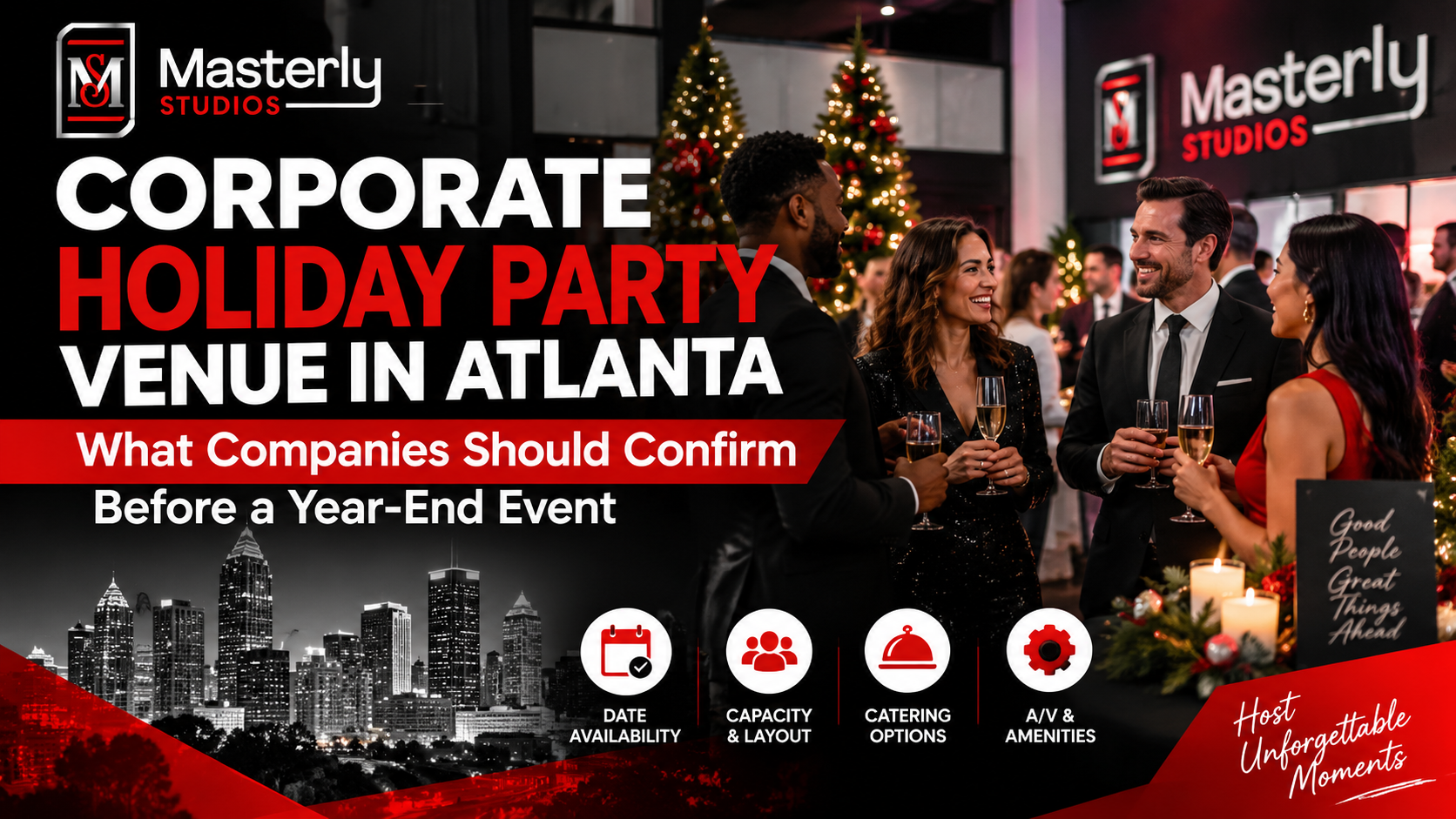
Book a corporate Christmas party venue in Atlanta for year-end events with flexible space, A/V support, catering, branding, and more for your team and festive fun.
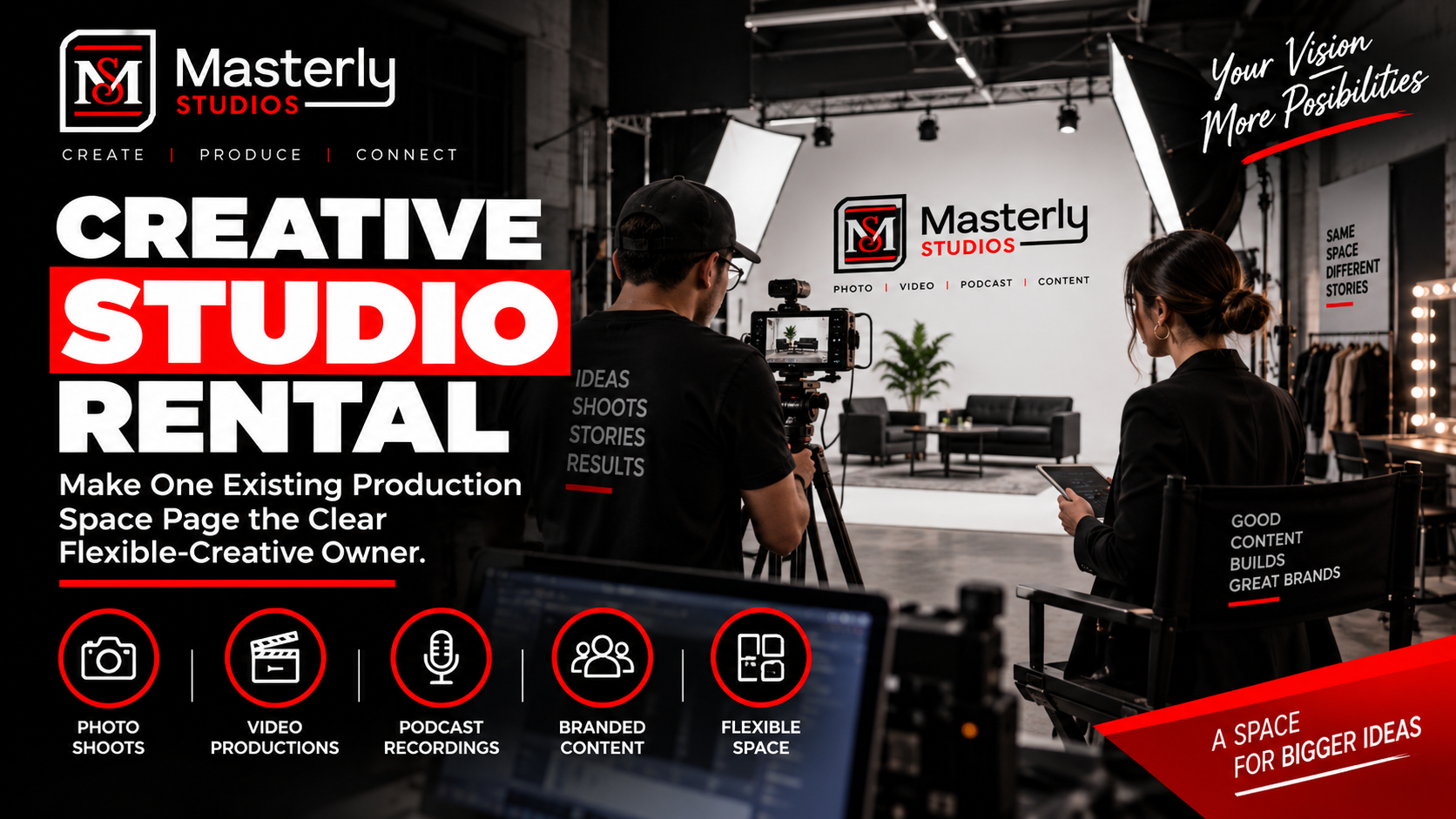
Book a creative studio rental for photography, video, branded content, and marketing campaigns with flexible production space at Masterly Studios for every project.
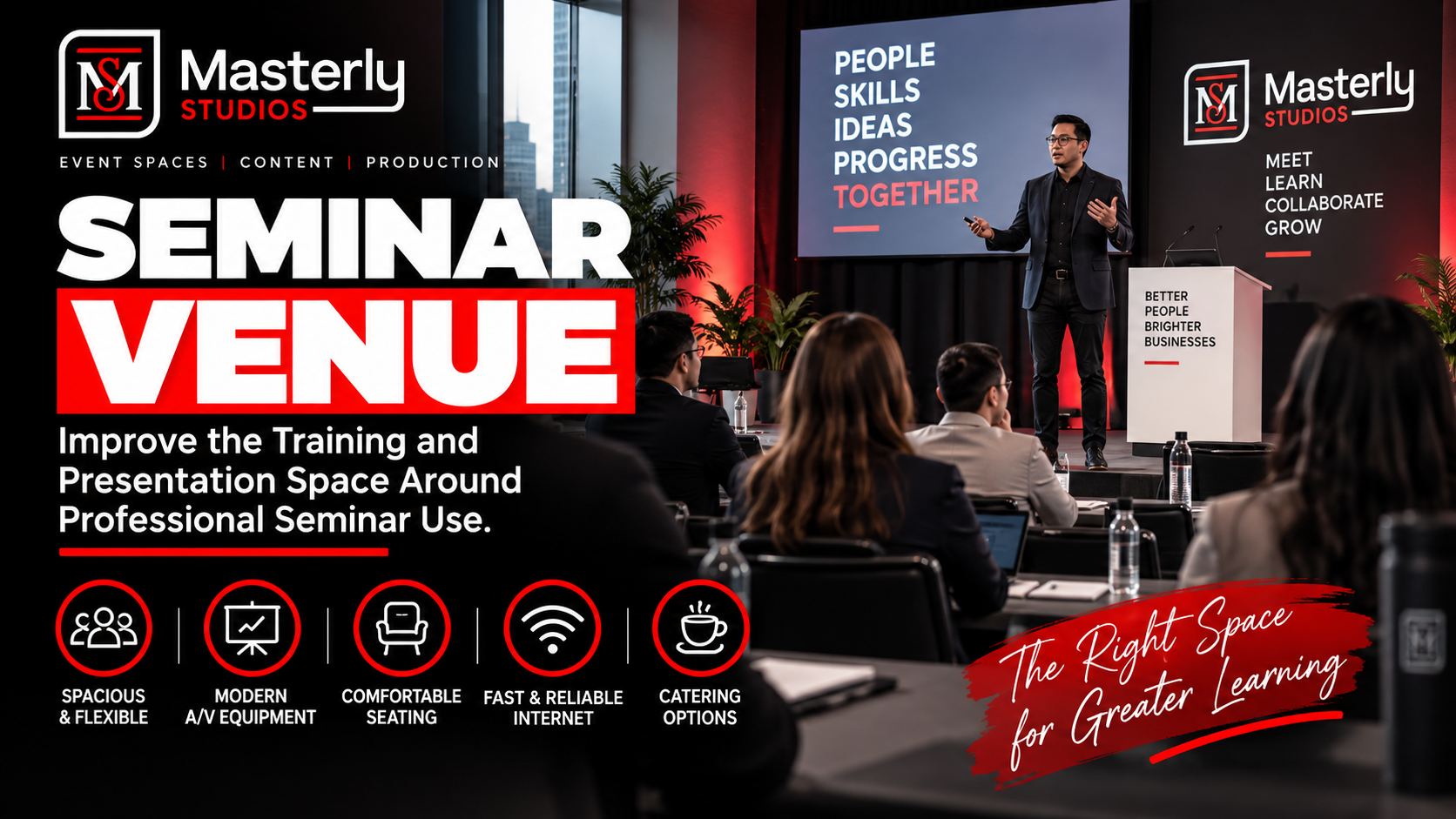
Book a professional seminar venue for training, presentations, and business events with flexible seating, A/V, check-in, parking, content support, and event setup.
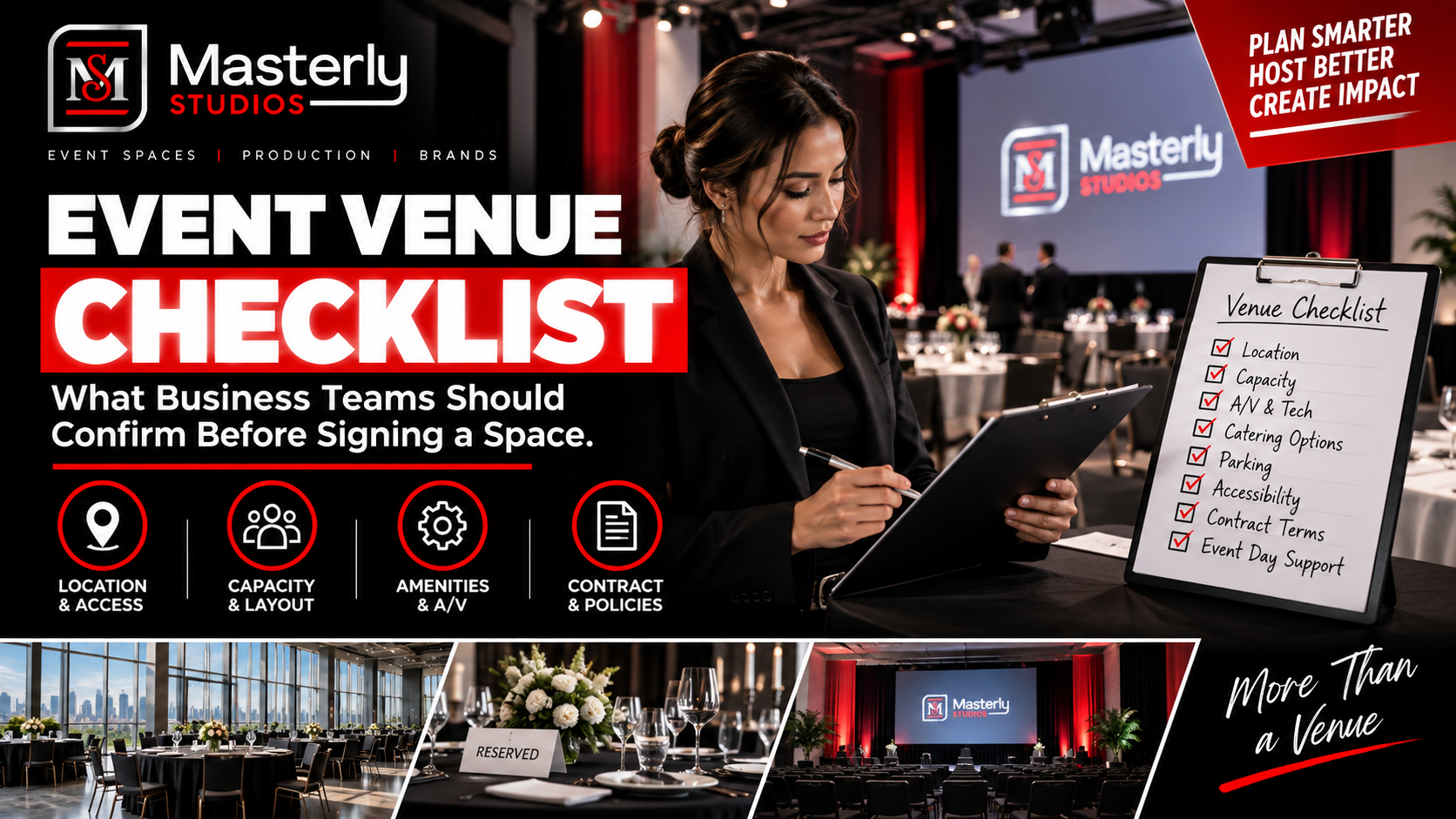
Use an event venue checklist to evaluate capacity, layout, parking, load-in, A/V, Wi-Fi, accessibility, catering, branding, production, and overtime needs.