Podcast Concept Development Strategies That Lead to Long-Term Success
November 13, 2025
Launchin
g a podcast is exciting, but turning it into something memorable takes more than just hitting record. Whether you dream of being featured among the best podcasts on apple podcasts and spotify, building a loyal audience, or creating a show that rivals the energy of true crime podcasts, success begins long before your first upload.
Podcasting
is no longer a space where you can wing it; today’s listeners are selective, curious, and quick to move on if a show lacks direction.
This article breaks down how developing a strong podcast concept sets you apart in a world where podcasts have become one of the most competitive digital platforms. If you want your voice to matter, if you want listeners to stay, and if you want your show to grow beyond the new podcast phase, concept development is the foundation you can’t skip.
With this clarity, you can make every episode intentional rather than experimental. A defined concept gives the listener confidence that subscribing to your show is worth their time. Podcast audiences crave consistency, and concept structure delivers it.
This is where urgency matters: without topic clarity, your podcast faces early burnout. Good equipment or a fancy microphone can’t save a show with no direction. Before you start, you must understand what topics hold attention, which ones match your personality, and which ones are aligned with your expertise.
Clear messaging prevents your episodes from drifting aimlessly. When people talk about the popular podcast they love, they describe how it makes them feel and what value it adds. Your message must be strong enough to guide your tone, pacing, and future series direction.
Think about the popularity of video podcasts or the cult following behind the best true crime shows. Their success is tied to understanding exactly what their audience wants. This is where a deep dive into listener habits, motivation, and goals becomes a critical step in your development phase.
Structured planning includes outlining episodes, organizing themes, selecting guests, and creating a calendar of material. A simple note-taking system during brainstorming can make your workflow much easier when recording day arrives.
Picking the right structure creates familiarity. Listeners prefer predictability even in creative shows. This is one of the best practices overlooked by beginners.
Successful shows—from comedy podcast hosts to investigative true crime storytellers—use structured flow to keep listeners engaged. Your episodes must answer a question, offer value, or entertain with intention.
You don’t need to copy them, but analyzing their strategies strengthens your own. Think of it as researching the 10 best shows in your niche before entering the arena.
Good production separates amateur creators from those ready to join ranking lists on google podcasts or even the podcast charts. Rememb er: polished does not mean complicated—it means intentional.
Listeners join shows that feel stable, well-planned, and worth investing time in. Your concept becomes the anchor that keeps your show consisten t even when new trends arise or when competing news podcast formats flood the space.
If you choose this type of podcast, you must elevate your format, message, and delivery to avoid blending into the noise. That means your development phase must be especially strong.
The biggest mistake? Believing that great gear alone—no matter how clear your microphone sounds—can carry a weak concept. It never will.
A strong foundation gives you the confidence to keep going when producing a weekly podcast becomes demanding. This structure will also kee p your show aligned with your original goals.
This article breaks down how developing a strong podcast concept sets you apart in a world where podcasts have become one of the most competitive digital platforms. If you want your voice to matter, if you want listeners to stay, and if you want your show to grow beyond the new podcast phase, concept development is the foundation you can’t skip.
What Makes a Strong Podcast Concept Different From a Good Idea?
A great idea gets people interested, but a clear podcast concept keeps them returning. With over a million podcasts available, strong concepts help you rise above similar shows. Think about podcasts like “crime junkie” or popular news podcasts: they know their message, their audience, and their tone.With this clarity, you can make every episode intentional rather than experimental. A defined concept gives the listener confidence that subscribing to your show is worth their time. Podcast audiences crave consistency, and concept structure delivers it.
How Do You Identify a Podcast Topic That Truly Connects With Listeners?
Choosing a podcast topic is more than picking something you enjoy. You must think about what you can speak on for dozens of podcast episodes, what stands out in your niche, and what answers a gap in the market. When podcasters skip audience research, they often discover too late that their idea lacks long-term potential.This is where urgency matters: without topic clarity, your podcast faces early burnout. Good equipment or a fancy microphone can’t save a show with no direction. Before you start, you must understand what topics hold attention, which ones match your personality, and which ones are aligned with your expertise.
What Role Does Message Development Play in Building a Memorable Podcast Series?
Your mess age is the heartbeat of your show. Whether you’re creating a true crime podcast, a storytelling series, or reviewing best podcasts, your message guides the experience. This message should answer: “What do I want listeners to feel, learn, or walk away with?”Clear messaging prevents your episodes from drifting aimlessly. When people talk about the popular podcast they love, they describe how it makes them feel and what value it adds. Your message must be strong enough to guide your tone, pacing, and future series direction.
Why Audience Identification Determines Long-Term Success
You can’t c reate effective podcast content if you don’t understand who you’re speaking to. Identifying audience needs ensures your show attracts loyal podcast listeners, not temporary visitors.Think about the popularity of video podcasts or the cult following behind the best true crime shows. Their success is tied to understanding exactly what their audience wants. This is where a deep dive into listener habits, motivation, and goals becomes a critical step in your development phase.
How Can Strong Planning Prevent Podcast Burnout?
Many s olo podcaster creators experience burnout by episode five because they didn’t build structure from the beginning. Real planning helps you stay focused and consistent. It creates the roadmap your show needs to survive the early stages when motivation dips.Structured planning includes outlining episodes, organizing themes, selecting guests, and creating a calendar of material. A simple note-taking system during brainstorming can make your workflow much easier when recording day arrives.
What Podcast Formats Help New Creators Stand Out?
Your podcast format shapes your production. Whether you choose interviews, storytelling, roundtables, or hybrid episodes, the format must align with your concept and message. Some of the most popular podcasts—including high-ranking shows on spotify—use predictable formats that make each episode easy to follow.Picking the right structure creates familiarity. Listeners prefer predictability even in creative shows. This is one of the best practices overlooked by beginners.
How Do You Craft Compelling Episodes That Keep Listeners Returning?
Each podcast episode needs a clear flow: introduction, story development, highlight moments, and closing. Jumping randomly between topics makes listeners tune out. Adding a simple script outline helps your pacing and strengthens delivery.Successful shows—from comedy podcast hosts to investigative true crime storytellers—use structured flow to keep listeners engaged. Your episodes must answer a question, offer value, or entertain with intention.
Should You Study Other Podcasts Before Launching Your Own?
Absolute ly. Reviewing podcast recommendations, studying the top podcast charts, and exploring review podcasts helps you see what works and what doesn’t. Observing successful creators helps you avoid repeating common mistakes.You don’t need to copy them, but analyzing their strategies strengthens your own. Think of it as researching the 10 best shows in your niche before entering the arena.
What Production Elements Turn a Concept Into a Professional Podcast?
Once your concept is ready, it’s time to refine your podcast production process. Production includes selecting the right podcast host, editing, adding music, and maintaining pacing. Even simple improvements to your audio rhythm or mixing can elevate your show dramatically.Good production separates amateur creators from those ready to join ranking lists on google podcasts or even the podcast charts. Rememb er: polished does not mean complicated—it means intentional.
How Does a Strong Concept Help You Compete in the Podcast Industry?
Standing out in the crowded podcast industry requires more than enthusiasm. A strong concept gives you an advantage, especially when facing competition from a million podcast creators. Your show must feel unique, focused, and aligned with your long-term vision.Listeners join shows that feel stable, well-planned, and worth investing time in. Your concept becomes the anchor that keeps your show consisten t even when new trends arise or when competing news podcast formats flood the space.
Is True Crime Still a Viable Concept for New Podcasts?
Creators s till enter the world of true crime and true-crime podcasts, but standing out requires creativity and strategy. Many shows now include investigative journalism, storytelling twists, or local crime stories to differentiate themselves.If you choose this type of podcast, you must elevate your format, message, and delivery to avoid blending into the noise. That means your development phase must be especially strong.
What Are the Most Common Mistakes New Podcasters Make During Concept Development?
Some crea tors jump straight into recording because they feel excited. But skipping concept work leads to issues like inconsistent episodes, unclear messaging, or audience drop-off. Others try to copy whatever podcast focuses is trending without adding anything original.The biggest mistake? Believing that great gear alone—no matter how clear your microphone sounds—can carry a weak concept. It never will.
How Do You Start Turning a Concept Into a Long-Term Podcast Series?
Turning ideas into a long-term podcast series takes planning, structure, and creativity. You begin by mapping out episodes, organizing themes, and understanding long-term content pacing.A strong foundation gives you the confidence to keep going when producing a weekly podcast becomes demanding. This structure will also kee p your show aligned with your original goals.
Does Multi-Platform Visibility Matter for New Podcasts?
Yes. Many creators exp and through world on youtube, video podcasts, or repurposing clips for social media. By doing this, your show becomes accessible to all kinds of listeners—including those who don’t normally listen to podcasts. Expanding visibility increases your gro wth potential and helps newer audiences discover your work.
Key Things to Remember
- A strong concept is the foundation of every successful podcast
- Poor planning prevents long-term success
- Good microphones cannot fix a weak concept
- Audience research determines your show’s direction
- Structure and format keep your show consistent
- Professional support accelerates your success
Contact Masterly Studios
If you’re ready to turn your idea into a powerful podcast that stands out among the best podcasts, our team at Masterly Studios is prepared to guide you. We work with creators throughout the country and nationally, helping them shape concepts, develop formats, and build shows listeners actually return to. Whether you're launching your first episode or refining a growing series, we’re here to help you create something lasting and meaningful.Contact us at (888) 209-4055 to book a free consultation, and let’s build a podcast that truly reflects your voice and vision.
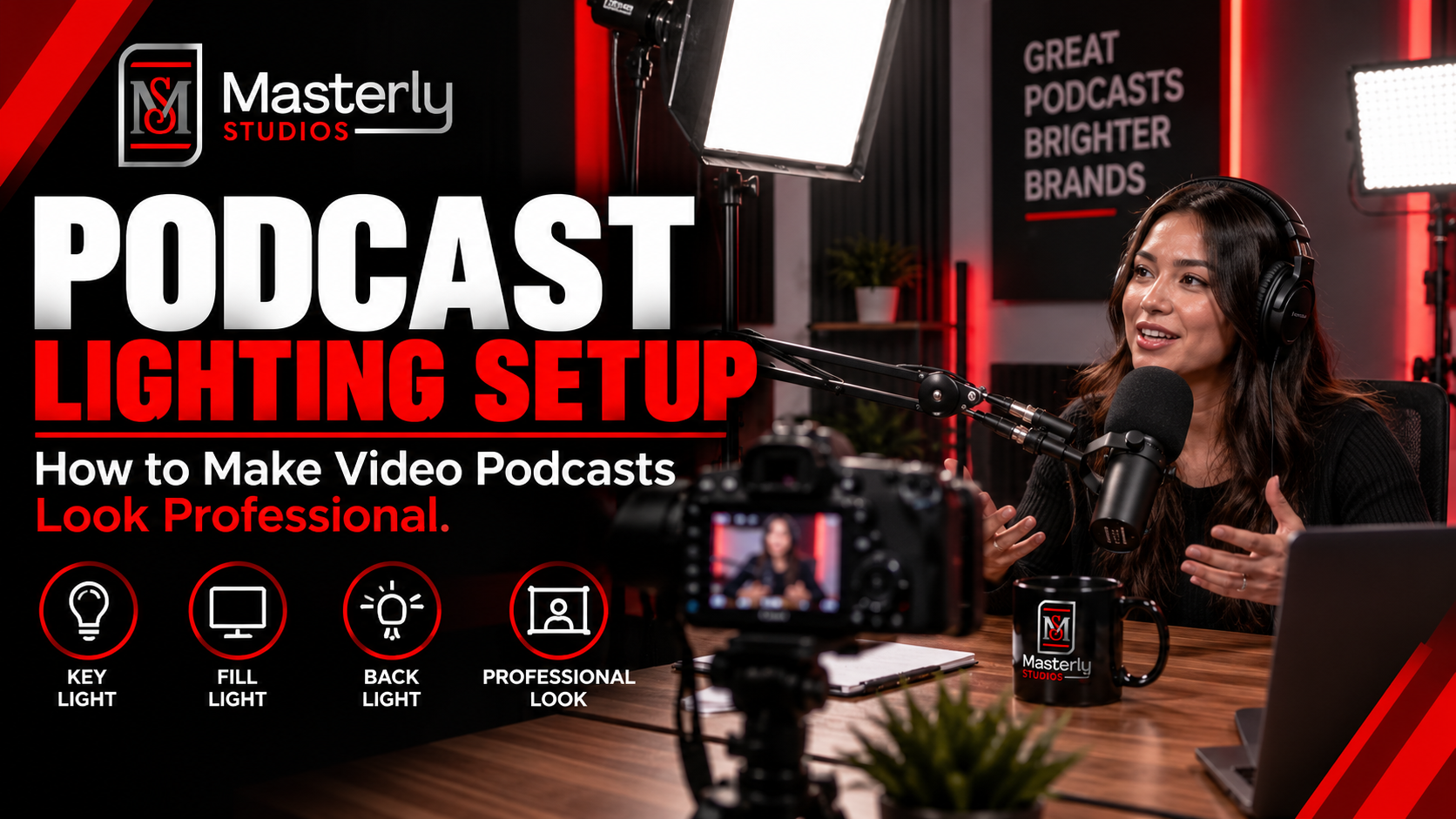
Need a podcast lighting setup? Masterly Studios provides professional podcast and camera lighting in a prepared studio for consistent, polished video production.
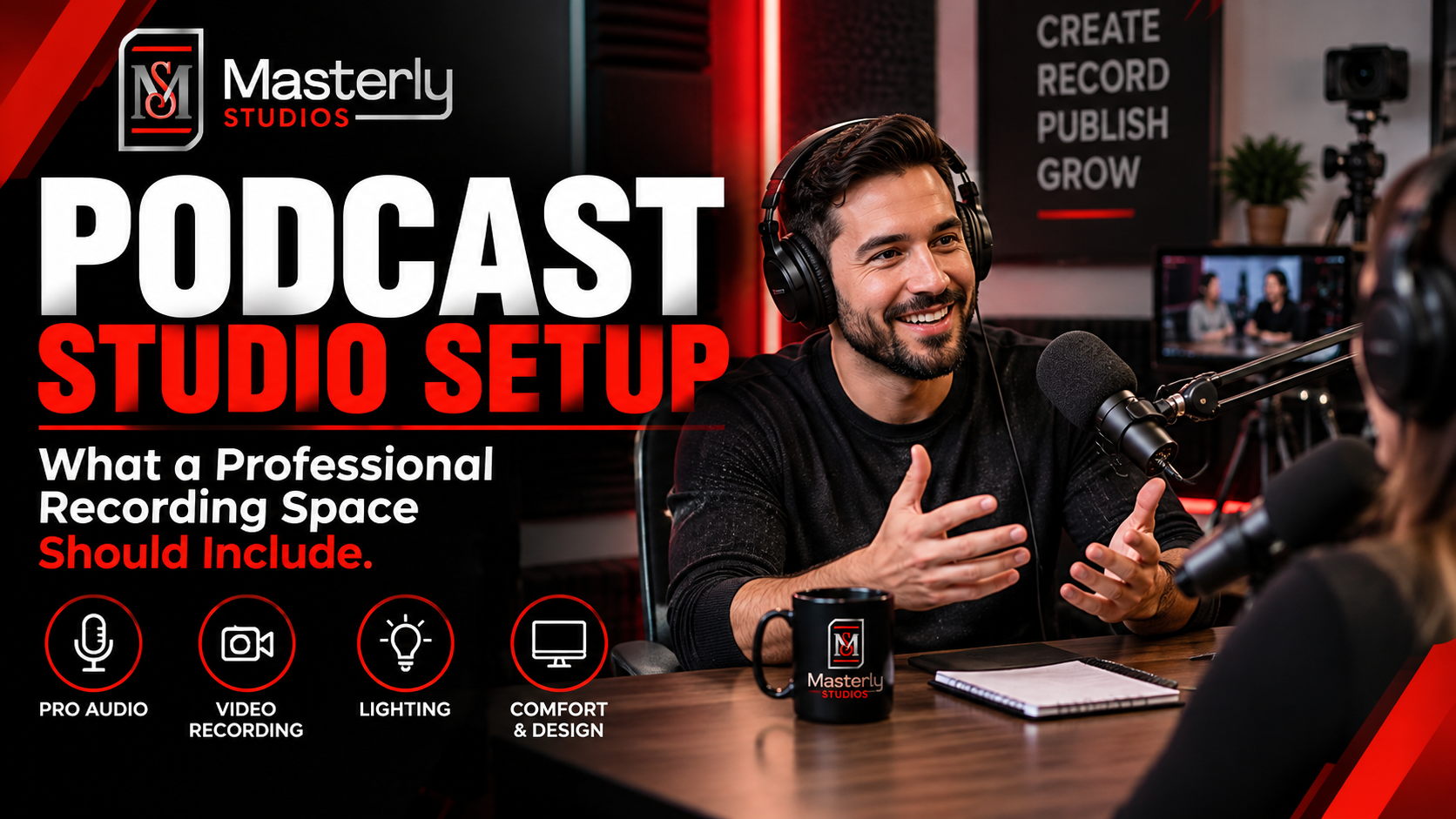
Need a podcast studio setup? Masterly Studios offers a professional recording space with quality equipment, lighting, acoustics, and video support for creators.
Book a training venue in Atlanta for corporate workshops, employee training, and learning events with flexible layouts, A/V support, and professional amenities.
Learn how to record a video podcast in Atlanta with a professional studio setup, clear audio, polished lighting, guest support, and a smooth recording workflow.

Book a corporate Christmas party venue in Atlanta for year-end events with flexible space, A/V support, catering, branding, and more for your team and festive fun.
Book a creative studio rental for photography, video, branded content, and marketing campaigns with flexible production space at Masterly Studios for every project.
Book a professional seminar venue for training, presentations, and business events with flexible seating, A/V, check-in, parking, content support, and event setup.
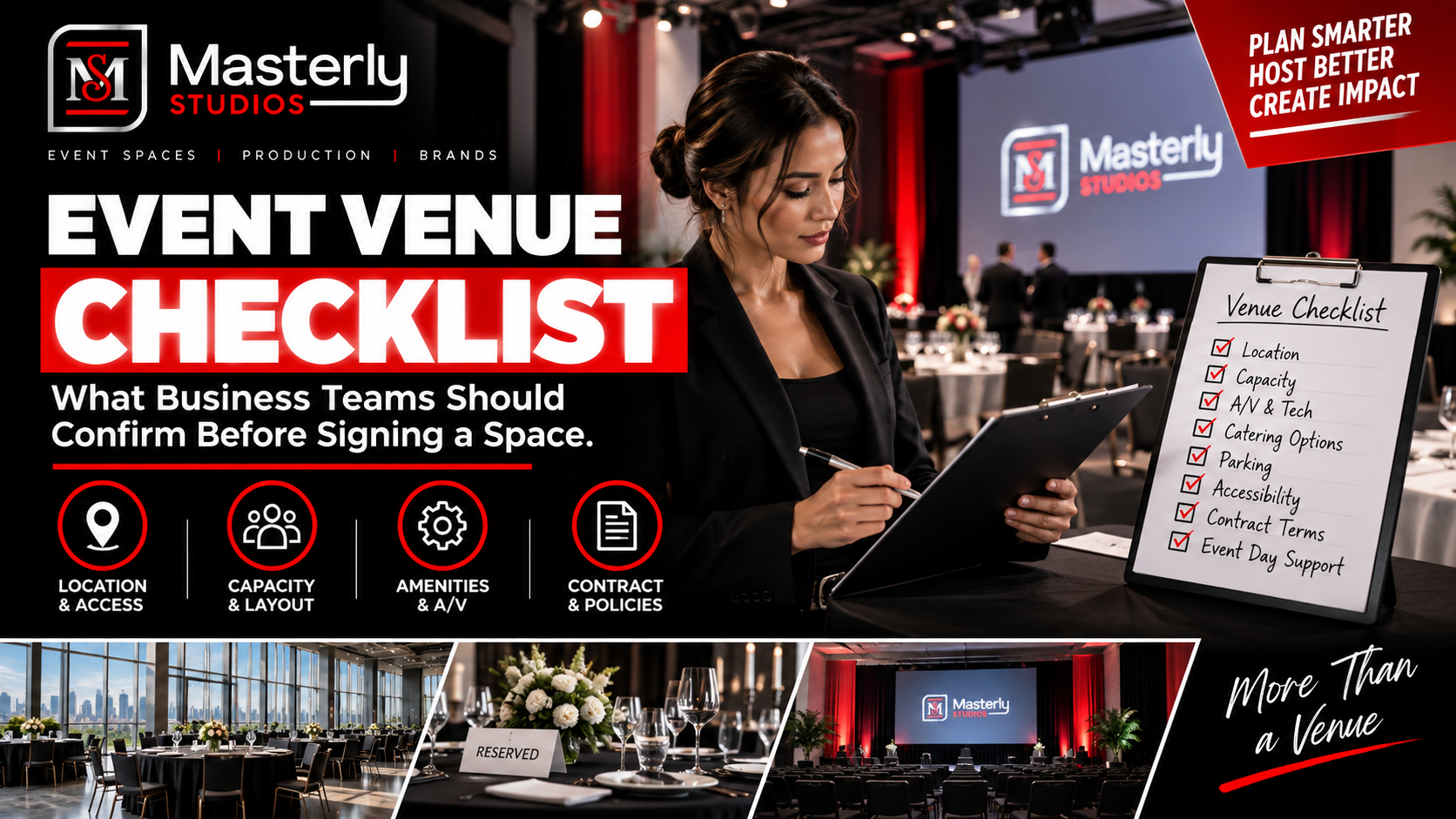
Use an event venue checklist to evaluate capacity, layout, parking, load-in, A/V, Wi-Fi, accessibility, catering, branding, production, and overtime needs.
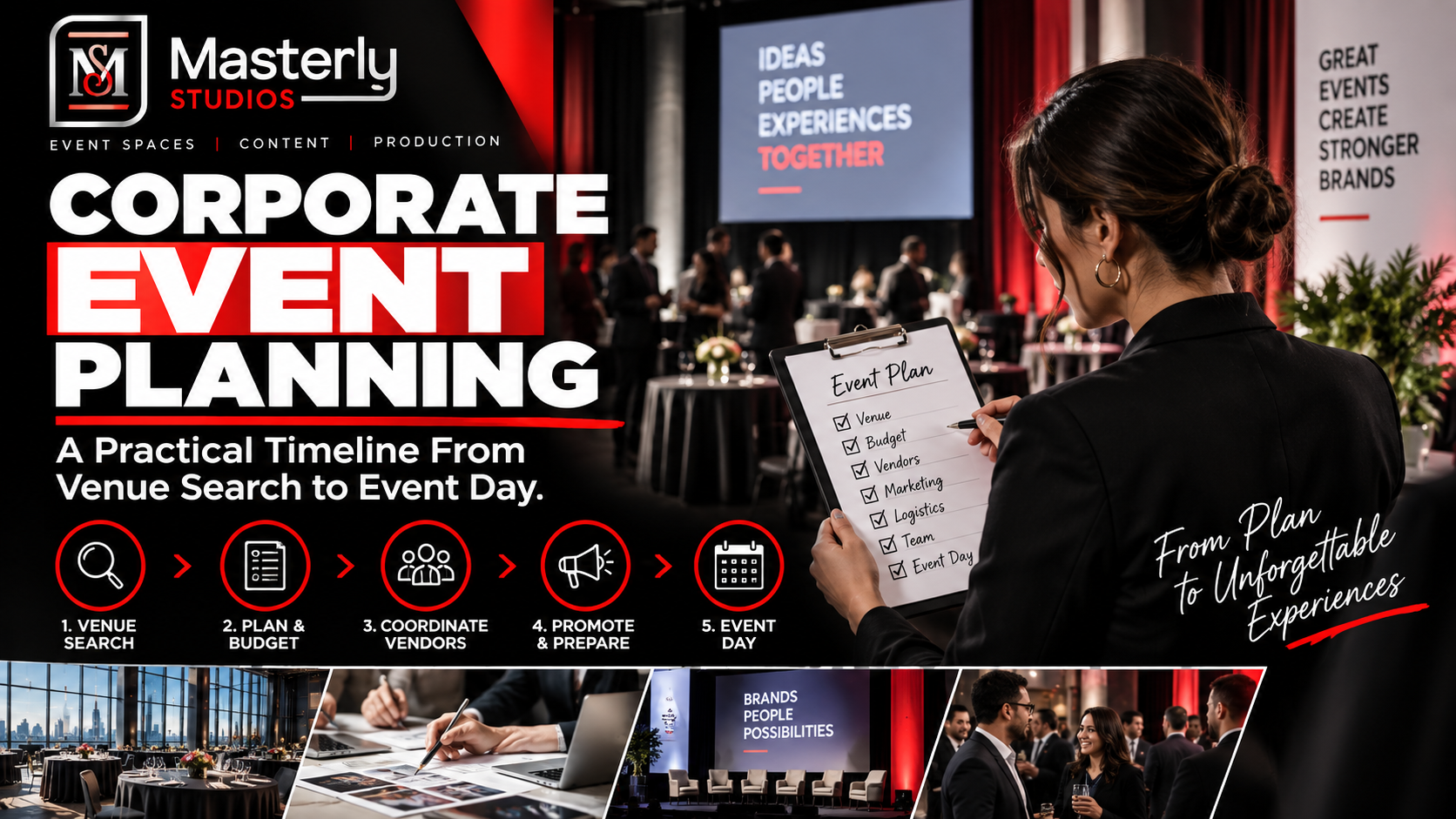
Plan corporate events with professional support for venues, A/V, catering, speakers, content capture, access, and production at Masterly Studios in Atlanta.
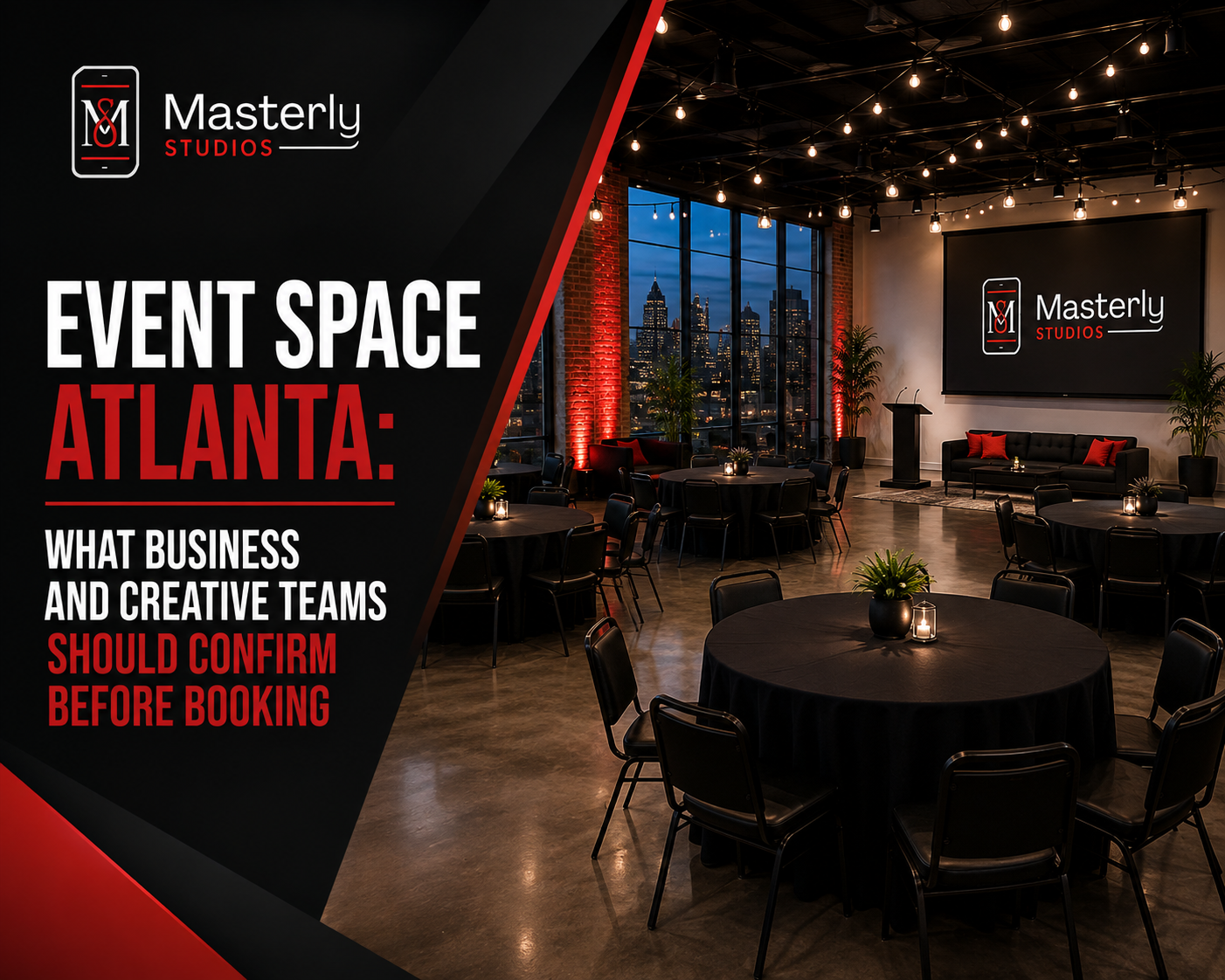
Find the right event space in Atlanta by confirming capacity, AV, parking, catering, layouts, accessibility, and production support before booking. Masterly Studios