Seamless Paper Backdrop: How to Plan a Clean Studio Shoot
A seamless paper backdrop is one of the simplest tools in a photo studio and one of the most useful. It gives you a clean, continuous background with no visible horizon line, which is why it shows up in headshots, product images, fashion work, and brand campaigns. It is also easy to get wrong if the color, width, lighting, and floor care are not planned before the shoot.
This guide covers what seamless paper is, how to choose the right roll, how to light it, and what to confirm with a studio before your booking.
What a Seamless Paper Backdrop Is
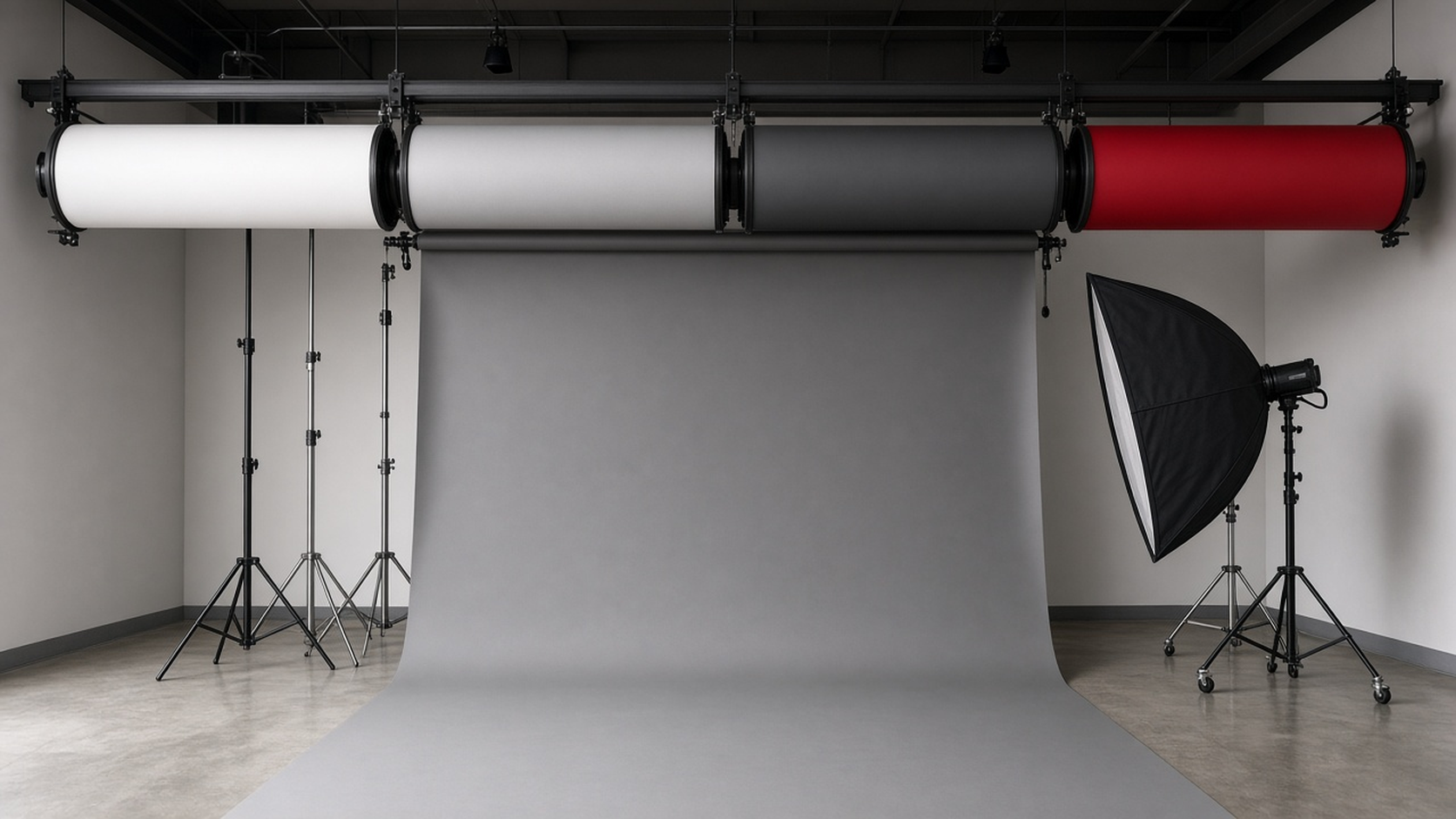
Seamless paper is heavy backdrop paper sold on long rolls. In a studio, the roll is mounted on stands or a wall system and pulled down to the floor in a gentle curve called a sweep. Because the paper flows from wall to floor without a seam, the subject appears to stand in a continuous space.
When a section gets dirty or torn, it is usually cut away and fresh paper is pulled down. That makes seamless paper practical for clean, repeatable work, as long as the shoot is planned with that in mind.
Choosing a Color
Color is the most important decision, because it sets the tone of every image.
- White: clean and bright, common for ecommerce, corporate portraits, and catalog work. It can be lit to pure white or to a soft light gray.
- Gray: flexible and forgiving. Gray can look lighter or darker depending on how much light reaches it, which makes it a favorite for headshots and team portraits.
- Black: dramatic and focused on the subject. It requires careful lighting so the subject separates from the background.
- Brand colors: a colored roll can tie a campaign to a brand palette, but it reflects color onto the subject and should be tested in advance.
If the images will be used together with photos from earlier shoots, match the background color and lighting to that existing library.
Choosing a Width
Seamless paper comes in several standard widths. Common options include 53 inches, which suits headshots and smaller products, and 107 inches, which allows full-length portraits, small groups, and larger products. Wider subjects, moving talent, and group shots may need a wider setup or a permanent cyclorama wall. Ask the studio which widths are available before you plan the shot list.
How to Light a Seamless Paper Backdrop
Lighting the subject and lighting the background are separate jobs.
Lighting for Pure White
To make white paper appear pure white, the background usually needs its own lights, aimed evenly at the paper and set brighter than the light on the subject. Keep the subject several feet in front of the paper to reduce spill light wrapping around their edges.
Controlling Shadows
Shadows on the sweep are often caused by a subject standing too close to the paper or by a key light set too low. Moving the subject forward, raising the light, or adding fill can clean up the background before any retouching is needed.
Lighting Gray and Black
Gray can be lit to different tones depending on distance and light placement, so test a few frames before talent arrives. For black, keep light off the background and use rim or hair lights to separate the subject.
Protecting the Sweep During a Shoot
Paper scuffs easily. A few habits keep the background clean longer:
- Ask talent to remove street shoes or cover them before stepping onto the paper.
- Lay a clear protective sheet over the floor section for product and footwear shoots.
- Keep drinks, makeup, and props off the paper.
- Plan full-length and movement shots early, before the floor section wears.
- Agree in advance on when paper will be cut and replaced.
Seamless Paper vs a Cyc Wall
A cyclorama wall is a permanent curved wall that creates a similar continuous background on a larger scale. Paper is portable, quick to change color, and well suited to portraits and products. A cyc wall supports larger sets, video, groups, and vehicles, but changing its color takes paint and time. Many productions use paper for headshots and product work and book a larger space for video or wide shots.
What to Confirm Before Booking a Studio
Every studio handles backdrops differently. Before you book, confirm:
- Which paper colors and widths are available.
- Whether paper use is included or billed separately.
- Whether you may bring your own rolls.
- How much setup time is included before talent arrives.
- Any rules on shoes, floor protection, and cleanup.
Our guide to what creators and brands should confirm before booking a photo studio includes a fuller pre-booking checklist.
Planning the Shot List Around the Backdrop
The order of your shots affects how long the paper stays clean and how efficiently the day runs. Start by listing every setup you need, then group them by background color and by how much of the floor each one uses.
Close-up headshots and tabletop products use only a small section of paper and can be scheduled at almost any point. Full-length portraits, footwear, and movement shots put the most wear on the floor section, so plan them for when the paper is freshest, then cut and replace as needed. If you need more than one color, schedule all shots on one color before switching, since changing rolls takes time and requires relighting.
Build in time for test frames at the start of each setup. A few minutes spent checking background tone, shadows, and the edges of the paper saves far more time in retouching later. If you are photographing a team, a short schedule with each person's time slot keeps the session on track and protects the backdrop from unnecessary foot traffic.
Frequently Asked Questions
What Is a Seamless Paper Backdrop Used For?
It provides a clean, continuous background for headshots, product photography, fashion, and brand portraits, without a visible line where the wall meets the floor.
What Color Seamless Paper Is Best for Headshots?
Gray and white are the most common choices. Gray is especially flexible because it can be lit lighter or darker to suit the look.
How Do You Keep White Seamless Paper Pure White?
Light the background separately and slightly brighter than the subject, and keep the subject far enough from the paper to avoid spill and shadows.
How Wide Should Seamless Paper Be?
Narrower rolls work for headshots and small products. Full-length portraits, groups, and larger products usually need a wider roll or a larger background.
Can Seamless Paper Be Reused?
The upper part of a roll can be reused many times. The floor section that gets walked on is usually cut away and replaced as it wears.
Book a Studio Set Up for Clean, Consistent Images
A seamless paper shoot looks simple in the final image because the planning happened beforehand. If you are preparing headshots, product images, or a brand shoot in Atlanta, Masterly Studios can help you confirm the backdrop, space, and setup time your production needs. Explore our Atlanta photo studio rental options, or send a booking inquiry with your shoot date and plan.