Podcast Intro & Episode Title Tactics That Make Listeners Click Instantly
February 11, 2026
Most people think growing a podcast starts with better equipment or louder promotion. In reality,
podcast listeners
decide whether to click before they ever hear your voice. Your podcast title, episode name, and opening seconds determine whether someone listens or scrolls past. At Masterly Studios, we help creators understand the psychology behind these decisions so they can attract an audience faster and with less guesswork.
This article breaks down why certain intros and episode titles work, how listeners think, and how to design hooks that feel natural instead of salesy. Whether you are starting a podcast or trying to revive a new podcast that is not gaining traction, these fundamentals matter more than most people realize.
Titles that feel vague or generic blend into the background. Strong podcast titles speak directly to curiosity, emotion, or outcome. This is why popular podcasts invest so much effort into naming strategy.
The best episode titles focus on one clear idea. Trying to summarize the whole episode usually weakens the click. One compelling angle almost always outperforms a long description.
Avoid long music intros or rambling welcomes. Podcast listeners want relevance right away. The opening hook should connect directly to the episode topic and audience pain point.
Fully scripted openings allow you to control pacing and clarity. They also make sure your strongest hook appears immediately. This is especially important for a first episode.
Using script templates helps hosts stay focused while still sounding conversational. Over time, scripting becomes faster and more intuitive. Like any skill, it takes practice.
Strong talking points also improve audio quality by reducing awkward pauses. They keep the host and guest aligned. This is critical for remote interviews.
This is why podcast branding matters early. Your podcast brand should feel intentional, even if the show is new. Perception shapes behavior.
Effective podcast artwork uses bold text, contrast, and simple imagery. It reinforces the podcast name and topic. Consistency builds recognition across platforms.
Focus on benefits, outcomes, and transformation. Keep sentences short and direct. Your podcast description should support your podcast title, not repeat it.
Publishing multiple episodes early helps establish momentum. Many successful shows launch with multiple episodes instead of one episode. This signals consistency to podcast players.
Optimizing for Apple Podcasts improves visibility across other podcast apps as well. Small adjustments can have large impact over time.
Listeners care less about length and more about relevance. A whole episode that stays focused feels shorter than a rambling one. Structure matters more than duration.
Choosing the right podcast hosting provider supports growth across podcast directories. This foundation matters more than many creators realize.
You do not need expensive podcast equipment to start. A good podcast mic and basic editing software are enough. Consistency matters more than perfection.
Video does not replace audio, but it enhances reach. Many creators record audio and video at the same time. This creates more content from one recording.
Guest intros should connect the guest’s experience to listener needs. This immediately establishes value. It also improves listener retention.
Using a simple outline before writing improves flow. Over time, writing becomes faster. Writing regularly improves confidence.
Narrative shows benefit from fully scripted formats. Consistency in voice and pacing builds loyalty. These techniques apply to non-fiction shows as well.
Clear goals prevent random episode naming. Strategy creates consistency. Consistency builds trust.
Successful podcasting starts with understanding behavior. Clicks lead to listens. Listens lead to loyalty.
This article breaks down why certain intros and episode titles work, how listeners think, and how to design hooks that feel natural instead of salesy. Whether you are starting a podcast or trying to revive a new podcast that is not gaining traction, these fundamentals matter more than most people realize.
Why Podcast Titles Trigger Instant Decisions
A podcast title is the first promise you make to your audience. It signals what problem you solve, who you serve, and whether the show is worth their time. Most podcast listeners skim podcast directories quickly, especially on Apple Podcasts, where competition is intense.Titles that feel vague or generic blend into the background. Strong podcast titles speak directly to curiosity, emotion, or outcome. This is why popular podcasts invest so much effort into naming strategy.
Episode Titles Work Like Headlines
Each podcast episode title functions like a headline in a blog post. It must spark interest without confusing the listener. A good episode title gives just enough information to make someone want to listen.The best episode titles focus on one clear idea. Trying to summarize the whole episode usually weakens the click. One compelling angle almost always outperforms a long description.
The Psychology of the First Ten Seconds
Most podcasts lose listeners in the first ten seconds. This moment decides whether someone stays or leaves. Your intro should immediately tell listeners why this episode matters to them.Avoid long music intros or rambling welcomes. Podcast listeners want relevance right away. The opening hook should connect directly to the episode topic and audience pain point.
Why Fully Scripted Intros Perform Better
Many creators resist a podcast script because they want to sound natural. Ironically, fully scripted intros often sound more confident and engaging. A podcast script helps eliminate filler words and wasted time.Fully scripted openings allow you to control pacing and clarity. They also make sure your strongest hook appears immediately. This is especially important for a first episode.
How Podcast Scripts Shape the Whole Episode
A podcast script does not mean reading word for word for the whole episode. It provides structure, talking points, and transitions. Most successful shows use a hybrid approach.Using script templates helps hosts stay focused while still sounding conversational. Over time, scripting becomes faster and more intuitive. Like any skill, it takes practice.
The Role of Talking Points in Engagement
Talking points keep the episode moving forward. Without them, hosts often ramble or repeat ideas. Clear talking points help listeners follow the conversation.Strong talking points also improve audio quality by reducing awkward pauses. They keep the host and guest aligned. This is critical for remote interviews.
Why Listeners Click Before They Trust You
Trust is built after someone listens, not before. Before clicking, listeners rely on signals like episode titles, podcast artwork, and descriptions. These signals tell them whether you are worth their time.This is why podcast branding matters early. Your podcast brand should feel intentional, even if the show is new. Perception shapes behavior.
Podcast Artwork as a Click Trigger
Podcast artwork is often overlooked, yet it strongly influences clicks. Artwork must be readable at small sizes inside podcast apps. Overly detailed designs usually fail.Effective podcast artwork uses bold text, contrast, and simple imagery. It reinforces the podcast name and topic. Consistency builds recognition across platforms.
Writing Podcast Descriptions That Convert
A podcast description should explain what listeners gain, not your personal story. Many creators treat the description like a biography. This is a missed opportunity.Focus on benefits, outcomes, and transformation. Keep sentences short and direct. Your podcast description should support your podcast title, not repeat it.
Understanding How Podcast Directories Rank Content
Podcast directories like Apple Podcasts use engagement signals to rank shows. Clicks, listens, and follows matter more than downloads alone. Strong intros increase retention, which improves visibility.Publishing multiple episodes early helps establish momentum. Many successful shows launch with multiple episodes instead of one episode. This signals consistency to podcast players.
Why Apple Podcasts Deserves Special Attention
Apple Podcasts remains one of the most influential podcast platforms. Many podcast listeners discover new shows there first. Titles and episode details matter greatly on this platform.Optimizing for Apple Podcasts improves visibility across other podcast apps as well. Small adjustments can have large impact over time.
Episode Length and Listener Psychology
Episode length should match listener expectations, not personal preference. Shorter episodes often perform better for educational content. Longer formats work when value is clear.Listeners care less about length and more about relevance. A whole episode that stays focused feels shorter than a rambling one. Structure matters more than duration.
Podcast Hosting and Distribution Strategy
Podcast hosting determines how your audio file is distributed. A reliable podcast hosting service ensures fast delivery and accurate analytics. Podcast hosting also generates your RSS feed.Choosing the right podcast hosting provider supports growth across podcast directories. This foundation matters more than many creators realize.
Audio Quality and Perceived Credibility
Audio quality affects whether listeners take you seriously. Poor audio can cause listeners to leave, even if the content is strong. High quality audio signals professionalism.You do not need expensive podcast equipment to start. A good podcast mic and basic editing software are enough. Consistency matters more than perfection.
The Rise of Video Podcasting
Video podcast formats continue to grow. Video podcast clips perform well on social platforms. They also support podcast website traffic.Video does not replace audio, but it enhances reach. Many creators record audio and video at the same time. This creates more content from one recording.
Guest Intros That Build Authority Fast
A strong guest intro frames why the guest matters. Avoid long resumes that lose attention. Focus on relevance to the episode topic.Guest intros should connect the guest’s experience to listener needs. This immediately establishes value. It also improves listener retention.
Writing Episode Scripts That Feel Natural
Learning to write a podcast script that sounds conversational is a skill. Scripts should guide, not restrict. They help maintain pacing and clarity.Using a simple outline before writing improves flow. Over time, writing becomes faster. Writing regularly improves confidence.
Fiction Podcasts and Narrative Hooks
Fiction podcasts rely heavily on episode hooks. Storytelling demands immediate immersion. Strong openings set tone and stakes quickly.Narrative shows benefit from fully scripted formats. Consistency in voice and pacing builds loyalty. These techniques apply to non-fiction shows as well.
Podcasting Goals Shape Title Strategy
Your podcasting goals influence how you write titles. Shows focused on paid subscriptions may emphasize exclusivity. Educational shows highlight outcomes.Clear goals prevent random episode naming. Strategy creates consistency. Consistency builds trust.
Why Most Podcasts Fail to Grow
Most podcasts fail because they focus on recording instead of positioning. Hitting record is easy. Designing for listeners is harder.Successful podcasting starts with understanding behavior. Clicks lead to listens. Listens lead to loyalty.
Keyword Research for Podcast Titles
Keyword research helps align titles with how people search. This improves discovery in podcast apps. It also supports blog post promotion. Use keywords naturally. Forced phrases reduce trust. Balance clarity with curiosity.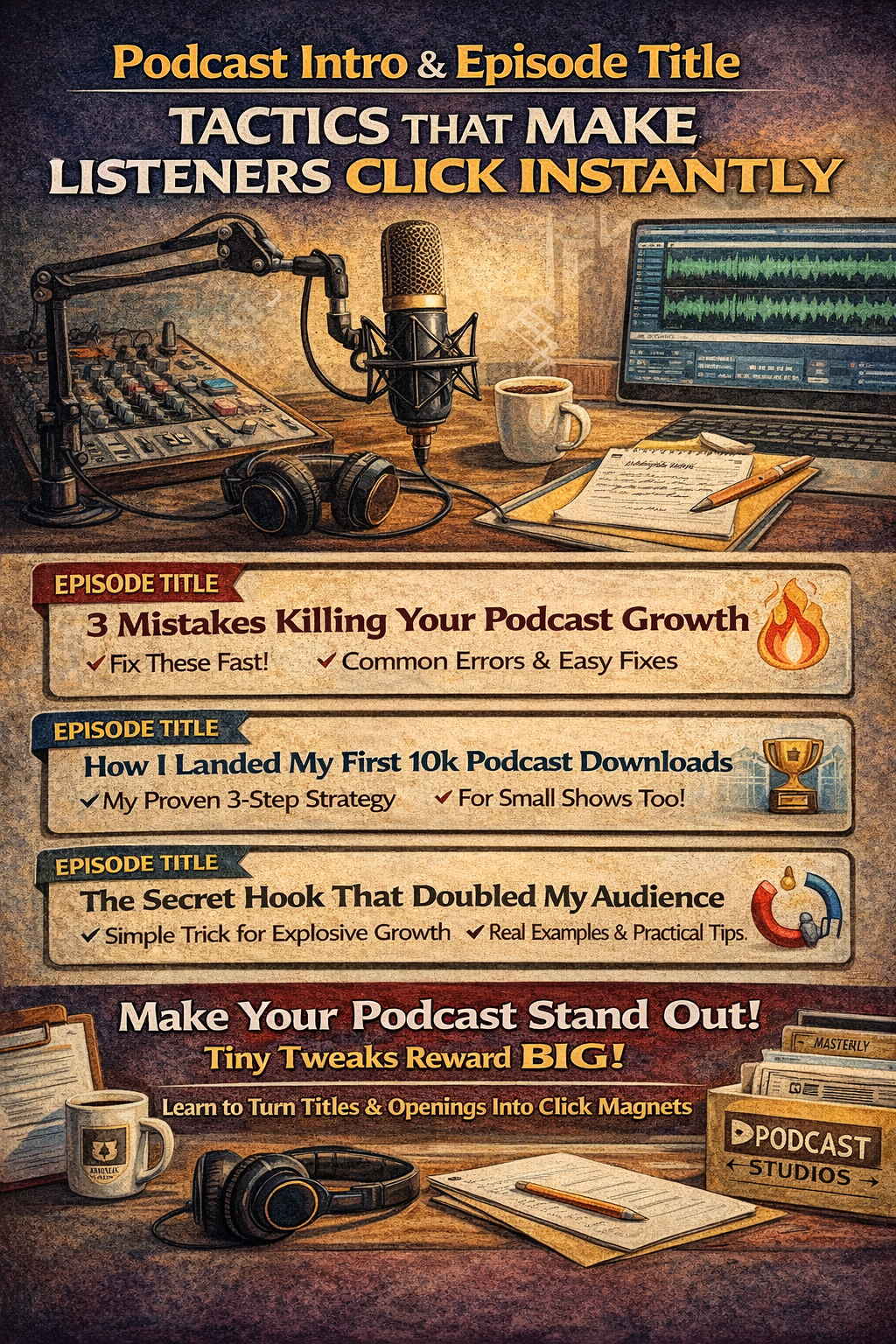
Show Notes as a Retention Tool
Show notes help listeners navigate the episode. They also improve SEO for your podcast website. Clear show notes encourage deeper engagement.Bullet points work well in show notes. Highlight key takeaways. Keep formatting clean.
Editing Software and Flow Control
Editing software improves pacing and clarity. Removing filler improves listener experience. Clean edits increase perceived value. Editing does not mean over-production. It means respecting listener time. Less friction equals more listens.Sound Effects and Music Usage
Sound effects should support the message, not distract. Royalty free music avoids legal issues. Simple intros often perform better than complex ones.Consistency builds familiarity. Familiarity builds loyalty.
Podcasting Is a Skill That Grows Over Time
Podcasting takes practice. Writing, talking, and hosting improve with repetition. Progress matters more than perfection. Moving forward requires feedback and adjustment. Data informs decisions. Creativity fuels growth.How Masterly Studios Helps You Jump Start Growth
At Masterly Studios, we help creators understand the fundamentals that drive clicks and listens. Our workshops simplify how to start a podcast, write a podcast script, and structure episodes that convert. We focus on clarity, psychology, and practical systems.We work with clients throughout the country and nationally. Whether you are starting a podcast or refining an existing show, we help you build momentum faster.
Contact Masterly Studios for a Free Podcast Consultation
If you are ready to stop guessing and start growing, Masterly Studios is here to help. We offer free consultations to walk you through podcast intros, episode title strategy, scripting fundamentals, and audience-building basics. Our team works with creators nationwide to help them build podcasts that listeners actually click and listen to .Call (888) 209-4055 today to book a free consultation and learn how to launch or refine your podcast with confidence.

Plan your Atlanta event space rental with the right room size, guest flow, technical support, and scheduling. Request a venue tour to confirm the best fit.
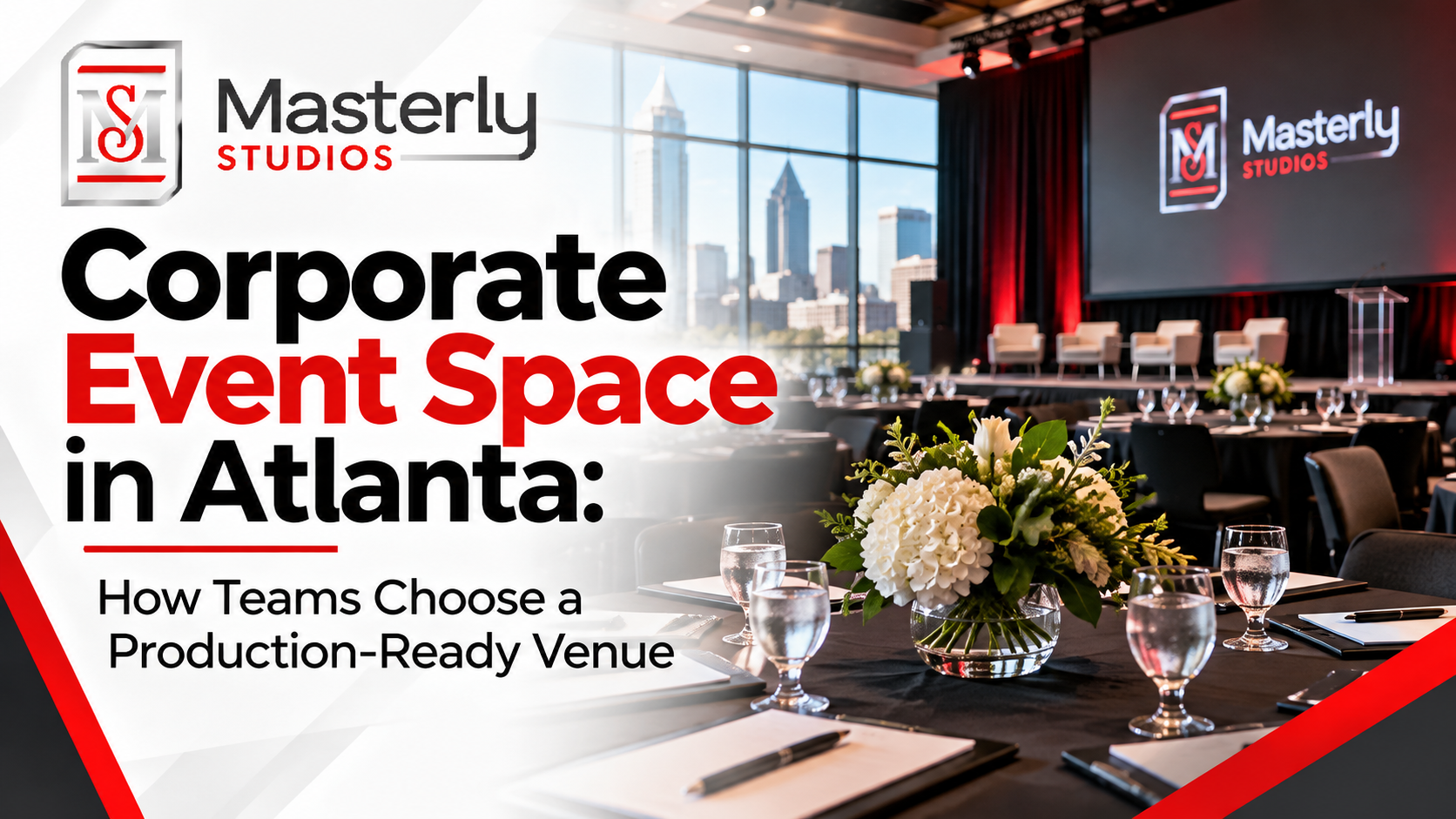
Explore what to consider when choosing Atlanta corporate event space, including room layouts, AV capabilities, parking, guest experience, and booking options.
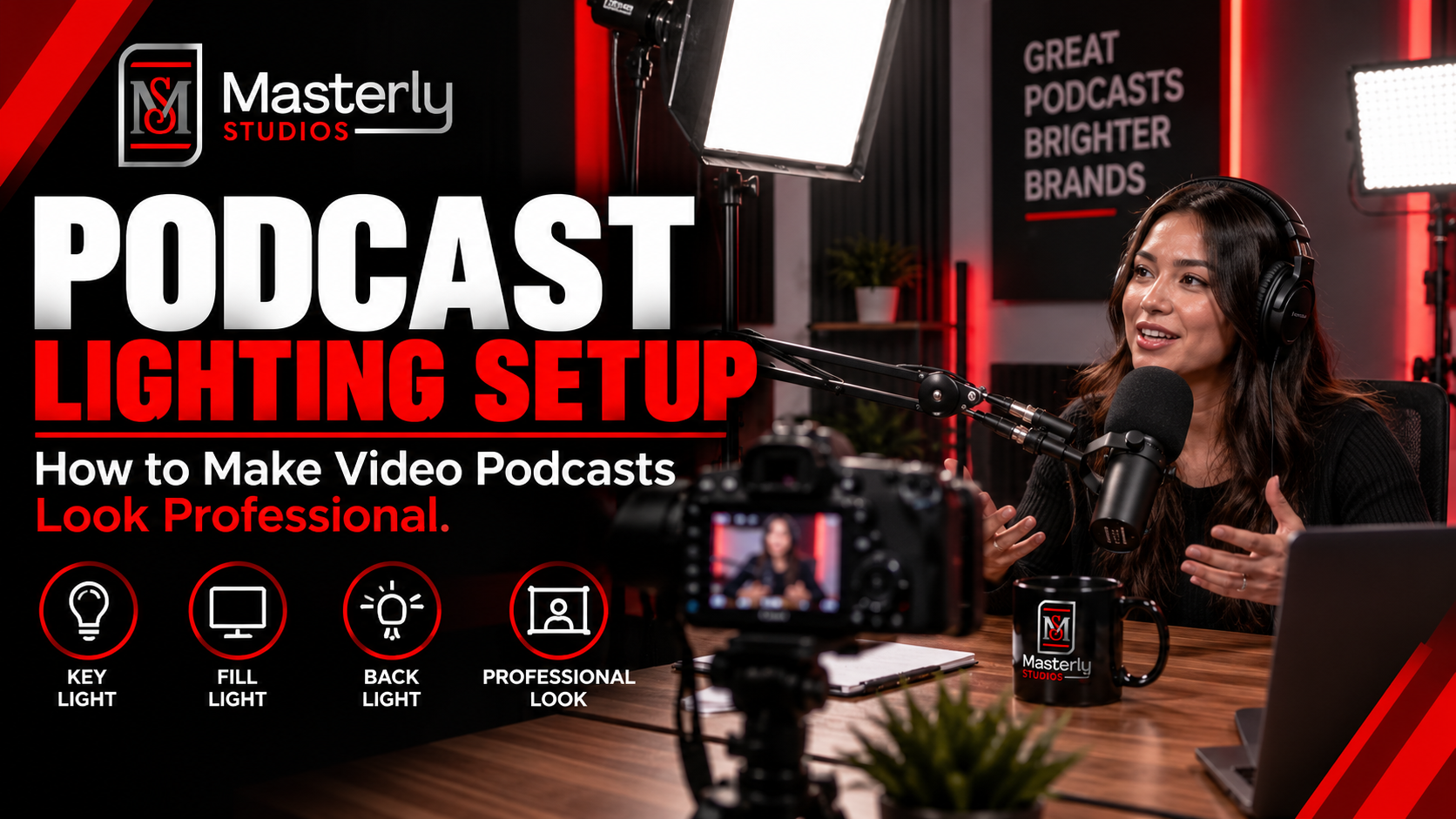
Need a podcast lighting setup? Masterly Studios provides professional podcast and camera lighting in a prepared studio for consistent, polished video production.
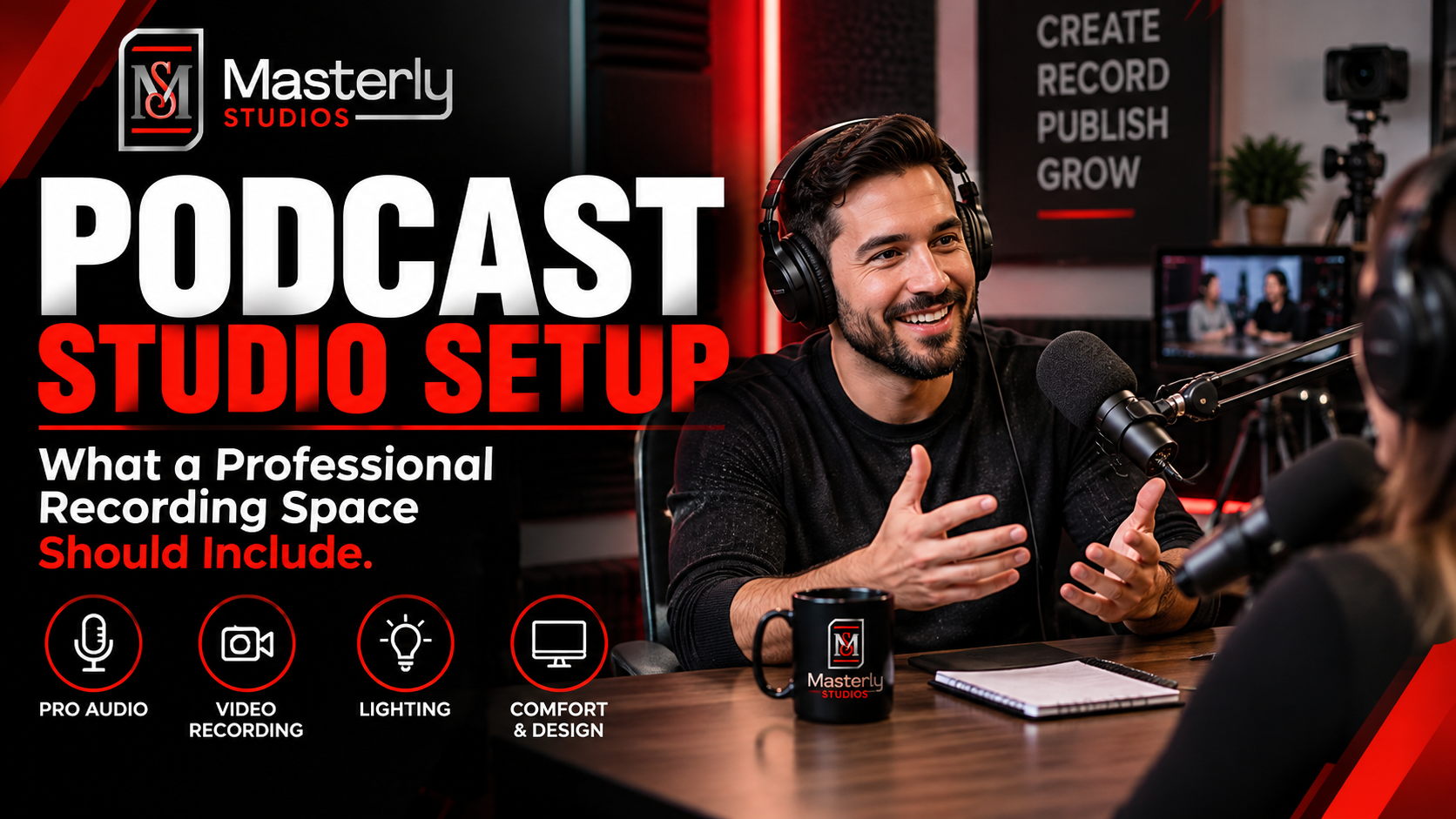
Need a podcast studio setup? Masterly Studios offers a professional recording space with quality equipment, lighting, acoustics, and video support for creators.
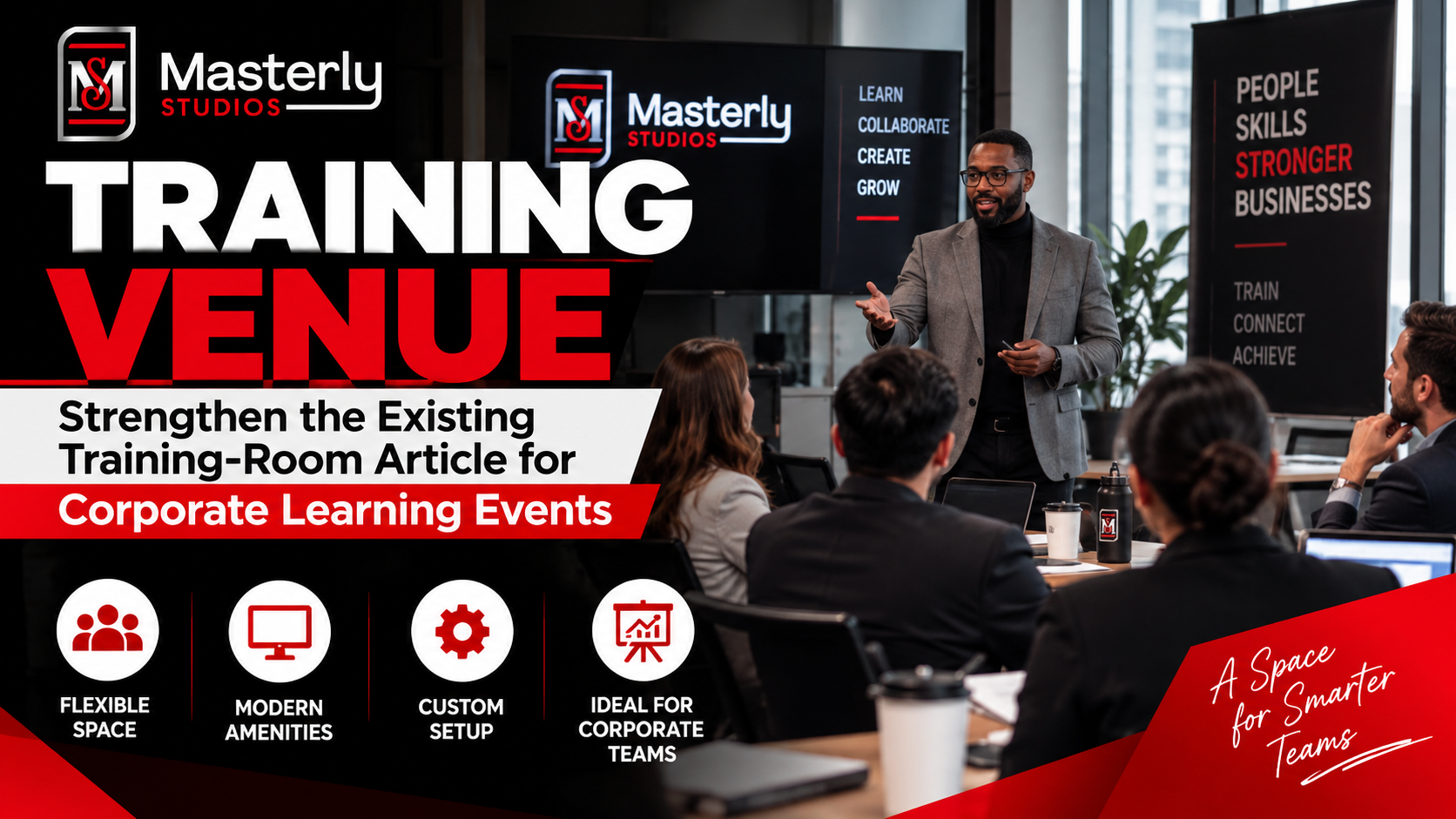
Book a training venue in Atlanta for corporate workshops, employee training, and learning events with flexible layouts, A/V support, and professional amenities.
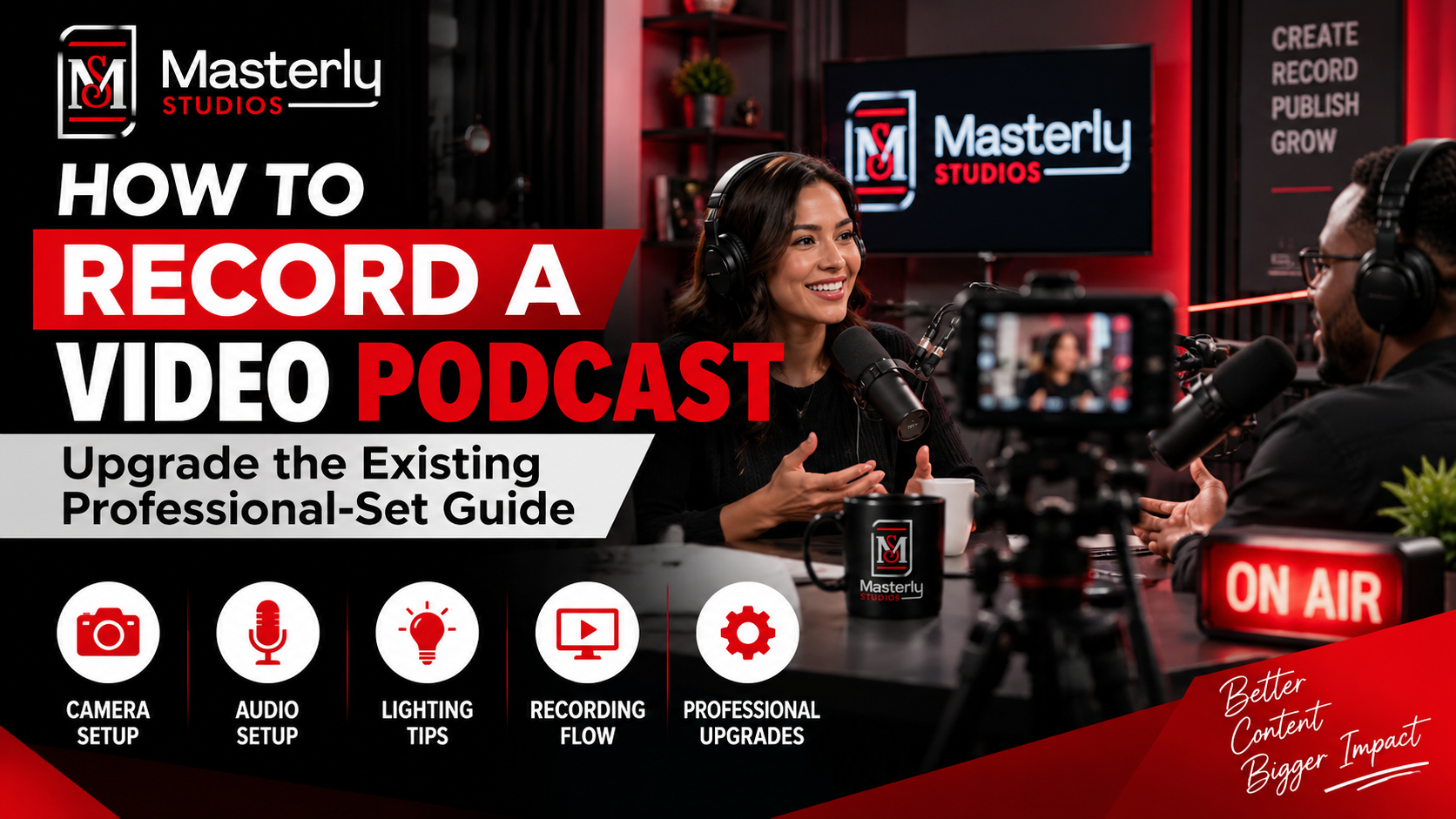
Learn how to record a video podcast in Atlanta with a professional studio setup, clear audio, polished lighting, guest support, and a smooth recording workflow.

Book a corporate Christmas party venue in Atlanta for year-end events with flexible space, A/V support, catering, branding, and more for your team and festive fun.
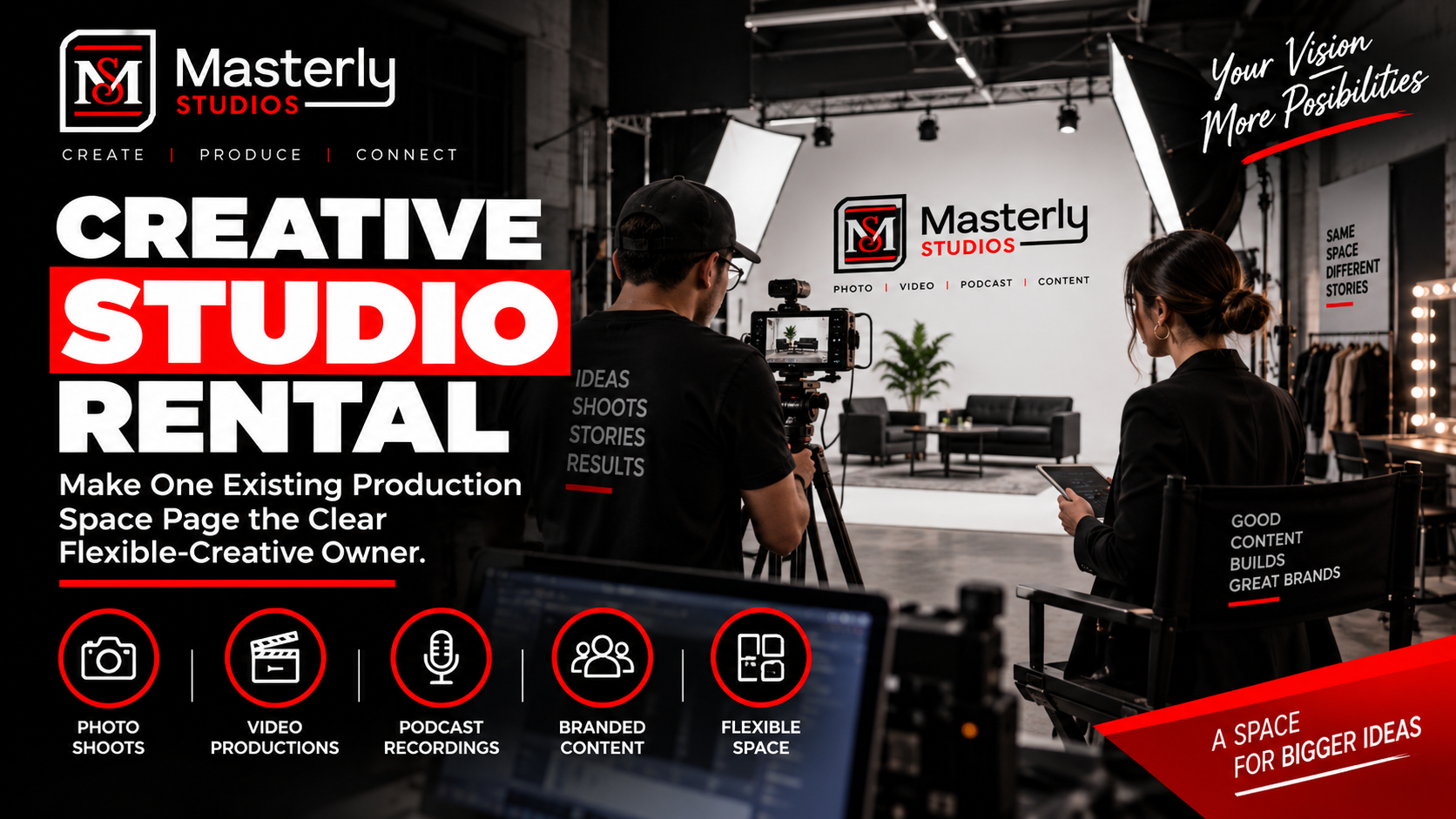
Book a creative studio rental for photography, video, branded content, and marketing campaigns with flexible production space at Masterly Studios for every project.
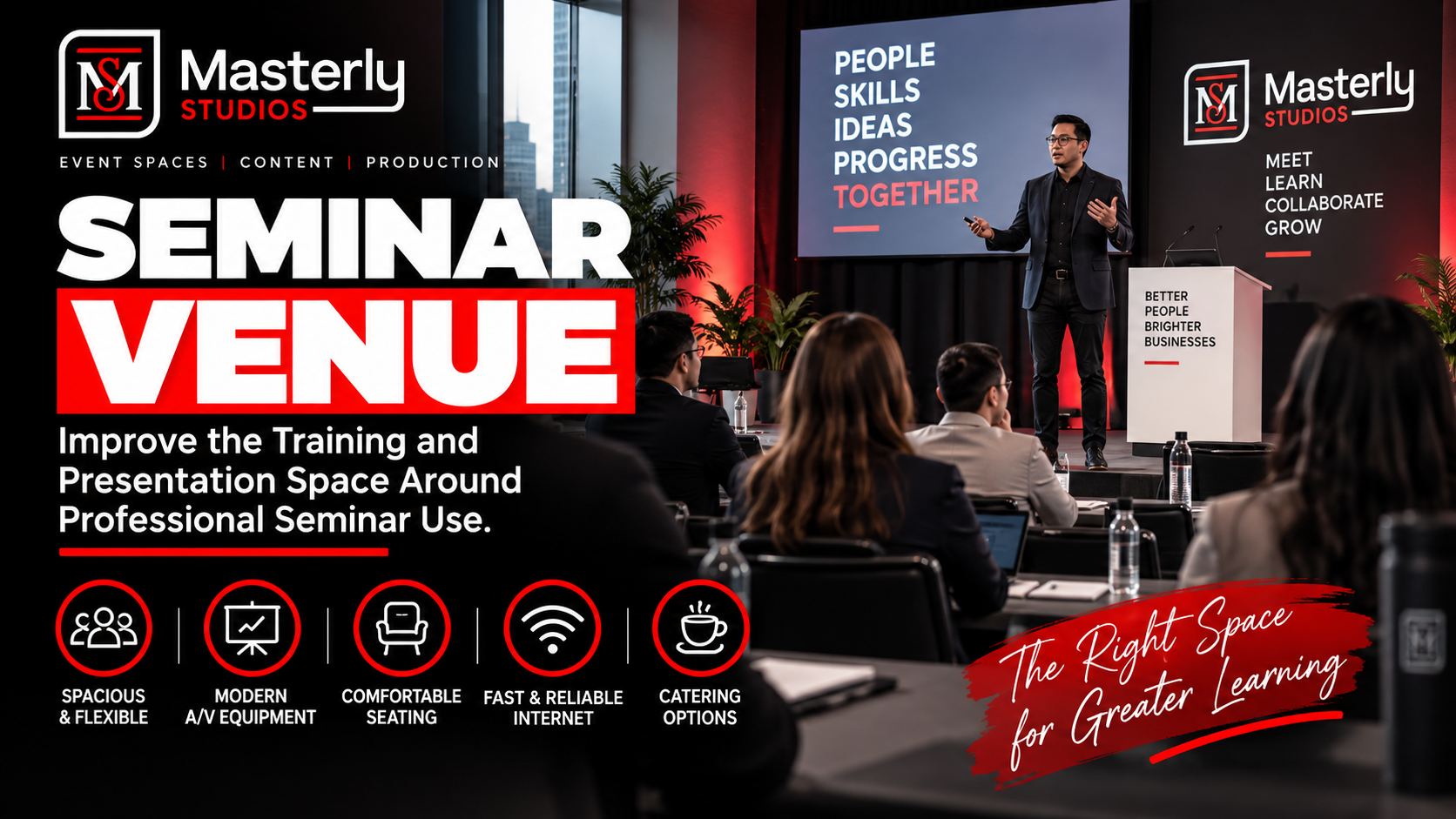
Book a professional seminar venue for training, presentations, and business events with flexible seating, A/V, check-in, parking, content support, and event setup.
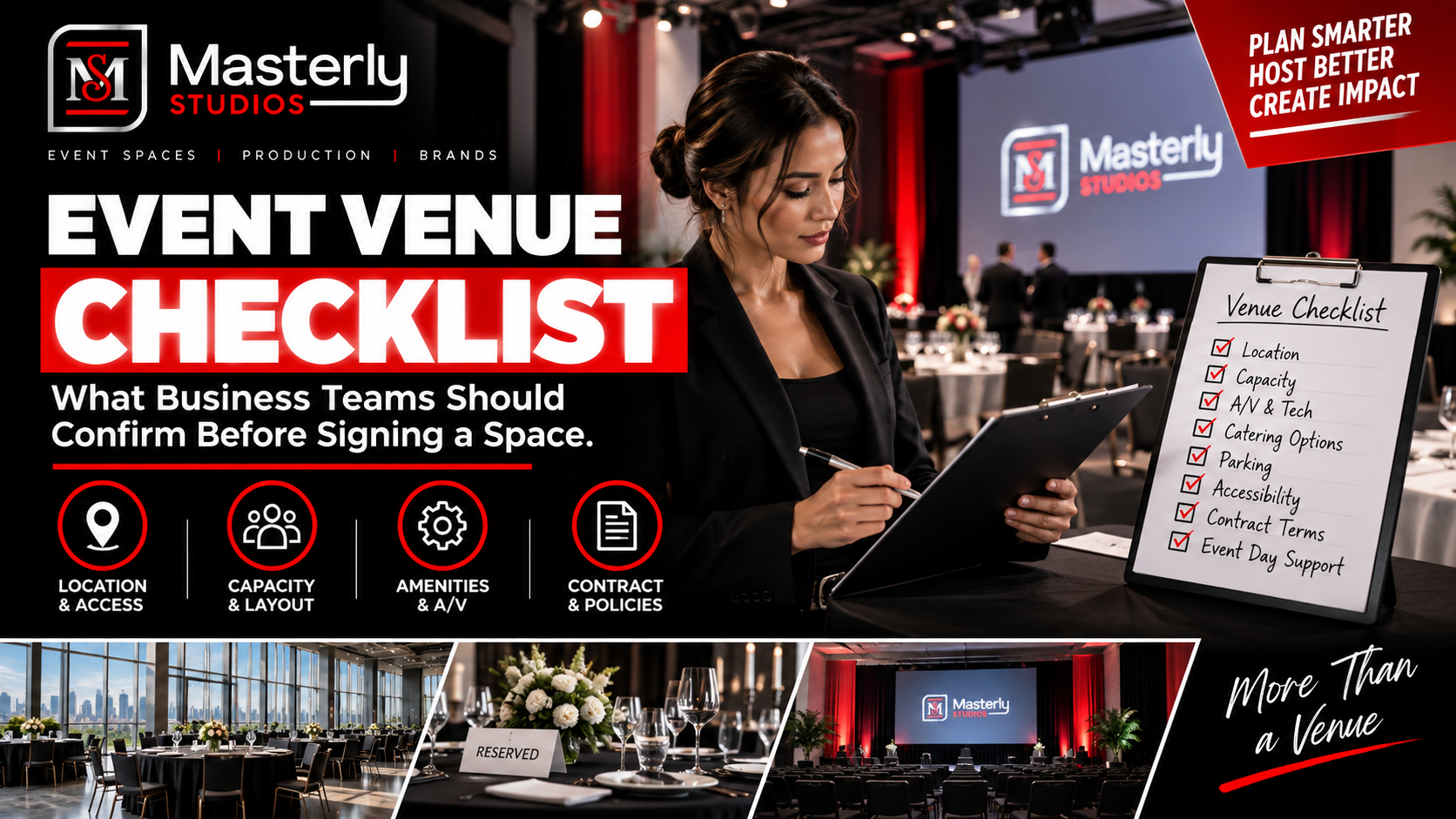
Use an event venue checklist to evaluate capacity, layout, parking, load-in, A/V, Wi-Fi, accessibility, catering, branding, production, and overtime needs.