Podcast Videos: The Secret to Reaching Audiences Who Never Listen to Audio-Only Shows
January 27, 2026
For years, podcasts were built almost entirely around audio. Creators focused on microphones, sound quality, and distribution to listening apps, assuming that if people wanted the content, they would press play. Today, that assumption no longer holds true. A growing segment of the audience prefers to watch rather than listen, and creators who rely only on audio are quietly losing reach every single day.
At Masterly Studios, we work with creators, brands, and businesses who want to expand their presence through podcast videos. Video podcast production is no longer a bonus feature or an experiment. It has become one of the most effective ways to connect with new audiences, grow visibility across platforms, and build a stronger brand without abandoning audio entirely.
This shift means that audio-only podcasts often miss viewers who rarely open audio apps. Video allows your podcast to exist where people already spend time, rather than hoping they will change habits to find you.
Podcast videos solve this problem by meeting audiences where they are. They turn passive listening into active viewing, making it easier for people to discover, sample, and connect with your message.
Instead of relying on a single platform, creators gain exposure across multiple channels. That expanded presence directly translates into new audiences who may never search for audio-only shows.
By combining audio and video content, creators strengthen their presence on Apple Podcasts while extending reach elsewhere. Video does not replace audio; it amplifies it by bringing attention back to the core podcast.
Many platforms now support richer content through the RSS feed URL, allowing creators to manage distribution from one dashboard. This simplifies publishing while supporting growth across channels.
With the right tools, podcasters no longer need separate systems for audio files and video content. Everything can be managed efficiently, allowing creators to focus on quality and consistency.
Publishing a video podcast on YouTube increases visibility, searchability, and engagement. Over time, viewers may convert into listeners across other platforms as well.
Video also helps creators build trust and authenticity. Audiences feel more connected to real people than to voices alone, which strengthens brand loyalty.
Creators who delay adopting video often find it harder to compete as others dominate visual spaces. Early adoption creates momentum that compounds over time.
Understanding how viewers interact with video allows podcasters to enhance quality and optimize future episodes. Data-driven decisions lead to more consistent growth.
YouTube monetization, exclusive content, and premium subscriptions offer additional revenue streams. These options give creators more control over monetization strategies.
Exclusive video content also differentiates a podcast from others in the same space. It gives viewers a reason to stay engaged beyond audio episodes.
Using the right camera, editing tools, and setup enhances credibility. Professional production reflects commitment and builds trust with the audience.
With proper support, podcasters can focus on content rather than logistics. Streamlined workflows make consistency easier to maintain.
Managing distribution through a unified system prevents errors and saves time. It also allows creators to maintain control over their content.
At Masterly Studios, we provide end-to-end support for podcast video production. Our team helps creators plan, record, edit, and publish content optimized for growth.
At Masterly Studios, we work with creators, brands, and businesses who want to expand their presence through podcast videos. Video podcast production is no longer a bonus feature or an experiment. It has become one of the most effective ways to connect with new audiences, grow visibility across platforms, and build a stronger brand without abandoning audio entirely.
The Shift in How Audiences Consume Podcasts
Audience behavior has changed dramatically over the last few years. While traditional podcast apps remain important, many users now discover shows through video platforms first. They scroll, watch clips, and decide whether to engage based on what they see before they ever listen.This shift means that audio-only podcasts often miss viewers who rarely open audio apps. Video allows your podcast to exist where people already spend time, rather than hoping they will change habits to find you.
Why Audio-Only Shows Miss a Growing Segment of Listeners
Many people simply do not listen to long audio episodes. They prefer visual engagement, even if the content itself is conversational. Without video, these potential listeners never encounter your podcast at all.Podcast videos solve this problem by meeting audiences where they are. They turn passive listening into active viewing, making it easier for people to discover, sample, and connect with your message.
Video Podcasting Expands Discoverability Across Platforms
A video podcas t platform opens the door to wider distribution. When you publish video versions of your episodes, your content can appear on platforms that prioritize visuals. This includes YouTube, embedded players on a website, and clips shared across social media.Instead of relying on a single platform, creators gain exposure across multiple channels. That expanded presence directly translates into new audiences who may never search for audio-only shows.
How Apple Podcasts and Spotify Fit Into the Video Strategy
Apple Podcasts and Spotify remain essential parts of any podcast strategy. They rely on an RSS feed to distribute audio episodes to listeners who prefer traditional listening apps. However, these platforms are only part of the picture.By combining audio and video content, creators strengthen their presence on Apple Podcasts while extending reach elsewhere. Video does not replace audio; it amplifies it by bringing attention back to the core podcast.
The Role of RSS Feeds in Modern Podcast Publishing
The RSS feed remains the backbone of podcast hosting. It controls how episodes are delivered to Apple Podcasts, Spotify, and other podcast directories. Even when adding video, the RSS feed continues to distribute audio files consistently.Many platforms now support richer content through the RSS feed URL, allowing creators to manage distribution from one dashboard. This simplifies publishing while supporting growth across channels.
Podcast Hosting and Video Integration
Modern podcast hosting services make it easier to manage both audio and video. Creators can upload audio episodes, link video versions, and track analytics in one place. This integration reduces complexity and saves time.With the right tools, podcasters no longer need separate systems for audio files and video content. Everything can be managed efficiently, allowing creators to focus on quality and consistency.
Why YouTube Is Essential for Podcast Growth
A YouTube channel is often the first place new viewers encounter podcast video content. YouTube functions as both a search engine and a content platform, making it ideal for discovery. Many users who never open podcast apps still watch long-form conversations on YouTube.Publishing a video podcast on YouTube increases visibility, searchability, and engagement. Over time, viewers may convert into listeners across other platforms as well.
Video Builds Stronger Audience Connection
Seeing hosts and guests creates a stronger sense of connection. Facial expressions, body language, and visual context enhance storytelling in ways audio alone cannot. This deeper engagement keeps viewers watching longer.Video also helps creators build trust and authenticity. Audiences feel more connected to real people than to voices alone, which strengthens brand loyalty.
Turning One Episode Into Multiple Content Assets
One of the biggest advantages of video podcasting is content flexibility. A single recording session can produce long-form episodes, short clips, and promotional content. This allows creators to maximize output without increasing workload. Video series clips can be shared across other platforms, driving traffic back to full episodes. This approach increases efficiency while expanding reach.How Video Podcasts Attract New Audiences
Video podcast content reaches users who scroll instead of search. Short clips introduce ideas quickly, encouraging viewers to explore full episodes. This discovery path is especially effective for attracting new audiences unfamiliar with the show.Creators who delay adopting video often find it harder to compete as others dominate visual spaces. Early adoption creates momentum that compounds over time.
Analytics and Data Reveal the Power of Video
Video platforms provide detailed analytics that audio apps often lack. Creators can track viewer behavior, watch time, and engagement patterns. This data helps refine content and improve performance.Understanding how viewers interact with video allows podcasters to enhance quality and optimize future episodes. Data-driven decisions lead to more consistent growth.
Monetization Opportunities Expand With Video
Video podcasting opens new monetization options. In addition to audio ads, creators can generate revenue through video ads, sponsorship placements, and branded content. Visual integrations often command higher value.YouTube monetization, exclusive content, and premium subscriptions offer additional revenue streams. These options give creators more control over monetization strategies.
Exclusive Content Drives Loyalty
Video makes it easier to offer exclusive content for subscribers or members. Behind-the-scenes footage, bonus episodes, and extended conversations add value. This strengthens audience loyalty and encourages long-term support.Exclusive video content also differentiates a podcast from others in the same space. It gives viewers a reason to stay engaged beyond audio episodes.
Production Quality Matters More Than Ever
As video becomes standard, quality expectations rise. Viewers expect clear visuals, good lighting, and professional sound. While production does not need to be cinematic, it must be intentional.Using the right camera, editing tools, and setup enhances credibility. Professional production reflects commitment and builds trust with the audience.
Tools That Simplify Video Podcast Production
Today’s tools make video podcasting accessible. Platforms offer features for recording, editing, publishing, and managing content from one dashboard. These tools reduce technical barriers for creators.With proper support, podcasters can focus on content rather than logistics. Streamlined workflows make consistency easier to maintain.
Managing Distribution Across Platforms
Publishing video and audio across platforms requires coordination. Effective distribution ensures episodes appear correctly on Apple Podcasts, Spotify, YouTube, and other platforms. Consistency builds audience trust.Managing distribution through a unified system prevents errors and saves time. It also allows creators to maintain control over their content.
Supporting Creators With Dedicated Services
Many creators benefit from dedicated support when transitioning to video. Producers and studios help manage technical details, allowing creators to stay focused on storytelling. Professional services reduce trial and error.At Masterly Studios, we provide end-to-end support for podcast video production. Our team helps creators plan, record, edit, and publish content optimized for growth.
How Video Enhances Brand Presence
Video strengthens brand identity by adding a visual layer to messaging. Logos, sets, and on-screen graphics reinforce recognition. This consistency builds a stronger brand across platforms. For businesses, video podcasts become a powerful branding tool. They position leaders as experts while reaching broader audiences.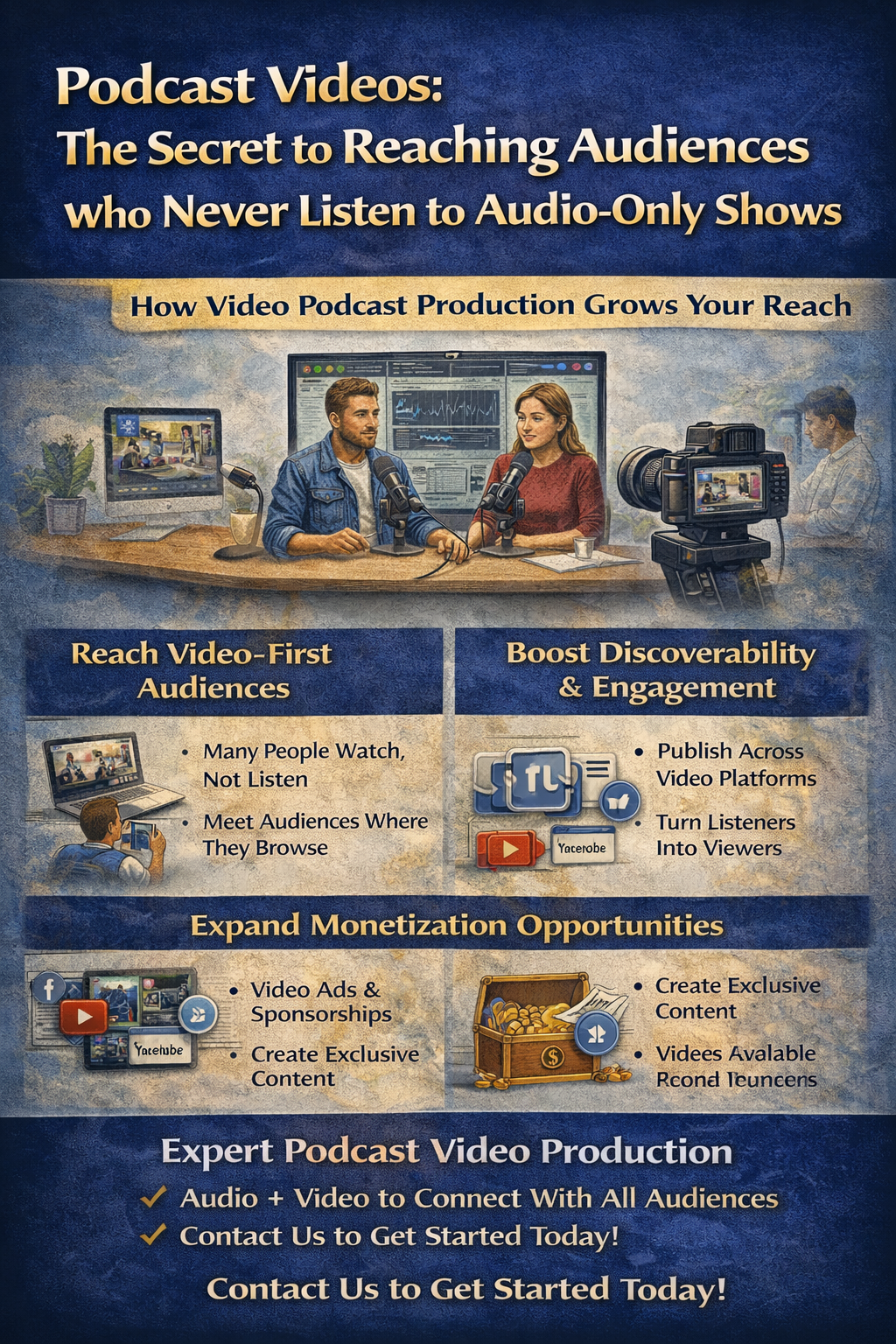
Reaching Viewers Who Never Listen to Audio
Some users simply prefer to watch content. They may never download a podcast app or listen to audio episodes. Video bridges that gap by offering content in a preferred format.By offering video, creators ensure they are not invisible to this growing audience segment. That visibility can be the difference between steady growth and stagnation.
The Cost of Waiting to Adopt Video
Creators who delay video adoption often fall behind competitors. As video becomes the norm, audiences expect it. Catching up later requires more effort and resources.Early adoption allows creators to build momentum gradually. It also positions the podcast as forward-thinking and adaptable.
Podcast Videos as a Long-Term Strategy
Video podcasting is not a trend; it is a long-term shift. Platforms continue to invest in video features, and audiences increasingly expect visual options. Adopting video now future-proofs content.A balanced approach that includes audio and video content ensures resilience. It allows creators to adapt as platforms and user behavior evolve.
Masterly Studios’ Approach to Podcast Video Production
At Masterly Studios, we believe podcast videos should feel natural, professional, and engaging. Our approach focuses on clarity, quality, and strategic distribution. We help creators transform existing podcasts into powerful video assets.Our services support creators at every stage, from concept to publishing. We work with clients throughout the country and nationally, providing guidance tailored to each project.
Let’s Talk About Your Podcast Video Strategy
If you are ready to expand your audience and stop missing viewers who never listen to audio-only shows, we invite you to connect with Masterly Studios. We offer a free consultation to discuss how podcast videos can elevate your content, reach new audiences, and support long-term growth.Contact us at (888) 209-4055 to book a free consultation and explore how our podcast video services can help you move forward with confidence.
Plan your Atlanta event space rental with the right room size, guest flow, technical support, and scheduling. Request a venue tour to confirm the best fit.
Explore what to consider when choosing Atlanta corporate event space, including room layouts, AV capabilities, parking, guest experience, and booking options.
Need a podcast lighting setup? Masterly Studios provides professional podcast and camera lighting in a prepared studio for consistent, polished video production.
Need a podcast studio setup? Masterly Studios offers a professional recording space with quality equipment, lighting, acoustics, and video support for creators.
Book a training venue in Atlanta for corporate workshops, employee training, and learning events with flexible layouts, A/V support, and professional amenities.
Learn how to record a video podcast in Atlanta with a professional studio setup, clear audio, polished lighting, guest support, and a smooth recording workflow.
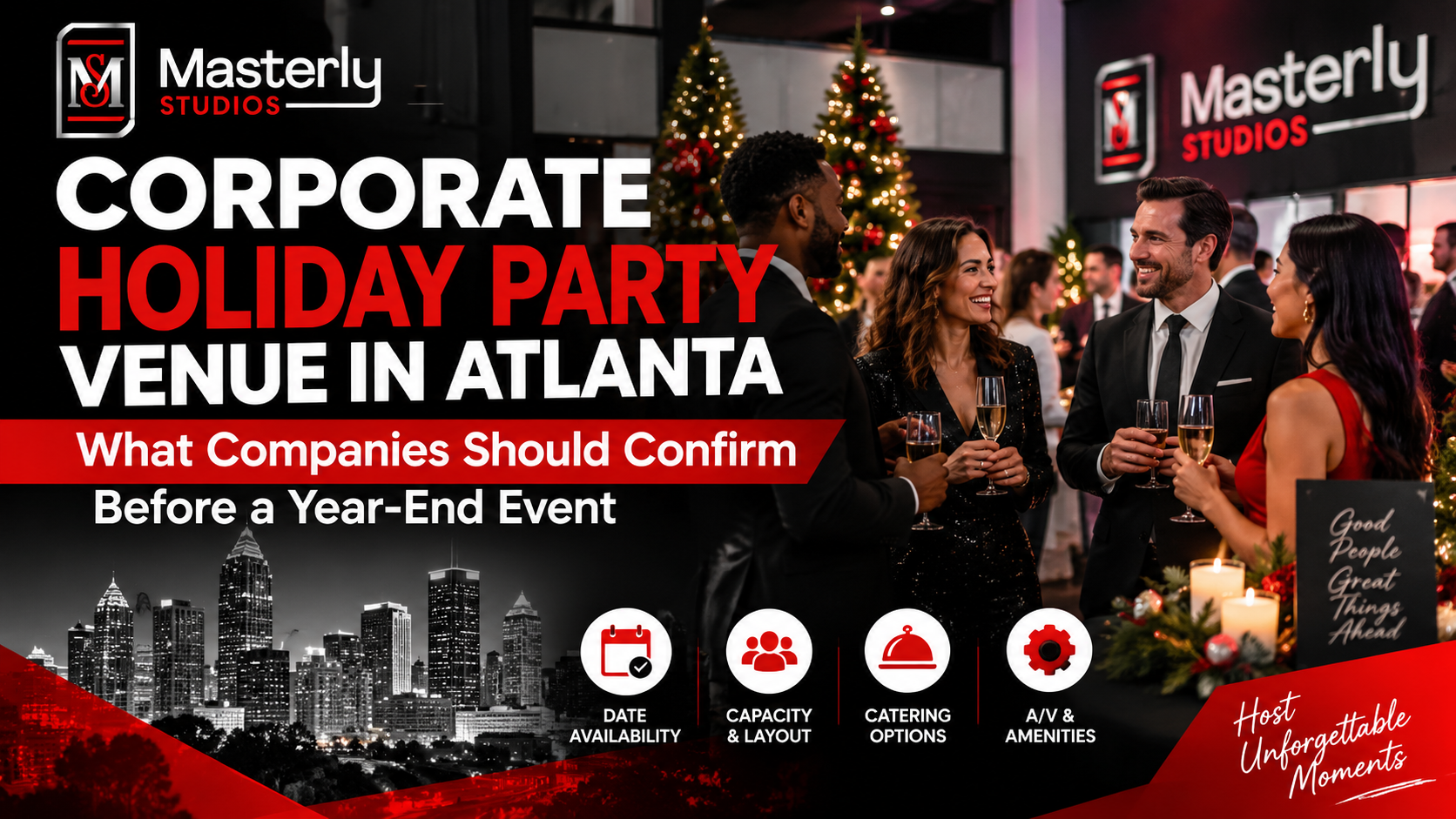
Book a corporate Christmas party venue in Atlanta for year-end events with flexible space, A/V support, catering, branding, and more for your team and festive fun.
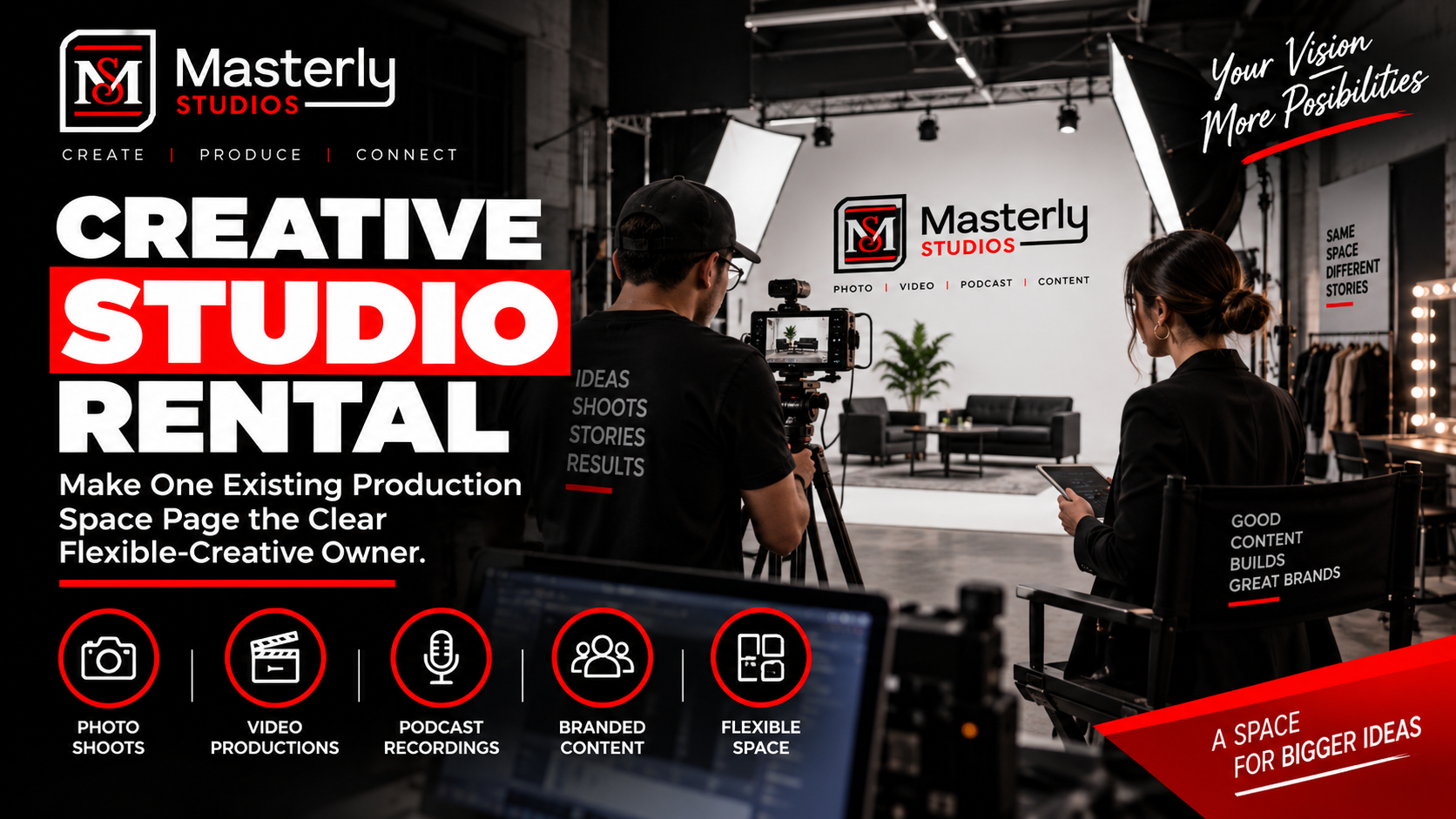
Book a creative studio rental for photography, video, branded content, and marketing campaigns with flexible production space at Masterly Studios for every project.
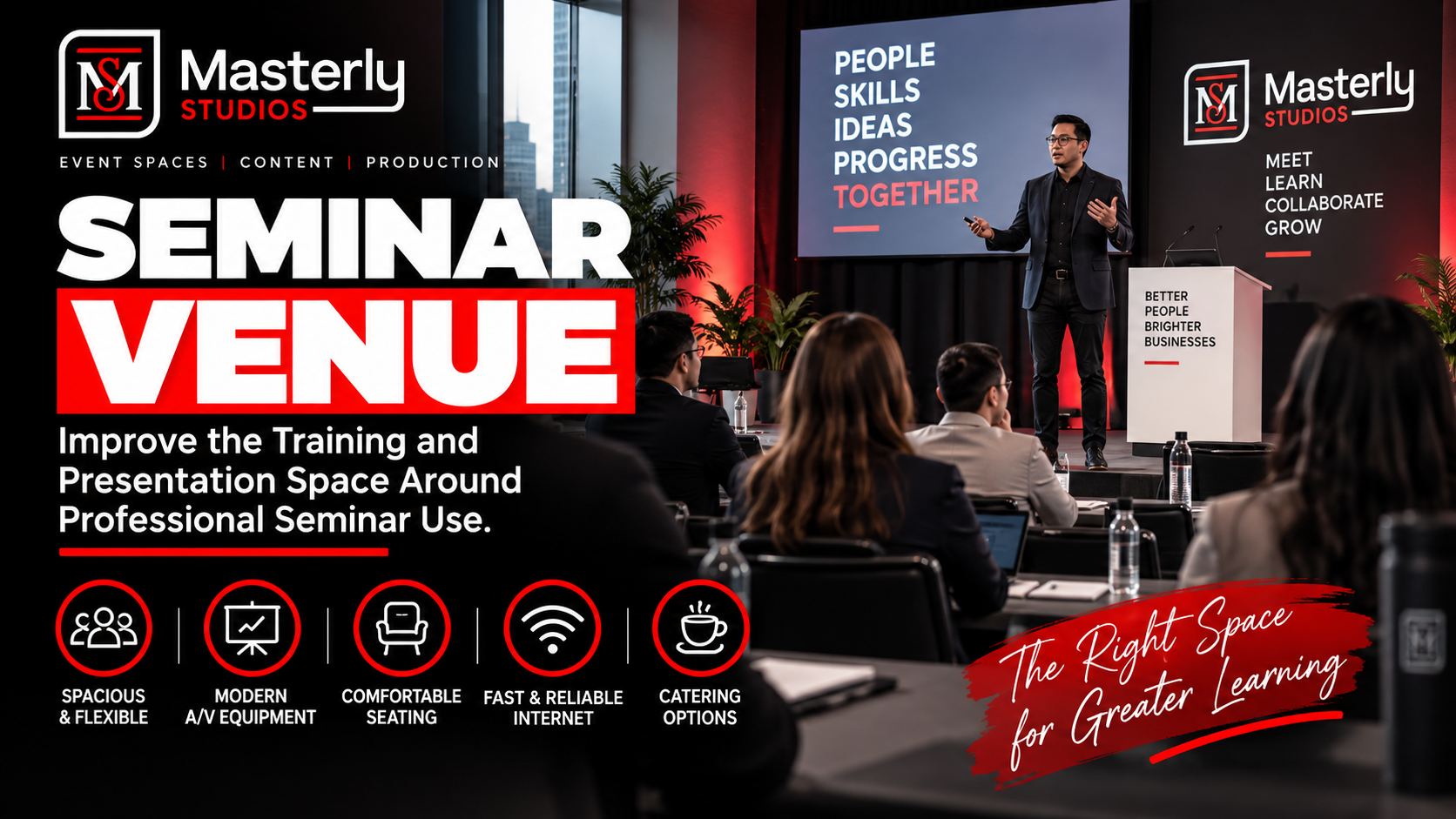
Book a professional seminar venue for training, presentations, and business events with flexible seating, A/V, check-in, parking, content support, and event setup.
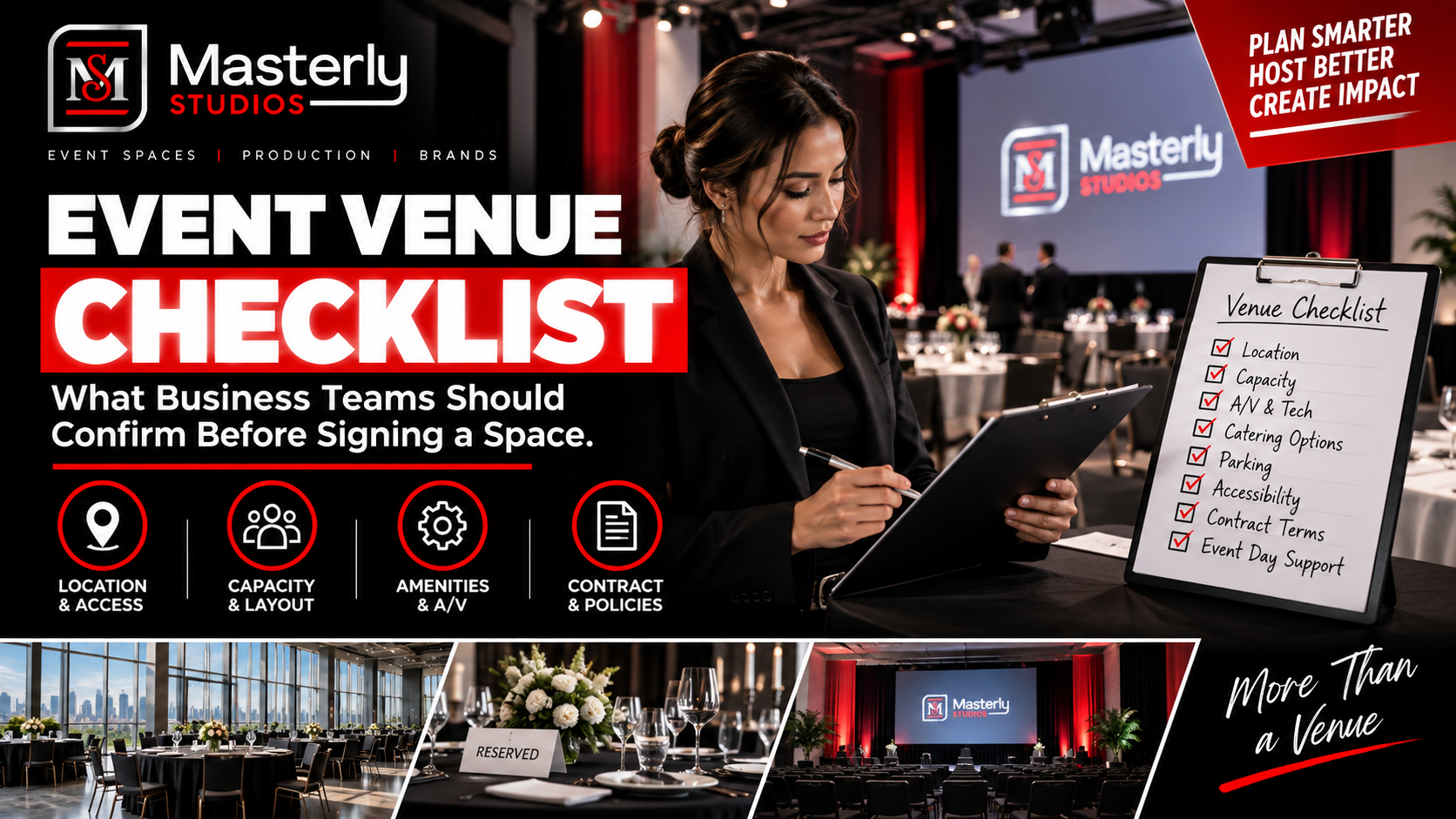
Use an event venue checklist to evaluate capacity, layout, parking, load-in, A/V, Wi-Fi, accessibility, catering, branding, production, and overtime needs.