From Good to Great Storytelling Podcasts: A Professional Upgrade Plan for Podcasters
February 11, 2026
If you’ve been makin
g a
podcast
for a while, you already know the basics: record clean audio, keep your levels steady, and publish consistently. You’ve probably released new episodes, promoted them online, and watched a few spikes come and go. But at some point, most creators hit a wall where the show is “good” and people listen… yet it doesn’t feel unforgettable. That’s the moment many podcasters realize they’re not competing with casual content anymore—they’re competing with good storytelling podcasts that feel like an experience.
At Masterly Studios, we work with creators who want to make that leap. We help podcasters refine their storytelling, tighten their structure, and create a sound that holds attention from the first line to the final breath. This is not about copying someone else’s voice or chasing trends on the internet. It’s about building a professional plan that helps your show stand next to the storytelling podcasts listeners talk about all week, recommend to friends, and replay in their head long after they press stop. Below is a practical upgrade roadmap you can use to elevate your show from “solid” to truly great.
If you’ve ever listened to american life and felt your brain light up because the structure was so clean, you’ve experienced this difference. If you’ve listened to modern love and felt the emotional truth land in your chest, you’ve experienced it again. If you’ve listened to memory palace and felt recent history turn into something intimate and human, you know the power of this format. Great shows are not “l ucky”—they are built with intention.
Think of your show like a studio series, not a casual upload. That means planning how each episode functions as a unit and how it fits into the bigger identity of the show. It also means deciding what you want your audience to feel, not just what you want them to learn. When your mindset chan ges, your production choices start to look different immediately.
The best upgrade plan starts with picking your lane, then sharpening your tools for that style. You don’t need to do everything. You need to do the right things exceptionally well.
A strong spine usually includes a clear opening hook, rising stakes, a midpoint shift, and a closing payoff. It also includes intentional pacing, where each section earns its place. If you want people to listen all the way through, your structure must reward attention. This is where professional planning separates casual creators from serious producers.
A strong hook can be a bold line, a question, a short scene, or a surprising fact. It can also be a tiny moment that hints at what’s coming next. The goal is not to “trick” the listener. The goal is to give them a reason to stay, because their time matters.
Serial storytelling works best when you have enough depth to sustain attention over time. It also requires discipline, because dragging a story out can backfire. If you want a show with three seasons, you need to build trust with the audience first. Trust comes from delivering value in every episode, not just promising it later.
You can study these creators without imitating them. The goal is to understand what makes their shows work: structure, voice, pacing, and emotional truth. When you understand the mechanics, you can apply them to your own topic and your own style. That’s how you create something original that still fe els professional.
To get there, you need preparation and intentional framing. You also need to guide the guest toward specific moments, not general opinions. Ask for details, emotions, and what happened next. When interviews become scenes, the listener stops multitasking and starts paying attention.
Emotion can come from joy, grief, confusion, hope, or surprise. It can come from a small line that reveals a whole relationship. It can also come from the stakes of the situation—loss, betrayal, or even death. Your job is to create space for truth, not to overproduce it.
If you’re building a fictional audio drama, sound design can shape the entire world. If you’re doing narrative nonfiction, it can help the listener visualize a place, a time, or a memory. Even in true crime, sound design can create suspense without becoming sensational. Great sound design is subtle, intentional, and controlled.
If your edit is packed with constant talking, your show may feel rushed or flat. Silence creates contrast, and contrast creates impact. It also helps your voice feel more human. In audio, silence can be as powerful as words.
Momentum comes from rhythm, structure, and the order of information. Sometimes the best choice is to move a line earlier, cut a paragraph, or reframe a section. Editing is not just technical—it’s storytelling. This is where a show becomes bingeable instead of “fine.”
You build suspense by controlling what the listener knows and when they learn it. You can also build suspense through pacing, scene structure, and strategic questions. If you’re telling a story about recent history, suspense can come from consequences unfolding. If you’re telling personal stories, suspense can come from what a person chooses to admit.
You don’t need to sound like a broadcaster on radio. You need to sound like a real person with confidence and control. When your voice is grounded, the listener relaxes. When the listener relaxes, they stay longer.
Some endings are thought provoking. Some are heartbreaking. Some are funny in a way that releases tension. But great endings are intentional, not accidental. If you want your show to be memorable, design the ending like you design the opening.
Consistency does not mean sameness. It means reliability. Your audience should know what kind of experience they’re about to get. When they trust that experience, they share it with friends, save links, and recommend particular episodes. That’s how storytelling podcasts build momentum.
Professional creators have systems that reduce stress and increase quality. They know how to go from idea to finished episode without chaos. They also know how to fix problems quickly when something isn’t working. Process is the hidden difference between good and great.
At Masterly Studios, we work with creators who want to make that leap. We help podcasters refine their storytelling, tighten their structure, and create a sound that holds attention from the first line to the final breath. This is not about copying someone else’s voice or chasing trends on the internet. It’s about building a professional plan that helps your show stand next to the storytelling podcasts listeners talk about all week, recommend to friends, and replay in their head long after they press stop. Below is a practical upgrade roadmap you can use to elevate your show from “solid” to truly great.
What Makes Great Storytelling Podcasts Feel Different
The be st storytelling podcasts don’t just share information—they create a moment. They take a listener somewhere, then bring them back changed. That could mean a thought provoking twist, an emotional payoff, or a surprising perspective that reframes what you thought you knew about life. The listener isn’t just hearing a topic; they’re stepping into a story with tension, stakes, and meaning.If you’ve ever listened to american life and felt your brain light up because the structure was so clean, you’ve experienced this difference. If you’ve listened to modern love and felt the emotional truth land in your chest, you’ve experienced it again. If you’ve listened to memory palace and felt recent history turn into something intimate and human, you know the power of this format. Great shows are not “l ucky”—they are built with intention.
The Upgrade Mindset: Stop Publishing, Start Producing
A lot of creators tre at podcasting like a weekly task list. Record on Monday, edit on Tuesday, publish on Wednesday, repeat. That approach can work in the early days, but it rarely creates long-term growth. If your goal is long form storytelling, you need to shift from “content output” to “production design.”Think of your show like a studio series, not a casual upload. That means planning how each episode functions as a unit and how it fits into the bigger identity of the show. It also means deciding what you want your audience to feel, not just what you want them to learn. When your mindset chan ges, your production choices start to look different immediately.
Choose Your Storytelling Lane Before You Improve Anything Else
Before you upgrade so und design or add music, you need clarity on your storytelling lane. Many podcasters blend styles without realizing it, which can confuse listeners and weaken retention. A show can absolutely mix formats, but the creator needs to be intentional about it. Common lanes include:- Narrative nonfiction built around true stories and real-world stakes
- True crime with suspense , timelines, and investigative beats
- Investigative journalism that uncovers patterns and accountability
- Fictional audio drama with voice actors, scenes, and worldbuilding
- Hybrid talk formats with interviews, narration, and commentary
The best upgrade plan starts with picking your lane, then sharpening your tools for that style. You don’t need to do everything. You need to do the right things exceptionally well.
Build a Strong Episode Spine (So Your Story Doesn’t Drift)
If your episode feels like it “wanders,” you don’t have a content problem—you have a structure problem. Great storytelling relies on a spine: a sequence of beats that pulls the listener forward. Without it, even a fascinating topic can feel slow. With it, even a simple topic can feel electric.A strong spine usually includes a clear opening hook, rising stakes, a midpoint shift, and a closing payoff. It also includes intentional pacing, where each section earns its place. If you want people to listen all the way through, your structure must reward attention. This is where professional planning separates casual creators from serious producers.
Start With a Hook That Makes People Stay
Most people decide whether to keep listening in the first minute. That’s not a theory—it’s behavior. If your opening is a long intro, a slow greeting, or a vague setup, you may be losing your audience before your story even starts. Great shows open with urgency, curiosity, or emotion.A strong hook can be a bold line, a question, a short scene, or a surprising fact. It can also be a tiny moment that hints at what’s coming next. The goal is not to “trick” the listener. The goal is to give them a reason to stay, because their time matters.
Make Each Episode Feel Like a Complete Experience
One common mistake in developing storytelling podcasts is treating episodes like fragments. You want each episode to feel like a full experience, even if the show is serialized. That means a beginning, middle, and end—even if the end is a cliffhanger. Think about the difference between a random update and a crafted narrative. A crafted narrative leaves listeners satisfied, curious, or moved. It creates a clear emotional arc, whether the tone is funny, heartbreaking, or tense. If you want people to binge, each episode needs to feel complete while still inviting the next.Serial Storytelling: When to Build a Multi-Episode Arc
Some stories demand more tha n one episode. That’s where serial design comes in. Shows like serial productions changed podcast culture by proving that serialized storytelling can be addictive when it’s structured well. If you want to build a season, you need to plan your reveals, pacing, and emotional peaks.Serial storytelling works best when you have enough depth to sustain attention over time. It also requires discipline, because dragging a story out can backfire. If you want a show with three seasons, you need to build trust with the audience first. Trust comes from delivering value in every episode, not just promising it later.
Learn From the Greats Without Copying Them
Some of the most influen tial storytelling podcasts have become reference points for the entire industry. Ira Glass helped define a style of narrative rhythm that still shapes audio today. Sarah Koenig helped bring serialized reporting into mainstream culture. Glynn Washington brought powerful voice and performance into audio storytelling in a way that feels both personal and expansive.You can study these creators without imitating them. The goal is to understand what makes their shows work: structure, voice, pacing, and emotional truth. When you understand the mechanics, you can apply them to your own topic and your own style. That’s how you create something original that still fe els professional.
Interviews That Sound Like Scenes, Not Q&A
A great interview doesn’t sound li ke a checklist. It sounds like a scene unfolding. The best interviews reveal character, tension, and change. The guest isn’t just answering questions—they’re living through the memory as they speak. That’s the difference between information and experience.To get there, you need preparation and intentional framing. You also need to guide the guest toward specific moments, not general opinions. Ask for details, emotions, and what happened next. When interviews become scenes, the listener stops multitasking and starts paying attention.
Capture Emotional Detail Without Forcing It
Great storytelling is emotional, but it shouldn’t feel manipulated. You don’t need dramatic music behind every line or a voice that sounds like a movie trailer. You need honesty, specificity, and pacing that allows emotion to land naturally. When you respect the listener’s intelligence, the emotion hits harder.Emotion can come from joy, grief, confusion, hope, or surprise. It can come from a small line that reveals a whole relationship. It can also come from the stakes of the situation—loss, betrayal, or even death. Your job is to create space for truth, not to overproduce it.
Sound Design That Feels Cinematic, Not Noisy
Advanced so und design is not about adding more effects. It’s about creating cinematic production choices that support the story. Music, ambience, and sound effects should guide attention, not distract. When done well, sound design makes the listener feel like they’re inside the moment.If you’re building a fictional audio drama, sound design can shape the entire world. If you’re doing narrative nonfiction, it can help the listener visualize a place, a time, or a memory. Even in true crime, sound design can create suspense without becoming sensational. Great sound design is subtle, intentional, and controlled.
Use Silence Like a Tool
One of the most overlooked tools in podcasting is silence. Silence gives weight to a line. It gives the listener time to process. It can also build suspense in a way that music cannot.If your edit is packed with constant talking, your show may feel rushed or flat. Silence creates contrast, and contrast creates impact. It also helps your voice feel more human. In audio, silence can be as powerful as words.
Edit for Momentum, Not Just Clean Audio
Many creators edit only to remove mistakes. Professional creators edit to shape momentum. That means cutting anything that slows the story, even if it’s interesting. It also means tightening the pacing so the listener feels pulled forward.Momentum comes from rhythm, structure, and the order of information. Sometimes the best choice is to move a line earlier, cut a paragraph, or reframe a section. Editing is not just technical—it’s storytelling. This is where a show becomes bingeable instead of “fine.”
Build Suspense Without Becoming Sensational
Suspense is not limit ed to true crime. Suspense exists whenever the listener is waiting for an answer. It can be the answer to a question, the outcome of a decision, or the reveal of a hidden truth. The best suspense feels earned, not forced.You build suspense by controlling what the listener knows and when they learn it. You can also build suspense through pacing, scene structure, and strategic questions. If you’re telling a story about recent history, suspense can come from consequences unfolding. If you’re telling personal stories, suspense can come from what a person chooses to admit.
Create a Consistent Host Voice That Listeners Trust
Your voice is not just your sound—it’s your presence. The best hosts feel like someone you can trust, even when the topic is heavy. That trust comes from clarity, tone, and consistency. It also comes from the way you speak to your audience.You don’t need to sound like a broadcaster on radio. You need to sound like a real person with confidence and control. When your voice is grounded, the listener relaxes. When the listener relaxes, they stay longer.
Decide What You Want the Listener to Feel at the End
Every episode should leave the listener with something. That might be a new perspective, a feeling, a question, or a quiet shift in how they see the world. The ending is not just the last sentence. It’s the emotional landing.Some endings are thought provoking. Some are heartbreaking. Some are funny in a way that releases tension. But great endings are intentional, not accidental. If you want your show to be memorable, design the ending like you design the opening.
Keep Your Audience Coming Back Each Week
A show grows when it becomes part of someone’s routine. The listener hits play while driving, cooking, walking, or winding down at night. If your show consistently delivers, they come back every week. If it’s inconsistent, they drift.Consistency does not mean sameness. It means reliability. Your audience should know what kind of experience they’re about to get. When they trust that experience, they share it with friends, save links, and recommend particular episodes. That’s how storytelling podcasts build momentum.
Upgrade Your Process, Not Just Your Gear
A professional upgrade plan is not about buying a new mic. Gear helps, but process is what changes everything. Your process includes planning, scripting, interview prep, editing workflow, and sound design strategy. When your process improves, your show improves.Professional creators have systems that reduce stress and increase quality. They know how to go from idea to finished episode without chaos. They also know how to fix problems quickly when something isn’t working. Process is the hidden difference between good and great.
What Masterly Studios Teaches Podcasters Ready for the Next Level
At Masterly Studios, we help podcasters upgrade the parts that actually move the needle. That includes narrative structure, interview technique, advanced editing, and sound design. We also help creators develop a storytelling voice that feels natural, confident, and compelling. Our goal is to help you compete with the best, without losing your authenticity. We work with creators across genres, from narrative nonfiction to serialized storytelling, from true crime to fictional audio drama. Whether you’re building a single season or planning long-term growth, we help you create a show that feels intentional. Your podcast should sound like it belongs in the same world as the shows you admire. With the right plan, it can.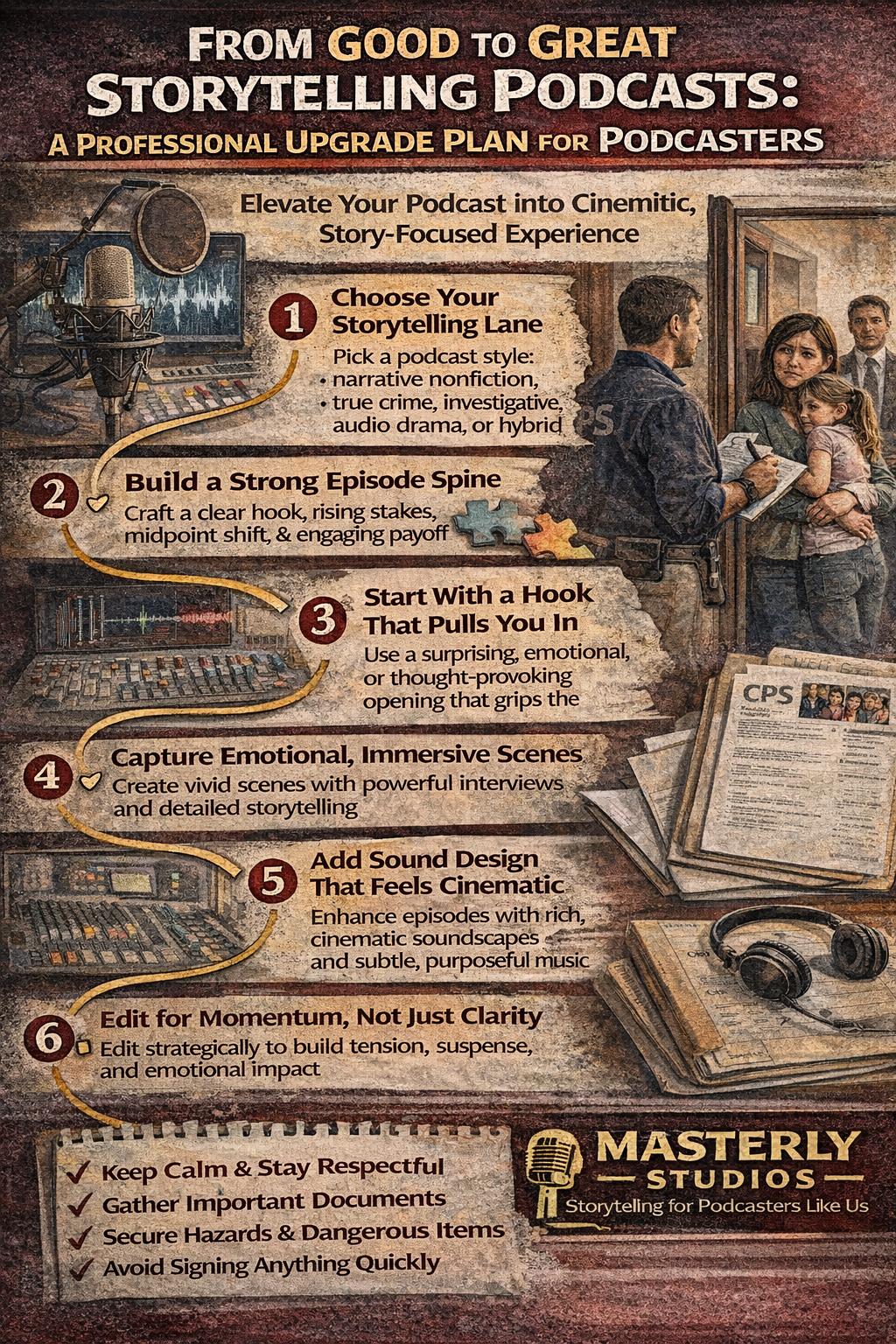
Studying the Craft Through Bright Sessions and Listener-Driven Structure
Shows lik e bright sessions demonstrate how strong structure and character development can keep listeners locked in, even when the story feels intimate and simple. What makes these storytelling podcasts stand out is the way each episode builds tension, reveals emotion, and stays grounded in real stakes. If you want your own podcast to compete at a higher level, studying these formats helps you understand pacing, payoff, and what makes an episode feel complete. This is one of the fastest ways to upgrade from “interesting content” to a true narrative experience.Great Storytelling Podcasts Capture the Human Experience
The strongest story telling podcasts are the ones that capture the human experience in a way that feels honest and vivid. Listeners don’t just want facts—they want meaning, conflict, and emotion they can recognize in their own lives. A single story can feel powerful when it reflects fear, hope, regret, joy, or the complicated choices people make under pressure. When your podcast consistently delivers that level of emotional truth, your audience is more likely to stay, share, and return each week.What S Town Teaches Podcasters About Momentum and Mystery
S Town is a perfect example of how a story can pull listeners forward through curiosity, tension, and unanswered questions. The show uses pacing and revelation to create momentum that feels almost impossible to pause, which is why so many people binge it quickly. It also shows how a story can evolve beyond its original premise and still feel coherent when the structure is carefully controlled. If your episodes tend to drift, studying S Town can help you understand how to build narrative gravity.Learning Production Standards from WNYC Studios
Many podcasters look to WNYC Studios as a benchmark for professional audio quality, tight editing, and consistent storytelling rhythm. Their shows often sound clean, intentional, and emotionally balanced, even when covering complex topics. The biggest takeaway is that professional sound is not accidental—it’s the result of planning, editing discipline, and strong production choices. If you want to elevate your podcast, studying WNYC-level exe cution can help you raise your standards without losing your own voice.Night Vale and the Power of a Strong Creative World
Night Vale proves that storytelling podcasts don’t need to follow traditional rules to be successful. Its world-building, tone, and consistency show how a creative concept can become a loyal community when the writing and delivery are confident. Even if your show is not fiction, Night Vale teaches a key lesson: when your audience understands the world you’re creating, they stay invested. A strong creative identity can be just as powerful as a strong plot.Writing That Sounds Natural but Still Feels Structured
Strong writing in podcasting does not have to sound scripted or stiff. The goal is to create language that feels conversational while still being organized and intentional. Great storytelling podcasts often use writing to guide pacing, sharpen emotional moments, and make complex ideas easier to follow. When your writing improves, your narration becomes smoother, your edits get faster, and your audience stays engaged longer.Focus: The Skill That Separates “Good” From “Professional”
One of the most important upgrades for any podc aster is focus. A focused episode has a clear point, a clean structure, and a listener experience that doesn’t feel scattered. Many creators have great material but lose momentum by trying to include too much at once. When you commit to focus, you start making smarter choices about what stays, what goes, and what truly supports the story.Inspired Doesn’t Mean Copying—It Means Learning the Mechanics
Many pod casters feel inspired by the best shows, but the key is turning inspiration into practical improvements. Instead of copying style, learn the mechanics: pacing, scene-building, and emotional payoff. When you study what makes great storytelling work, you can apply those tools to your own v oice and subject matter. Being inspired is powerful, but execution is what makes your show professional.Using the Past to Build Stories That Matter Now
Some of the most compelling storytelli ng podcasts pull from the past to explain see patterns, decisions, and consequences. Stories grounded in real history or personal memory often feel richer because they carry meaning beyond the moment. When podcasters use the past well, they create depth and emotional resonance that keeps listeners invested. The key is choosing details that move the story forward instead of getting lost in background information.Tales That Keep Listeners Hooked Without Overexplaining
Great podcasts often feel like mode rn tales—stories that unfold with suspense, character, and meaning. The best tales don’t over-explain or lecture; they reveal information at the right time. When you structure your episodes like a tale with a clear arc, your audience stays curious. That curiosity is what keeps listeners pressing p lay on the next episode.Turning Inspiration Into a Repeatable Production System
Most creators have b ursts of inspiration, but professional podcasters build systems that work even when inspiration is low. That system includes planning, outlining, recording, editing, and publishing in a repeatable way. When you rely only on inspiration, your output becomes inconsistent. When you build a workflow, your quality and confidence grow with every episode.Fall Releases and Seasonal Momentum for Podcast Growth
Many storytelling po dcasts use the fall season to release stronger episodes, launch new seasons, or build momentum for growth. Listener behavior often shifts in fall, with more routine listening during commutes, workouts, and daily schedules. Planning seasonal content can help you release episodes when people are most likely to stick with them. A strategic release schedule can be just as important as great production.Science Topics That Still Feel Emotional and Human
Even science storytelling podcasts succeed when they connect facts to people. The most engaging science episodes do not just explain information—they show how the information affects lives, decisions, and culture. When you combine science with narrative, the listener stays emotionally c onnected. That connection turns a topic into a story instead of a lecture.Designing an Episode That Feels Great the First Time
The first time a listener hears your show, they decide whether you’re worth their attention. That first time experience should feel clean, intentional, and engaging from the opening line. A strong intro, clear structure, and good pacing create trust immediately. When you design for the first-time listener, you build a podcast that gr ows faster and retains better.Turning Interviews Into Insights, Not Just Quotes
The best interviews prod uce insights, not just soundbites. Insights come from asking the right questions, digging into details, and guiding the guest toward specific moments. Instead of collecting opinions, you’re collecting story material that creates tension and meaning. When your episodes deliver insights, listeners feel like they gained something real—not just background noise.Horror Storytelling and Controlled Suspense in Audio
Audio is one of t he best formats for horror because sound can build suspense without showing anything visually. Even if your show isn’t horror, the techniques still apply: silence, pacing, and controlled reveals. Horror podcasts teach creators how to hold attention through tension and atmosphere. Learning these tools can make any storytelling podcast more gripping.A Course That Builds Real Podcast Skill, Not Just Motivation
A goo d course does more than inspire you—it gives you tools you can use immediately. Advanced podcast training should help you improve structure, interview strategy, and editing decisions. It should also help you diagnose what isn’t working and fix it quickly. When your skills improve, your confidence and quality rise together.Cutting the Extra Stuff That Slows Your Story
One of the biggest upgrades you can mak e is learning to cut the extra stuff . Great storytelling podcasts are rarely long because they’re trying to be long—they’re long because every section earns its place. If your episode drags, it usually needs tightening. Removing unnecessary content improves pacing, clarity, and listener rete ntion.Live Events and Audience Connection Beyond the Episode
Some storytelling podcasts grow faster when they expand into live events, collaborations, or community-based experiences. Events help listeners feel connected to the show and to each other. They also create new content opportunities, behind-the-scenes moments, and brand credibility. Even if you don’t host events yet, planning for them can shape how you build your audience.Theme Consistency That Makes Your Podcast Memorable
A stron g theme helps your podcast feel consistent, recognizable, and bingeable. Theme can be emotional, stylistic, or topic-based, but it should be clear to the listener. When a show has a strong theme, it feels like a complete world instead of random episodes. That consistency is one reason great storyte lling podcasts build loyal followings.Featured Episodes That Drive Growth and Credibility
Having a few stand out, featured episodes can accelerate podcast growth. These are the episodes you promote most, link on your website, and send to potential partners or sponsors. Featured episodes should represent your best storytelling, best production, and strongest pacing. When someone listens to a featured episode and feels the quality immediately, they’re more likely to subscribe and share.Contact Masterly Studios to Elevate Your Storytelling Podcast
If you’re ready to mov e beyond “good enough” and build a show that stands next to good storytelling podcasts people recommend again and again, Masterly Studios is here to help. Our advanced podcasting workshop is designed for creators who already understand the basics and want a professional upgrade plan that improves structure, interviews, sound design, and listener retention. You don’t have to guess your way to a premium sound—there is a process, and we’ll help you master it.Call (888) 209-4055 to book a free consultation, and let’s talk about your podcast goals, your current workflow, and what it would take to turn your next episode into something unforgettable. We work with clients throughout the country and support podcasters nationally who want their stories to feel alive, immersive, and worth pressing play on every week.

Plan your Atlanta event space rental with the right room size, guest flow, technical support, and scheduling. Request a venue tour to confirm the best fit.
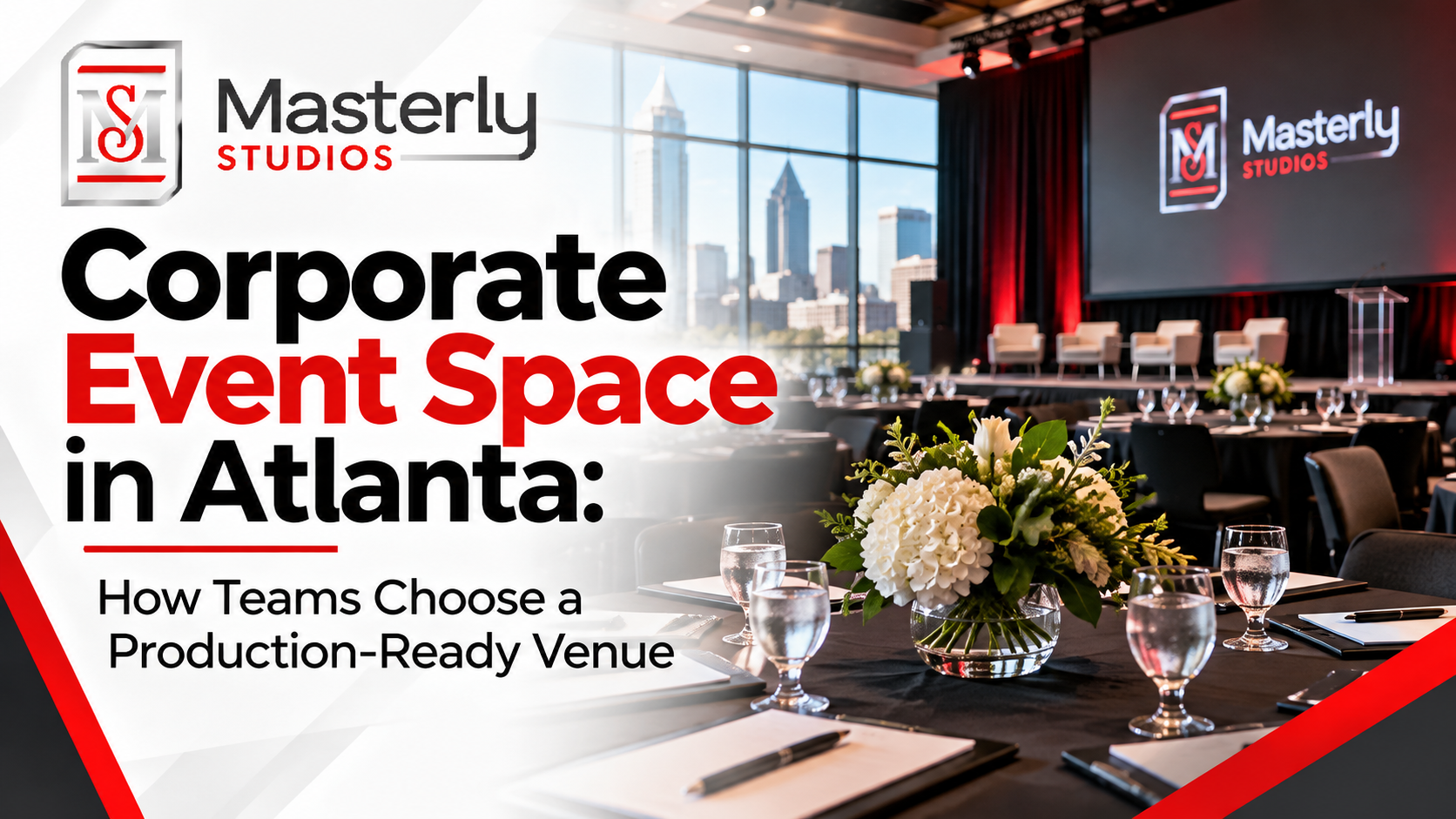
Explore what to consider when choosing Atlanta corporate event space, including room layouts, AV capabilities, parking, guest experience, and booking options.
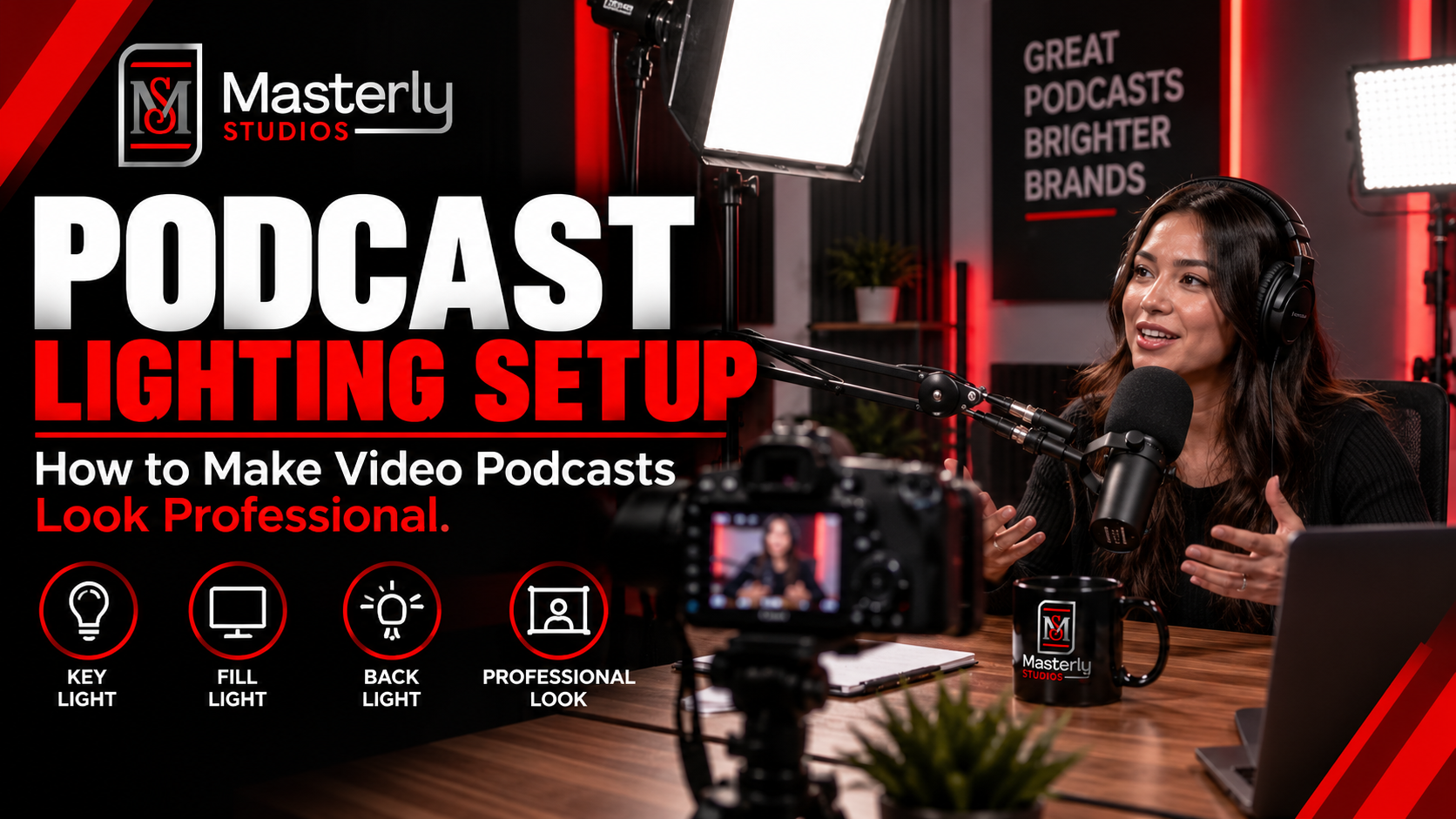
Need a podcast lighting setup? Masterly Studios provides professional podcast and camera lighting in a prepared studio for consistent, polished video production.
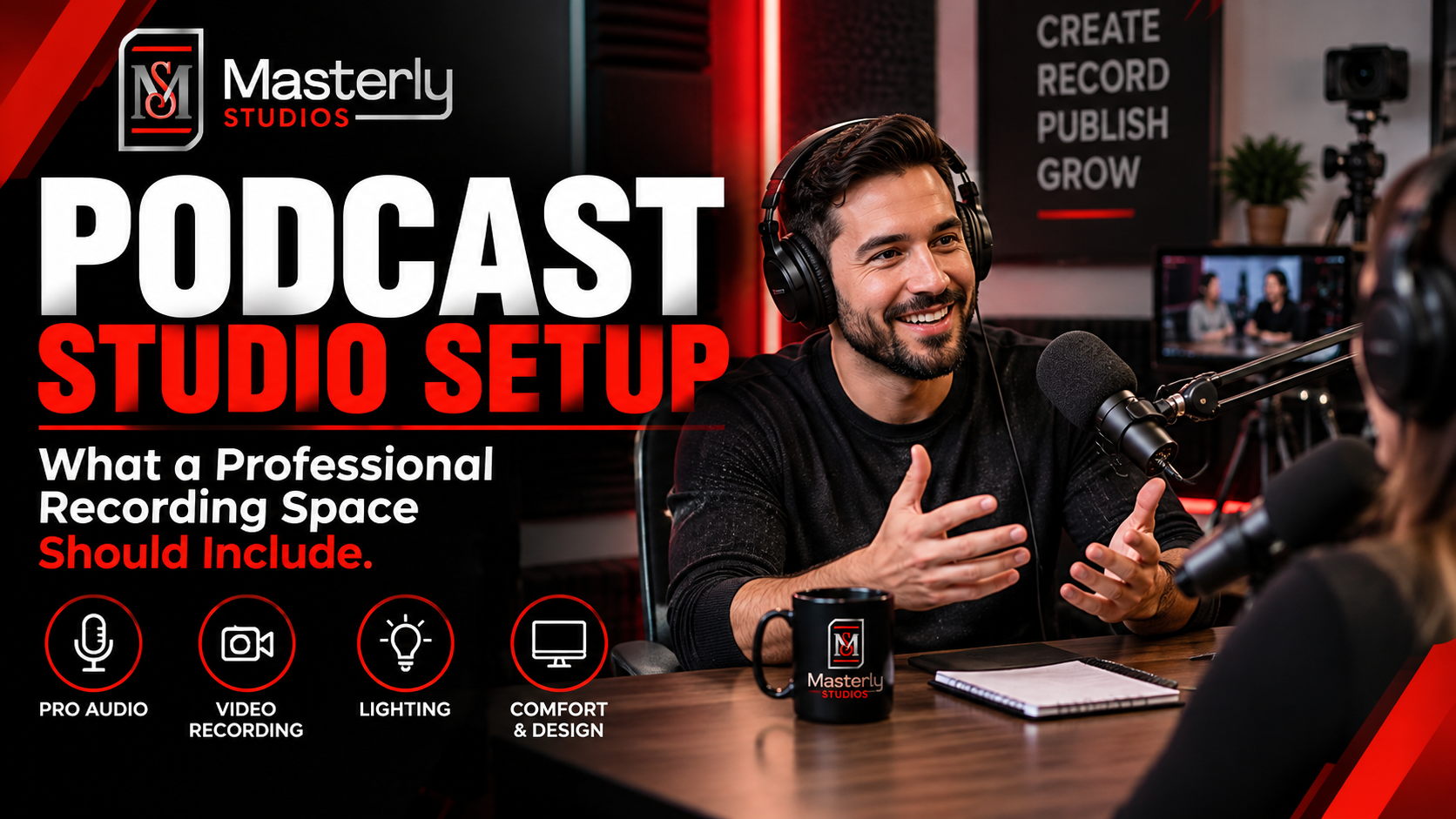
Need a podcast studio setup? Masterly Studios offers a professional recording space with quality equipment, lighting, acoustics, and video support for creators.
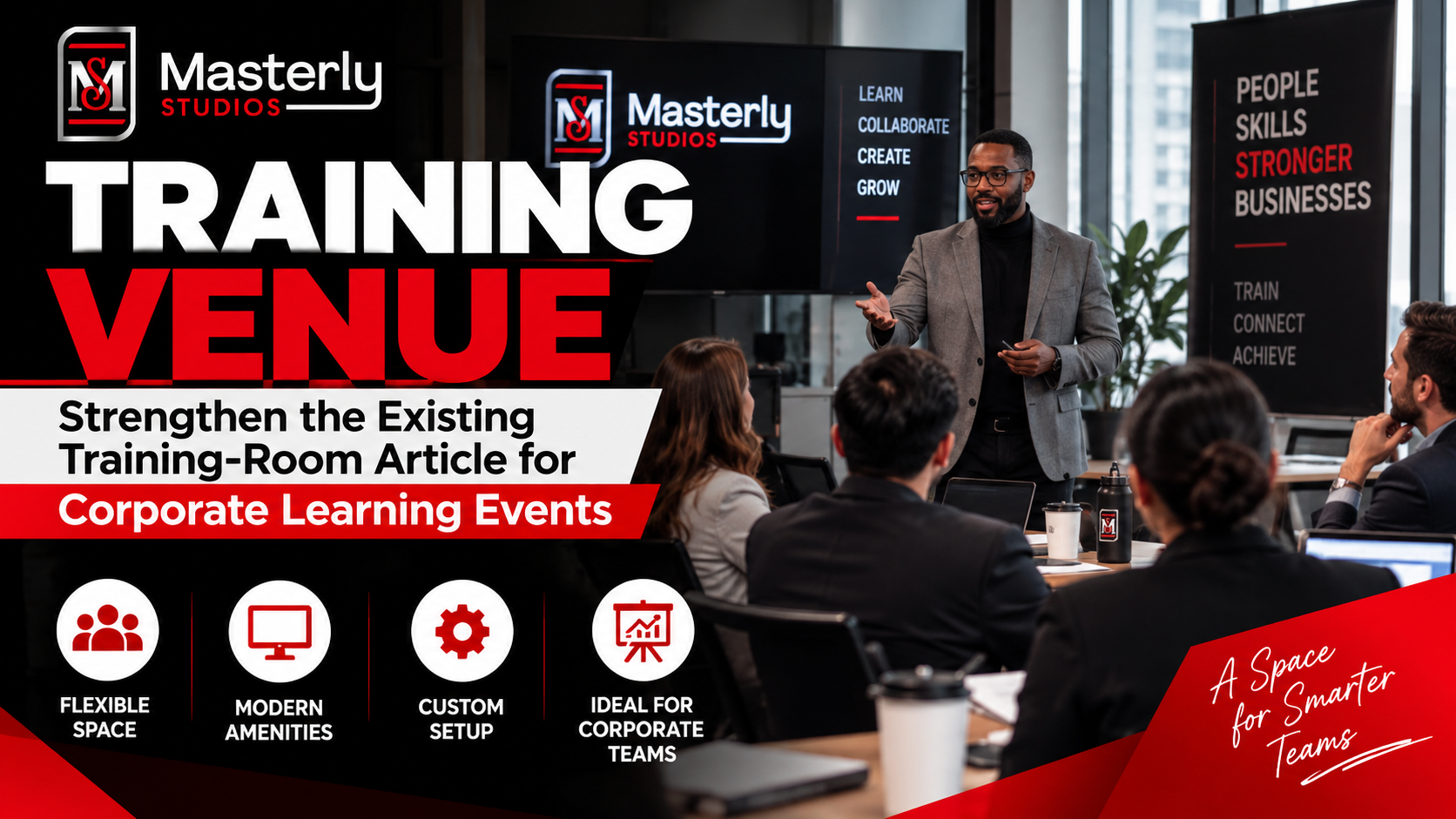
Book a training venue in Atlanta for corporate workshops, employee training, and learning events with flexible layouts, A/V support, and professional amenities.
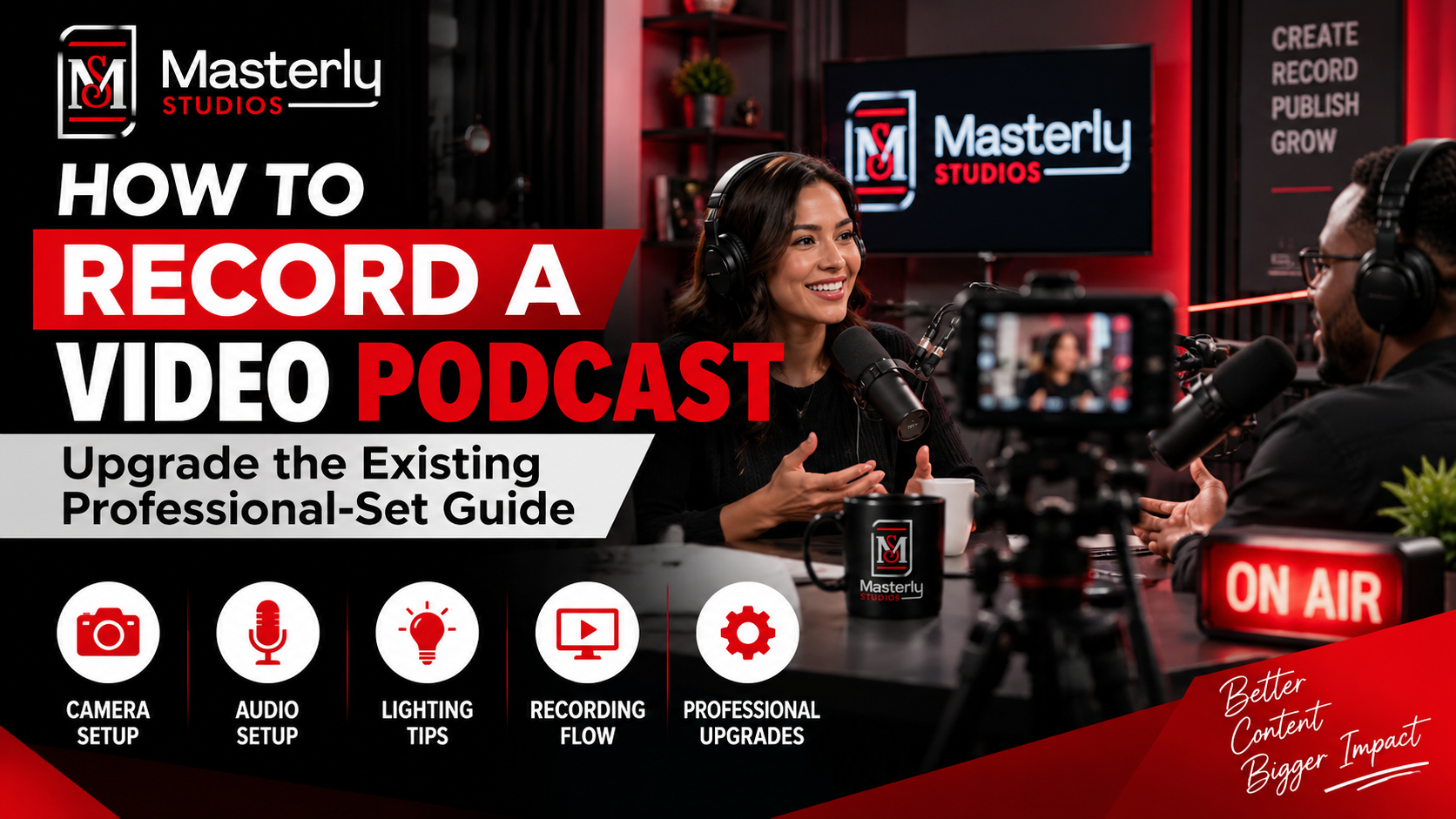
Learn how to record a video podcast in Atlanta with a professional studio setup, clear audio, polished lighting, guest support, and a smooth recording workflow.

Book a corporate Christmas party venue in Atlanta for year-end events with flexible space, A/V support, catering, branding, and more for your team and festive fun.
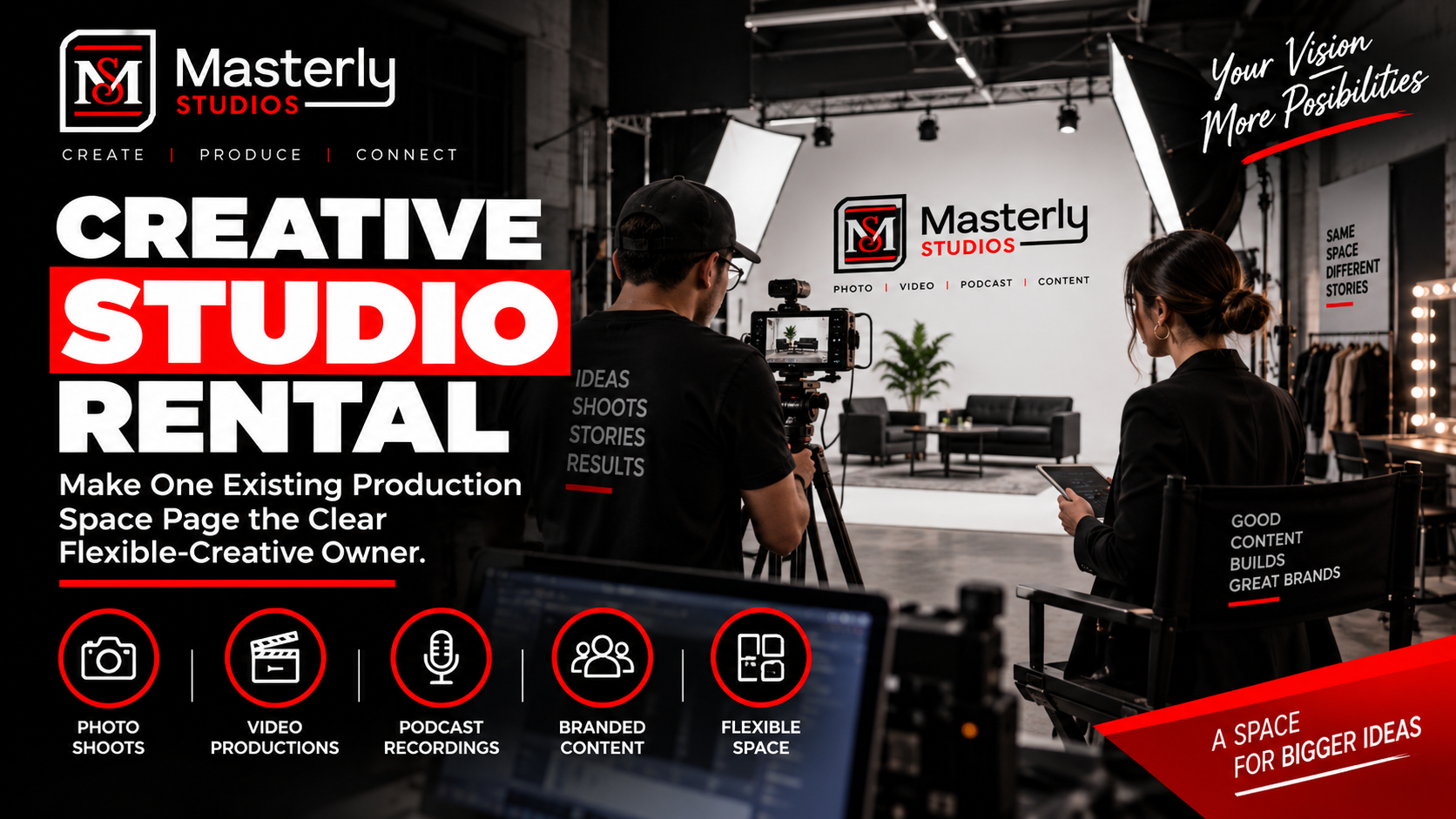
Book a creative studio rental for photography, video, branded content, and marketing campaigns with flexible production space at Masterly Studios for every project.
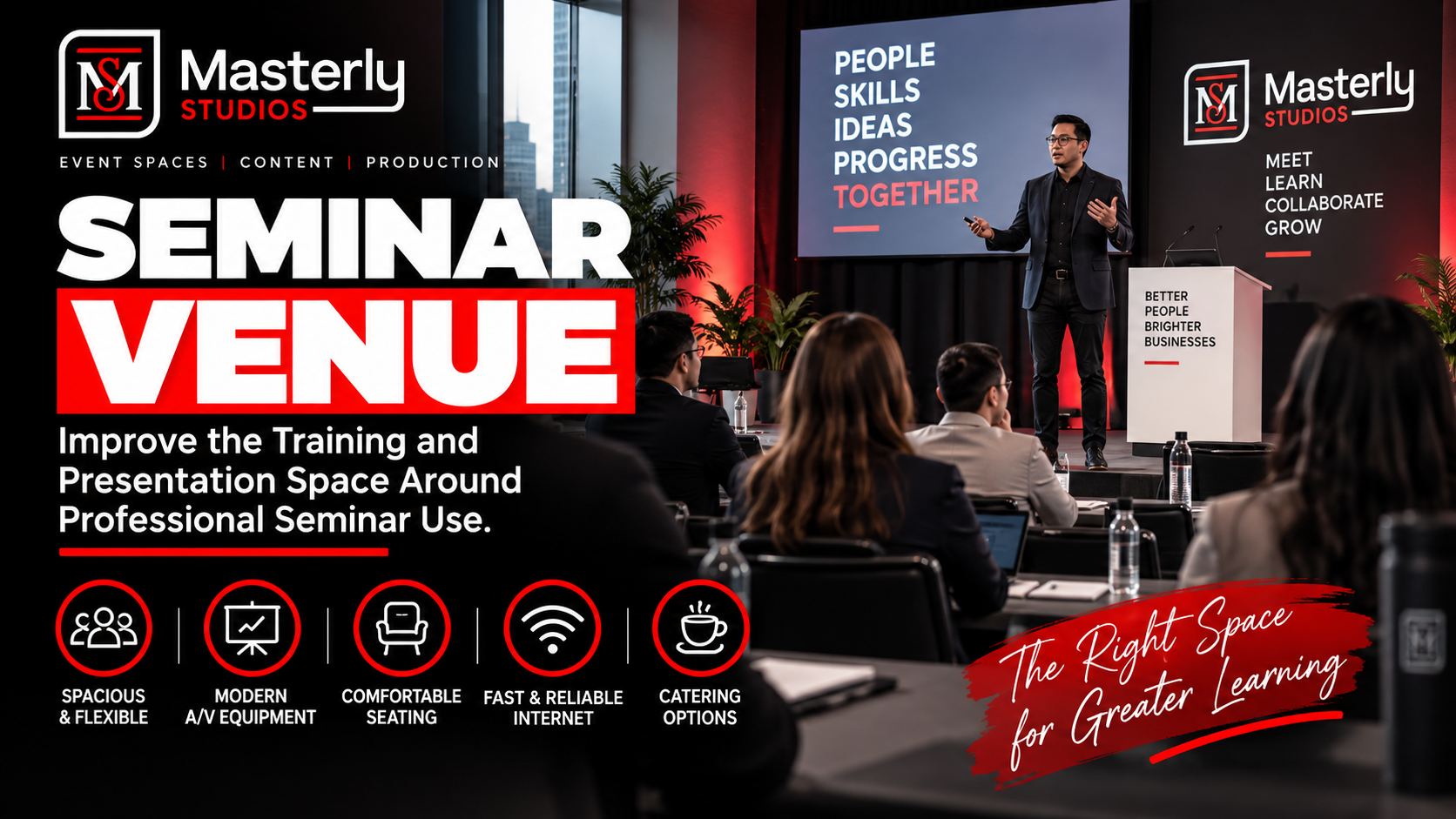
Book a professional seminar venue for training, presentations, and business events with flexible seating, A/V, check-in, parking, content support, and event setup.
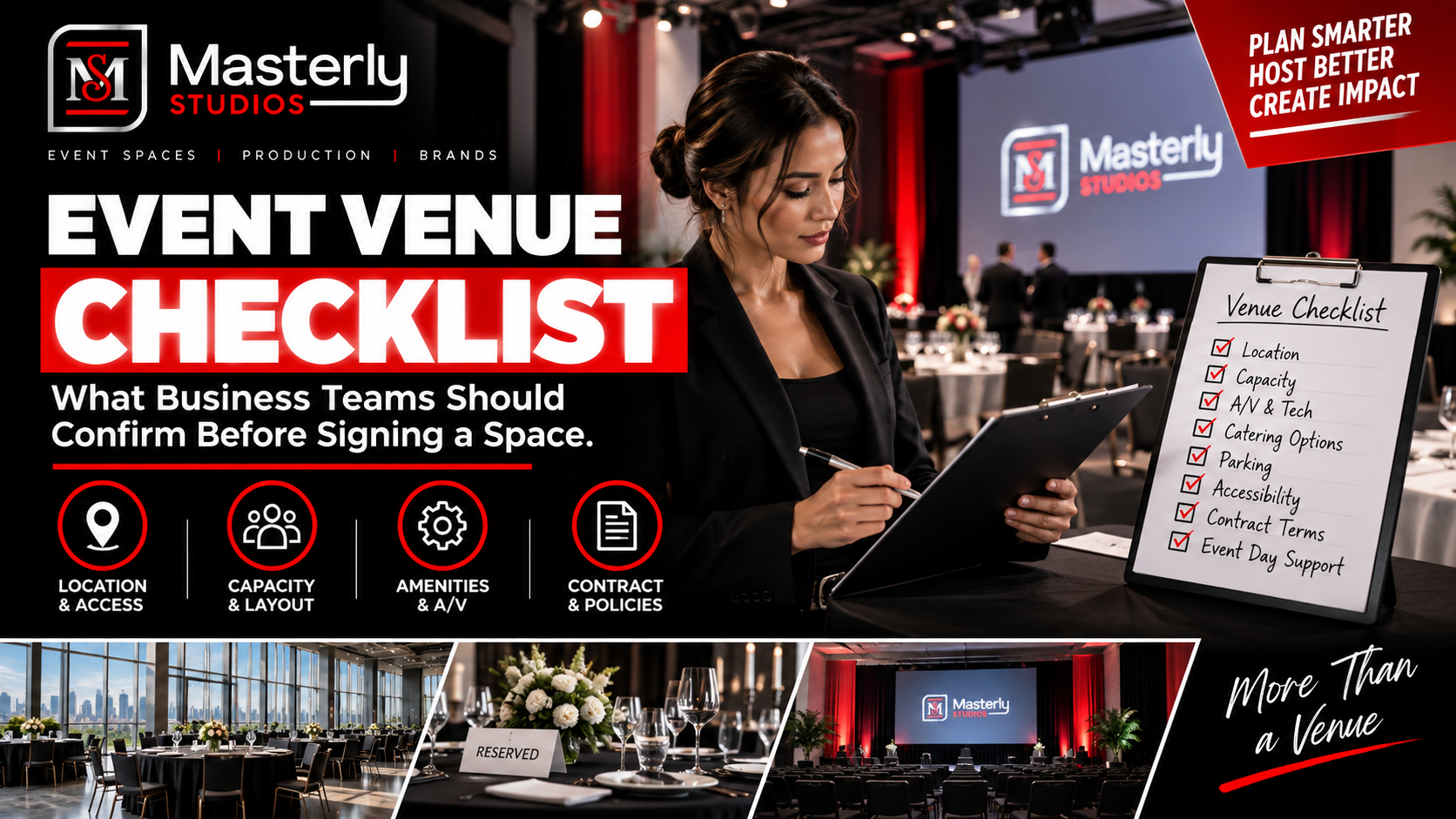
Use an event venue checklist to evaluate capacity, layout, parking, load-in, A/V, Wi-Fi, accessibility, catering, branding, production, and overtime needs.