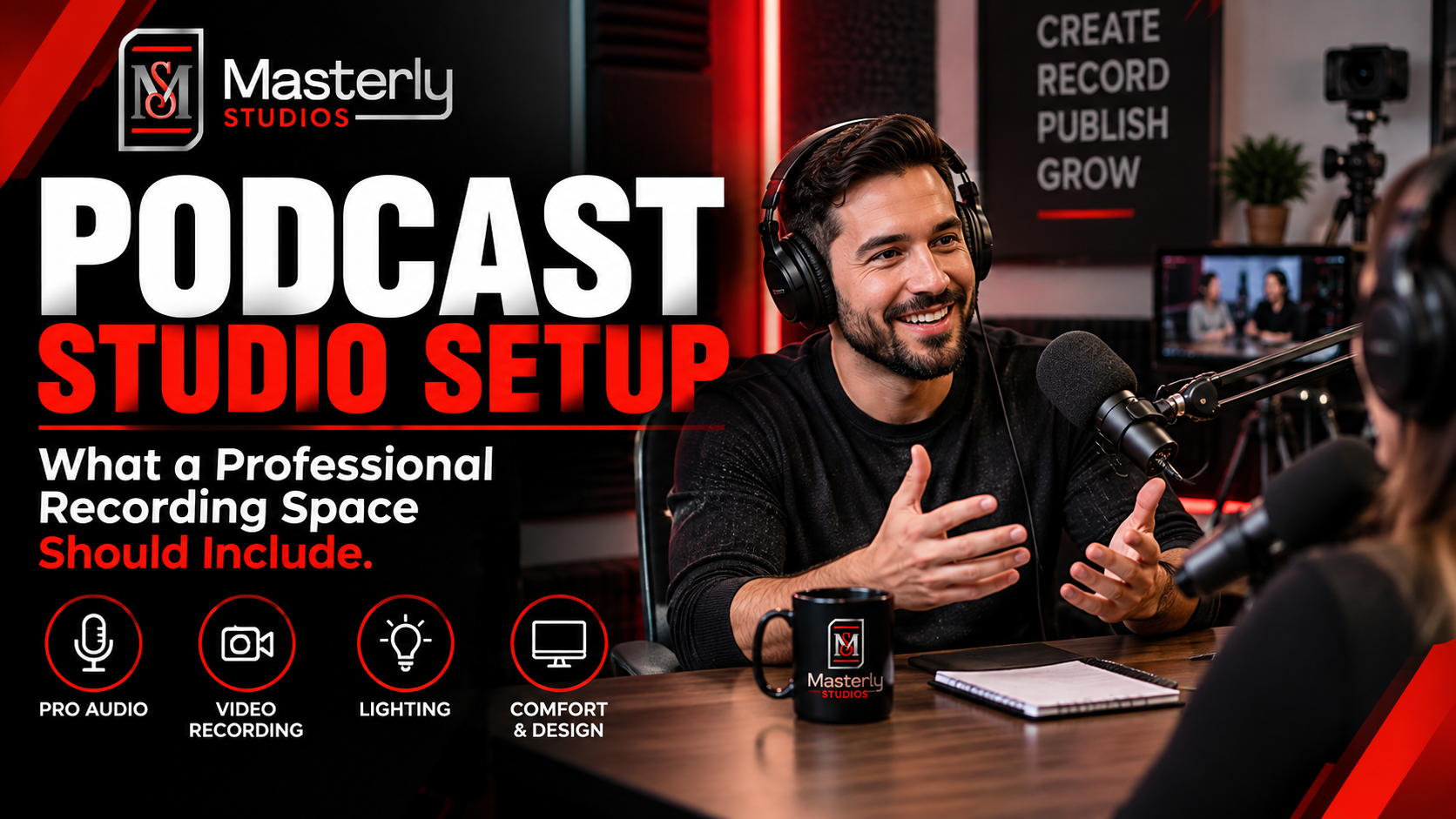
Make Your Podcast Stand Out with Cinematic-Quality Video and Audio Production
Choosing a Podcast Production Studio for Executive Video Recording
A podcast production studio is a physically bookable space - not a strategy firm, not a marketing agency - that provides the room, gear, and technical staff you need to record a polished video podcast. This article covers what to evaluate, confirm, and expect when booking one for executive-level video recording, whether you are a founder building thought leadership or an in-house team producing recurring episodes.
Overview: What a Podcast Production Studio Actually Provides
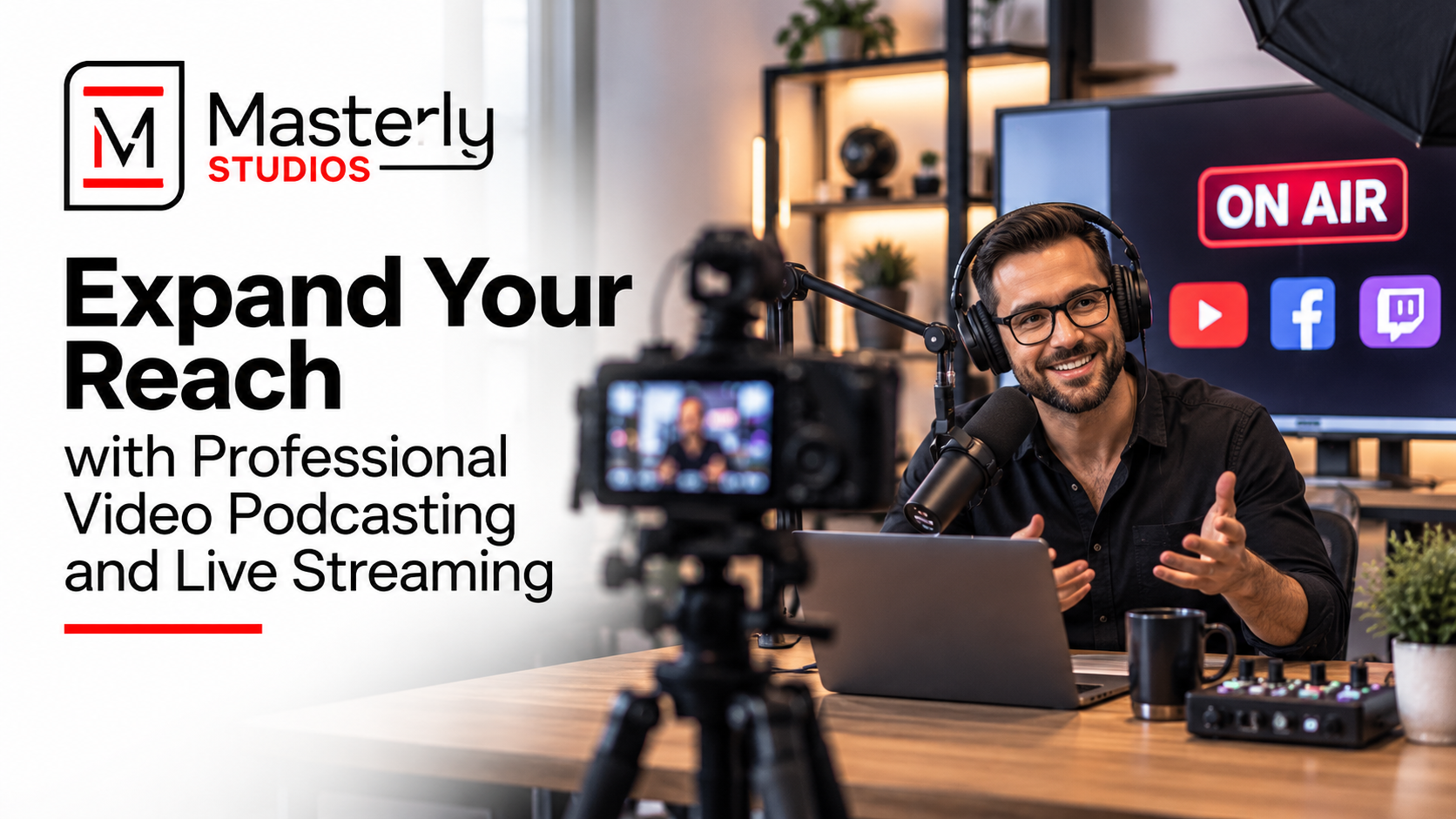
A dedicated podcast room differs from a DIY setup in three fundamental ways: it delivers controlled professional lighting that flatters rather than flattens, real acoustic treatment that eliminates echo and background noise, and multi-camera video recording managed by trained operators. The result is broadcast-quality content you can publish to YouTube, embed on your site, or cut into clips - without hauling gear or troubleshooting your own space.
This guide is tailored to executives, in-house marketing teams, and B2B founders who book a video podcast studio for recurring sessions. Use it as a decision framework built around three pillars:
- Room - acoustics, layout, soundproofing
- Gear - cameras, microphones, lighting, connectivity
- People - engineer, operator, optional producer
Room, Lighting, and Audio Requirements
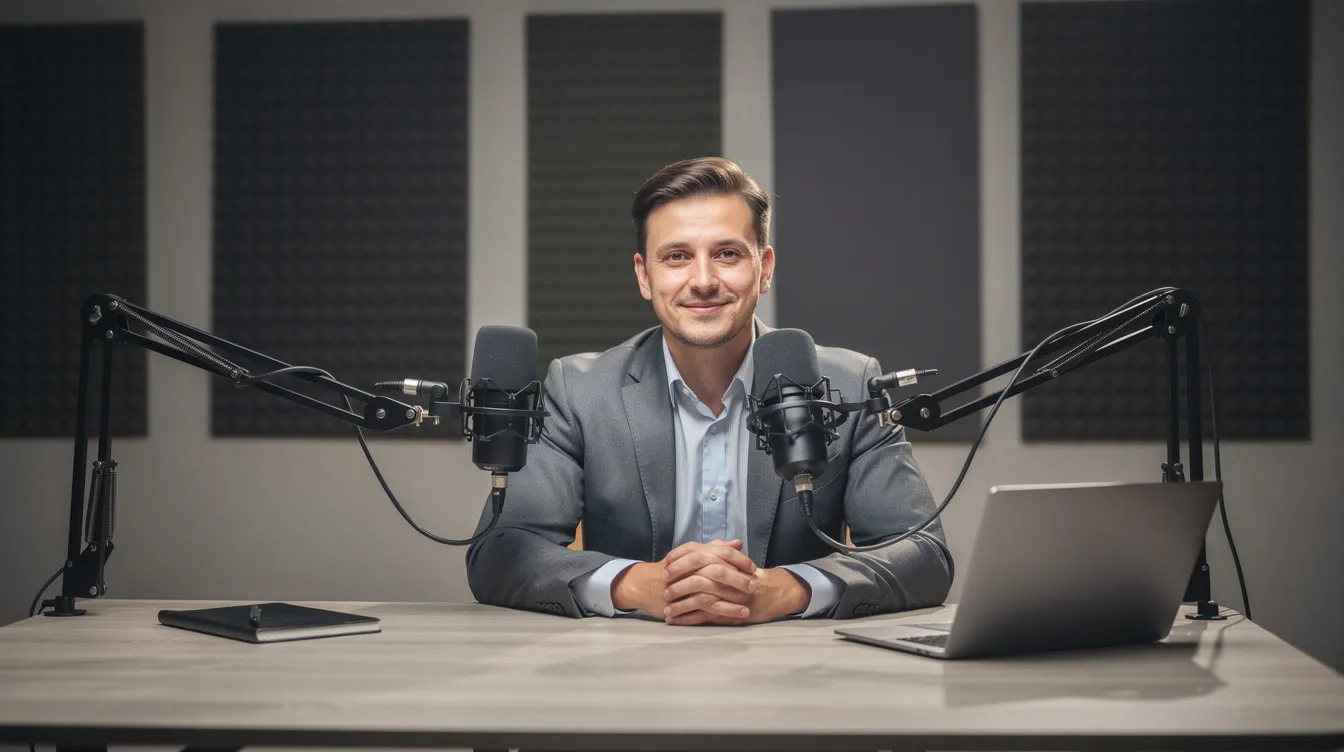
The physical room matters more than any single piece of equipment. A perfect microphone in a reverberant, noisy space still sounds unprofessional. A properly treated studio built for podcast recording solves problems before you press record.
What to look for in a podcast room
- A dedicated, enclosed studio space - not a converted conference room with glass walls
- Solid, thick doors and minimal HVAC noise routed through isolated ducts
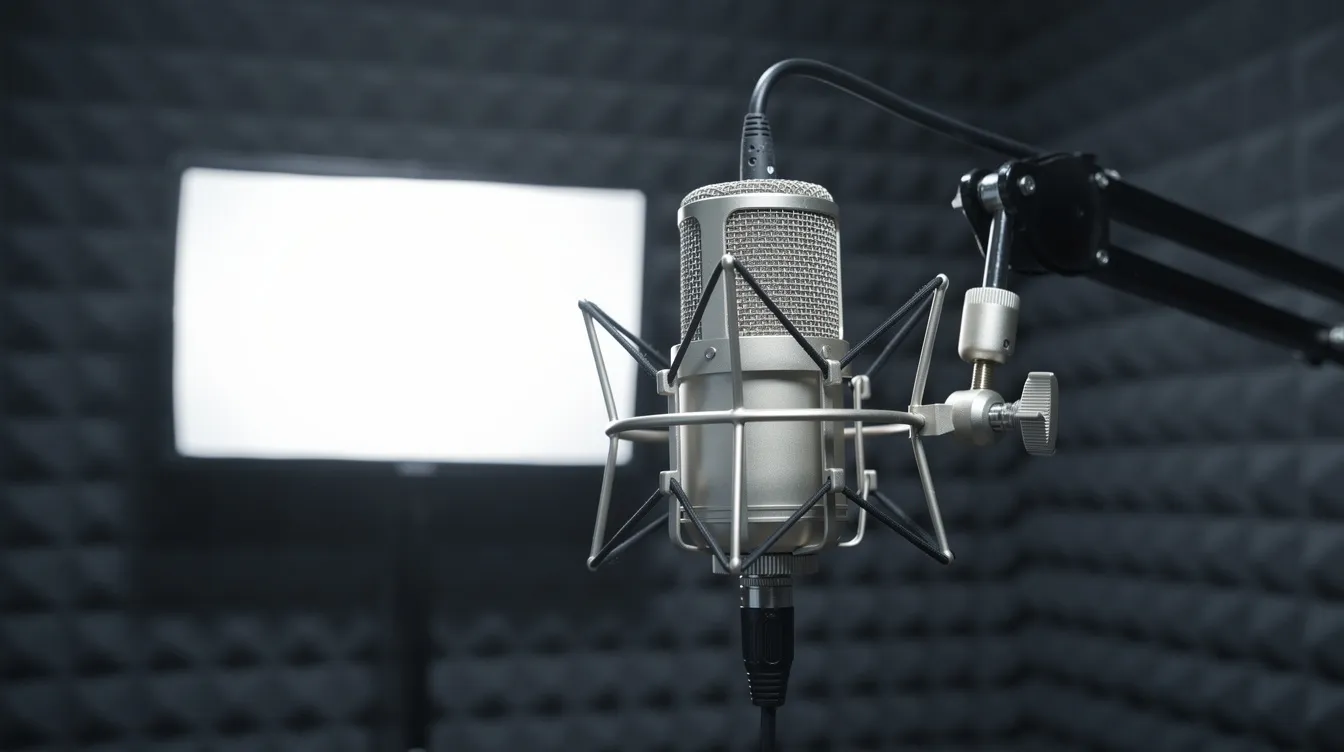
- Acoustic treatment on walls and ceiling: absorption panels, bass traps, diffusers
- No shared walls with loud tenants or street-facing windows without sound isolation
Acoustic quality and soundproofing are critical in podcast production. Studios provide soundproofing to block outside noise, and sound isolation prevents external interruptions like street traffic and HVAC noise. Professional soundproofing improves audio clarity, which is why podcast studios offer soundproofed spaces for clear audio capture. If a studio is conveniently located in a busy downtown district, ask how they handle siren and traffic bleed - request a sample of the room tone, not just a highlight reel.
Lighting
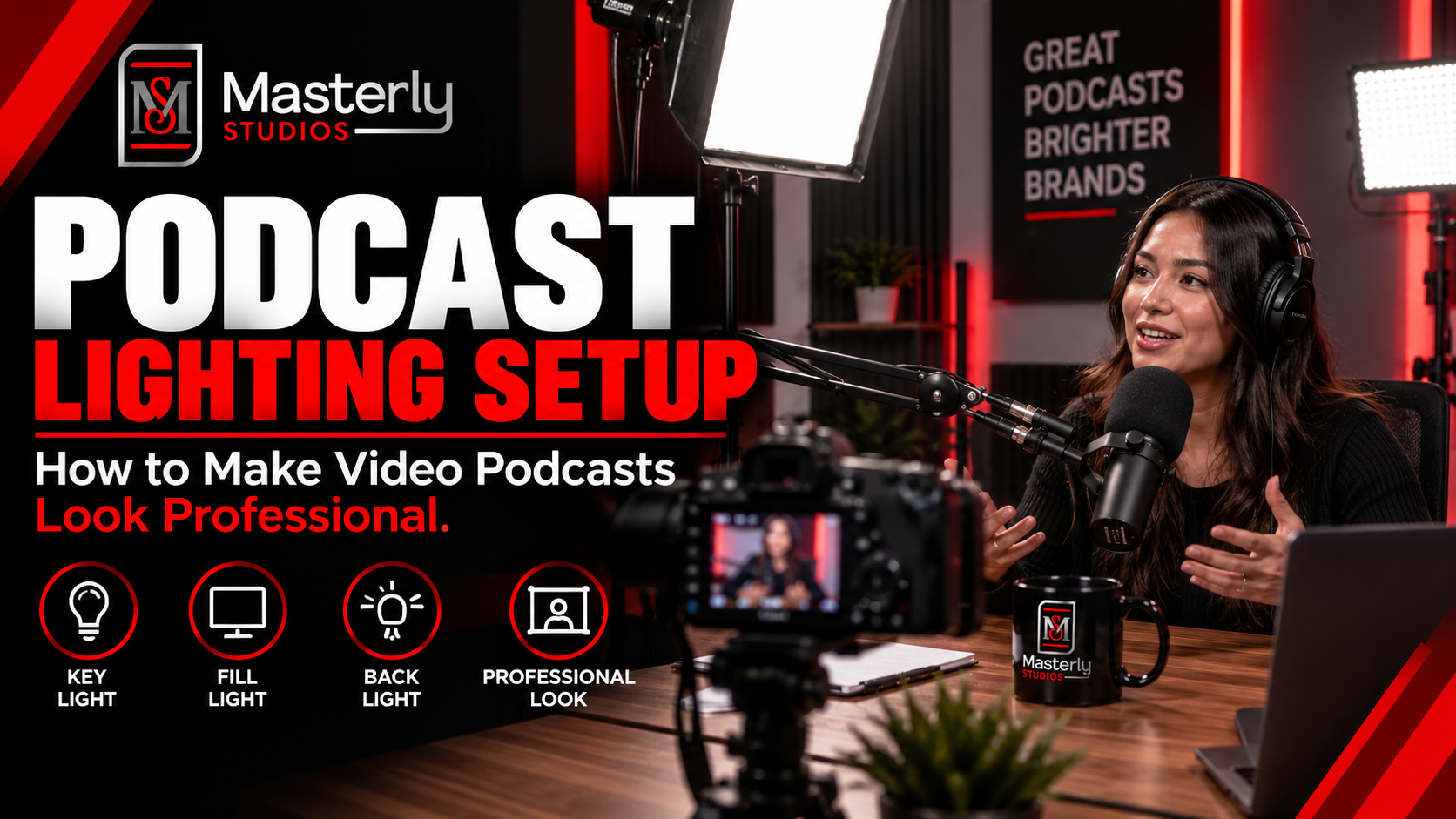
For a video podcast, soft key and fill lights placed at roughly 45 degrees to the host create dimension without harsh shadows. A hair or back light separates the subject from the background. Dimmable LED fixtures with controllable color temperature (typically 5600K daylight-balanced) ensure consistency across episodes. A studio setup ensures consistent lighting and acoustics, which is especially important when executives appear on camera in professional attire - mixed color temperatures or overhead fluorescents are a bigger problem than most people realize. Background accent lights or practicals add visual depth and interest.
Audio
Expect broadcast-grade dynamic microphones such as the Shure SM7B, stable boom arms, pop filters, and closed-back headphones for monitoring. Each speaker
should have a dedicated mic routed to separate tracks. The studio should capture individual audio files per microphone plus a backup stereo mix, giving your editor complete flexibility. High quality audio starts with gear selection but depends equally on the room's acoustic treatment - the two are inseparable.
Room layout also matters: a comfortable table or conversational seating arrangement, cable-managed floor, space for laptops or notes, and discreet monitors for slides or talking points keep sessions feeling natural rather than technical.
Multi-Camera Video Recording for Executive Podcasts
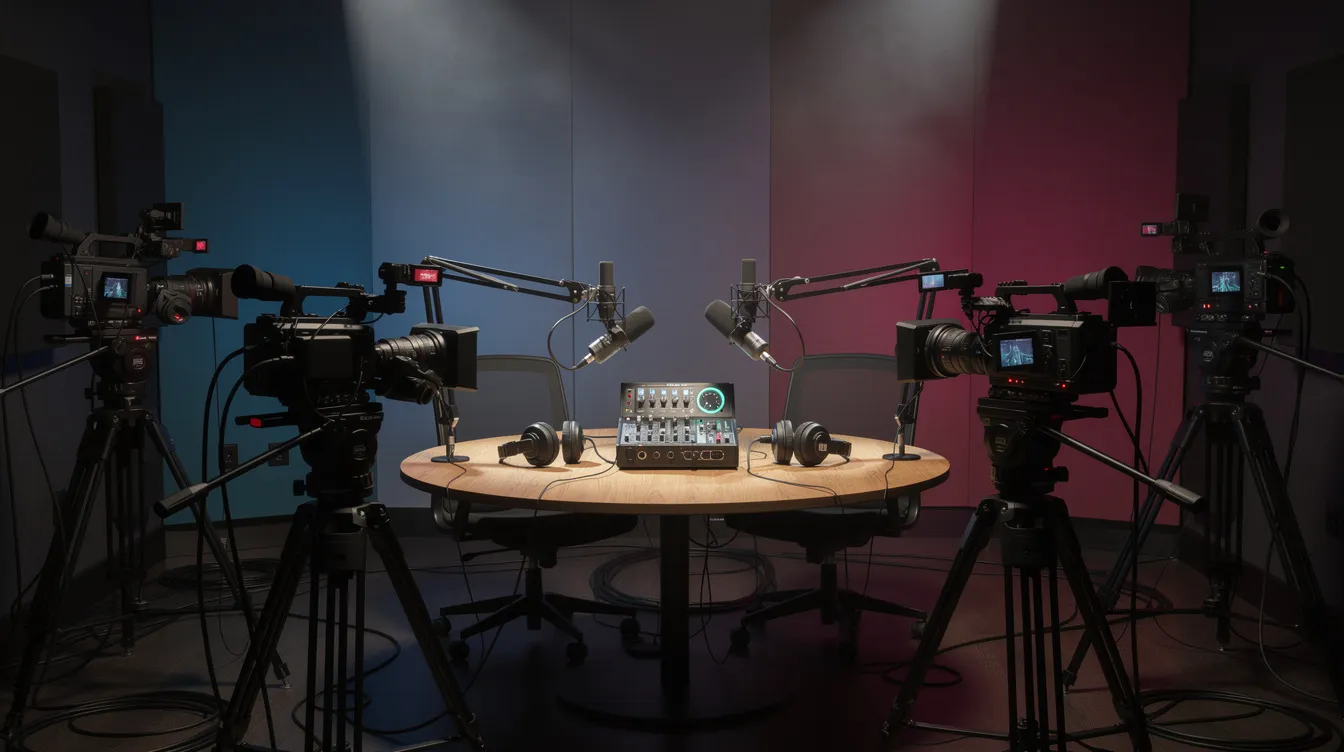
Modern viewers expect visual variety. A single static camera angle is fine for audio-first content, but if you are publishing to YouTube, cutting LinkedIn clips, or embedding episodes on a company site, multiple camera angles make the difference between watchable and forgettable. Multi-camera setups offer dynamic video content for visual podcasts, and multi-camera setups enhance video podcast production quality overall.
A typical executive configuration uses three cameras for a two-person conversation: one wide master shot and one close-up per speaker. Panel formats may require four or more angles plus an over-the-shoulder or reaction shot. Cameras should be capable of 4K capture - bodies like Sony FX-series or Blackmagic Pocket Cinema cameras allow flexible reframing in post production without sacrificing resolution.
ISO recording and live switching
Each camera's feed should be recorded separately (ISO recording), which lets an editor cut between angles, extract vertical clips for social, and create B roll alternatives without being locked to a single program feed. Syncing is handled via timecode or software alignment so the editor can match multi-camera studio recording tracks quickly.
Many studios also offer a live-switched program feed through a hardware switcher. This gives you a rough-cut video ready for fast turnaround or live streaming, while the ISO files remain available for polished editing later. Both the switched feed and raw footage should be part of your deliverables.
Guest Experience and Scheduling Logistics
Executive shows rise or fall on guest comfort. If your guest circles the block for parking, rides a freight elevator, and arrives flustered, the first ten minutes of your episode suffer. Comfortable studio environments contribute to better performances by hosts and guests, so logistics deserve as much attention as cameras.
Location and access:
- Proximity to highways, transit, or airports
- Onsite or validated parking
- Elevator access and clear wayfinding from building entry to the studio
- A clean lobby or reception area with water, coffee, and a restroom
Session flow for a 60–90 minute booking:
- Arrival buffer (10–15 min) - guest settles, wardrobe check
- Tech check - mic test, lighting confirmation, monitor orientation
- Podcast recording - focused session with a clear end time
- Wrap - quick debrief, file capture confirmation
Professional studios have on-site technical support during sessions, and studios provide real-time monitoring during recording sessions, so your host can focus on the conversation rather than troubleshooting levels.
For business podcasts, a common pattern is booking 2–4 episodes in a half-day block to capture a month of content. Plan each next recording cadence with shared booking links, clear time zone handling, and calendar invites that include building entry instructions and dress-code tips for being camera ready under studio lights.
What to Confirm Before Booking a Podcast Studio
This is your due-diligence checklist. Run through these items before signing a booking contract.
Pricing and scope:
- Hourly vs. half-day rates - podcast studio prices can range from budget-friendly to several hundred dollars per hour. Across 211 U.S. studios, the average is about $104 per hour, with most falling between $50 and $125.
- Basic studio rentals may start at around $75 per hour for audio-focused rooms.
- Some studios charge additional fees for services like editing and technical support.
- Add-ons like green rooms can cost $150 to $250 per session.
- Booking a studio often includes costs for setup and teardown time - verify whether that's billed separately.
- Overtime rules and fees for additional crew
Deliverables:
- How soon are raw audio files and video files delivered? Same day? 24–48 hours?
- What formats - WAV, ProRes, H.264?
- Are backups kept, and for how long?
Post production availability:
- What level of editing is bundled? Can you upgrade later?
- Is a complete podcast production package available, or is editing handled externally?
Samples and policies:
- Ask for unedited sample raw footage and audio from the actual room - not a polished reel. This reveals true noise levels, echo characteristics, and lighting quality.
- Confirm rescheduling, cancellation, and last-minute guest-change policies. Executive calendars move often; the studio's flexibility here can be a bigger problem than expected if not clarified upfront.
Understanding Post Production and File Handoffs
The handoff between the physical podcast recording session and any post production work is where many first-time clients lose time. Clarify expectations before
the session so your content production pipeline stays on schedule.
Three common service levels:
- Room only - You get raw audio files, camera ISO feeds, and possibly a switched program file. Your team handles all editing.
- Basic edit and mix - The studio delivers a synchronized, mixed full-length video with light color correction and loudness normalization.
- Full service - Multicam editing, color grading, motion graphics, branded intros/outros, and short-form social clips (vertical and square formats for phone-first platforms).
Post-production includes audio mastering and color grading. Editing and post-production services are often included in studio rentals, and editing and post-production services enhance audio quality beyond what even great content captures raw. Editing services can start at $75 per hour depending on complexity. Post-production can include creating short-form clips for social media - typically 3–10 vertical or square snippets per episode. Professional studios offer in-house editing and publishing services, and an efficient workflow in studios can save significant time in podcast production.
Clients should specify file naming conventions (episode number, guest name, track type), provide show intros or music assets, and confirm where files will ultimately live - YouTube, an internal LMS, a company site, or a podcast distribution platform. Plan for post production in both budget and timeline even if your own team handles it. Film and edit mode decisions made after the session determine how quickly your episode goes live.
Do You Need a Producer or Engineer Included?
Three roles appear in studio bookings, and they are not interchangeable:
- Sound engineer - handles mic levels, audio routing, monitors for clipping or noise, and ensures every track records cleanly. Sound engineering helps balance volume levels and improve vocal clarity in recordings.
- Studio operator - manages cameras, lighting, the switcher, and file capture.
- Producer - shapes content: run of show, guest prep, scripted intros/outros, pacing, and creative direction.
Many podcast studios include a sound engineer or operator in the session fee, especially for multi-camera video podcast setups. A dedicated producer is typically optional or brought by the client's internal marketing team.
When do you need a producer?
- Complex panel shows with three or more guests
- Scripted segments integrating slides, demos, or product shoots
- Solo episodes where the host needs on-set direction and pacing support
Mini-checklist:
- [ ] Engineer included by default?
- [ ] Camera operator included or separate?
- [ ] Producer optional or required?
- [ ] Can the client bring their own producer?
- [ ] Cost difference between staffed and self-service?
First-time executive hosts should book at least one fully staffed session to establish a reliable baseline process before considering self-run rooms.
Can You Batch Record Multiple Episodes Per Session?
Recording several episodes during one studio booking reduces setup overhead, cuts travel time, and keeps lighting and camera framing consistent across your content. It is one of the most effective ways to create a library of great content efficiently.
Concrete example: A leadership team books a 4-hour block to capture three 30–40 minute episodes plus short FAQ segments. Each episode requires a 5–10 minute reset for mic repositioning, a quick wardrobe check, and a brief re-read of the outline.
What has to be in place:
- Pre-written episode outlines or question lists for each session
- Guest arrival windows staggered to avoid lobby congestion
- Wardrobe coordination so episodes appear distinct (if airing separately)
- Scheduled breaks - hosts lose energy without them
- Clearly labeled file folders per episode and per host/guest mic
Confirm whether the studio's minimum booking duration accommodates back-to-back episodes and whether quick room resets are included in the time block. Many studios offer price breaks for recurring bookings or multi-day cycles. Ask about discounted rates when building an ongoing executive podcast production plan - locking in a cadence reduces per-session costs and builds crew familiarity with your brand and setup.
How to Compare Podcast Studios for Executive Use
When evaluating 2–3 candidate podcast studios side by side, separate the objective from the subjective.
Objective comparison:
- Location and travel time from your office
- Room size, ceiling height, and décor alignment with your brand
- Camera count and resolution
- Audio chain: mic types, preamps, mixer quality
- Included crew (engineer, operator) vs. add-on staffing
- Turnaround time for raw and edited deliverables
Subjective factors:
- How does the space look on camera? Does it provide the perfect backdrop for your brand's image?
- How responsive and clear are staff during pre-booking communications?
- How are remote guests handled? Does the studio support remote interviews with clean audio return feeds?
Request a quick video walk-through or test clip from each studio with a person seated at the table. This reveals real framing, lighting, and sound - not what a polished marketing shoot looks like.
Prioritize reliability over the lowest hourly rate. For C-suite interviews and external partner conversations, the reputational risk of poor audio or inconsistent video far outweighs a modest price difference. Once you find the right fit, locking in a recurring cadence with the same studio yields faster sessions, more consistent results, and a crew that already knows your preferences.
Working with Masterly Studios: Next Steps
Masterly Studios is a physical podcast production studio equipped for cinematic video and professional audio in executive podcast sessions. A typical booking includes a configured podcast room, multi-camera recording, professional lighting, on-site technical support, and flexible file delivery options. The content studio is studio built around the needs of creators and business leaders who need to rent a reliable, high-quality space on a recurring basis.
Strategy and distribution for ongoing shows are handled separately from the physical studio rental, keeping the focus squarely on the recording environment and production quality within each session.
Ready to book? Request a Masterly Studios production booking to review room options, technical needs, and scheduling before committing to a date. A short consultation can clarify features, services, and pricing so your team arrives prepared.