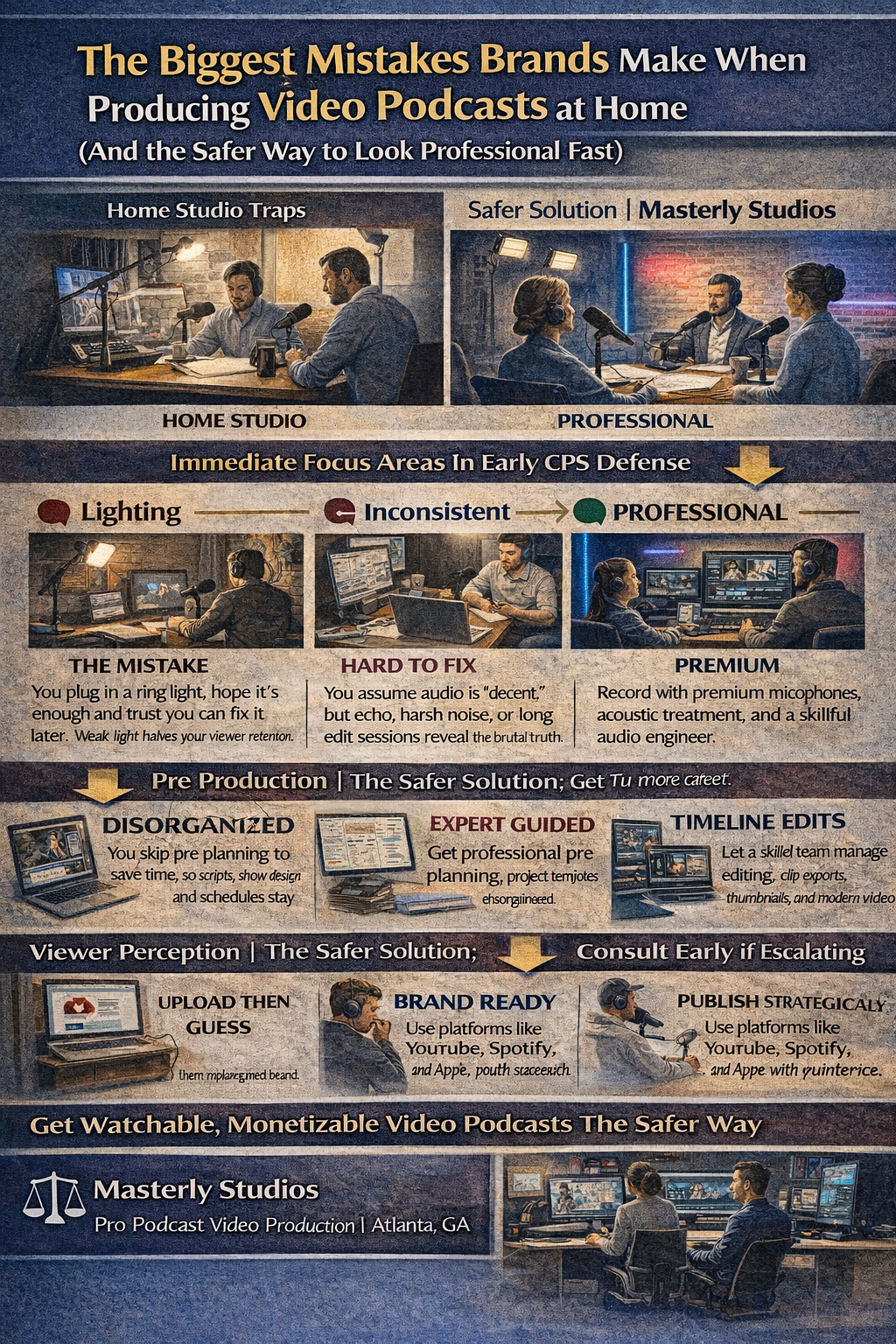
The Biggest Mistakes Brands Make When Producing Video Podcasts at Home
January 27, 2026
If you’re a business own
er, content creator, or marketing team trying to grow your brand,
video podcasts
probably feel like the smartest move you can make right now. They look modern, they feel personal, and they create trust faster than almost any other type of content. But what many brands learn the hard way is that producing video podcasts at home is not as simple as buying a camera, pressing record, and uploading to YouTube.
What makes this worth reading is that the mistakes aren’t always obvious in the moment. A lot of businesses start a podcast series thinking they’ll “fix it in post production,” only to realize that weak lighting, bad audio, and inconsistent visuals can hurt credibility, waste time, and slow growth. And if you’re trying to monetize a show, home production mistakes can cost you money before you even get traction.
This article breaks down the biggest production traps that derail home studio setups and explains what to do instead. You’ll also see why a professional studio and an experienced team—like Masterly Studios—can help you move faster, look better, and stay consistent without burning out. We’re Masterly Legal Solutions, and our role is to help protect your business decisions, contracts, and brand risk—while our trusted production partner, Masterly Studios, provides the production workflow that keeps your podcast looking and sounding credible.
But the biggest reason brands love video podcasts is reach. A single recording can become clips for YouTube, short content for social media, and long-form audio and video content for multiple channels. That kind of repurposing is powerful when it’s done correctly.
The problem is that many brands jump into video production without understanding what the process really requires. And that’s where the biggest mistakes happen.
Home setups often create unpredictable sound, inconsistent lighting, and messy framing. Even small issues can distract viewers and reduce retention, especially if you’re trying to build authority in a competitive market. Your audience may not “hate” the content, but they might stop trusting it.
That’s why a professional approach matters. Your podcast is more than content—it’s your brand reputation on camera.
This is why pre production is not optional. Great shows are built with intention, not improvisation. A real plan helps you produce faster, edit faster, and publish consistently.
Even one structured pre production session can change your entire workflow and reduce stress.
This planning step is one of the easiest ways to increase quality without spending more money.
Lighting, framing, lens choice, stabilization, and environment matter just as much as the camera itself. If you’re recording inside a house with mixed lighting, reflective surfaces, and background noise, your video quality will suffer. And once your show looks “cheap,” it can be hard to rebuild trust.
A professional studio environment eliminates many of these issues instantly.
Even worse, the environment can change from episode to episode. That creates an inconsistent viewer experience, which hurts your brand. Your audience may not know why something feels “off,” but they will feel it.
Professional video production companies control the environment so the brand stays consistent.
Audio problems are extremely common in home-produced video podcasts. Even if you think your microphone sounds “fine,” editing reveals the harsh reality. And if you have multiple speakers, the problem doubles.
This is why professional pr oduction is safer. A studio and a skilled team can control audio from the start instead of trying to rescue it later.
This is where brands waste the most hours. They record an episode in 60 minutes, then spend 6–12 hours trying to fix it. That’s not a sustainable way to grow.
If you want professional results, audio must be handled correctly during production—not just in post.
Good post production includes pacing, audio cleanup, color correction, titles, transitions, clip exports, and thumbnail design. It can also include visual effects and graphic treatments that reinforce the brand. If you skip these steps, your content feels unfinished.
Post production isn’t about being fancy. It’s about being clear, polished, and watchable.
This is the difference between “home video” and brand-ready video content.
Storytelling helps guide the audience through a message. It creates curiosity, tension, clarity, and value. If you don’t structure your content, viewers won’t know why they should stay.
This is where pro fessional production teams help, even during pre production.
Strong storytelling also creates better clips for YouTube and social media. It gives your editors moments to highlight and package. That directly supports distribution and reach.
A good message deserves a good container.
Your podcast might live on YouTube, but it also needs to be on audio platforms to capture listeners who prefer commuting content. A strong strategy includes Apple Podcasts, Spotify, and a reliable hosting solution.
If you build this right, your show becomes discoverable in more places—without extra work every week.
Tools like Libsyn are popular for podcast hosting because they help distribute shows across major directories. But brands often set it up incorrectly or forget key settings, which creates problems later. A professional team can set this up cleanly from day one.
A consistent distribution system is the foundation of growth.
If you want to grow, you need a reliable production schedule and a realistic workflow. That includes batching episodes and using a system that reduces time. The goal is steady output, not perfection.
Professional studio support makes consistency easier because production becomes predictable.
A predictable rhythm also makes it easier to promote your series and plan content in advance. It helps you schedule guests, build partnerships, and coordinate marketing.
Consistency builds trust, and trust builds revenue.
A professional team makes the process smoother. It reduces mistakes, improves quality, and helps you focus on your message. When you have support, you stop feeling stuck.
That’s why a video production co mpany is often the safer option for serious brands.
This doesn’t mean you lose control of your message. It means you stop fighting your setup and start producing content that matches your brand level.
Your time is valuable, and your brand deserves a professional output.
This includes thumbnails, intro graphics, and on-screen titles. A professional look improves retention and helps your show compete. It also increases the chance your content gets shared.
Strong design is not dec oration—it’s communication.
The key is balance. Effects should support the message, not distract from it. Professional teams know how to use visuals with restraint.
A clean look builds authority faster than a chaotic one.
Brands need a workflow that feels clean and manageable. Some systems operate through one dashboard so you can track everything in one place. Whether you call it a dashboard or a control center, the goal is visibility and control.
When you simplify tools, you speed up production.
This is why professional studios matter. They provide tools and systems together. Your show becomes easier to run because the steps stay the same every time.
Consistency is built through process, not motivation.
If you cut corners early, your content library becomes less valuable. If you produce professionally, your content becomes evergreen. That can lead to partnerships, sponsorships, and sales.
Video podcasts are not a hobby for most brands—they’re a business growth engine.
Real monetization can come from sponsorships, product sales, consulting, services, and premium offers. It can also come from simply building credibility that converts viewers into clients. But if production quality is low, monetization becomes harder. A professional show open s doors faster than a DIY show.
Your audience behavior tells you what to double down on. Your viewers show you what visuals and pacing work. Your listeners reveal what content keeps attention.
When you track these insig hts, you stop wasting episodes and start building a stronger series.
This is how professional podcasts improve quickly. It’s not magic—it’s repetition with learning.
Smart content teams learn faster than random production teams.
If you spend your nights editing, you’ll eventually quit. That’s not a discipline problem—it’s a workflow problem. Professional post production solves this by giving you repeatable outputs. A good studio turns hours into minutes.
When you work with a team, the workload becomes manageable. You focus on the content and message while the production system handles the heavy lifting.
That’s how brands scale without burnout.
A professional workflow creates repeatability: same lighting, same audio standards, same editing style, same distribution checklist. It’s the difference between a hobby and a real show. That repeatability also makes your brand look stable and serious. In business, stability builds trust.
A stable system also lets you expand your content library without chaos. You can grow your series, add guests, and scale distribution. Instead of fighting your setup, you focus on impact. Systems create freedom.
A lot of brands forget the audio audience entirely. They produce video and ignore the audio-only community, even though audio listeners often binge episodes. Strong distribution multiplies your reach without adding extra recording time. Distribution is leverage, and leverage builds growth.
It also helps to use a hosting system that simplifies the backend. Podcast hosting platforms can distribute episodes across directories efficiently. That way, you aren’t manually uploading everywhere every week.
A clean workflow reduces stress and increases reach.
This is why professional video production protects your reputation. It reduces the risk of embarrassing uploads, low-quality audio, or inconsistent visuals. It also makes your brand look established.
Your content is a first impression that lives forever.
This is especially helpful for brands that want consistency. It’s also ideal for businesses that want a production partner instead of juggling tools and timelines alone.
When you choose a studio, you choose speed and stability.
The right studio can deliver a high-end look with an efficient workflow. You don’t need a movie set—you need consistency, clarity, and quality. That’s what makes a show feel premium.
Professional doesn’t mean complicated. It means controlled.
When viewers can focus on your message instead of your setup, your influence grows faster. That’s how podcasts build trust. The production supports the content.
Confidence is what converts viewers into clients.
If you want to grow, you need a workflow that can expand. That means batching episodes, building a clip system, and keeping post production consistent. It also means building a strategy for monetization, partnerships, and audience growth.
A scalable system protects your time and your brand.
The brands that win treat podcasting like a business project, not a random experiment. They protect quality from day one. The world rewards consistency.
Support doesn’t mean you can’t do anything. It means you don’t have to do everything. A studio team can handle production details while you focus on message and performance.
Support is what makes podcasting sustainable.
Professional production helps you skip the awkward phase. It makes your show look mature from the beginning.
That matters when your content is tied to sales and reputation.
A professional setup makes those moments usable. Your clips look high quality, your message is clear, and your brand identity stays consistent.
Social proof is one of the fastest ways to build trust.
When clients see your podcast, they feel like they already know you. That shortens the sales cycle and increases conversions. Video is relationship-building at scale.
The creative economy in Atlanta is moving fast, and businesses in Atlanta are realizing that video podcasts are not a side project anymore.
What happens in Atlanta often influences trends in other markets. Brands watch what works in Atlanta, then replicate it in their own industry. That’s why the demand for studios and reliable production teams has exploded in Atlanta—because quality wins.
Even if you’re not in Atlanta, the m essage is clear: professional production is becoming the standard, not the exception.
That approach creates momentum quickly. It also makes it easier to monetize because the show looks serious. The brands in Atlanta that are winning understand that qualit y is leverage.
In a competitive world, leverage matters.
Masterly Studios supports creators and businesses with studio rentals, podcast production setups, and workflow guidance. Their team understands video production standards and post production pipelines, so your final content looks clean. This is especially valuable for brands that want to look premium without spending months figuring everything out.
It’s not about being flashy—it’s about being trusted.
A studio gives you predictable quality. A team gives you predictable workflow. And predictable workflow is what keeps your show alive long enough to grow.
If your podcast matters, your production process matters.
What makes this worth reading is that the mistakes aren’t always obvious in the moment. A lot of businesses start a podcast series thinking they’ll “fix it in post production,” only to realize that weak lighting, bad audio, and inconsistent visuals can hurt credibility, waste time, and slow growth. And if you’re trying to monetize a show, home production mistakes can cost you money before you even get traction.
This article breaks down the biggest production traps that derail home studio setups and explains what to do instead. You’ll also see why a professional studio and an experienced team—like Masterly Studios—can help you move faster, look better, and stay consistent without burning out. We’re Masterly Legal Solutions, and our role is to help protect your business decisions, contracts, and brand risk—while our trusted production partner, Masterly Studios, provides the production workflow that keeps your podcast looking and sounding credible.
Quick Outline: What This Article Covers
Before we dive in, he re’s a clean outline of what we’ll cover, with a heavy focus on the real-world issues that hurt brands producing video at home.- Why DIY video production feels cheaper—but often becomes expensive
- The “home studio ” myth and why it hurts your audience
- Pre production planning mistakes that cause chaos later
- Post production mistakes that make a show look low-quality
- Why your platform and distribution strategy matter from day one
- How podcast hosting tools like Libsyn fit into the workflow
- Publishing to Apple Podcasts and Spotify without confusion
- Why storytelling , design, and brand consistency matter for growth
- Monetization strategy mistakes that stall momentum
- How to produce professional video podcasts without the stre ss
Why Brands Are Rushing Into Video Podcasts Right Now
There’s a reason video podcasts are exploding across every industry. Businesses want to build trust, show expertise, and create long-form content that feels real. A good podcast can turn strangers into followers, and followers into paying clients.But the biggest reason brands love video podcasts is reach. A single recording can become clips for YouTube, short content for social media, and long-form audio and video content for multiple channels. That kind of repurposing is powerful when it’s done correctly.
The problem is that many brands jump into video production without understanding what the process really requires. And that’s where the biggest mistakes happen.
The Home Studio Trap: “It Looks Easy on YouTube”
A lo t of creators have made home production look effortless. You see a clean background, great lighting, crisp audio, and a confident speaker—and it feels like you could do the same thing by next week. But what you don’t see is the amount of production work that happens behind the scenes.Home setups often create unpredictable sound, inconsistent lighting, and messy framing. Even small issues can distract viewers and reduce retention, especially if you’re trying to build authority in a competitive market. Your audience may not “hate” the content, but they might stop trusting it.
That’s why a professional approach matters. Your podcast is more than content—it’s your brand reputation on camera.
Mistake: Starting Without a Real Video Production Plan
One of the biggest problem s in home video production is skipping the planning stage. Brands assume they can just record “whenever they have time,” but that leads to inconsistent quality and inconsistent output. When you don’t plan, you burn time, waste money, and lose momentum.This is why pre production is not optional. Great shows are built with intention, not improvisation. A real plan helps you produce faster, edit faster, and publish consistently.
Even one structured pre production session can change your entire workflow and reduce stress.
What Pre Production Should Include (Even for Simple Shows)
Pre production doesn’t have to be complicated, but it must be real. At a minimum, you should lock in the project goal, show format, and recording workflow. Here are a few core pre production items that brands often miss:- Episode format and timing (solo, interview, panel)
- Topic list and content structure for a full series
- Recording plan and studio setup
- Branding and visual design choices
- Guest outreach , scheduling, and release calendar
This planning step is one of the easiest ways to increase quality without spending more money.
Mistake: Assuming Your Camera Automatically Means Professional Video
Buying a good camera is not the same as producing professional video. Many brands invest in gear, but the final footage still looks flat or distracting. That’s because camera quality is only one part of the video production equation.Lighting, framing, lens choice, stabilization, and environment matter just as much as the camera itself. If you’re recording inside a house with mixed lighting, reflective surfaces, and background noise, your video quality will suffer. And once your show looks “cheap,” it can be hard to rebuild trust.
A professional studio environment eliminates many of these issues instantly.
Why Your Environment Matters More Than You Think
The room you record i n shapes your entire show. A house setup may include echo, fan noise, street noise, and inconsistent lighting throughout the day. These problems are harder to fix than most people realize.Even worse, the environment can change from episode to episode. That creates an inconsistent viewer experience, which hurts your brand. Your audience may not know why something feels “off,” but they will feel it.
Professional video production companies control the environment so the brand stays consistent.
Mistake: Bad Audio That Ruins Great Video Content
Here’s a brutal truth: people will forgive average video, but they won’t tolerate bad audio. If your voice is echoey, muffled, or distorted, listeners will click away. That kills trust and kills retention.Audio problems are extremely common in home-produced video podcasts. Even if you think your microphone sounds “fine,” editing reveals the harsh reality. And if you have multiple speakers, the problem doubles.
This is why professional pr oduction is safer. A studio and a skilled team can control audio from the start instead of trying to rescue it later.
The Hidden Cost of Fixing Audio in Post Production
Many brands think they can fix a udio in post production, but audio repair takes time. Cleaning up noise, balancing levels, and syncing tracks is not fast work, especially if your workflow isn’t organized.This is where brands waste the most hours. They record an episode in 60 minutes, then spend 6–12 hours trying to fix it. That’s not a sustainable way to grow.
If you want professional results, audio must be handled correctly during production—not just in post.
Mistake: Treating Post Production Like an Afterthought
Post production is where a lot of home-produced podcasts fall apart. Brands underestimate how much editing affects the final product. They think the content itself will carry the show, but the editing style is what makes it feel modern and professional.Good post production includes pacing, audio cleanup, color correction, titles, transitions, clip exports, and thumbnail design. It can also include visual effects and graphic treatments that reinforce the brand. If you skip these steps, your content feels unfinished.
Post production isn’t about being fancy. It’s about being clear, polished, and watchable.
What Post Production Really Includes for Video Podcasts
When professional st udios handle post production, they don’t just “cut mistakes.” They shape the final viewer experience. Common post production elements include:- Removing awkward pauses and distractions
- Syncing video a nd audio perfectly
- Color correction and consistent look
- On-screen titles and branded lower-thirds
- Exporting full episodes and short clips
- Adding simple visual effects for clarity
This is the difference between “home video” and brand-ready video content.
Mistake: Ignoring Storytelling and Structure
A podcast that rambles is hard to watch, even if the speaker is smart. Brands often underestimate the importance of structure because they assume long-form means “unfiltered.” But the most successful shows are still planned.Storytelling helps guide the audience through a message. It creates curiosity, tension, clarity, and value. If you don’t structure your content, viewers won’t know why they should stay.
This is where pro fessional production teams help, even during pre production.
Storytelling Makes Your Podcast Feel Like a Real Show
When content has structure, it feels like a show—not a meeting. That matters if you want to grow, build trust, and eventually monetize. You don’t need a script, but you do need a plan.Strong storytelling also creates better clips for YouTube and social media. It gives your editors moments to highlight and package. That directly supports distribution and reach.
A good message deserves a good container.
Mistake: Trying to Build a Podcast Platform Strategy After You Publish
Many brands hit “upload ” and only then think about where the content should live. That’s backwards. Your platform strategy should be built before you publish the first episode.Your podcast might live on YouTube, but it also needs to be on audio platforms to capture listeners who prefer commuting content. A strong strategy includes Apple Podcasts, Spotify, and a reliable hosting solution.
If you build this right, your show becomes discoverable in more places—without extra work every week.
Podcast Hosting and Distribution: The Missing System Most Brands Need
You can’t scale without a system. That’s why podcast hosting matters. Hosting platforms manage RSS feeds, analytics, and distribution workflows.Tools like Libsyn are popular for podcast hosting because they help distribute shows across major directories. But brands often set it up incorrectly or forget key settings, which creates problems later. A professional team can set this up cleanly from day one.
A consistent distribution system is the foundation of growth.
Mistake: Not Publishing Consistently
Consistency is the difference between a podcast that grows and a podcast that disappears. Brands often start strong, then disappear for weeks because production is too hard at home. That breaks trust with your audience and stalls momentum.If you want to grow, you need a reliable production schedule and a realistic workflow. That includes batching episodes and using a system that reduces time. The goal is steady output, not perfection.
Professional studio support makes consistency easier because production becomes predictable.
Why Your Audience Needs a Predictable Release Rhythm
People build habits around content. If your show is always random, listeners stop checking. Even the best content can fail if the timing is chaotic.A predictable rhythm also makes it easier to promote your series and plan content in advance. It helps you schedule guests, build partnerships, and coordinate marketing.
Consistency builds trust, and trust builds revenue.
Mistake: Underestimating the Value of a Real Production Team
Brands often try to do everything internally. One person becomes the host, producer, editor, clipper, and uploader. That’s too much for most people, even if they’re talented.A professional team makes the process smoother. It reduces mistakes, improves quality, and helps you focus on your message. When you have support, you stop feeling stuck.
That’s why a video production co mpany is often the safer option for serious brands.
Why Video Production Companies Are Built for This Work
A str ong video production company has systems. It has the tools, workflows, and experience to deliver consistent results. That includes production planning, filming, and post production pipelines.This doesn’t mean you lose control of your message. It means you stop fighting your setup and start producing content that matches your brand level.
Your time is valuable, and your brand deserves a professional output.
Mistake: Skipping Branding and Design Details That Matter
Small design cho ices make a huge difference in viewer perception. Fonts, colors, backgrounds, and overlays either reinforce trust or create confusion. Many home podcasts look inconsistent because the brand elements are scattered.This includes thumbnails, intro graphics, and on-screen titles. A professional look improves retention and helps your show compete. It also increases the chance your content gets shared.
Strong design is not dec oration—it’s communication.
Visual Effects and Animation: When They Help (And When They Hurt)
Some brands a void visual effects and animation because they don’t want to look “too produced.” That’s understandable, but minimal effects can actually make your show clearer. Simple on-screen text, branded transitions, and light motion graphics can boost professionalism without feeling fake.The key is balance. Effects should support the message, not distract from it. Professional teams know how to use visuals with restraint.
A clean look builds authority faster than a chaotic one.
Mistake: Not Protecting Your Time With Better Tools
Home production often turns into an endless list of tools. One app for recording, one for editing, one for thumbnails, one for scheduling, and one for analytics. That tool chaos slows down production.Brands need a workflow that feels clean and manageable. Some systems operate through one dashboard so you can track everything in one place. Whether you call it a dashboard or a control center, the goal is visibility and control.
When you simplify tools, you speed up production.
Why Tools Alone Don’t Fix a Broken Workflow
Tools are not a strategy. You can buy the latest apps and still struggle if your process is disorganized. A real workflow includes clear roles, clear steps, and repeatable production habits.This is why professional studios matter. They provide tools and systems together. Your show becomes easier to run because the steps stay the same every time.
Consistency is built through process, not motivation.
Mistake: Forgetting That Video Podcasts Are a Business Asset
A podcast is not just marketing content. It’s an asset that can grow your business for years. That means your production decisions should be treated like business decisions.If you cut corners early, your content library becomes less valuable. If you produce professionally, your content becomes evergreen. That can lead to partnerships, sponsorships, and sales.
Video podcasts are not a hobby for most brands—they’re a business growth engine.
Monetization and Monetization Strategy Mistakes Brands Make Early
Some brands tr y to monetize too early, and others wait too long. The key is building a clean foundation first: brand identity, content consistency, and audience trust.Real monetization can come from sponsorships, product sales, consulting, services, and premium offers. It can also come from simply building credibility that converts viewers into clients. But if production quality is low, monetization becomes harder. A professional show open s doors faster than a DIY show.
Mistake: Ignoring Audience, Viewers, and Listeners Data
You don’t grow by guessing. You grow by watching what your audience responds to. Many brands don’t track what segments perform best or what topics keep people engaged.Your audience behavior tells you what to double down on. Your viewers show you what visuals and pacing work. Your listeners reveal what content keeps attention.
When you track these insig hts, you stop wasting episodes and start building a stronger series.
Insights That Improve Your Next Episodes Immediately
Even basic insights help. Track where people drop off, what clips perform best, and what topics get comments. Then adjust your next episode accordingly.This is how professional podcasts improve quickly. It’s not magic—it’s repetition with learning.
Smart content teams learn faster than random production teams.
Mistake: DIY Post Production That Takes Too Long
Home editing is where brands lose the most time. Many people don’t realize how intense editing becomes when you’re managing multiple cameras, audio sources, and brand overlays. Post production can easily become the reason a series stops.If you spend your nights editing, you’ll eventually quit. That’s not a discipline problem—it’s a workflow problem. Professional post production solves this by giving you repeatable outputs. A good studio turns hours into minutes.
The Reality of Pre and Post Workload
Even before you record, you need pre production planning and setup. After you record, you need post production edits, exports, clips, thumbnails, and uploads. That’s a lot of “pre” and “post” work that most brands underestimate.When you work with a team, the workload becomes manageable. You focus on the content and message while the production system handles the heavy lifting.
That’s how brands scale without burnout.
Mistake: Not Building a Repeatable Production Process
A repeatable process is what makes video podcasts sustainable. Without it, every episode feels like a new project. That’s exhausting and it creates inconsistent quality.A professional workflow creates repeatability: same lighting, same audio standards, same editing style, same distribution checklist. It’s the difference between a hobby and a real show. That repeatability also makes your brand look stable and serious. In business, stability builds trust.
Production Should Feel Like a System, Not a Crisis
If every episode feels stressful, you won’t last. Production should feel predictable. That means planning, recording, editing, and publishing should follow the same path each time.A stable system also lets you expand your content library without chaos. You can grow your series, add guests, and scale distribution. Instead of fighting your setup, you focus on impact. Systems create freedom.
Mistake: Neglecting Your Distribution Plan Across Platforms
Distribution is not optional. A podcast should be easy to find across multiple platforms. That includes YouTube for video, and audio channels like Apple Podcasts and Spotify for listeners.A lot of brands forget the audio audience entirely. They produce video and ignore the audio-only community, even though audio listeners often binge episodes. Strong distribution multiplies your reach without adding extra recording time. Distribution is leverage, and leverage builds growth.
Publishing to Apple Podcasts, Spotify, and YouTube the Right Way
Publishing should be clean, consistent, and trackable. Your titles, descriptions, tags, and thumbnails all matter. Your show should look professional everywhere it appears.It also helps to use a hosting system that simplifies the backend. Podcast hosting platforms can distribute episodes across directories efficiently. That way, you aren’t manually uploading everywhere every week.
A clean workflow reduces stress and increases reach.
Mistake: Not Considering How Video Production Protects Your Brand Reputation
Your podcast reflects your business. If your video looks messy or unprofessional, people may assume your services are messy too. That’s not fair, but it’s how the world works.This is why professional video production protects your reputation. It reduces the risk of embarrassing uploads, low-quality audio, or inconsistent visuals. It also makes your brand look established.
Your content is a first impression that lives forever.
Why Masterly Studios Is the Safer Option for Video Podcasts
Masterly Studios is designed to help brands produce high-quality podcast content without DIY chaos. The studio environment gives you control over lighting, sound, visuals, and workflow. It’s built for professional output.This is especially helpful for brands that want consistency. It’s also ideal for businesses that want a production partner instead of juggling tools and timelines alone.
When you choose a studio, you choose speed and stability.
Mistake: Thinking You Need a Hollywood Film Crew for Great Podcasts
Some brands avoid professional production because th ey think it means hiring a full film crew, renting expensive equipment, and spending huge budgets. But professional video production doesn’t have to be dramatic.The right studio can deliver a high-end look with an efficient workflow. You don’t need a movie set—you need consistency, clarity, and quality. That’s what makes a show feel premium.
Professional doesn’t mean complicated. It means controlled.
Video Production Is About Confidence, Not Flash
The goal of video production is to make the host and brand look confident. That includes clean audio, stable framing, flattering lighting, and a clear visual identity.When viewers can focus on your message instead of your setup, your influence grows faster. That’s how podcasts build trust. The production supports the content.
Confidence is what converts viewers into clients.
Mistake: Not Preparing to Grow and Expand Over Time
Brands often start podcasts thinking small. They plan one episode or a few recordings, but they don’t plan for scale. Then growth happens, and the system can’t handle it.If you want to grow, you need a workflow that can expand. That means batching episodes, building a clip system, and keeping post production consistent. It also means building a strategy for monetization, partnerships, and audience growth.
A scalable system protects your time and your brand.
Growth Requires Planning, Not Luck
Growth is built through repetition and improvement. You publish consistently, learn from insights, and improve your storytelling. You adjust the show based on audience needs.The brands that win treat podcasting like a business project, not a random experiment. They protect quality from day one. The world rewards consistency.
Mistake: Trying to Do Everything Alone Instead of Getting Support
A common failure point is exhaustion. Brands try to manage recording, editing, publishing, thumbnails, and promotion in-house. Eventually, the workload becomes too heavy.Support doesn’t mean you can’t do anything. It means you don’t have to do everything. A studio team can handle production details while you focus on message and performance.
Support is what makes podcasting sustainable.
The Difference Between “Recently Started” and “Actually Established”
Some brands start recently and still look established because they invest in a professional workflow. Other brands have been recording for months and still look amateur because the system is inconsistent.Professional production helps you skip the awkward phase. It makes your show look mature from the beginning.
That matters when your content is tied to sales and reputation.
Mistake: Ignoring Testimonials and Social Proof Opportunities
Video podcasts create an easy way to build social proof. Interviews, client stories, and behind-the-scenes content can function like living testimonials. But many brands fail to capture those moments correctly.A professional setup makes those moments usable. Your clips look high quality, your message is clear, and your brand identity stays consistent.
Social proof is one of the fastest ways to build trust.
Why Clients Trust Video More Than Text
People want to see real humans. Video shows confidence, clarity, and authenticity. It also allows brands to demonstrate expertise in a way text can’t.When clients see your podcast, they feel like they already know you. That shortens the sales cycle and increases conversions. Video is relationship-building at scale.
Atlanta Trends: Why Major Cities Are Doubling Down on Video Podcasts
Across the country, po dcasting is growing—but Atlanta has become a major hub for creators, businesses, and production culture. More brands in Atlanta are launching video shows to build influence, expand reach, and monetize content libraries.The creative economy in Atlanta is moving fast, and businesses in Atlanta are realizing that video podcasts are not a side project anymore.
What happens in Atlanta often influences trends in other markets. Brands watch what works in Atlanta, then replicate it in their own industry. That’s why the demand for studios and reliable production teams has exploded in Atlanta—because quality wins.
Even if you’re not in Atlanta, the m essage is clear: professional production is becoming the standard, not the exception.
What Atlanta Brands Are Doing Differently
Many Atlanta businesses treat video content like a full brand strategy, not a hobby. They invest in pre production planning, consistent post production, and multi-platform publishing. They focus on storytelling, brand design, and audience growth.That approach creates momentum quickly. It also makes it easier to monetize because the show looks serious. The brands in Atlanta that are winning understand that qualit y is leverage.
In a competitive world, leverage matters.
How Masterly Studios Helps Brands Avoid DIY Podcast Mistakes
Masterly Studios offers a safer, smoother way to produce professional video podcasts without the chaos of home production. Instead of troubleshooting lighting, sound, and editing every week, brands can walk into a studio built for consistent results. That removes stress and increases output.Masterly Studios supports creators and businesses with studio rentals, podcast production setups, and workflow guidance. Their team understands video production standards and post production pipelines, so your final content looks clean. This is especially valuable for brands that want to look premium without spending months figuring everything out.
It’s not about being flashy—it’s about being trusted.
A Simple “Don’t DIY This” Reminder for Smart Brands
DIY works for some projects, but video podcasts are high-visibility assets. They represent your business publicly, and they can either build or damage trust. The safest option is to reduce risk by working with professionals.A studio gives you predictable quality. A team gives you predictable workflow. And predictable workflow is what keeps your show alive long enough to grow.
If your podcast matters, your production process matters.
What to Remember Before You Produce Your Next Video Podcast at Home
Here are the biggest takeaways to keep in mind if you’re serious about producing video podcasts that look professional and build trust.- Video podcasts are powerful, but home production mistakes can hurt credibility
- Pre production planning reduces stress and increases consistency
- Post production is where quality is created, not just cleaned up
- Bad audio kills retention , even if the video looks fine
- Distribution matters across YouTube, Apple Podcasts, and Spotify
- Professional studios create consistent content faster than DIY setups
- A repeatable workflow helps brands grow without burnout
- Professional production protects brand reputation and improves monetization
Contact Masterly Studios for a Free Consultation About Video Podcasts
If your busi ness is investing in video podcasts, it’s smart to protect your time, your brand reputation, and your long-term content strategy. Many brands start recording at home thinking they’re saving money, but they quickly learn how costly DIY becomes when post production drags on, quality feels inconsistent, and the whole video production process turns into a weekly scramble.At Masterly Studios, we help brands create professional podcast content without the stress of building a home setup from scratch. From pre production planning to filming, editing, and polished post production deliverables, our team makes it easier to produce consistent, high-quality video content that looks credible on YouTube and across your distribution channels. Whether you’re launching a new series or trying to rescue a show that isn’t meeting your standards, we’re ready to help you build a workflow that actually lasts.
Call (888) 209- 4055 today to schedule a free consultation. We’ll answer your questions, walk you through the safest options, and help you create video podcasts that feel premium from the first episode.
Plan your Atlanta event space rental with the right room size, guest flow, technical support, and scheduling. Request a venue tour to confirm the best fit.
Explore what to consider when choosing Atlanta corporate event space, including room layouts, AV capabilities, parking, guest experience, and booking options.
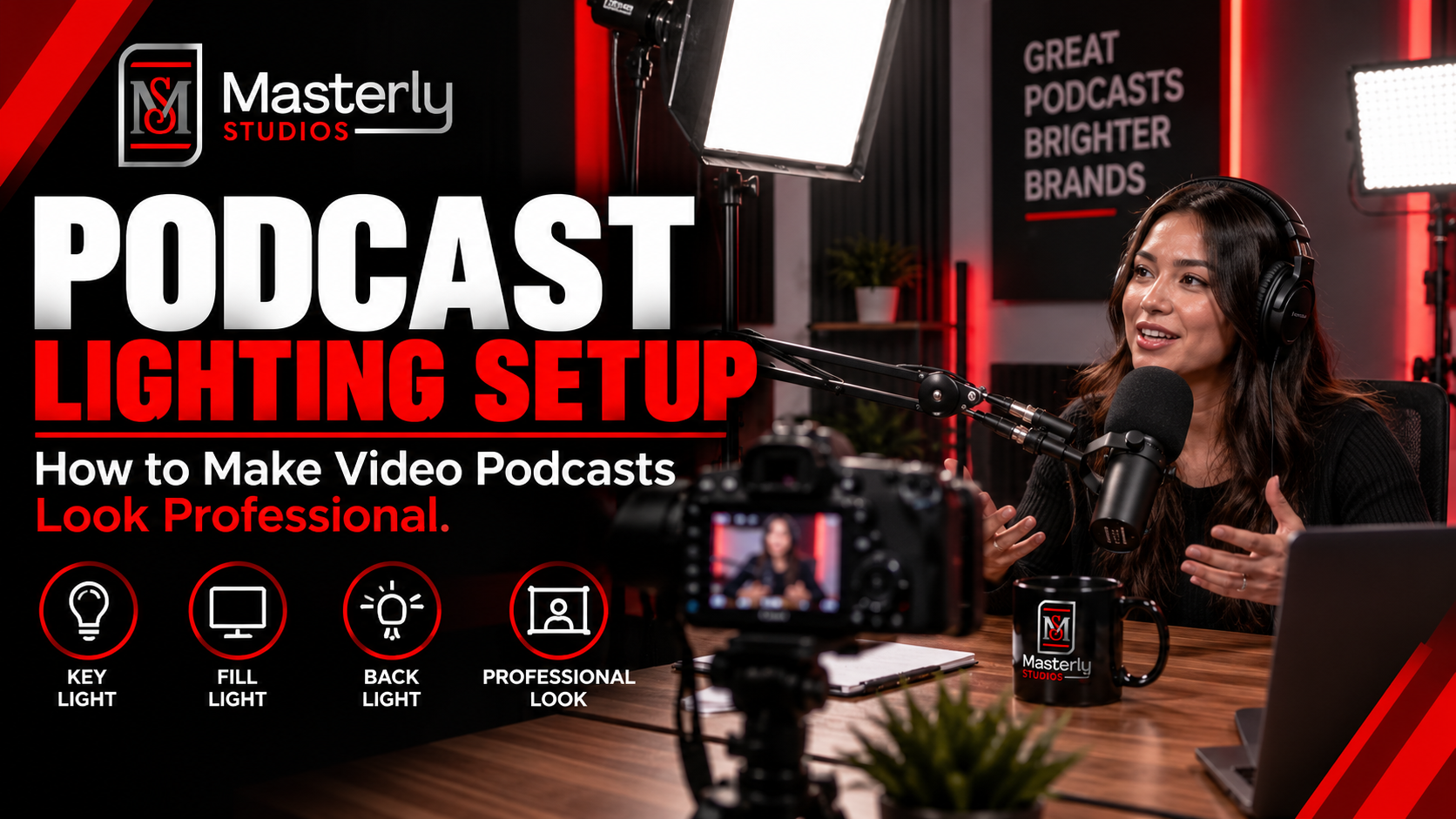
Need a podcast lighting setup? Masterly Studios provides professional podcast and camera lighting in a prepared studio for consistent, polished video production.
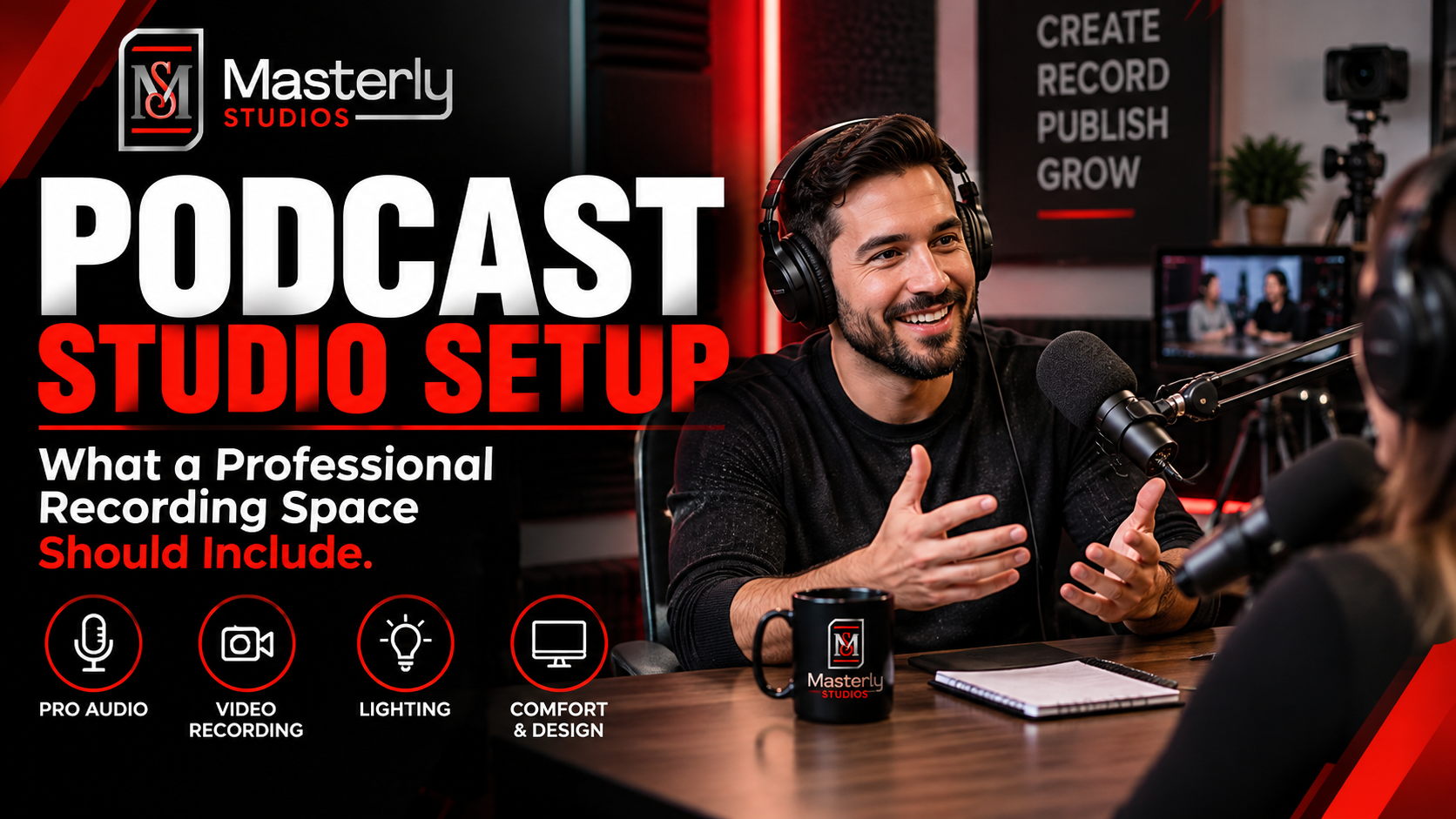
Need a podcast studio setup? Masterly Studios offers a professional recording space with quality equipment, lighting, acoustics, and video support for creators.
Book a training venue in Atlanta for corporate workshops, employee training, and learning events with flexible layouts, A/V support, and professional amenities.
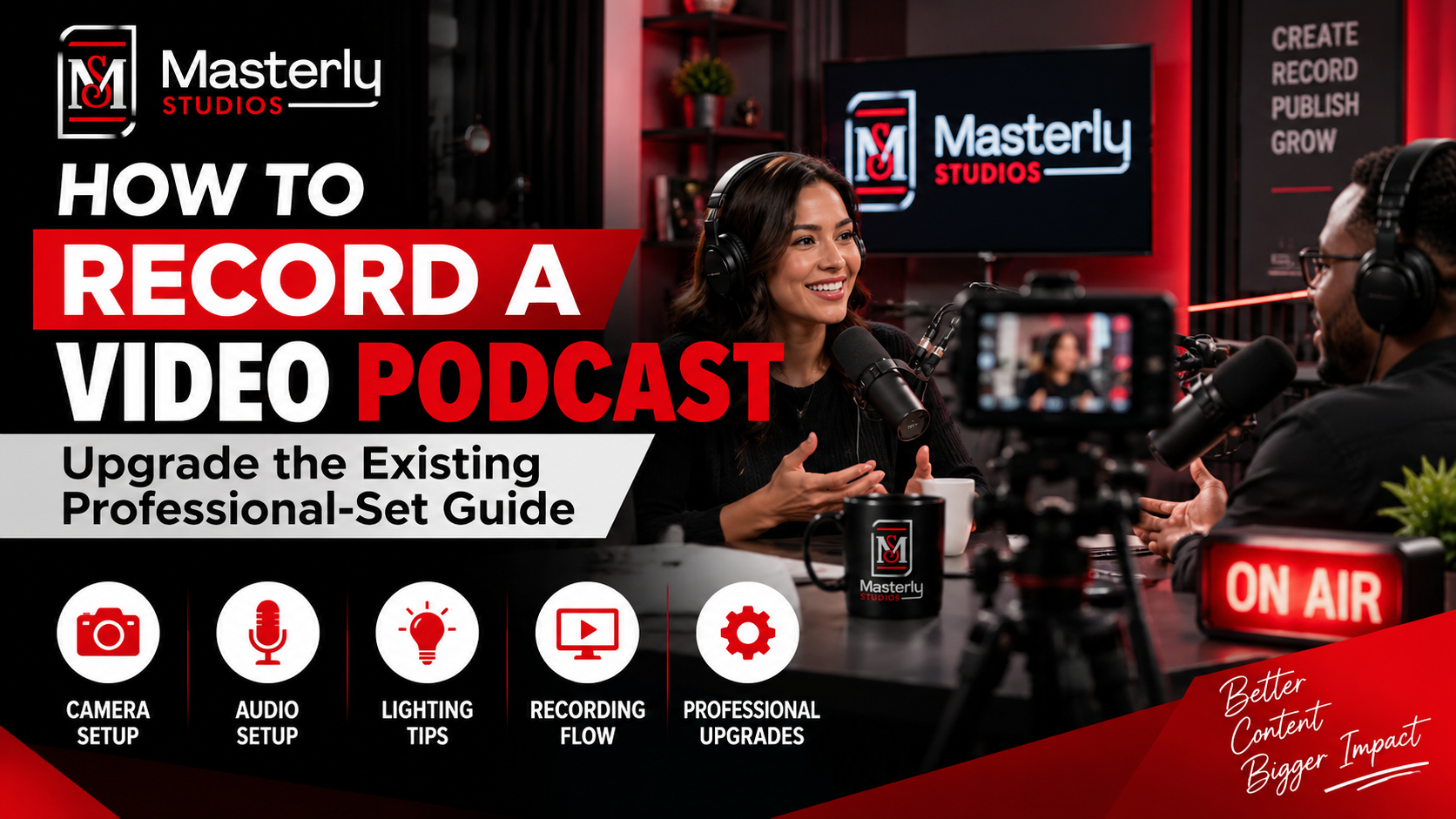
Learn how to record a video podcast in Atlanta with a professional studio setup, clear audio, polished lighting, guest support, and a smooth recording workflow.
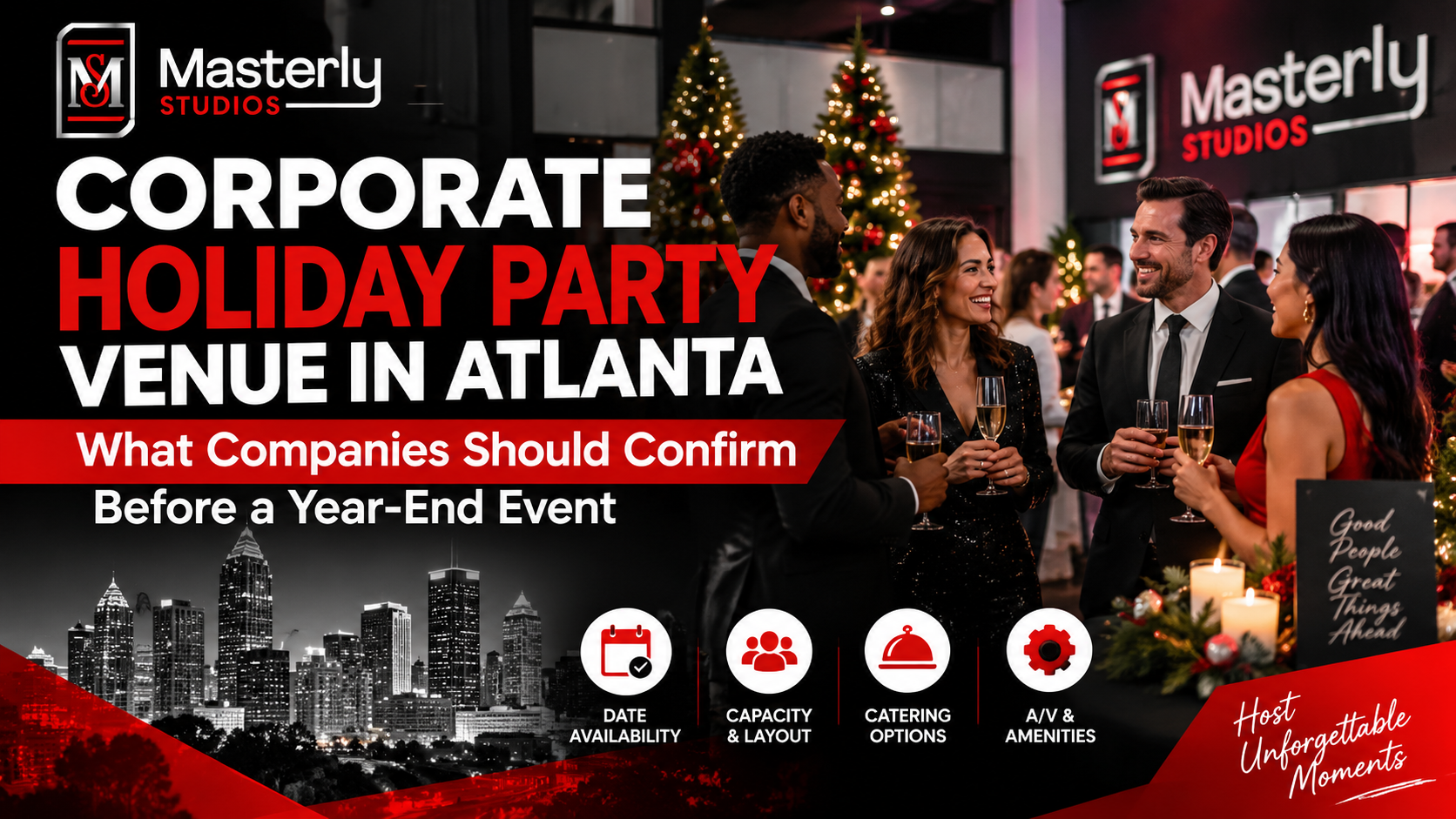
Book a corporate Christmas party venue in Atlanta for year-end events with flexible space, A/V support, catering, branding, and more for your team and festive fun.
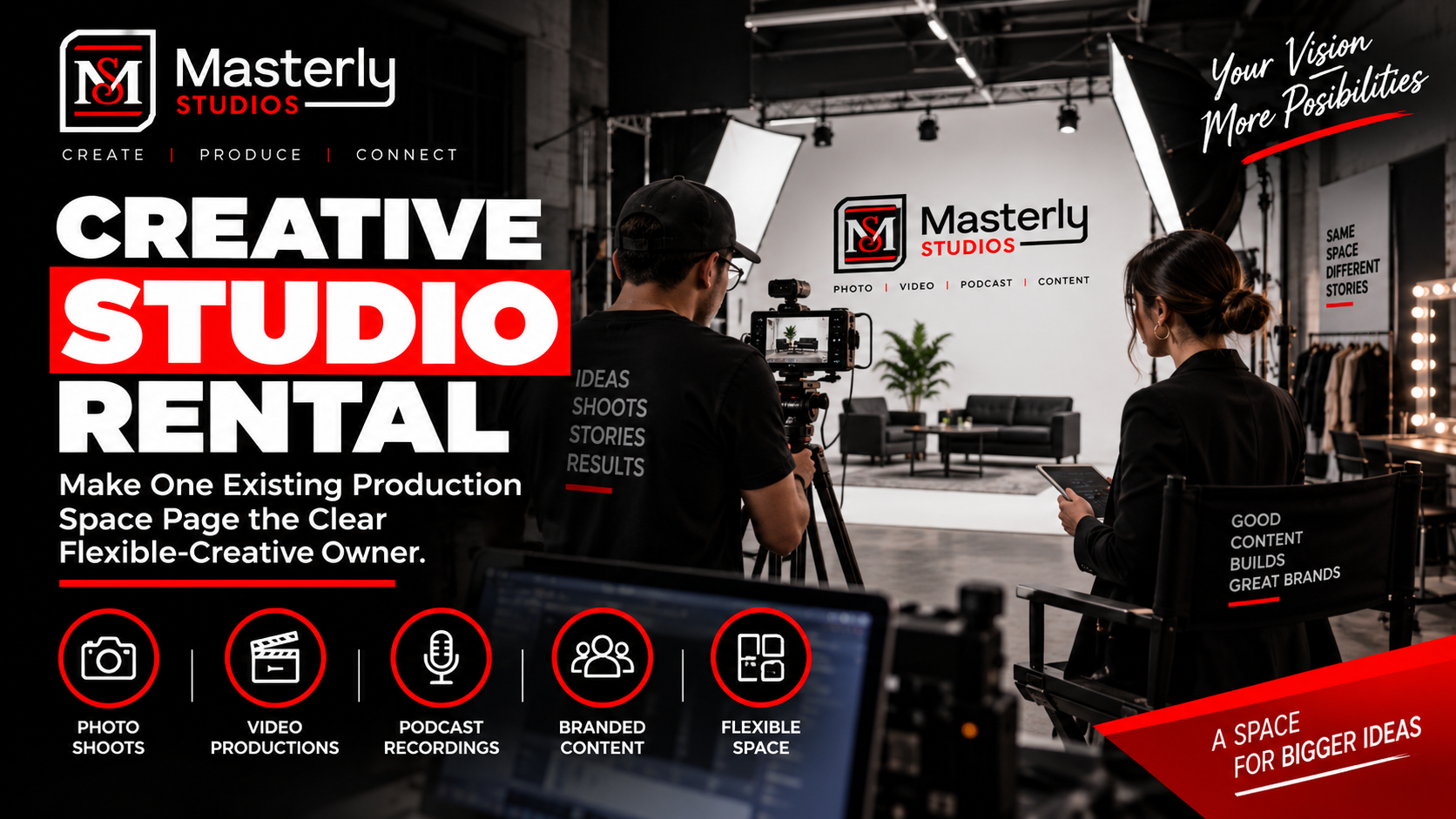
Book a creative studio rental for photography, video, branded content, and marketing campaigns with flexible production space at Masterly Studios for every project.
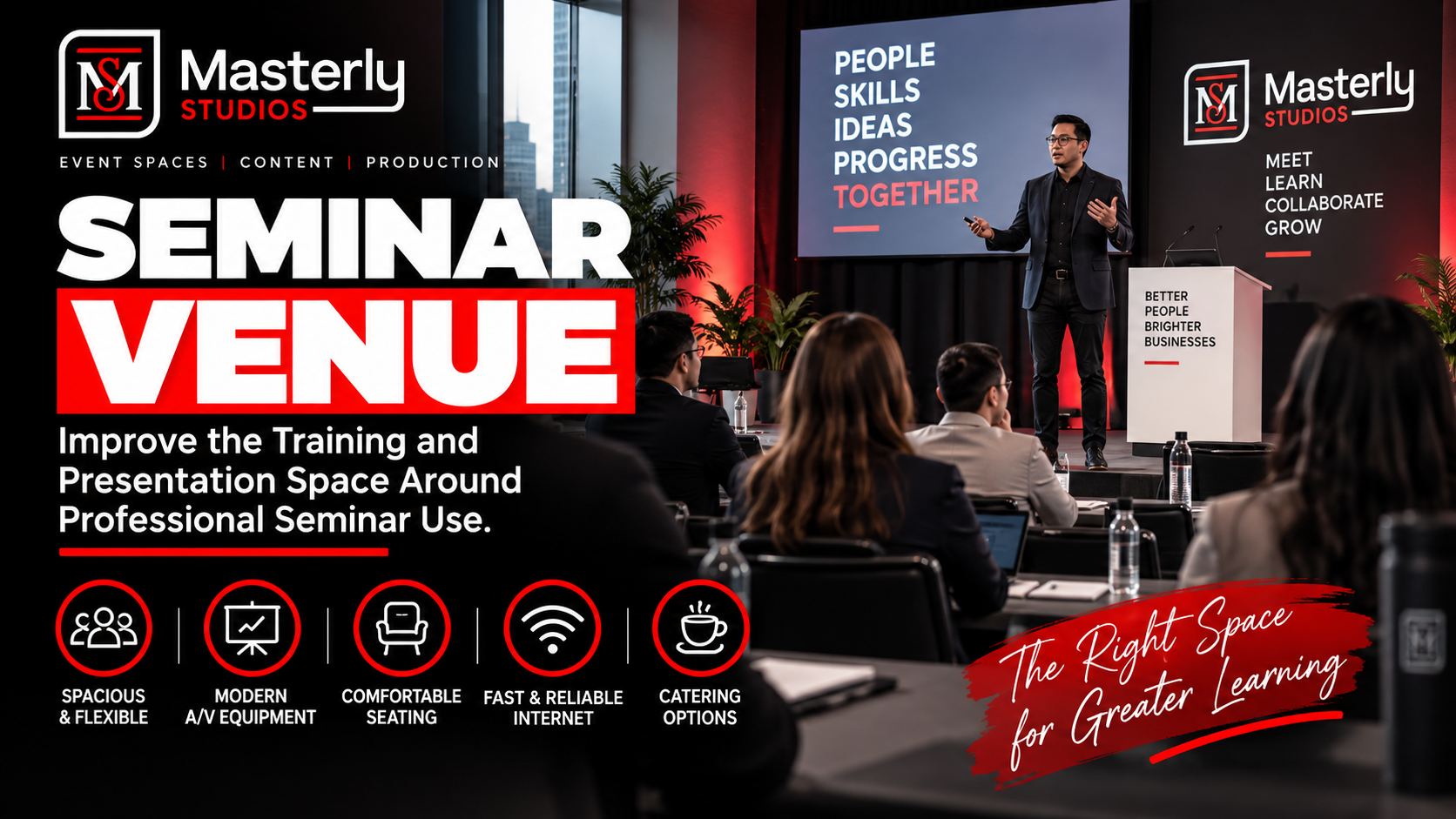
Book a professional seminar venue for training, presentations, and business events with flexible seating, A/V, check-in, parking, content support, and event setup.
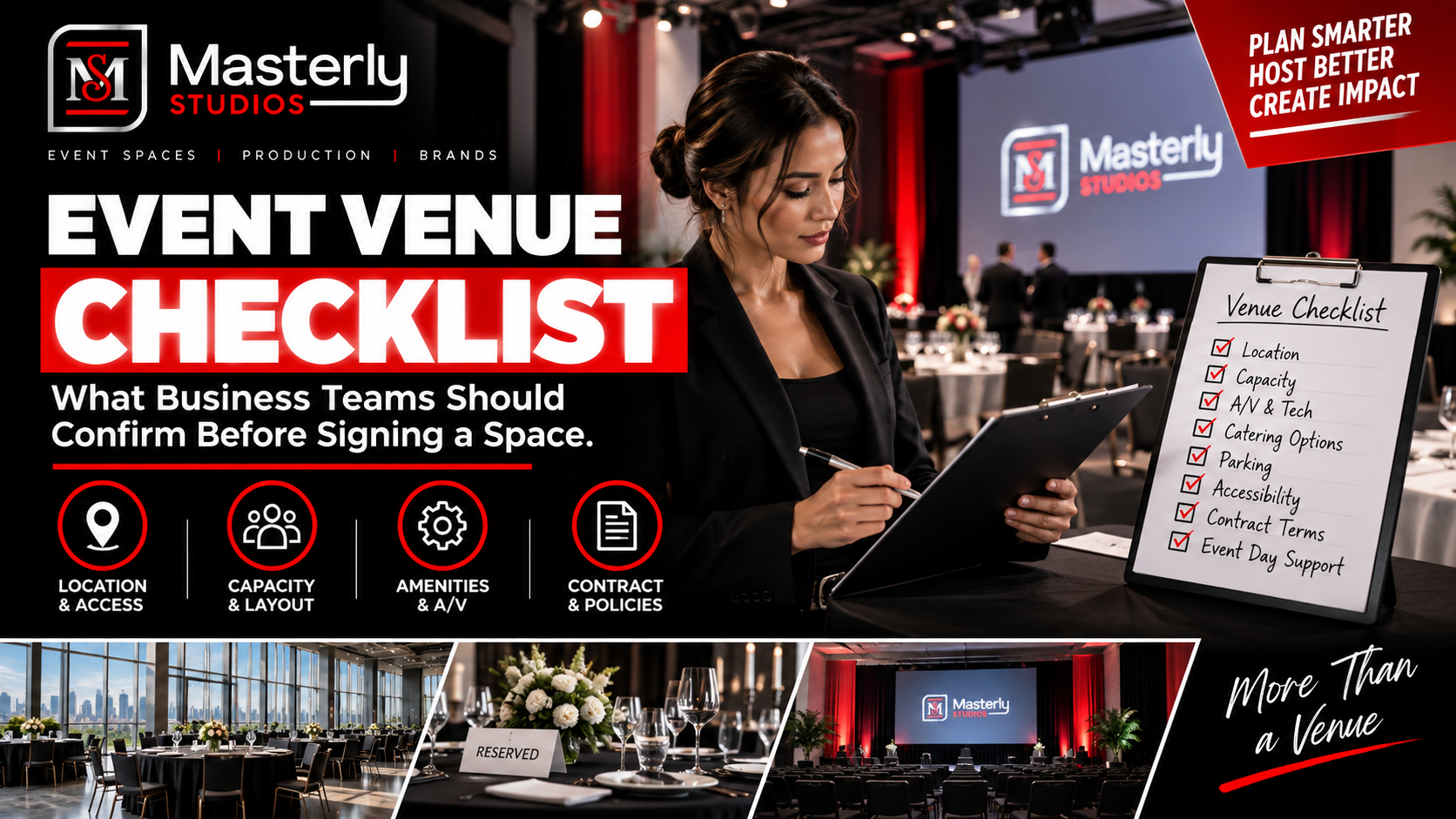
Use an event venue checklist to evaluate capacity, layout, parking, load-in, A/V, Wi-Fi, accessibility, catering, branding, production, and overtime needs.