Panel Discussion: How to Plan and Host One That Keeps the Room Engaged
By Masterly Studios Editorial Team
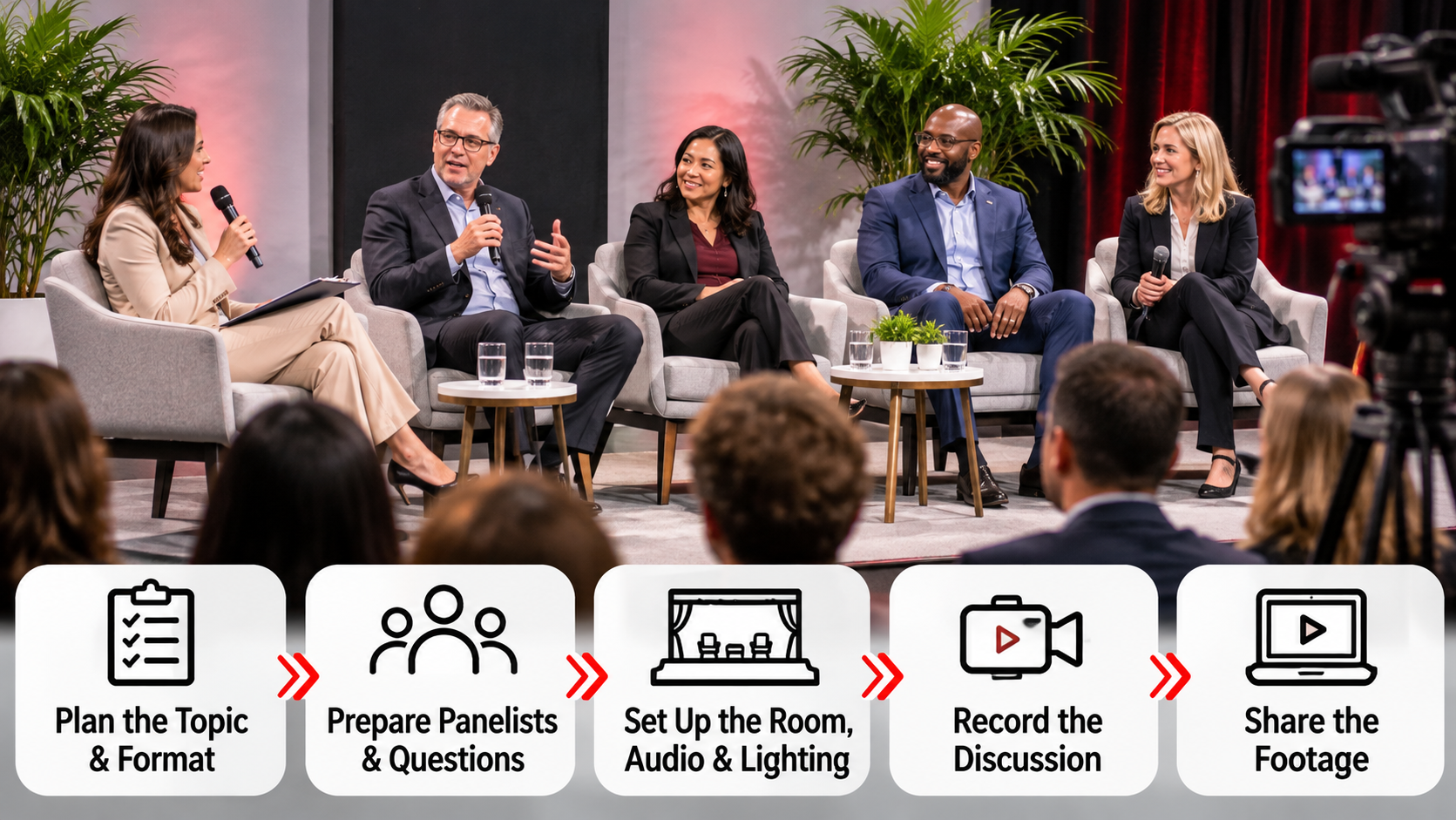
Planning a panel discussion involves choosing a focused topic, selecting qualified panelists, preparing relevant questions, and arranging a professional event setting. A successful panel also requires clear audio, suitable lighting, comfortable seating, and thoughtful recording arrangements that support audience engagement and extend the value of the discussion beyond the event.
Even when an event features knowledgeable speakers, poor audio, uncomfortable seating, and an unstructured conversation can make it difficult for audiences to stay engaged. A good panel keeps people interested by using inclusive language that helps audience members feel their concerns are understood and represent their place in the discussion.
For businesses and professional associations, these problems can affect the audience's experience and the organization's reputation. Poor recording quality can also limit opportunities to share valuable insights after the event.
Masterly Studios helps Atlanta event organizers, association leaders, and corporate teams bring their panel discussions together through professional event space, technical planning, and video production services.
Choosing a Panel Discussion Format: Moderated Panel, Fireside Chat, or Audience Q and A
The right panel discussion format depends on the event's purpose, audience size, number of speakers, and desired level of participation.
Different formats create different experiences. Choosing an appropriate format before arranging the technical setup helps establish clear expectations for the speakers and production team.
Moderated Panel Discussion
A moderated panel typically features several speakers discussing a shared topic under the direction of a moderator.
This format works well for industry conferences, corporate leadership events, professional association meetings, and educational discussions.
Having speakers with different backgrounds or areas of expertise allows the audience to hear multiple perspectives on the same subject.
A moderated panel generally benefits from individual microphones, comfortable seating, and a room arrangement that supports communication between panelists, fellow panelists, and audience members.
Fireside Chat
A fireside chat usually involves a conversation between a host and one or two invited guests.
The format creates a more personal atmosphere and can work particularly well for executive interviews, leadership discussions, founder stories, and professional development events.
Comfortable chairs, softer lighting, and a thoughtfully arranged background can support the conversational nature of the event while creating a polished appearance on camera.
Audience Questions and Q and A
An audience question and answer format allows attendees to participate directly in the discussion.
This approach can be valuable for community events, professional associations, industry forums, and corporate meetings where audience concerns are central to the conversation.
The room and audio setup should accommodate audience participation so questions can be heard clearly by both panelists and other attendees, making it easier for everyone to follow the response as the discussion continues.
For organizers planning additional interactive sessions, our article on how to host a workshop explains the considerations involved in a different type of audience-focused event.
Preparing Panelists and Writing Panel Discussion Questions
A well-prepared panel allows speakers to share meaningful insights without losing the natural flow of conversation. Memorable advice often comes from concrete stories, so be ready to discuss specific examples rather than relying on abstract points alone.
Panelists should understand the purpose of the event, the audience's interests, and the key topics expected to be discussed. They should also assess what attendees are most interested in before the event.
Active listening during the session helps you link your comments to prior contributions from other panelists.
Establishing Key Points and a Shared Discussion Focus
Panelists may bring different experiences, professional backgrounds, and opinions to the conversation.
A clearly defined topic helps connect these perspectives while reducing unnecessary repetition or unrelated discussions.
For example, a corporate leadership panel may focus on workplace innovation, while an association event may explore changes affecting a particular industry.
Sharing the discussion focus in advance gives speakers an opportunity to prepare relevant examples and consider the information most valuable to attendees.
Preparing Meaningful Prepared Questions for Panel Discussions
Strong panel discussion questions encourage thoughtful responses rather than simple yes or no answers. Preparing key points in advance and structuring answers in a What? So What? Now What? format helps panelists communicate concisely and gives the discussion clarity.
Depending on the event, questions may explore:
- Current challenges affecting an industry or organization.
- Lessons learned from professional experiences.
- Different approaches to solving a shared problem.
- Emerging opportunities and future developments.
- Practical insights that audience members can take away.
Questions should reflect the audience's interests and the purpose of the event, and by following this structure, panelists can communicate their key points clearly.
A focused discussion outline also helps the production team anticipate speaker interactions, audience participation, and important recording moments.
Preparing Speakers for the Event Environment
Panelists may have different levels of experience speaking in front of audiences or appearing on camera.
A professional event setup allows speakers to become familiar with their seating positions, microphones, lighting, and recording arrangements before the discussion begins. Preparing for the event environment also means practicing concise contributions, with most answers kept to about 60 to 90 seconds.
This preparation can help reduce distractions and allow panelists to focus on delivering meaningful insights while limiting overly long contributions so the audience stays focused.
Room Layout, Microphones, and Lighting for a Panel
The physical environment plays an important role in how a panel discussion looks, sounds, and feels.
Even experienced speakers may struggle to communicate effectively when the audience cannot hear clearly or when the room layout limits interaction.
Choosing a Room Layout That Supports Conversation
Panel seating should allow speakers to communicate naturally while remaining visible to the audience and maintain occasional eye contact while speaking.
Common arrangements include individual chairs positioned across a stage, conversational seating in a slight semicircle, or a seated panel behind a table.
The appropriate layout depends on the number of participants, audience size, event format, accessibility needs, and recording requirements.
Camera placement and clear sightlines should also be considered when the event will be professionally filmed.
Our article on choosing a corporate event space in Atlanta explains the broader considerations involved in selecting a production-ready venue.
Professional Microphone and Audio Setup
Clear audio is essential for both live audience engagement and recorded panel discussions.
Individual microphones allow panelists to speak naturally without repeatedly passing equipment between participants.
Depending on the event, suitable microphone options may include handheld microphones, lapel microphones, or tabletop microphones.
Audience participation may require a separate microphone so questions can be heard throughout the room and captured in the recording.
Professional audio planning can address microphone levels, background noise, sound feedback, and recording quality.
Lighting That Works for the Room and Camera
Event lighting should provide comfortable visibility for attendees while supporting the appearance of speakers on camera.
Uneven lighting can create distracting shadows, make facial expressions difficult to see, and reduce the quality of recorded footage.
Balanced lighting helps maintain a professional appearance across the panel while keeping attention on the discussion.
Masterly Studios considers room arrangements, audio requirements, and lighting needs when discussing the technical scope of an event.
Recording the Panel and Using the Footage Afterward
A professionally recorded panel discussion can continue providing value after the live event has ended.
Businesses and associations can use recorded discussions to share industry knowledge, support professional development, and connect with audiences who could not attend in person.
Professional Panel Discussion Recording
A multi-camera production should account for the structured flow of a panel session, which often runs 45 to 90 minutes, while capturing individual speakers, wider views of the panel, and relevant audience interactions.
Separate camera angles can provide greater flexibility during editing, particularly when several speakers contribute to the conversation.
Audio recording is equally important because the value of a panel depends largely on the audience's ability to understand what is being said throughout the full session.
Turning Panel Footage Into Marketing Content
Depending on the agreed production scope, recorded panel footage may support several types of content:
- Full-length event recordings.
- Short social media clips.
- Speaker highlights and interview excerpts.
- Educational videos for members or employees.
- Website content and event recaps.
- Promotional materials for future events.
Planning these deliverables before the event helps align the recording approach with the organization's communication goals.
Speaker permissions, audience privacy, and any confidential discussion topics should also be considered before publishing footage.
Recording Versus Livestreaming
Recording supports later viewing and allows footage to be reviewed and edited before publication, while livestreaming lets remote audiences watch or participate in the session as it happens.
Some organizations may benefit from combining both approaches, which can be especially useful for presentations or event segments intended for wider distribution.
Livestreaming requires additional technical considerations, including reliable internet connectivity, audio monitoring, and coordination with the selected streaming platform.
These requirements should be addressed during production planning. For broader scheduling considerations, our corporate event planning timeline explains how venue selection and event preparation fit into the larger planning process.
Frequently Asked Questions About Panel Discussions
How Many People Should Be on a Panel?
Three to five panelists, plus a moderator, is a practical starting point for many events. The appropriate number depends on the available discussion time, topic, room capacity, and desired audience participation.
How Long Should a Panel Discussion Last?
Many panel discussions last between 45 and 60 minutes, including time for audience questions. Shorter discussions may suit focused topics, while complex subjects may benefit from additional time.
Should a Panel Discussion Be Recorded or Livestreamed?
Recording is suitable for edited content and future distribution, while livestreaming allows remote audiences to watch in real time. Some events benefit from both, depending on their audience, technical requirements, and production budget.
Book a studio tour or Request a Production Quote from Masterly Studios.
Your panelists bring valuable knowledge and experience to the conversation, and engaging speakers make their ideas more memorable by pairing expertise with concrete stories. The event environment should support their expertise rather than distract from it.
Masterly Studios helps Atlanta businesses, professional associations, and event organizers host panel discussions with thoughtful room arrangements, professional audio, lighting, and video production support.
Whether you are planning an executive leadership discussion, industry conference, fireside chat, or audience-focused event, our team can develop a production approach around your format, speakers, communication objectives, and an engaging talk.
From preparing the event space to capturing footage for future marketing and educational content, Masterly Studios helps bring the technical and creative elements of your panel together, and these planning tips improve the chances of success.
Phone: (404) 726-7261