Networking Event Ideas: Formats That Get Guests Talking
By Masterly Studios Editorial Team
Good networking event ideas for business groups include speed networking rounds, themed roundtables, interactive panel discussions, and informal mixers. These formats encourage professional introductions, meaningful conversations, and relationship building. A comfortable event space with thoughtful room layouts, clear pathways, and balanced programming can help guests connect naturally without feeling overwhelmed.
Creating Successful Networking Events That Encourage Real Connections
A room filled with business professionals does not automatically create a successful networking event. Guests may feel uncomfortable approaching unfamiliar people, remain within their existing professional circle, or struggle to find opportunities for meaningful conversations. A clear purpose should come first, because it shapes the experience before you decide on format or venue.
For event organizers, chambers of commerce, professional associations, and corporate teams, these challenges can affect the overall guest experience and the organization's reputation. Defining the target audience and the event's purpose early makes it easier to choose the right format and create better networking opportunities.
The right networking format gives attendees a reason to participate while providing enough flexibility for natural interactions. A suitable venue also supports comfortable movement, clear communication, and professional presentations. Practical planning tips include creating a budget to manage event expenses effectively and selecting a date well in advance to avoid scheduling conflicts.
Masterly Studios provides Atlanta-area organizations with professional event space and production services that support business gatherings designed around meaningful connections.
Networking Event Formats That Work for Business Groups
Different networking event ideas serve different purposes. Some formats help guests meet several professionals quickly, while others encourage deeper conversations around shared interests.
The most suitable format depends on your audience, business objectives, and preferred guest experience.
Speed Networking Rounds
Speed networking provides a structured environment where attendees participate in brief conversations before meeting another professional.
This format can be particularly valuable for guests attending alone or meeting other participants for the first time. A simple variation uses bingo cards as attendees walk between rounds and speak with one person at a time. It reduces the pressure of approaching strangers, can ease small talk, and helps people form meaningful connections through multiple introductions.
Speed networking may be suitable for chambers of commerce, entrepreneurs, young professionals, and business development groups.
A venue with organized conversation stations, comfortable seating, and clear movement areas can support smooth transitions between rounds. In this format, badges with conversation hooks often work better than traditional job titles.
Themed Roundtable Discussions
Roundtable discussions bring small groups together around specific business topics or professional interests, creating space for focused discussion and balanced participation.
Attendees can exchange experiences, discuss industry challenges, and explore potential opportunities with like-minded individuals.
Shared experiences can help participants build relationships and gain insights more quickly.
Popular discussion themes include business growth, leadership, marketing, technology, and professional development.
Reverse mentoring roundtables are one example, where early career professionals share perspectives with senior colleagues.
Unlike traditional presentations, roundtable discussions give participants a more active role in the conversation.
This format can be especially valuable for professional associations and company teams that want to encourage knowledge sharing alongside relationship building.
Panel Discussions With Networking Sessions
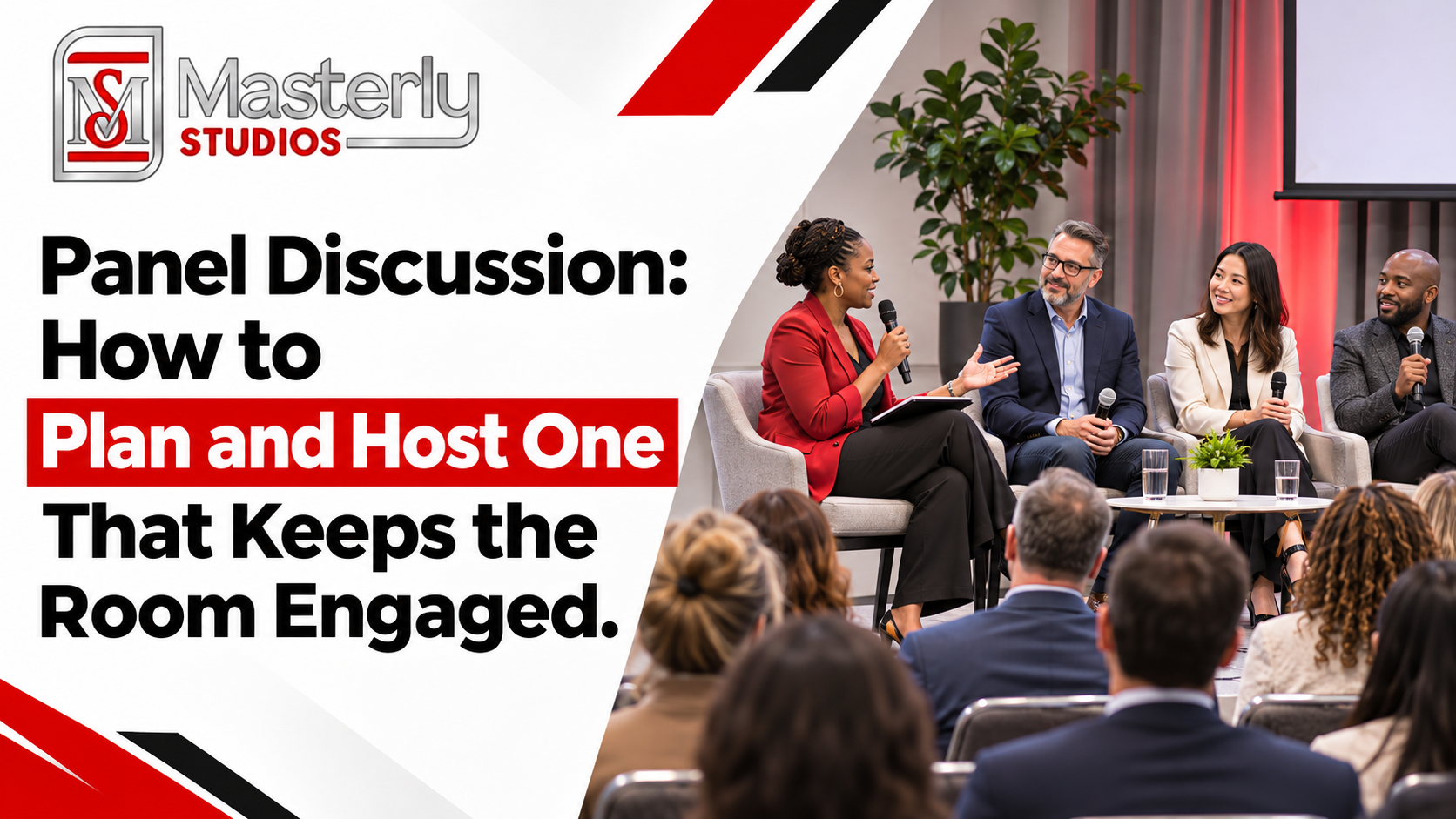
A panel discussion gives attendees a shared experience that can serve as a starting point for conversations.
Industry leaders, business owners, and subject matter experts may discuss relevant topics before guests participate in informal networking.
Professional audio, lighting, and clear stage visibility are important considerations for this format. Optional photography and video production can also support organizations that want to capture panel highlights for future use.
Masterly Studios can discuss event space and production requirements based on the needs of your panel and networking program.
Informal Business Mixers
Business mixers offer a relaxed setting where professionals can meet, exchange ideas, and develop relationships without following a heavily structured schedule. A Coffee and Curiosity Pop-Up, for example, can invite guests to join informal conversations over coffee.
This format may work well for member appreciation events, client receptions, professional community gatherings, and business introductions.
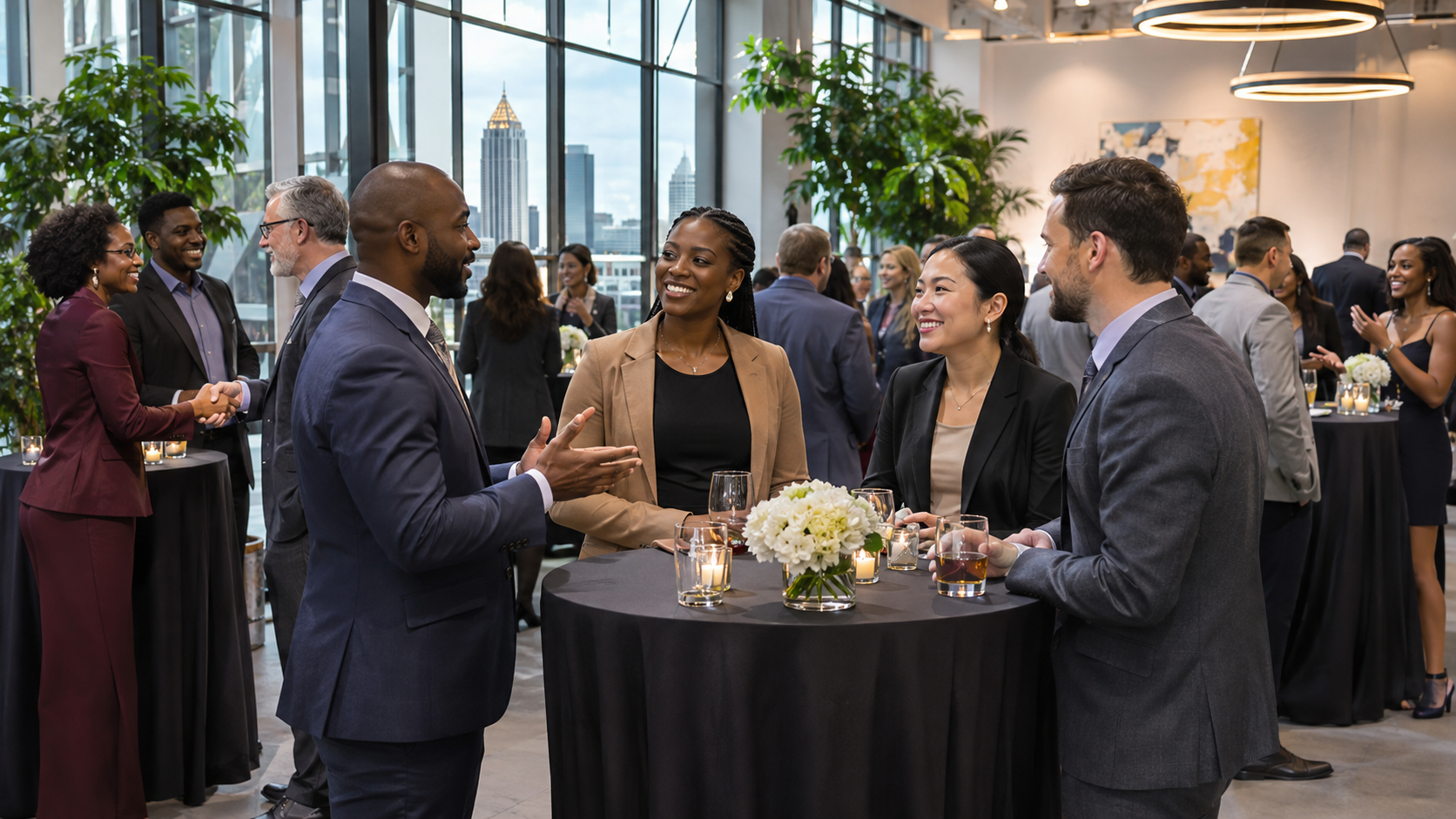
An inviting room with standing tables, seating areas, and comfortable conversation spaces can help guests meet new people through spontaneous conversations.
The goal is to create an environment where attendees feel welcome rather than pressured to participate. For smaller gatherings, a hotel lobby may work well, and avoiding too many high-top tables can reduce social barriers.
Industry-Specific Networking Gatherings
Industry-focused events bring together professionals with shared interests, business challenges, or career goals.
Progressive networking dinners are one example, with attendees rotating tables between courses to meet different peers across the room. That rotation can connect guests with others who have similar interests while also leading to fresh insights and new opportunities.
These networking events may connect creative professionals, entrepreneurs, executives, technology specialists, or local business owners.
A shared professional interest gives guests common ground and can make conversations more relevant.
For Atlanta organizations exploring networking event ideas, this format may support stronger professional connections within a specific business community.
Room Layout, Name Tags, and Flow That Help Guests Meet
The physical environment can influence how comfortably guests interact throughout a networking event.
An attractive venue may still create challenges when furniture restricts movement, background noise interrupts conversations, or attendees have difficulty locating activity areas.
Conversation Areas That Support Different Guest Preferences
An effective networking space can accommodate both brief introductions and longer discussions. Simple conversation prompts can also help different guest types move naturally between quick chats and more in-depth exchanges.
Standing tables provide convenient meeting points, while comfortable seating areas allow guests to continue conversations in a more relaxed setting.
Accessible pathways and suitable spacing are also important for supporting attendees with different mobility needs.
The room should feel welcoming without becoming overcrowded or separating guests into isolated groups.
For large groups, planners may use team-based trivia games or outdoor scavenger hunts to promote teamwork and unique exploration, adjusting the format to the group size and available space.
Our corporate event space in Atlanta article explains additional considerations when selecting a production-ready venue for professional gatherings.
Name Tags That Make Introductions Easier
Clear name tags can help guests feel more comfortable approaching unfamiliar professionals.
Displaying a person's name, company, or professional role provides useful context and creates natural conversation opportunities.
For industry-specific events, name tags may also identify professional interests or areas of expertise.
These small details can make networking more approachable, particularly for first-time attendees.
Room Flow That Encourages Movement
Registration areas, refreshment stations, conversation spaces, and presentation areas influence how guests move throughout an event.
A thoughtful arrangement can reduce congestion and make it easier for attendees to interact with different groups.
For organizations considering how to host a networking event, selecting a venue that supports the intended format is an important decision.
Additional operational considerations are covered in our event planning checklist for business teams.
Lighting and Sound That Support Meaningful Conversations
Networking events benefit from lighting that allows guests to recognize faces, read name tags, and move comfortably throughout the room.
Sound levels should also support clear conversations. Music can contribute to a welcoming atmosphere, but excessive volume may make professional discussions difficult.
When presentations are included, appropriate audio equipment can help speakers communicate clearly without disrupting the overall event experience.
Adding a Short Program or Speaker Without Losing Networking Time
A speaker, presentation, or educational session can add value to a networking event when it complements the primary purpose of bringing people together.
However, an extended program may reduce the time available for professional introductions and meaningful conversations.
Short Welcome Presentations
A brief welcome can introduce the hosting organization, explain the purpose of the gathering, and establish a professional atmosphere.
Chambers and associations may also use this opportunity to acknowledge members, recognize business achievements, or introduce upcoming events.
A focused presentation helps preserve time for guests to interact.
Guest Speakers Who Encourage Discussion
A relevant guest speaker can introduce business topics that attendees may continue discussing after the presentation.
Subjects such as leadership, entrepreneurship, industry developments, professional growth, and career transitions can provide useful conversation starters.
Professional presentation support can contribute to a polished experience while helping the hosting organization maintain a consistent brand image.
Interactive Learning and Networking
Some organizations combine networking with a brief educational experience that helps attendees engage in person, not just listen passively.
A focused workshop or moderated discussion can encourage participants to exchange ideas while developing professional relationships.
Moderators may divide participants into smaller discussion groups or use breakout rooms to guide conversations, and organizers can provide participants with prompts or questions that encourages participants to contribute.
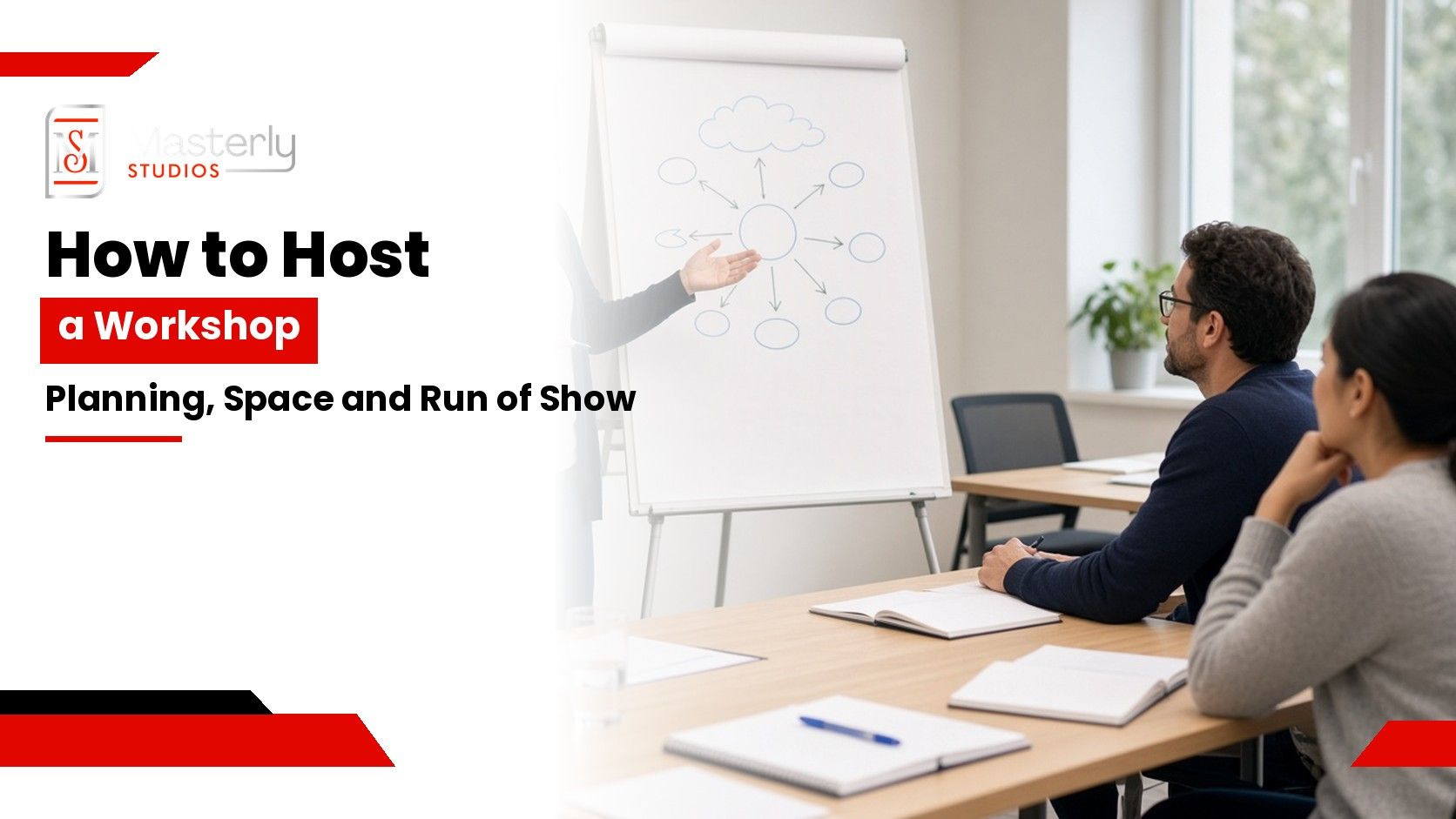
For organizations considering this approach, our article on how to host a workshop provides additional information about workshop-focused events.
Masterly Studios can discuss venue arrangements, presentation requirements, and production options that complement your networking format.
Following Up After the Networking Event
The professional relationships formed during a networking event can continue beyond the gathering itself.
Post-event communication gives organizations an opportunity to thank guests, maintain engagement, and share relevant resources.
Professional follow-up materials may include:
- Personalized thank-you messages.
- Professional event photographs.
- Speaker highlights and presentation summaries.
- Event recap videos.
- Guest feedback surveys.
- Announcements about upcoming networking events.
Contact information should only be distributed with appropriate attendee permission.
Professional event photography and video production can also provide organizations with visual materials for websites, newsletters, social media platforms, and future event promotions.
These materials help document the gathering and communicate the organization's professional identity to members, clients, and business partners.
Masterly Studios offers event space and production services that can support both the live networking experience and its related content needs.
Frequently Asked Questions About Networking Event Ideas
How Long Should a Networking Event Last?
A networking event typically lasts between 90 minutes and two hours. This provides time for introductions, informal conversations, and a short presentation. Events with panel discussions or structured activities may benefit from a longer schedule.
How Do You Get People to Mingle at a Networking Event?
Comfortable conversation areas, clear name tags, structured introductions, themed discussions, and an accessible room layout can make meeting people feel easier and less awkward while still encouraging guests to mingle. A welcoming atmosphere helps attendees feel more comfortable approaching unfamiliar professionals.
What Is a Good Size for a Networking Event?
A group of 20 to 50 attendees can work well for focused networking discussions. Larger groups may suit business mixers and industry gatherings. The appropriate size depends on the venue capacity, event format, and desired level of interaction.
Host Your Next Networking Event at Masterly Studios in Atlanta
Your networking event reflects your organization's professionalism, values, and commitment to building meaningful business relationships.
Masterly Studios provides Atlanta businesses, chambers of commerce, professional associations, event planners, and other event organizers with event space and production services suited to professional gatherings.
Whether you are considering a business mixer, speed networking session, themed roundtable, or speaker-led event, our team can discuss your preferred format, room layout, presentation requirements, and event coverage needs.
With venue and production services available through Masterly Studios, your organization can focus on its guests while coordinating the physical and technical requirements of the gathering.
Phone: (404) 726-7261
Website: www.masterlystudios.com